


logo
EverydayChaos
Everyday Chaos
Too Big to Know
Too Big to Know
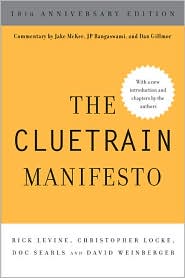
Cluetrain 10th Anniversary edition
Cluetrain 10th Anniversary
Everything Is Miscellaneous
Small Pieces cover
Small Pieces Loosely Joined
Cluetrain cover
Cluetrain Manifesto
My face
Speaker info
Who am I? (Blog Disclosure Form) Copy this link as RSS address Atom Feed

February 22, 2007

Shut Up and Sing

Last night I was just going to watch a few minutes of the documentary about the boycotting of the Dixie Chicks, Shut Up and Sing , but I ended up watching the whole thing, going to bed too late. It’s an imperfect documentary about imperfect people, which is why I loved it.

I didn’t used to be in the DC’s demographic. I’m a totally stereotypical northeastern liberal Jew, predictable down to my preference for iceberg lettuce and whining about sunburn. And that means I don’t much like country music (although I was brought up on folk music). I only started paying attention to the DC’s once their fans turned against them because Natalie Maines, the lead singer, uttered a single line critical of our president. Now, some celebrities have been brought down by using a single word, but generally those words have indicated an intolerance that we (thankfully) no longer tolerate. But Maines only said she’s ashamed of our president. That’s well within the range of political discourse. Economically punishing people you disagree with makes democracy worse, not better, imo — although I know many of you disagree. (As for Maines criticizing the president while outside of the US, the notion that we need to put on a fake, unified face for our allies strikes me as being ashamed of what’s best about democracy.)

The documentary makes it clear that Maines is a big mouth. Nothing wrong with that. Heck, some of my best friends and bloggers are big mouths. She said that one sentence from the heart, in the heat of the moment — London had just seen its largest-ever anti-war demonstration — and, as she acknowledges, to get a rise from the audience. Life is complex, and the documentary’s willingness to acknowledge this is a real plus.

Seeing the DC’s embrace the consequences of Maines’ single sentence, growing as people, citizens and musicians, is moving precisely because the growth is contingent and painful. This isn’t a matter of riding some bromide. They feel their way. They’re pushed and they react, sometimes with anger, sometimes with sadness, sometimes with their instruments. They may be insanely talented millionaire musicians, but it’s easy to connect with them as bullies shove them off their accustomed path.

The DC’s are great musicians and singers. I would never have found them if their politics hadn’t snagged me. I am, I believe, part of their new demographic.

(Disclosure: I got sent a free copy of the DVD as part of a blogging marketing campaign. I was planning on renting it anyway.)

[Tags: dixie_chicks movies free_speech music country_music politics ]

Tweet
Follow me

Categories: Uncategorized Tagged with: culture • entertainment • marketing • media • peace • politics Date: February 22nd, 2007 dw

7 Comments »

Audiences to conversations to communities

SJSU JMC163 New Media in Journalism School of Journalism & Mass Communications (yes, that’s the name of the blog — I suspect it’s class-related), has a nice example of an audience for a particular TV show — the BBC’s “North & South” — forming itself into a conversation “with a voice” that worked around the BBC’s attempt to moderate it. [Tags: media cluetrain bbc ]

Tweet
Follow me

Categories: Uncategorized Tagged with: digital culture • entertainment • media Date: February 22nd, 2007 dw

Be the first to comment »

February 21, 2007

Reuters, Africa, Bloggers…all on one page

Reuters has started a site devoted exclusively to Africa. Each country has its own page. And there at the top left of each page is a feed of the most recent posts from Global Voices. Reuters is a funder of GV, and this is a very cool integration of the mainstream media and our global voices.

It makes me inordinately happy. [Tags: global Voices africa news media msm reuters everything_is_miscellaneous ]

Tweet
Follow me

Categories: Uncategorized Tagged with: bridgeblog • everythingIsMiscellaneous • media • peace Date: February 21st, 2007 dw

Be the first to comment »

February 20, 2007

Free digital download store

No, it’s not a place where you can get free digital downloads. Rather, it’s software for creating your own storefront for selling your music, documents, used Powerpoints, whatever. It’s from the Web’s favorite musician, BradSucks, and uses Amazon’s incredibly cheap S3 storage service. BradSucks’ store is DRM-free, of course.

You can see it in action here. Or you can download BradSuck’s software here, so you can install it on your own site. (And while you’re checking out BradSucks’ store, you can listen to his music for free, and then go buy a copy of his album.) [Tags: bradsucks music drm retail amazon ecommerce everything_is_miscellaneous ]

Tweet
Follow me

Categories: Uncategorized Tagged with: digital culture • digital rights • entertainment • everythingIsMiscellaneous • media • podcasts Date: February 20th, 2007 dw

2 Comments »

Finding videos ‘n’ stuff

Scouta lets you bookmark and recommend videos at sites like YouTube, helping you find people with the same interests. It also lets you create groups and share what you’ve found with them. It has a “karma and kudos” system that notices when you recommend and share stuff. I’ve been using it in alpha (Disclosure: I’m some type of unoffical advisor, I think) with my family and the Berkman Center as groups. It’s useful despite some rough edges. I like and trust the guys who built it. [Tags: scouta media everything_is_miscellaneous videos youtube]

Tweet
Follow me

Categories: Uncategorized Tagged with: digital culture • everythingIsMiscellaneous • media • podcasts Date: February 20th, 2007 dw

2 Comments »

February 17, 2007

A day at NPR

Yesterday was a treat.

I spent the day at NPR with five other consultants — Zadi Diaz, Jeff Jarvis, Doc Searls, and Euan Semple, and Jay Rosen — brought in by Rob Paterson, who has been consulting to NPR for months. As Jeff Jarvis points out (in a post that covers the day well enough that I don’t feel a need to rehash it), many consultants would be too insecure and self-centered to bring in a bunch of others. So, thanks, Rob.

We’d spent Wednesday afternoon in a lively open discussion amongst ourselves, along with Maria Thomas , the head of NPR.org, with whom we all felt an immediate bond, and with Andy Carvin, the estimable blogger whom most of us already knew. (Andy’s been blogging the meetings.) Not surprisingly, the NPR folks we met were uniformly, well, wonderful. You don’t get to NPR without being good at what you do, and you don’t try to get to NPR unless you love what NPR does for us all.

Wednesday night we went to a red-checked tablecloth Italian place for a group dinner with NPR folks, which was one great conversation after another. Then, Thursday morning we met in a slightly larger group to hash out issues and to prepare for the two-hour panel discussion open to all NPR’ers. Jeff Jarvis was nominated to lead the morning discussion because he has an uncanny ability to do so. Quite remarkable. David Folkenflik led the afternoon panel, with only a few moments of hippy panelist rebellion.

So, that was the format. As to the substance, Jeff’s post covers it well. The discussions throughout the 24 hours pretty consistently progressed from full-time Web heads (Maria and Andy) to those less involved in the Web side of things. So, the focus of concern shifted over time from the long-term internal contradiction — NPR is a product of member stations, but as audio content gets “miscellanized” and available to anyone at any time, member stations are at risk of becoming just another play list — to shorter term hurdles such as the assumption that the growth of listener-created-content means lowering NPR’s standards.

To the standards point, I tried to respond that this isn’t a matter of posting listener’s content as if we’re all now as good at telling stories as NPR reporters are. Rather: (a) There are lots of ways that listeners can and will contribute, beyond posting their own NPR-ish reports; (b) Metadata saves the day. We humans are good at sensing the metadata that tells us that this is a comment someone dashed off, that is an audio piece NPR’s staff has picked out as meeting its professional standards, and everything in between.

For me a highlight was Jay Rosen‘s response to a question from Michel Martin , the host of a new program being developed in public at Rough Cuts, about objectivity. Jay gave a measured, thoughtful response that was a brilliant use of language. When controversies are particularly polarizing, Jay said, NPR inevitably is going to resort to strict objectivity in order to retain its innocence. But, he continued, that can be at the price of truth. Beautiful. I loved Jay’s Blake-ian use of the term “innocence.” (I followed up by asking him if NPR’s Web site gave it a way to blurt out the truth. Blurting is the opposite of objectivity?)

I also thought the various discussions about how and when to enable the users to filter content, rather than relying on an NPR editor to do so, were particularly illuminating.

Zadi Diaz, host and co-creator of JetSet, provided a series of highlights throughout the day. She told a story about a 14 year old who approached JetSet with an ambitious idea for a video series and received unbounded help from the community. It made me want to yell, “Jeez, I love the Web!”, but I managed to restrain myself.

So, it was a great 24 hours for me, and I hope it was at least worthwhile for NPR. What a treat to be allowed to participate.


I had a brainstorm-y idea I floated to NPR I will try out on you, too. Keep in mind that it’s an ill-formed, un-thought-through idea, which you should feel free to kick the bejeezus out of.

NPR values civil discourse. And, despite its reputation in some circles, it’s committed to being non-partisan. So, suppose on pages devoted to particular segments or topics, NPR listeners were explicitly charged with pulling together links that represent the spectrum of opinion and thought on that topic. If it were a page about, say, the Libby trial, users would be asked to find Web references from the left and right, from US and elsewhere, from the scholarly to the flippant. If this were to work, it would presumably be because some small cadre of users stepped up to the task. Getting the “social physics ” right would be crucial, of course.(This idea is spurred by Debatepedia, except it aims at a plurality of views, not a duopoly.)

Bad idea? Impractical? Undesirable? Too much coffee, not enough reality?

[Tags: npr radio everything_is_miscellaneous ]

Tweet
Follow me

Categories: Uncategorized Tagged with: digital culture • everythingIsMiscellaneous • media Date: February 17th, 2007 dw

4 Comments »

February 16, 2007

NPR Rough Cuts

NPR Rough Cuts is a new NPR program, aimed at younger listeners, being developed in public. The site’s been up for five weeks. This is a new level of transparency for NPR. Lee Hill from the show is at the meeting I’m at and just said that the show’s staff keeps referring to the listeners as “users,” which I take as a good sign… [Tags: npr radio media roughcuts transparency ]

Tweet
Follow me

Categories: Uncategorized Tagged with: digital culture • everythingIsMiscellaneous • media Date: February 16th, 2007 dw

3 Comments »

NPR.org and news

I’m at NPR again today for a group discussion of the effect of the Web. I am very lucky.

There was discussion yesterday about whether NPR.org should become more of a news site. My gut reaction (which usually means “my wrong reaction” — bad guts! Bad bad guts!) was that it shouldn’t. I woke up this morning realizing why I reacted negatively.

NPR’s distinguishing strength in news isn’t coverage. Audio is hard to skim. Besides, there are already lots of news sites, and increasingly we’re pulling in the coverage we care about, rather than going to a source site. Why go to CNN.com when you can have CNN, The NY Times, Alternet, HuffingtonPost and Ethan Zuckerman come to you in a feed?

But NPR is fantastic at feature stories analyzing and contextualizing the news. Which means NPR.org faces the same problem every blogger does: Getting word out about the interesting features they generate. NPR has some facilities available to it that we ordinary bloggers don’t, of course, but the challenge is the same. So, I think NPR should think through how they can surface more of their excellent reportage. And I think it comes down to two basic, well-understand things.

First, let us subscribe to people (e.g., the Nina Totenberg feed), topics (e.g., Iraq coverage, book reviews), programs (e.g., “Fresh Air”), and stuff that other people recommend (e.g., a Digg-like facility?). NPR is already good about providing feeds within the limits of the law and the need to maintain a relationship with their member stations.

Second, let us add value to the NPR content by posting our own, posting reactions, engaging in conversation, etc.

So, should NPR.org become more of a news site? It depends what you mean by news. Coverage? Nah. Features and discussion? Sure.

Straightforward stuff, but hard to get right, and with plenty of room for innovation within these bromides. [Tags: news npr media everything_is_miscellaneous journalism ]

Tweet
Follow me

Categories: Uncategorized Tagged with: everythingIsMiscellaneous • media Date: February 16th, 2007 dw

8 Comments »

February 15, 2007

At NPR

At I’m at a meeting with NPR, along with Zadi Diaz, Jeff Jarvis, Rob Paterson, Doc Searls, and Euan Semple. Jay Rosen is on his way. We’ve been hearing about NPR’s structure and business. Fascinating. And check Jeff’s fabulous pre-post.

Just a few notes from the opening background discussion:

NPR’s structure is complex. It produces some shows, but NPR member stations run lots of stuff produced by others. So, when your local station runs “A Prairie Home Companion,” NPR doesn’t get a nickel. About ten percent of the country listens to NPR stations, but the average age is in the 50s. (The average age of PBS viewers is 60.) It has an operating budget of $140M and 750 employees, which makes it smaller than some of its stations, particularly stations with radio and tv branches.

After a while, we come to what seems to me to be the essential conflict: NPR wants to tell more stories, allow listeners to tell stories, and make those stories available to anyone at any time. But, NPR is also a creation of the member stations. If we can find and listen to those stories when and where we want, we won’t tune in to the stations. In short, podcasts peel listeners from stations.

We talked for a few hours after that about what this means for NPR going forward, and then had a group dinner. Then Doc, Jay, Jeff and I had a beer in the hotel bar, where we each declared our unending love for the Internet and threw our glasses into the fireplace.

So, I learned a lot, spent time with people I admire, and maybe get to help in some tiny way an institution I care about. Sort of a great day.

BTW, Euan has flickred a photo here. [Tags: npr media radio everything_is_miscellaneous ]

Tweet
Follow me

Categories: Uncategorized Tagged with: everythingIsMiscellaneous • media Date: February 15th, 2007 dw

4 Comments »

February 14, 2007

Can the Internet save democracy?

This is the “catchy” question I’m posing at a Web of Ideas session tonight at the Berkman, weather permitting. (It’s at 6pm. Details here.)

Here’s what I’m thinking of saying to kick things off.

The Internet is just technology, so, no, of course it can’t save democracy. But technology has certain possibilities, so given how the Internet works and also how we’ve been taking it up, can it help rescue democracy?

Rescue democracy from what? Does democracy need rescuing?

Yes, it does. There are, of coures, many definitions of democracy: A government that gets its authority from the will of the people, a government that lets citizens vote, a government that grants citizens certain equal rights, etc. But I want to take one particular sense of democracy: A government that is ours, where the “we” is all citizens. Our government doesn’t much feel like its ours. Frequently — usually, even — it works for us and our interests. But I venture to say that compared to the Founding generation, our democracy does not feel much like ours any more.

Why might this be?

1. In part it’s the sheer scale of the government. Yikes, it’s a big puppy! And there are so many of us.

2. Corporate lobbies that operate for their own self interest are so influential. Economics is the great unleveler.

3. Governing has become continuous campaigning, and campaigning is marketing. The language and body language of politics is demeaning. It doesn’t feel like us.

So, three questions:

1. Is the Internet well-suited to address any of these problems? How is it addressing them? How might it?

2. Since the Internet is just technology, it can be used for Good or Eeeevil. Will it become just another corrupt and alienating medium?

3. What does a leader look like in a Netty campaign and government? What does a follower look like?

[Tags: politics government berkman]

Tweet
Follow me

Categories: Uncategorized Tagged with: marketing • media • politics Date: February 14th, 2007 dw

6 Comments »

« Previous Page | Next Page »


Creative Commons License
This work is licensed under a Creative Commons Attribution-NonCommercial-ShareAlike 3.0 Unported License.
TL;DR: Share this post freely, but attribute it to me (name (David Weinberger) and link to it), and don't use it commercially without my permission.

Joho the Blog uses WordPress blogging software.
Thank you, WordPress!