logo
EverydayChaos
Everyday Chaos
Too Big to Know
Too Big to Know
Cluetrain 10th Anniversary edition
Cluetrain 10th Anniversary
Everything Is Miscellaneous
Small Pieces cover
Small Pieces Loosely Joined
Cluetrain cover
Cluetrain Manifesto
My face
Speaker info
Who am I? (Blog Disclosure Form) Copy this link as RSS address Atom Feed

April 28, 2009

Australia: Broadband as electricity

Stephen Conroy, Australia’s Minister for Broadband, Communications and the Digital Economy, today gives a talk ([Tags: broadband telecommunications australia ftth fttp net_neutrality ]‘>transcript here) to the National Press Club in which he outlines the case for treating broadband access as a service as fundamental as electricity. Australia is implementing a national rollout, providing wholesale access to competitive access retailers. They want 90% of the country connected. “Our rollout will start at 100Mbps, but once fibre is distributed, future hardware upgrades can boost speeds even further to 1000Mbps and beyond.” (No mention of Net neutrality or the openness of access; a truly competitive market would help ameliorate some of the need for that.)

Conroy ends his talk with a summary:

Broadband, like electricity in the century past, has the potential to drive innovation, productivity, efficiency and employment across the economy.

It will, over time, influence every activity and process throughout our daily lives.

Broadband will transform health care.

Broadband will revolutionise education.

Broadband will underpin our future carbon constrained economy.

vBroadband will secure our infrastructure investments.

The National Broadband Network will support applications and services in these and other sectors that today we cannot begin to imagine.

And for the first time they will be delivered over a genuinely competitive platform.

It is our responsibility and obligation to ensure that these opportunities are available to future generations of Australians.

[Tags: broadband telecommunications australia ftth fttp net_neutrality ]

Tweet
Follow me

Categories: Uncategorized Tagged with: australia • broadband • egov • ftth • fttp • net neutrality • policy • telecommunications Date: April 28th, 2009 dw

2 Comments »

April 23, 2009

From our Archives

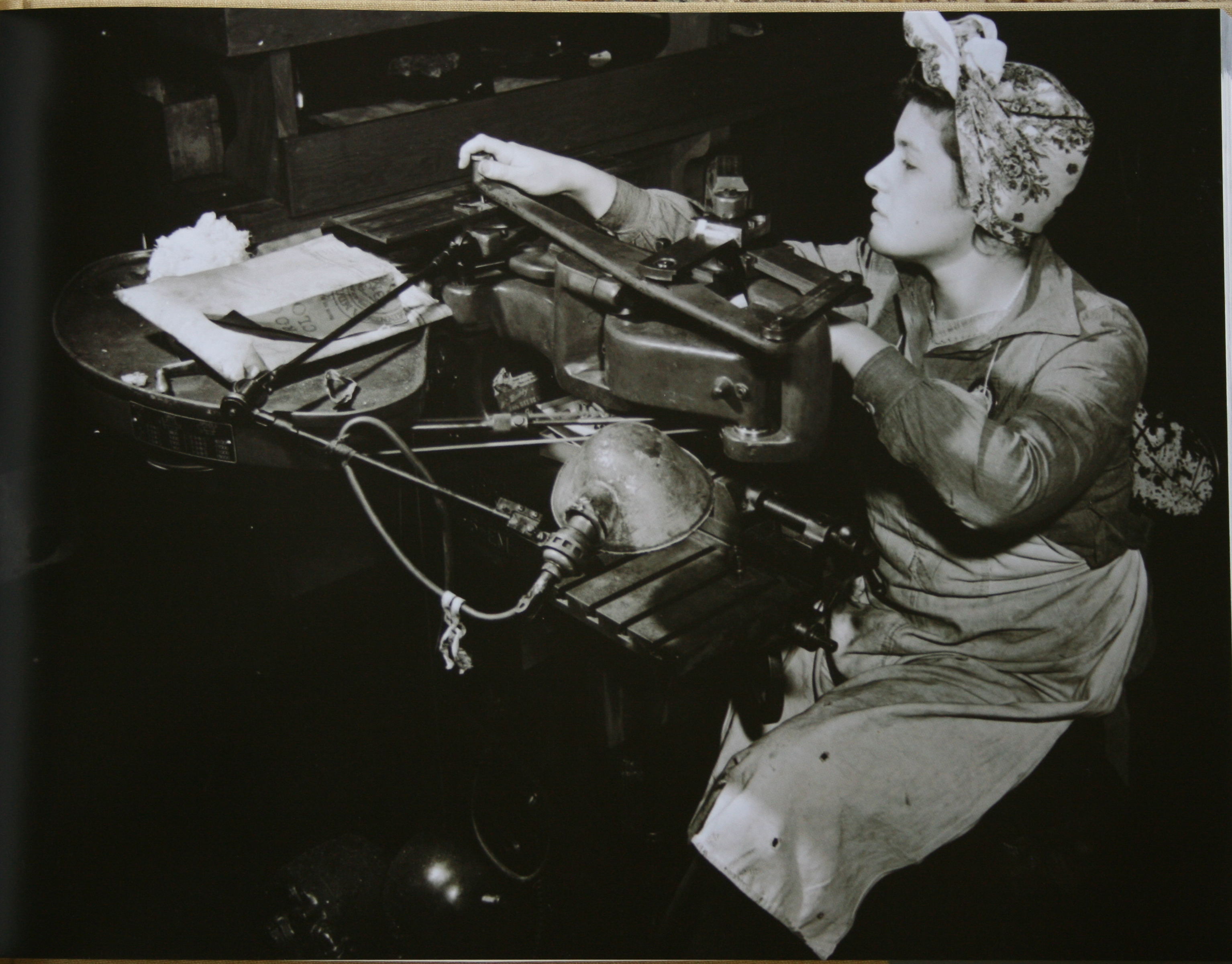
After giving a talk to folks from the National Archives, they gave me a book — Your Land, Our Land, edited by Monroe Dodd and Brian Burnes, on the staff of the National Archives — of photos from the regional archives. Beautiful stuff in it. Here are some samples. (I photographed them since the book doesn’t fit into my scanner very well.) Click on the samples to download large versions:

artillery shells
From the Watertown arsenal (Boston), WWI artillery shells

artillery shells
Woody Guthrie’s signed loyalty oath

artillery shells
vMinerva Markowitz working an engraving machine: Brooklyn Navy Yard, WWII

This book, published by Kansas City Star Books and the Foundation for the National Archives comes with the usual stern copyright warning:

“All rights reserved. No part of this book may be reproduced, stored in a retrieval system or transmitted in any form or by any means, electronic, mechanical, photocopying, recording or otherwise, without the prior consent of the publisher.”

But I checked with counsel: The copyright only extends to the selection and arrangement of the photos, plus any text they added. The photos themselves are public domain (I presume), and “in the US (unlike Europe), there is no copyright protection for the digitization or accurate reproduction of public domain works.”

[Tags: national_archives photos woody_guthrie artillery munitions rosie_the_riveter copyright ]

Tweet
Follow me

Categories: Uncategorized Tagged with: artillery • copyright • culture • digital rights • egov • munitions • photos Date: April 23rd, 2009 dw

5 Comments »

April 19, 2009

Obama’s CTO

Tim O’Reilly explains why we should be excited by Obama’s choice of Aneesh Chopra as national CTO. Tim makes a compelling case.

I’m excited.

[Tags: aneesh_chopra obama cto federal_cto e-gov egovernment egov ]

Tweet
Follow me

Categories: Uncategorized Tagged with: cto • digital culture • e-gov • egov • egovernment • obama Date: April 19th, 2009 dw

1 Comment »

April 15, 2009

The CIA’s Intellipedia

We’ve posted the latest Radio Berkman podcast, this time an interview with Don Burke and Sean Dennehy, two of the folks behind Intellipedia, a wikipedia for U.S. intelligence services.

[Tags: wikipedia intellipedia cia intelligence everything_is_miscellaneous ]

Tweet
Follow me

Categories: Uncategorized Tagged with: cia • digital culture • egov • everythingIsMiscellaneous • intelligence • intellipedia • social networks • wikipedia Date: April 15th, 2009 dw

1 Comment »

April 5, 2009

Public data becoming public! Viva Vivek!

The U.S. has announced that it will be making data public routinely at data.gov starting May. Vivek Kundra, our federal CIO gets the credit, since he did the same thing for DC.

[Tags: egovernment egov everything_is_miscellaneous vivek_kundra ]

Tweet
Follow me

Categories: Uncategorized Tagged with: egov • egovernment • everythingIsMiscellaneous Date: April 5th, 2009 dw

3 Comments »

Deep Packet Inspection: The essays

The Office of the Privacy Commissioner of Canada has published a set of solicited essays on the wisdom of using software that looks at the content of the data being sent over the Net, AKA deep packet inspection or DPI. The essays are from notables such as Susan Crawford , and Berkman’s Chris Soghoian and Max Weinstein. The essays overall condemn DPI as a general practice, on privacy and free speech grounds.

The page itself reads like something that comes not out of government but out of e-government.

[Later that day:] By the way, the Privacy Commissioner is the only federal government org in Canada with an outward facing blog. I can’t tell if that should be filed under Irony or Appropriate.[Tags: dpi canada e-gov egovernment net_neutrality ]

Tweet
Follow me

Categories: Uncategorized Tagged with: canada • dpi • e-gov • egov • egovernment • net neutrality Date: April 5th, 2009 dw

1 Comment »

March 31, 2009

[f2c] Grids and muni nets

Geoff Daily introduces a panel at Freedom to Connect. [Note: Live blogging. Unedited. Uncorrected. Incomplete. Flat out wrong. Thanks for playing.]

James Salter talks about the Smart Grid. The biggest problems on earth: Over-population and global warming. The second is a subset of the first. James at first thought Al Gore was a hypocrite, but now he’s convinced of the truth of what AG says. (James is a proud Republican.) American residential electric usage has tripled in the past 50 years, and the efficiency has gone down. (Efficiency = peak usage over average usage.) 40% of carbon comes from coal-fired power plants and 33% from cars. Obama says we should get greener by building windmills, etc. But the effective thing he’s doing is installing smart meters. Smart meters are networked. There are 140M lectric meters in the use. Only 6.7M are smart meters so far. He estimates it’d cost $2,500 per house — including fiber to the house — to lower the load factor significantly.

Q: Is fiber required for a smart grid?
A: Nope. But the apps will need more bandwidth over time.

Terry Huval of Lafayette, Louisiana tells about broadbanding the city. In 1998, the Lafayette Utilities System put in fiber for its utilities. In 2000, they were authorized to “establish a wholesale and governmental retail network.” Companies were allowed to resell access to private folks. In 2004, the city proposed fiber to home and business as its fourth utility. But then the “Local Government Fair Competition Act” passed, a bill favoring the incumbents. The Governor stepped in and negotiated a compromise. Then the private telcos successfully sued. In 2005, the public voted 62% in favor of the project. “It was looked upon as a huge benefit to local businesses.” It was viewed as being like electricity. Then, in 2006, tow unknown citizens filed suit. 2007, State Supreme Court ruled 7-0 in favor of the project. The whole process cost $3.5M. In 2009, they’ve started providing retail telecommunication services to residential and smaller business customers, at 20% less than the standard competitor. But the vision is to provide much more than basic TV and phone services. They provide the triple play for $85. For $138 you get 250 channels (including HD) and 30MB up and down Internet. Customers can build their own bundle. E.g., unlimited long distance for $31. Five cents a minute to reach much of the world. He stresses that they’ve listened to the community. So, they’ provide 100Mbps for peer-to-peer, free. “We think it opens up doors for all our citizens and businesses.” They enable Net access through your TV if you don’t have a computer. It’s limited, but they can Google… People love the service overall and consider it, proudly, to be “ours.”

Q: [bob frankston] Among the triple play, which funds what?
A: TV is the driver.

Q; [Todd of the Utopia project in Utah] Will you wholesale access to the network so that others can be ISPs.
A: No. At least not until our bonds are paid off.

Q: [brett glass] Where does Lafayette get its backbone connection?
A: AT&T and Quest, about $50-60/Mbps. It’s an over-subscription-based model. You assume you won’t have all of your sources using all of your resources at the same time.

[Terry now plays Cajun fiddle and sings. Awesome.]

Geoff Daily makes a quick announcement of a new alliance: “All Americans deserve equal access to the best broadband. The best broadband is fiber.” [I couldn’t get the URL. Sorry.]

[Tags: f2c09 f2c smart_grid ecology environment global_warming fiber ftth wifi ]

Tweet
Follow me

Categories: Uncategorized Tagged with: conference coverage • ecology • egov • environment • f2c • f2c09 • fiber • ftth • policy • wifi Date: March 31st, 2009 dw

Be the first to comment »

March 30, 2009

[f2c] Politics

Tim Karr, campaign director of Free Press, moderates a small panel: Nathaniel James ( Media and Democracy Coalition) and Ellen Miller (Sunlight Foundation).

Tim: We’re in a period of turmoil, torn between “two distinct value systems”: Mass media and social media. Now is the crucial time for making the right policies. We’re seeing a perfect alignment of three movements: media reform, free culture, and open government. The principles of the unity of these three movements: Openness (neutral, nondiscriminatory net), transparency, innovation (through copyright reform), privacy, access.

Ellen: As Andrew Rasiej says, technology is not a slice of the pie, it’s the entire pan. (Ellen talks about the origins and current projects of the magnificent Sunlight Foundation.)

Nathaniel mentions that he’s very involved in One Web Day. But his talk is about fighting for the freedom to connect. He says the process of providing access needs to include a diverse swath of the country. The Internet policy process ought to be as participatory as Internet culture itself. “Are we building programs that allow empowerment and peer to peer education?”

Q: Politically, what’s it look like with the new administration and Congress?
Tim: We’re more hopeful. “The more the public gets involved in the sausage-making, the more visionary and courageous our politicians become”
Nathaniel: The Dems and Reps are equally opportunity offenders in this area.
Ellen: When it comes to the new admin, “it’s a delight to be pushing on an open door.”

Q: [googin] We’re seeing an increase in bottom up business, not just in media.

[Tags: f2c egov egovernment transparency f2c09 ]

Tweet
Follow me

Categories: Uncategorized Tagged with: conference coverage • digital rights • egov • egovernment • f2c • f2c09 • net neutrality • politics • transparency Date: March 30th, 2009 dw

Be the first to comment »

March 28, 2009

Q: How do you know when your question-asking site is broken?

A: When you get 104,003 questions for the President.

I applaud the Obama administration for soliciting online questions for the President’s online town hall. And they let us all see the questions that our fellow citizens (of the US and the world) were submitting. Excellent!

But if you get that many different questions, it’s pretty much guaranteed that you really got far fewer unique questions. If people can’t easily find the question they had, they asked it again. This dissipates the votes on the questions as well.

I don’t know how to fix it other than by manual intervention, or possibly automagic natural language processing, or some such. Or maybe you could show people questions like the one they just posed (through just a little bit of automagic NLP) and offer to let them vote for those questions rather than pose their own. This might cause some clustering around questions: Why ask “You, dude, when are you going to make pot legal? PS: You can come by our place in White Plains any time if you do.” when you’re shown that the question, “Do you support the legalization and taxation of marijuana?” already has 983,455 votes?

[Tags: obama egov egovernment e-gov ]

Tweet
Follow me

Categories: Uncategorized Tagged with: digital culture • e-gov • egov • egovernment • obama Date: March 28th, 2009 dw

13 Comments »

March 17, 2009

Open Congress Wiki

Congresspedia has become the Open Congress Wiki, where we can build transparency and knowledge together.

[Tags: everything_is_miscellaneous e-gov egov democracy congress politics ]

Tweet
Follow me

Categories: Uncategorized Tagged with: congress • democracy • e-gov • egov • everythingIsMiscellaneous • media • politics Date: March 17th, 2009 dw

Be the first to comment »

« Previous Page | Next Page »


Creative Commons License
This work is licensed under a Creative Commons Attribution-NonCommercial-ShareAlike 3.0 Unported License.
TL;DR: Share this post freely, but attribute it to me (name (David Weinberger) and link to it), and don't use it commercially without my permission.

Joho the Blog uses WordPress blogging software.
Thank you, WordPress!