logo
EverydayChaos
Everyday Chaos
Too Big to Know
Too Big to Know
Cluetrain 10th Anniversary edition
Cluetrain 10th Anniversary
Everything Is Miscellaneous
Small Pieces cover
Small Pieces Loosely Joined
Cluetrain cover
Cluetrain Manifesto
My face
Speaker info
Who am I? (Blog Disclosure Form) Copy this link as RSS address Atom Feed

May 11, 2009

[berkman] Kenneth Crews on academic copyright

Harvard’s Office for Scholarly Communication has brought Kenneth Crews of Columbia Law School to talk about “Protecting Your Scholarship: Copyrights, Publication Agreements, and Open Access.”

NOTE: Live-blogging. Getting things wrong. Missing points. Omitting key information. Introducing artificial choppiness. Over-emphasizing small matters. Paraphrasing badly. Not running a spellpchecker. Mangling other people’s ideas and words. You are warned, people.

How do all the things mentioned in his subtitle fit together, he asks, assuring us that they do.

Our goals as academics, he says, are to: advance scholarship, promote access to pubs, preserve academic freedom, expand the class roomk support research worldwide, build the next generation of research, and reduce the costs and barriers. Does it shift costs or reduce them, he asks?

Peter Suber defines open access as online, free of charage, and free of most copyright and licensing restrictions. Is that the right definition, he asks. He says that as he’s traveled around the world, he’s seen access to the Internet is expanding rapidly. “People are connected.” It’s there as a potential and is in place in many places. But, in many of these places, there’s no cash to buy access to content. They can get to content if it’s made available on line. So, in addition to those other goals he’s listed, there’s altruism.

Why right now? The Harvard resolution (2008) requiring open access. The NIH public access policy (2008) puts works PubMedCentral. There are, of course, pitfalls: Misuse of work, etc. [missed some. sorry.]

There are challenges to these policies now. Congress has a bill to undo the NIH open access policy. There’s the DMCA’s anticircumvention provisions; the Copyright Office is holding hearings right now about exemptions to those processions. There’s the Google Books settlement that would provide tight controls to the accessibility and usability of that content. “Are we putting together a database of 20M volumes that is guaranteed to frustrate the heck out of the users?” There’s our distaste of other people making money with other people’s copyrights.

He gives a quick review of copyright: Just about everything is protected, if it’s “fixed in some tangible medium.” Copyright is as set of rights wrt reproduction, distribution, derivatives, performane and display, and DMCA rights. These rights can be unbundled and parceled out by the rights holder. Who owns the copyright isn’t very important. The real question is who has the particular rights within that bundle

Those rights are transferable. But they may be transfered or licensed, exclusive or not. In scholarly publishing, I might transfer rights to a publisher who then licenses back to me certain rights, such as the right to use it in further research, or to post portions on my Web site. Or, I might not transfer any rights, and instead license some rights to my publisher. Maybe I’ll license it to the publisher, stipulating that it be Creative Commons licensed. There are many, many possibilities. “So the process of engaging with a publisher is …. a process of negotiation.”

The context is changing. It’s becoming digital. Digital tech both can make scholarship more easily available, and it holds the potential for controlling access. Open access is key to the growth of scholarship. “The growth of scholarship comes from access to existing works,” as does its impact.

So, being a good steward of copyright requires understanding our interests, those of our institution, the revenue possibilities, and the interests of people I do not know and who may not be in my field. We should worry about maintaining the integrity of our work. Money matters. We need to worry about the business models.

“Not all copyrights are created equal…Not all works need to be treated in the same way.”

Who gets to decide all this: The author.

“Managing this work in a way that moves us toward open access publishing … is a good thing.” How to do that: Self publish. Use OA publishers (e.g., www.doaj.org). Put it in an institutional repository. And negotiate. “The happier the agreement, the longer the agreement.” “We have to look for language that does happy things for us.” He shows an example of happy language that gives the author right to post an article for free. Another: Language that lets the author use the article for her own work. A license leaves the unstated rights with the author. He notes that the law’s default does not require the publisher to include the author’s name and affiliation.

Tough questions about open access: Will colleagues respect publications in OA journals? (More so every day, he says.) OA compatible with peer review? (Yes, Kenneth says.) How do I manage my copyrights? How do I negotiate agreements? Who pays the pub costs. What about the economic surival of journals? (I don’t know the answers, he says, but the problem is more real than we often like to acknowledge.)

Key points of the talk, he says: . You have choices. Be a good steward. Negotiate…and keep a copy of the agreement. In fact, keep the agreement for the entire term of the copyright, i.e., 70 years after you’re dead.

Q: Google Books settlement?
A: Read the agreement. “It will really wow you.” The key point: It permits Google to continue scanning, and to create this “fantastically large, very useful archive of materials.” But access to it will be restricted. If a book’s in copyright, you can only get bibliographic info. If you want more, you sign up for a subscription. Tightly controlled, limited access. “And it’s a book selling situation.” Google and the association become major booksellers. You buy access, not copies. “The challenge for all of us is there is no question, this proposal should it become the legal standard, is the biggest, most important step toward digital access of materials not previous available.” We need to decide if we want to move into the future on these terms. “I only give this agreement several years before it falls apart” and they’re back in court looking for new terms.

Q: Robert Darnton: What kind of legislation should we have for orphan works [= works under copyright whose license holders cannot be found]
A: The Copyright Office’s legislative proposal from a few years ago was actually pretty good. But as it went through the process, “every change was a step backward.” “I thought it was a good thing the legislation died last year.” We’re in pretty good shape now with the Fair Use laws. The Google settlement allows the Registry to collect revenues from the use of works and distribute money out to the rights holders. But with an orphaned works, who gets it? The basic idea is that that money is used to pay organizational overhead. If there’s leftover money, 70% gets distributed to the class of known copyright holders. The other 30% goes into a pool for non-profits. “The serious problem is that it gives Google a monumental head start over anyone else in working with orphan works.” Competitors don’t have a court settlement that protects them from law suits over rights abuses. “This is a formidable problem with the agreement.”

Q: I edit an undergraduate Harvard journal. Authors sign over all rights to the journal. I worry about students being chagrined by their very first publication. Can an author ever get them back under wraps?
A: If I make something open access, can I reel it in if I change my mind? Legally, yes. Realistically, no. It’s probably been downloaded, mirrored, put into the Internet Archive.

Q: What about students’ lecture notes, etc.?
A: If everything created in a fixed medium is copyrighted, we have a responsibility to manage it. If you’re a student who created notes or papers, they’re yours. But, when it comes to wikis, etc., the copyright situation is nightmarish. It’s jointly copyrighted and owned. Any one student can exert rights.

Q: Every change in the copyright law has gotten awa from the original intent, which was to preserve creativity. The change to make everything copyrighted is nightmarish. Why not have a registry of copyright and require some action on the part of creators to get and renew a copyright?
A: So many ways I could respond! The US Constitution lists powers the Congress has. Most of those statements are very clear and simple. Then comes copyright: To promote progress in the sciences and useful arts, Congress has the power to granted limited-time rights to publish. It’s clear this has a purpose, a goal. There are many reasons we’ve gotten away from this. In addition to everthing else, the Berne Convention, which we joined in 1989, sets basic rules, including broad copyright with no formalities to get one. We couldn’t require registration to get a copyright without dropping out of Berne, but we’re locked into international provisions in multiple other agreements. You want change, go to Berne. [Tags: copyright copyleft google_books ]
Tweet
Follow me

Categories: Uncategorized Tagged with: copyleft • copyright • digital rights • education • knowledge • libraries Date: May 11th, 2009 dw

3 Comments »

May 10, 2009

Copyright debate at The Economist

Economist.com is featuring a debate on whether current copyright laws do more harm than good. The “Yes, they do” side is represented by Terry Fisher, a faculty director of the Berkman Center. The “No, they don’t” position is argued by Justin Hughes. Excellent discussion.

[Tags: copyright copyleft creative_commons ]

Tweet
Follow me

Categories: Uncategorized Tagged with: copyleft • copyright • creative_commons • digital rights Date: May 10th, 2009 dw

1 Comment »

April 30, 2009

New Zealand starts copyright from scratch

New Zealand has decided that trying to amend copyright for the digital age is like trying to adjust a horse’s carburetor. So, it’s going to start all over again.

That’s what we ought to do. Fresh piece of paper, a very big table, and an open bar. I don’t see any other way forward, really.

[Tags: copyleft copyright new_zealand ]

Tweet
Follow me

Categories: Uncategorized Tagged with: copyleft • copyright • digital rights • everythingIsMiscellaneous • media • new_zealand Date: April 30th, 2009 dw

5 Comments »

Isenberg on what makes the Internet the Internet

David Isenberg has posted a transcript of his keynote at the Broadband Properties Summit that reminds us that the value of the Net comes not merely from its technical architecture but from the fact that that protocols that define that architecture are public. From the middle of the talk:

The Internet derives its disruptive quality from a very special property: IT IS PUBLIC. The core of the Internet is a body of simple, public agreements, called RFCs, that specify the structure of the Internet Protocol packet. These public agreements don’t need to be ratified or officially approved – they just need to be widely adopted and used.

The Internet’s component technologies – routing, storage, transmission, etc. – can be improved in private. But the Internet Protocol itself is hurt by private changes, because its very strength is its public-ness.

Because it is public, device makers, application makers, content providers and network providers can make stuff that works together. The result is completely unprecedented; instead of a special-purpose network – with telephone wires on telephone poles that connect telephones to telephone switches, or a cable network that connects TVs to content – we have the Internet, a network that connects any application – love letters, music lessons, credit card payments, doctor’s appointments, fantasy games – to any network – wired, wireless, twisted pair, coax, fiber, wi-fi, 3G, smoke signals, carrier pigeon, you name it. Automatically, no extra services needed. It just works.

This allows several emergent miracles…

[Tags: broadband net_neutrality david_isenberg ]

Tweet
Follow me

Categories: Uncategorized Tagged with: broadband • david_isenberg • digital rights • net neutrality • net_neutrality Date: April 30th, 2009 dw

Be the first to comment »

Cass Sunstein: Fascist totalitarian or totalitarian fascist?

WorldNetDaily’s article about Cass Sunstein is laughably wrong and scarily partisan. Now that Obama has nominated Sunstein to head the White House Office of Information and Regulatory Affairs, the anonymous article in WND presents suggestions and ideas in Sunstein’s nuanced and clear-eyed works as if Sunstein were putting them forward as federal policy. The weirdest is Sunstein’s thought that it’d be useful if software could tell you that a message you’re about to send is a flame, and then keep you from pressing the send button hastily. In the hands of WND, this becomes Sunstein using the power of the federal government to mandate that it read all emails and block ones it doesn’t like.

I disagree with Sunstein on many points. In particular, Sunstein famously worries that the Internet is a causing us to harden our hearts and minds, enabling us to hear only from people with whom we agree. As an overall characterization, I think that misses too much else of what the Net is doing…even as I agree that the Net undoubtedly has that effect, too. I disagree with him, but I’m thrilled to have him in the Internet conversation. At the very least, his concern should remind us that the good things that the Net does and can do won’t happen automatically; we need to be vigilant and imaginative. At the most, he’s right and we need to heed him.

So, given that a concern about polarization has become the best-known piece of Sunstein’s powerful writings, the WorldNetDaily’s polarizing article can this morning reassure us that unintended irony remains the strongest force in the universe.

[Later that day: Julian Sanchez does a great job tracking down the quotes ‘n’ context (AKA The Truth.]

[Tags: cass_sunstein polarization conservatives free_speech fairness_doctrine ]

Tweet
Follow me

Categories: Uncategorized Tagged with: cass_sunstein • conservatives • digital culture • digital rights • everythingIsMiscellaneous • fairness_doctrine • free_speech • polarization • politics Date: April 30th, 2009 dw

1 Comment »

April 28, 2009

Plagiarism and Fair Use

Afroditi Theodoridou at IP Osgoode does an excellent job explaining the application of Fair Use in the Turnitin Plagiarism Detection Service suit. This post not only makes the decision clearer, it also lays out the legal nature of Fair Use.

TurnItIn lets a teacher submit a paper to see if it’s original or plagiarized. The service keeps a database of the papers submitted for checking. Some students sued, claiming that was an infringement of their copyright. The court decided that TurnItIn was covered by Fair Use. Afroditi concludes with the interesting claim that fighting plagiarism advances the Framers’ original motivation for creating copyright.

[Tags: copyright copyleft fair_use plagiarism ]

Tweet
Follow me

Categories: Uncategorized Tagged with: copyleft • copyright • digital rights • fair_use • plagiarism Date: April 28th, 2009 dw

1 Comment »

April 25, 2009

The Pirate Bay and The Pirate Google

ThePirateBay has links to content hosted elsewhere that’s available for download using the BitTorrent protocol. The site also provides a search engine for finding that content, and a page for each torrent with information about the content. It doesn’t distinguish between content that’s protected by copyright and content that isn’t. The four founders of ThePirateBay were convicted by a Swedish court last week. They were fined a middling amount, and were sentenced to a year in jail. (“What’re you in for?” “Improper use of metadata.”)

Now there is ThePirateGoogle, created by someone to make a point. There you can use the Google search engine to search for content hosted elsewhere, available for download using the BitTorrent protocol. It doesn’t distinguish between content that’s protected by copyright and content that isn’t.

Here’s the text from ThePirateGoogle site:

Bit Torrent Search

Please Note: This site is not affiliated with Google, it simply makes use of Google Custom Search to restrict your searches to Torrent files. You can do this with any regular Google search by appending your query with filetype:torrent. This technique can be used for any type of file supported by Google.

The intention of this site is to demonstrate the double standard that was exemplified in the recent Pirate Bay Trial. Sites such as Google offer much the same functionality as The Pirate Bay and other Bit Torrent sites but are not targeted by media conglomerates such as the IFPI as they have the political and legal clout to defend themselves unlike these small independent sites.

This site is created in support of an open, neutral internet accessible and equitable to all regardless of political or financial standing.

Cheers!

Yes, you can do with Google what you do with ThePirateBay. For example, do the following search at Google:


filetype:torrent “the dark knight”

There’s obviously a difference in intent between ThePirateBay and Google. But there is precious little relevant difference in the service. So, why jail the founders of ThePirateBay but not the founders of Google since either can be used to find copyright-protected torrents? Having the wrong mental attitude? (“What are you in for?” “Intent to improperly use metadata.”)

What to make of this? I find myself in a jumble:

1. I don’t think it’s a double standard. Intent counts. The difference between the Heimlich maneuver and assault is intent, and that’s as it should be. ThePirateBay is intended to enable the sharing of copyrighted works: TPB has facilities designed to help you locate, evaluate, and share files, including a page for each torrent with comments, ratings, descriptions, and the number of seeders and leechers (to see how alive the torrent is). And it’s named The freaking Pirate Bay. There may or may not be a law in Sweden against what TPB does, but it’s disingenuous to say that the site is ethically the same as Google.

3. ThePirateGoogle shows that shutting down ThePirateBay is not going to stop the use of BitTorrent to share copyrighted files. But jailing TPB’s founders may slow sharing down. Torrent site after torrent site has been shut down over the past few years, making it harder to find and download files now. The verdict in TPB case, especially with its jail sentence, will slow down the torrent of torrents, although perhaps not by much.

4. Just in case someone tells you otherwise: The BitTorrent protocol is not the issue here. It’s a brilliant way of sharing large files, and it’s used all over the place for perfectly legal file-sharing.

5. I don’t know what to do about copyright. It’s obviously spun out of control and needs to be pulled back in — lasting 70 years after the death of the creator is absurd — but we need to do far more than just shorten its term. Compensating creators for every use of their works obviously contradicts the maximal open sharing and reuse of works that drives culture forward. Creating a legal and economic environment with incentives for creators does not contradict the open sharing and reuse of works. The question is: Which legal/economic environment would work best? I don’t know — I wish I did — but I suspect it’s one in which copyrighting a work takes a little bit of effort, not all categories of work have the same copyright protections, the terms are way way way shorter than they are now, fair use is greatly extended, infringement only counts if it actually hurts sales (in the way that most mashups do not), compensation does not come from accounting for each and every use of a work, and we start rewarding those who release their works into the public domain by showering them with affection, cultural uptake, and some money.

That’s about seven steps short of an actual copyright reform program. But I find the whole topic headache-making and, frankly, depressing. [Tags: thepiratebay google copyright copyleft ]


1. ThePirateBay posts all the legal letters it gets, plus its replies. Feisty doesn’t begin to describe the replies.

2. The judge in the case seems to have ties to the copyright industry. The lawyer for one of the defendants is calling for a new trial.

Tweet
Follow me

Categories: Uncategorized Tagged with: copyleft • copyright • digital culture • digital rights • everythingIsMiscellaneous • google • thepiratebay Date: April 25th, 2009 dw

5 Comments »

April 24, 2009

Craigslist Killer – PR in the news

Doc blogs about the unfairness of Craigslist becoming an adjective attached to “killer.” Yes, it’s unfair. It’s what the tabloid press does. And increasingly, that just means “the press.”

That’s the sort of catchy name that sells papers. But, as Craig points out in his blog, Craigslist does not promise anonymity. In fact, it promises that it will rat out rats. Wikipedia makes the same promise. Good. Of course, this assumes the police are not persecuting innocents as part of a totalitarian state, but I’m happy Craigslist helped the police arrest the sick fuck who otherwise probably wasn’t done murdering women allegedly.

The PR job doesn’t stop with the media, of course. Craigslist’s PR company fumbled the ball here in Boston. This Businessweek story is excellent, but the Boston Globe coverage has been miserable (here, here and here). The PR agency seems intent on keeping Craig from commenting, shunting inquiries to CEO Jim Buckmaster. Nothing against Jim, but Craig’s name is on the site. Craig has earned his reputation for honesty, bluntness, and service. Craig is known, respected, and even beloved. So, master the buck, Craig. It stops with you.

PS: The Globe ought to take a look at the “Erosphere” classified ad section of the Boston Phoenix before coming down on Craigslist.

[Tags: craigslist anonymity pr marketing ]

Tweet
Follow me

Categories: misc Tagged with: anonymity • craigslist • culture • digital rights • marketing • media • policy • pr Date: April 24th, 2009 dw

11 Comments »

April 23, 2009

From our Archives

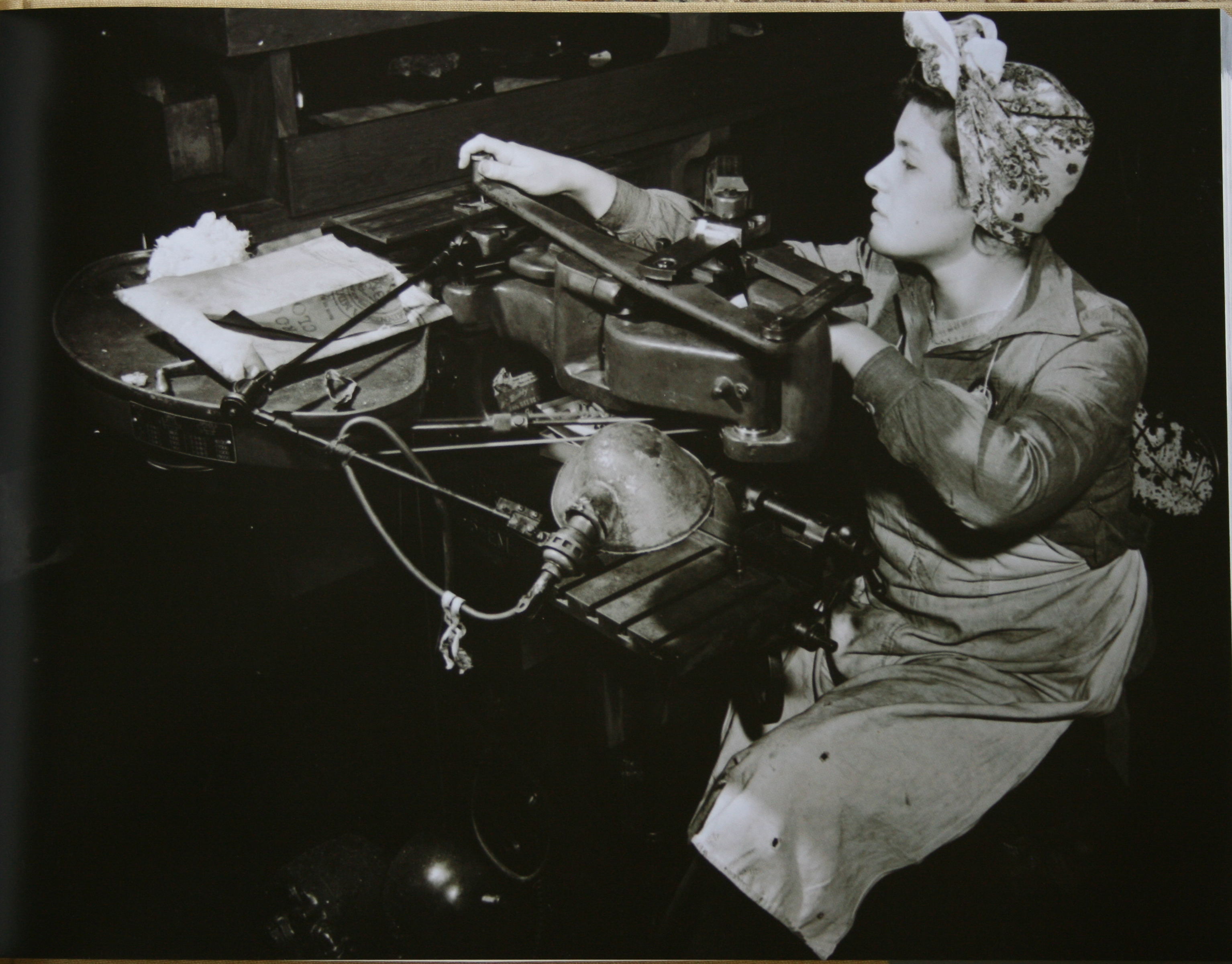
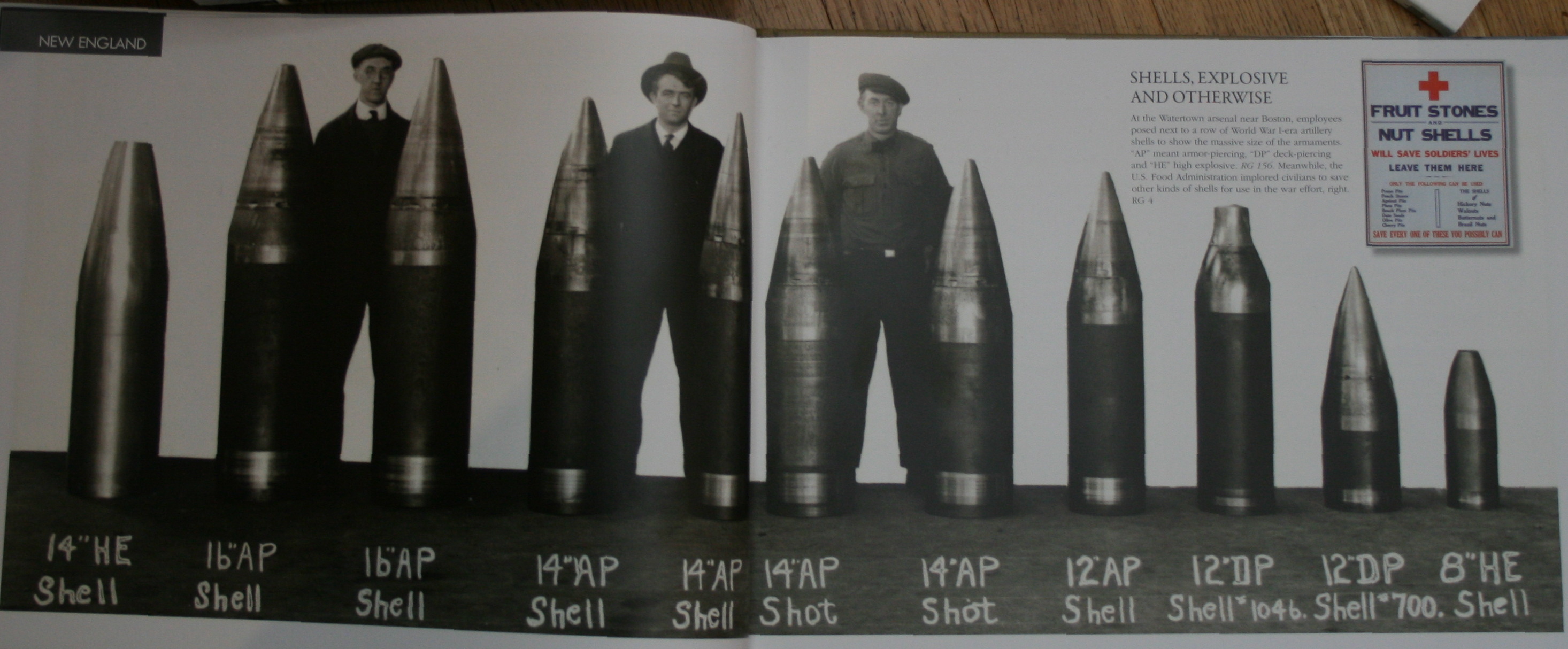
After giving a talk to folks from the National Archives, they gave me a book — Your Land, Our Land, edited by Monroe Dodd and Brian Burnes, on the staff of the National Archives — of photos from the regional archives. Beautiful stuff in it. Here are some samples. (I photographed them since the book doesn’t fit into my scanner very well.) Click on the samples to download large versions:

artillery shells
From the Watertown arsenal (Boston), WWI artillery shells

artillery shells
Woody Guthrie’s signed loyalty oath

artillery shells
vMinerva Markowitz working an engraving machine: Brooklyn Navy Yard, WWII

This book, published by Kansas City Star Books and the Foundation for the National Archives comes with the usual stern copyright warning:

“All rights reserved. No part of this book may be reproduced, stored in a retrieval system or transmitted in any form or by any means, electronic, mechanical, photocopying, recording or otherwise, without the prior consent of the publisher.”

But I checked with counsel: The copyright only extends to the selection and arrangement of the photos, plus any text they added. The photos themselves are public domain (I presume), and “in the US (unlike Europe), there is no copyright protection for the digitization or accurate reproduction of public domain works.”

[Tags: national_archives photos woody_guthrie artillery munitions rosie_the_riveter copyright ]

Tweet
Follow me

Categories: Uncategorized Tagged with: artillery • copyright • culture • digital rights • egov • munitions • photos Date: April 23rd, 2009 dw

5 Comments »

April 20, 2009

Pam Samuelson on the Google Books settlement

Pam Samuelson has written a brilliant piece about the Google Book settlement. It goes in the must-read (and highly readable) pile along with Robert Darnton’s eloquent NY Review of Books piece and James Grimmelmann’s more wonky explanation.

[Tags: google google_books publishing copyright copyleft everything_is_miscellaneous ]

Tweet
Follow me

Categories: Uncategorized Tagged with: copyleft • copyright • culture • digital rights • everythingIsMiscellaneous • google • libraries • publishing Date: April 20th, 2009 dw

1 Comment »

« Previous Page | Next Page »


Creative Commons License
This work is licensed under a Creative Commons Attribution-NonCommercial-ShareAlike 3.0 Unported License.
TL;DR: Share this post freely, but attribute it to me (name (David Weinberger) and link to it), and don't use it commercially without my permission.

Joho the Blog uses WordPress blogging software.
Thank you, WordPress!