

logo
EverydayChaos
Everyday Chaos
Too Big to Know
Too Big to Know
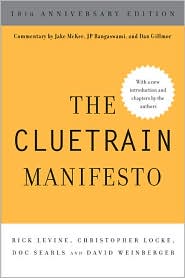
Cluetrain 10th Anniversary edition
Cluetrain 10th Anniversary
Everything Is Miscellaneous
Small Pieces cover
Small Pieces Loosely Joined
Cluetrain cover
Cluetrain Manifesto
My face
Speaker info
Who am I? (Blog Disclosure Form) Copy this link as RSS address Atom Feed

January 21, 2008

When all you have is a hammer, nobody looks for Maslow

My friend Bob Morris at UMass Boston, in a message to a mailing list, points out how few posts attribute “When you have a hammer, everything looks like a nail” to Abraham Maslow. Bob found the attribution via Google Groups, which pointed him to Google Books. In fact, a search at Google Books for Maslow as the author and for hammer and nail turns up the relevant snippet of Maslow’s 1966 The Psychology of Science, in which he writes: “I suppose it is tempting, if the only tool you have is a hammer, to treat everything as if it were a nail.” The folk process seems to have sharpened the aphorism.

Bob notes that the Oxford Dictionary of Proverbs only traces it as far back as a NY Times article.

Bob also points out that Google Books does not give page references for the Maslow book, which unnecessarily limits GB’s utility as a tool for scholarly research.

That aside, all hail Google Books! [Tags: google google_books abraham_maslow if_all_you_have_is_a_hammer ]

Tweet
Follow me

Categories: Uncategorized Tagged with: digital culture • digital rights • google Date: January 21st, 2008 dw

8 Comments »

January 20, 2008

When IP goes bad: Berkman retaliates against cyberlawâ„¢ & Apple patents ordering from a menu

Item #1

A cyberlawyer named Eric Menhart has trademarked “cyberlaw,” according to slashdot.

In response, the Berkman Center for Internet & Society at Harvard Law is changing its address from cyber.law.harvard.edu to eric.menhart.harvard.edu, will rename its annual conference to the EricMenhart conference, and is petitioning Google to do a search-and-replace on the 75,400 pages containing harvard berkman cyberlaw.

All your EricMenhartâ„¢ are belong to us.

[Legal notices: I don’t speak for the Berkman Center. And one of those jokes was Ethan Zuckerman‘s.]


Item #2

20070291710

Inventors: Fadell; Anthony M.; (Portola Valley, CA)
Correspondence Name and Address:

BEYER WEAVER LLP
P.O. BOX 70250
OAKLAND
CA
94612-0250
US

Assignee Name and Adress: Apple Computer, Inc.

Serial No.: 485142
Series Code: 11
Filed: July 11, 2006

Abstract

A processing system is described that includes a wireless communication interface that wirelessly communicates with one or more wireless client devices in the vicinity of an establishment. The wireless communication interface receives a remote order corresponding to an item selected by at least one of the wireless client devices. A local server computer located in proximity to the establishment generates instructions for processing the remote order received from the wireless communication interface. The local server computer then passes the processing instructions to an order processing queue in preparation for processing of the remote order.


Yes, Apple is patenting using a cellphone to order food.

[Tags: apple ericmenhart trademark patent ip copyright copyleft cyberlaw ]

Tweet
Follow me

Categories: Uncategorized Tagged with: apple • copyleft • copyright • culture • cyberlaw • digital rights • ericmenhart • ip • patent • trademark Date: January 20th, 2008 dw

Be the first to comment »

January 13, 2008

Copyrighting dance

I had a stimulating dinner conversation with someone who works for an institution that preserves the work of a well-known choreographer. (I’m being a bit cagey because I may not be representing this person’s views accurately.) The institution licenses productions very carefully and is stringent in insisting that every element of the productions be authentic, i.e., be as the work was originally produced.


Predictably, I wondered why the institution didn’t loosen up. The choreographer would have more influence because her (or his — caginess!) works would be more frequently performed. After all, if the Beethoven Institute insisted that all performances must be on original instruments, using exactly the same pacing, intonations, sonic dynamics, etc., as Beethoven intended, our culture would be far poorer because we’d hear much less Beethoven and many fewer creative interpretations of his works. In fact, Beethoven would have copyrighted himself right out of culture.


But, replied my dinner companion, it’s different with the work of a great choreographer. The work consists of the details of music, costume, lighting and gesture. The gap between composition and performance is smaller than with a musical score; in fact, there is no gap.


I am not convinced. Nor am I not unconvinced. I think I think that the magic of metadata could let us have our cake and dance it too: the association could authenticate those performances that met its criteria, while freely (liberally, if not for free) permitting non-canonical performances. I don’t know the status of Gilbert and Sullivan’s copyrights, but the D’Olyly Carte group performs a similar metadata function: There are many productions of Gilbert and Sullivan works — a couple of weeks ago, we saw a delightful Mikado that updated lyrics with references to Dick Cheney’s little list — but if you want to see an authentic version, you go to D’Oyly Carte.


But, much as a I like metadata, I’m not confident that I understand the dimensions of the issues in copyrighting something that seems to fall between a score and a performance. [Tags: copyright copyleft choreography dance arts mikado ]

Tweet
Follow me

Categories: Uncategorized Tagged with: culture • digital culture • digital rights • metadata Date: January 13th, 2008 dw

13 Comments »

January 12, 2008

David Isenberg and Harold Feld on who gets to discriminate among packets

When I blogged something positive about Net Neutrality, Seth Finkelstein wanted to know what the alternative was to letting the carriers decide which packets to block, if there is genuine Net traffic congestion.


David Isenberg and Harold Feld have each responded not only in comments to my post, but more fully on their own sites. I like David and Harold’s approaches better than my own hasty and, well, dumb response. (A while ago I’d posted an idea I heard somewhere that I like: The carriers could let users nominate particular sites for especially speedy interaction, limiting the number of times a user could switch in a month. So, if you want to play WoW but don’t care about downloading on-demand movies, you could choose some WoW sites for your express lane, but I could choose on-demand this month and next month decide I’d like really fast P2P video. Or whatever.)


(FWIW, David lists me among those who conflate copyright and congestion. I’m not sure how I gave David that impression. I understand that AT&T’s intention to filter copyrighted material is different from the carriers’ contention that network congestion requires them to filter packets.) [Tags: net_neutrality david_isenberg harold_feld seth_finkelstein att ]

Tweet
Follow me

Categories: Uncategorized Tagged with: digital rights • net neutrality Date: January 12th, 2008 dw

Be the first to comment »

January 9, 2008

AT&T ready to filter our Internet for us

Here’s a worrisome report on AT&T’s willingness to inspect packets, filter out what it thinks are copyright violations, and limit peer-to-peer interactions. Because the reporting is sketchy and is coming through an advocacy group (that I support), I’m not perfectly confident that this is the whole story. But as a partial story, it’s damn disturbing. If Net traffic needs to be “shaped” (i.e., packets purposefully blocked or delayed) because of technical limitations, the carriers are the last people I trust to make decisions about what’s important and acceptable. And that, to me, is the essence of the argument for Net neutrality.

[LATER that same day:] And here’s why we shouldn’t trust the carriers to decide what “content” is most important to deliver and to deliver well: According to the NY Times, “Comcast is already the world’s largest buyer of content, and it is spending about $4.5 billion a year to assemble content from around the world to offer on demand.” The people who make money selling content are the last ones who should be deciding which content to prefer./ [Tags: net_neutrality at&t ]

Tweet
Follow me

Categories: Uncategorized Tagged with: digital rights • net neutrality Date: January 9th, 2008 dw

14 Comments »

January 3, 2008

Bush administation stands by Saudi blogger

From CNN:

The Bush administration has brought its concerns about the detention of a well-known blogger to the Saudi Arabian government at “a relatively senior level,” State Department spokesman Sean McCormack said Thursday.

Kudos to the Bush administration. Every now and then it gets one right.

[Tags: bush blogs saudi_arabia ]

Tweet
Follow me

Categories: blogs Tagged with: blogs • bush • digital rights • politics • saudi_arabia Date: January 3rd, 2008 dw

Be the first to comment »

January 2, 2008

These videos do not violate copyright

Pat Aufderheide and Peter Jaszi, under the auspices of the Center for Social Media and American University’s Washington College of Law, have released a report (“Recut, Reframe, Recycle”) on Fair Use that argues that much of the video remix culture does not violate copyright, and that we need a lot of leeway if we’re going to maintain a vibrant and creative culture. The report goes through the most common ways copyrighted material is used in remixes, and evaluates the application of the Fair Use exemption to each.

Plus, the site has five examples of each type.

Fair Use is a muscle we should be using as often as possible to keep it strong… [Tags: copyright copyleft fair_use ]

Tweet
Follow me

Categories: Uncategorized Tagged with: copyleft • copyright • digital culture • digital rights Date: January 2nd, 2008 dw

1 Comment »

December 30, 2007

RIAA: Put down that CD and back away slowly

[NOTE Dec. 31: The Washington Post article I based this blog post on is wrong. Thanks, Shelley!] The RIAA continues to ratchet up its claims for what we customers are allowed to do with music. According to this Washington Post article, the RIAA is now claiming in a law suit that a man who has 2,000 legally-purchased CDs is not allowed to copy those CDs onto his computer.

What next? Will the RIAA claim that were not allowed to play CDs loud enough for our neighbors to hear? Listen on speakers because people who did not purchase the CD might listen along? Look at our CDs funny?

Tags: RIAA copyright copyleft music berkman

Tweet
Follow me

Categories: Uncategorized Tagged with: berkman • copyleft • copyright • digital rights • music • riaa Date: December 30th, 2007 dw

7 Comments »

December 18, 2007

Internet censorship overview

Nart Villeneuve has an excellent round-up article on the state of Internet censorship. It’s part of the latest issue of Index on Censorship for Free Expression, in which I also have an article; unfortunately the issue is, ironically, behind the pay wall.

[Tags: censorship nart_villeneuve ]

Tweet
Follow me

Categories: Uncategorized Tagged with: bridgeblog • digital rights • globalvoices • politics Date: December 18th, 2007 dw

1 Comment »

December 16, 2007

Tim O’Reilly on what a truly open cellphone network looks like (and an article on Google cloud computing)

Great op-ed by Tim O’Reilly, holding out the greed stick to the cellphone companies to induce them to open their networks.

[Tags: tim_oreilly open_networks wireless cellphones telcom net_neutrality ]


Stephen Baker has an excellent, provocative article on “cloud” computing, where “cloud” means gigaclusters like Google’s and not the great amorphous mashup of information known as the Internet.

Tweet
Follow me

Categories: Uncategorized Tagged with: business • digital rights • net neutrality • wifi Date: December 16th, 2007 dw

4 Comments »

« Previous Page | Next Page »


Creative Commons License
This work is licensed under a Creative Commons Attribution-NonCommercial-ShareAlike 3.0 Unported License.
TL;DR: Share this post freely, but attribute it to me (name (David Weinberger) and link to it), and don't use it commercially without my permission.

Joho the Blog uses WordPress blogging software.
Thank you, WordPress!