logo
EverydayChaos
Everyday Chaos
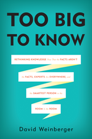
Too Big to Know
Too Big to Know
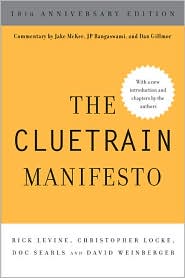
Cluetrain 10th Anniversary edition
Cluetrain 10th Anniversary
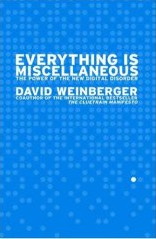
Everything Is Miscellaneous
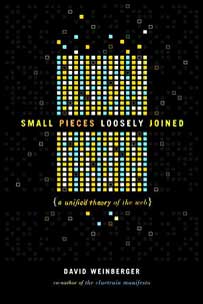
Small Pieces cover
Small Pieces Loosely Joined
Cluetrain cover
Cluetrain Manifesto
My face
Speaker info
Who am I? (Blog Disclosure Form) Copy this link as RSS address Atom Feed

October 28, 2008

Global code of conduct for free speech and privacy online

The NY Times breaks the news that a bunch of large companies and rights organizations are proposing a global code of conduct to help protect online free speech and privacy. (The Berkman has been involved in this.)

[Tags: free_speech privacy berkman ]


Rebeca MacKinnon has an excellent post on this.

Tweet
Follow me

Categories: Uncategorized Tagged with: berkman • digital rights • privacy Date: October 28th, 2008 dw

Be the first to comment »

October 22, 2008

FreeCulture and Open Universities

From the FreeCulture movement has emerged the Open University Campaign based on the new Wheeler Declaration:

An open university is one in which

1. The research the university produces is open access.
2. The course materials are open educational resources.
3. The university embraces free software and open standards.
4. If the university holds patents, it readily licenses them for free software, essential medicines, and the public good.
5. The university network reflects the open nature of the internet.

where “university” includes all parts of the community: students, faculty, administration.

As we used to say: Right on.

[Tags: free_culture open_access open_courseware open_university university education ]

Tweet
Follow me

Categories: Uncategorized Tagged with: digital culture • digital rights • education • for_everythingismisc • knowledge • university Date: October 22nd, 2008 dw

3 Comments »

October 15, 2008

Support Creative Commons

I just joined the Creative Commons Network. CC makes it easy to unfreeze your stuff from the icy grip of copyright that seizes across every work of hand or thought from the moment of its creation. And now that the US has a copyright czar, because clearly copyright abuse is as serious a threat to our nation’s youth as drug abuse is, we all the more need the flexibility that CC gives us.

[Tags: creative_commons copyright copyleft ]


Chris Soghoian pastes it to McCain for wanting special treatment for politicians when their stuff is taken off of YouTube because it allegedly infringes on someone’s copyright, as per the DMCA…despite Larry Lessig‘s enthusiasm for the McCain position.

Tweet
Follow me

Categories: Uncategorized Tagged with: copyleft • copyright • digital rights Date: October 15th, 2008 dw

1 Comment »

October 8, 2008

Innovation and the Open Internet: Joi Ito

Joi Ito is giving a talk at a Copenhagen media conference. He says that he wants to show us the world the way it looks to an “Internet geek.” [Note: I’m live-blogging, and poorly. Full of mistakes and omissions.]

Way back when, it was difficult to connect computers. Then we got Ethernet, then TCP/IP, and then HTTP (the Web). These new layers allow participation without permission. The cost of sending information and the cost of innovation have gone down (because the cost of failure has gone down). Now we’re getting another layer: Creative Commons. “By standardizing and simplifying the legal layer … I think we will lower the costs and create another explosion of innovation.”

Most innovation on the Net comes about through small projects with lots of connections. E.g., Google could start up for a few thousands dollars without having to get bilateral agreements with countries, etc. Europe is getting more innovative because it’s easier to pull together the pieces and easier to participate in the worldwide conversation. Now we have to figure out how to let amateur innovation into the system.

Distribution used to be the biggest problem. Experts went into distribution. Now we’re in danger of losing that expertise. Bloggers can’t fly into distant places to do a story, and can’t protect themselves from libel suits. We need to stop fighting with one another and find a way for these professionals to survive.

Joi gives a subset of Larry Lessig’s copyright talk. We’ve gone from a mostly unregulated zone for books to a mostly regulated one, for every digital use requires making copies. The digital realm also enables more control. Creative Commons aims at the middle between all rights reserved and no rights reserved. CC wants to make it easier to negotiate rights. It’s a “user interface for copyright” so people can be clear about how they are willing to have their stuff used. Four major properties: Attribution, modification, commercial use, share-alike. 130M works use CC. “Star Wreck” is 100% collaborative, 8M downloads. Instead of distribution, it’s about discovery, and links help with this. And giving stuff away helps gets links. He points to Nine Inch Nails giving away an album, as well as selling collectors’ version of physical media.

CC is becoming part of the media infrastructure, he says.

In response to a question, he says that amateurs who reuse his photos generally give him credit, but professional media folks tend not to, because the latter assume money is the currency. We need to teach them that respect is, he says.

Q: Could CC be used in the real world?
A: Yes, it already is. There is a “materials transfer agreement” that lowers the friction for using, say, a mouse from another lab in an experiment. [Tags: joi_ito copyright copyleft creative_commons ]

Tweet
Follow me

Categories: Uncategorized Tagged with: copyleft • copyright • digital rights • everythingIsMiscellaneous Date: October 8th, 2008 dw

2 Comments »

October 5, 2008

Breaking the Internet Code in Italy

Last night I went to the second performance of CodiceInternet, a one-person show by Marco Montemagno in Teatro dell’Arte in Milan. Granting that it was in Italian (which I do not speak) and that Marco is a friend, I still thought it was pretty great. (I understand a little Italian, and the context was familiar enoughthat I only had to turn to an Italian friend next to me a few times to roughly follow what was going on. Or so I have deluded myself. I am reminded of the old Woody Allen line: “I spead-read War and Peace in 30 minutes. It’s about Russia, right?”)

CodiceInternet (the Internet Code) is a project that’s been going on all month in Milan, including daily street interviews in the popular (and beautiful) Galleria. The events, the show, and the DVD that will come out of it are all intended to encourage Italians to accept the Internet in all its open glory. The percentage of Italians using the Internet is the lowest in Europe. Milan only has 100 hot spots. Net access is expensive and difficult. I’m writing this from a Net cafe, where the law requires all users to provide a passport or similar ID document to prevent terrorists from using the Net, because, as we all know, terrorists are too stupid to ever use codes.) According to Marco, the general view of the Internet in Italy is that it’s good for email or maybe looking something up, but othewise it’s a den of iniquity and a distraction from what matters. And that it is very hard to use.

So, Marco and the CodiceInternet group are trying to tell people that the Internet is not just a few tools in an ocean of porn. It is where people meet, connect, and build new things together. The Internet is for everyone. His stage show is entertaining, funny, and someetimes moving. (Marco is an incredibly engaging performer, as well as a Net entrepreneur and host of a Sky TV show about the Internet.)

CodiceInternet will continue, moving from city to city and building an online social network that already has 2,000 Italian bloggers on it. (Yesterday I got to hang out with a handful of those bloggers, which was great fun, of course.) The energy and goodwill of CoediceInternet is encouraging. Too bad it’s needed.

Tweet
Follow me

Categories: Uncategorized Tagged with: digital culture • digital rights Date: October 5th, 2008 dw

3 Comments »

September 24, 2008

Information breeds control

A stray and obvious thought?

If you look at the issue of privacy at social networking sites in terms of information, as outside observers such as parents and governments frequently do, you come up with proposals to enable users to control their information.

But sites like Facebook aren’t about information. They’re about self, others, and the connections among them. Likewise Flickr isn’t about info; it’s about sharing photos.

If the issue gets phrased in terms of info, then the field tilts towards assuming privacy as the good and publicness as the threat, with control over info as the bulwark. But, within the participant’s frame, publicness is taken as the good and privacy as fear-based or selfish.

This is a case where an information-based view misses the phenomenon and can lead to bad policy decisions.

Also, our kids will think we’re dorks.

[Tags: privacy social_networking sns facebook infohist ]

Tweet
Follow me

Categories: Uncategorized Tagged with: digital culture • digital rights • facebook • infohist • infohistory • privacy • sns • social networks Date: September 24th, 2008 dw

1 Comment »

September 22, 2008

One Web Day

Yay for One Web Day! This is from 2007:

[Tags: owd one_web_day susan_crawford rocketboom ]

Tweet
Follow me

Categories: Uncategorized Tagged with: digital culture • digital rights • owd • rocketboom Date: September 22nd, 2008 dw

1 Comment »

September 10, 2008

Rowling wins copyright suit, but a little good news for Fair Use

JK Rowling has won her suit against the publisher of a Harry Potter lexicon. David Ardia, of the Berkman Center’s Citizen Media Law Project finds some good news for Fair Use in the decision.

I liked Tim Wu’s explanation last January of why Rowling should lose the case, and was disappointed in the decision.

[Tags: berkman harry_potter jk_rowling david_ardia fair_use copyright ]

Tweet
Follow me

Categories: Uncategorized Tagged with: berkman • copyright • digital rights Date: September 10th, 2008 dw

1 Comment »

September 8, 2008

New Brad Sucks CD is out

I’m downloading the new Brad Sucks collection…

[Tags: music brad_sucks bradsucks copyright riaa riaa_sucks ]

Tweet
Follow me

Categories: Uncategorized Tagged with: bradsucks • copyright • digital culture • digital rights • entertainment • music • riaa Date: September 8th, 2008 dw

4 Comments »

September 6, 2008

[ae] Ronaldo Lemos

Ronaldo Lemos says that Sony offers 13 new CDs a year to all of Brazil. But there is tremendous activity online. But sites like TramaVirtual only works for people with computers. His group researched Nigeria, Brazil, Colombia and Argentina. E.g., in the Brazilian province of Parà “tehcnobrega” (cheesy techno) is popular. There every year they produce 400 cds and 100 dvds. They’re not available in store. The producers have a deal with the people who sell pirated cds on the street. The cds are sold at the “raves.” The economic system is entirely different from the traditional music industry’s. The artists also sell higher-end versions at their concerts. This is a multi-million dollar market. The number 1 well-known artist in the country, Calypso, is completely outside the media-record industry complex. Baile funk is another example.

Brazil produces 51 films a year. Us: 611. India: 934. Nigeria: 1200. In Nigeria, they skip the usual distribution channels. They sell them directly on the street. Movies provide the #2 source of employment in Nigeria, for a million people.

Henri Langlois in 1969 said that cinema will only reach its destiny until people have appropriated the means of production, Ronaldo says.

He says people say that this music and these movies are in bad taste. But, he says, the samba in the 1930s was also perceived as in bad taste.

This is a global phenomenon: Grind, dubstep, hip hop, kuduro, champeta, etc.

[Now there is a general discussion with the panel I’m on. Too hard to live blog…] [Tags: music copyright ronaldo_lemos ae08 ars_electronica ]

Tweet
Follow me

Categories: Uncategorized Tagged with: ae08 • copyright • culture • digital culture • digital rights • music Date: September 6th, 2008 dw

1 Comment »

« Previous Page | Next Page »


Creative Commons License
This work is licensed under a Creative Commons Attribution-NonCommercial-ShareAlike 3.0 Unported License.
TL;DR: Share this post freely, but attribute it to me (name (David Weinberger) and link to it), and don't use it commercially without my permission.

Joho the Blog uses WordPress blogging software.
Thank you, WordPress!