



logo
EverydayChaos
Everyday Chaos
Too Big to Know
Too Big to Know
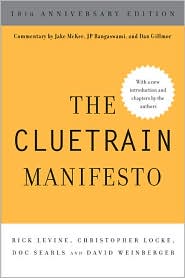
Cluetrain 10th Anniversary edition
Cluetrain 10th Anniversary
Everything Is Miscellaneous
Small Pieces cover
Small Pieces Loosely Joined
Cluetrain cover
Cluetrain Manifesto
My face
Speaker info
Who am I? (Blog Disclosure Form) Copy this link as RSS address Atom Feed

February 18, 2009

Charlie Leadbeater’s problem with Digital Britain

Charlie Leadbeater has posted a paper on why he’s unhappy with the British broadband proposal, Digital Britain. Given Charlie’s way with words, it’s not surprising that it’s a well-done piece, and it makes some essential points: First, you can’t solve problems just by throwing broadband at them, and, second, the Digital Britain proposal takes no account of the Net’s disruptive capabilities. (I’m summarizing to entice you, not to obviate reading it, people!)

[Tags: charlie_leadbeater digital_rights digital_britain broadband ]

Tweet
Follow me

Categories: Uncategorized Tagged with: broadband • digital culture • digital rights • policy Date: February 18th, 2009 dw

2 Comments »

[podcast] Seeing the network – Its traffic, obstructions, and its social effect

The latest Radio Berkman podcast talks with Jonathan Zittrain about Herdict, a service that lets us together discover which sites are being blocked by whom. Then there’s an interview with Judith Donath about her MIT Museum installation that lets us experience what it means to live in a world supersaturated with information.

[Tags: berkman herdict judith_donath jonathan_zittrain art museum network_tools filtering censorship digital_rights ]

Tweet
Follow me

Categories: Uncategorized Tagged with: art • berkman • censorship • culture • digital culture • filtering • herdict • museum Date: February 18th, 2009 dw

Be the first to comment »

February 17, 2009

Wikipedia art project

Scott Kildall has posted to a public mailing list a very useful compendium of links about an attempt to create a work of art as a Wikipedia article. I have not seen the Wikpedia page and it’s been deleted but the Talk page is there. (And from the Talk page, it sounds to me like the deletion was appropriate.)

[Tags: wikipedia art ]

Tweet
Follow me

Categories: Uncategorized Tagged with: art • digital culture • wikipedia Date: February 17th, 2009 dw

3 Comments »

February 15, 2009

Republicans thinking outside that damn box

Christopher Beam at Slate has a lively article about the Republican National Committee’s meeting to come up with new ways of using the new media to build the party back up. The article gives the sense of a group that simultaneously is Getting It and Floundering in It.

Tweet
Follow me

Categories: Uncategorized Tagged with: digital culture • egov • politics Date: February 15th, 2009 dw

Be the first to comment »

February 13, 2009

SpokenWord.org aggregates spoken words

Douglas Kaye, founder of IT Conversations and the Conversations Network, has launched SpokenWord.org. Here’s part of the announcement:

There are perhaps millions of audio and video spoken-word
recordings on the Internet. Think of all those lectures,
interviews, speeches, conferences, meetings, radio and TV
programs and podcasts. No matter how obscure the topic,
someone has recorded and published it on line.

But how do you find it?

SpokenWord.org is a new free on-line service that helps you
find, manage and share audio and video spoken-word
recordings, regardless of who produced them or where
they’re published. All of the recordings in the
SpokenWord.org database are discovered on the Internet and
submitted to our database by members like you.

This is another public-spirited work from a public-spirited guy who has assembled and inspired a public-spirited collective. [Disclosure: I’m on the board of advisers.]

[Tags: spokenword aggregators collaboration doug_kaye douglas_kaye ]

Tweet
Follow me

Categories: Uncategorized Tagged with: aggregators • collaboration • culture • digital culture • everythingIsMiscellaneous • libraries • metadata • podcasts • spokenword Date: February 13th, 2009 dw

5 Comments »

February 9, 2009

Fourier Tweet Transforms

Me, on Twitter:

Challenge: Explain Fourier Transforms, w/o math, to a Humanities major (me), more clearly than http://tinyurl.com/27n3g … in 1 tweet?

Note: I somehow got the TinyURL, which points to the Wikipedia article, wrong. The Wikipedia article begins this way: “In mathematics, the Fourier transform is an operation that transforms one complex-valued function of a real variable into another.” It does not get clearer after that, at least for this Humanities major.


The responses, in the order received:

jonathanweber Looking at a periodic signal in time, the Fourier transform explains it in terms of what mix of frequencies is present. Helps?

DarrylParker the better question is why does a humanities major like you need to understand it? ;)

cparasat It’s just adding waves to other waves.

DarrylParker simpler overview of the Fourier series, but still a bit mathematical – http://tinyurl.com/chw5pp

fantomplanet Fourier Xformations are like ironing your shirt. It smooths things out.

JoeAndrieu FTs take a signal in time and represent it as a series of frequencies. Makes audio signal look like an equalizer graph.v

ts_eliot in 1 tweet?! impossible

fanf the FT splits a signal into separate frequencies, like a prism splits light

fjania – it shows us which, and how much of each, simple sine waves we can add together to reconstruct the signal we’re transforming.

ricklevine Hm. Fourier transforms convert a bunch of sample measurements (audio, seismic data, etc) into frequency info: http://is.gd/iQP3

ricklevine Of course there’s a lot more to it. Try: it’s a way of taking seemingly rndm data and fitting a curve to it, enabling analysis.

fields Things you don’t understand can be expressed in smaller equivalent pieces of things you don’t understand.

IanYorston “Explain Fourier Transforms to a Humanities major”. Smart maths breaks large constructs down into small things loosely joined.

mtobis: your tinyurl fails. Fourier transform an audio signal and get back an amplitude for each pure tone; no information is lost.

vasusrini Sound=Vibrating Air.Bee Buzz & dog bark=diff. frequency signatures. Ear hears all at once & sorts it. FT is the m/c equivalent.

chichiri just say without it you wouldn’t have JPEGs, enough said ;)

artficlinanity Every signal, no matter how complex, is made up of simple sinusoids. Fourier Transformation is how you find those.

vnitin every physical phenomenon can be viewed as existing in space+time or vibrations+energy. FourierTrfm converts view1 -> view2

_eon_ think of waves on the ocean

To follow any of these twitterers, add their name to this url: http://www.twitter.com/

[Tags: fourier twitter ]

Tweet
Follow me

Categories: misc Tagged with: digital culture • everythingIsMiscellaneous • fourier • knowledge • misc • twitter Date: February 9th, 2009 dw

8 Comments »

February 5, 2009

Good news coming on national CTO?

The National Journal says that Obama has picked Vivek Kundra, DC’s CTO, to fill the national post. This would be fantastic news. Vivek is all about transparency.

It’s just a rumor. But it’s a rumor that makes me happy.

[Tags: national_cto vivek_kundra obama transparency e-gov egov e-government ]

Tweet
Follow me

Categories: Uncategorized Tagged with: digital culture • digital rights • e-gov • e-government • egov • obama • policy • transparency Date: February 5th, 2009 dw

Be the first to comment »

February 4, 2009

Daily [intermittent] Open-Ended Puzzle (DOEP): Fill in the filesharer

In a conversation with Gene Koo, a mishearing turned into a pun minus one term. I twittered a request for people to fill in the following blank:

Turning _____ into filesharers.

Unfortunately, I added that the blank should rhyme with “plows” instead of “swords” because I made a mistake. Here are some of the tweets I received:

fanf: the copyright lobby want to shove swords into filesharers

cfigallo: Beating hoarders into filesharers

digiphile: “Beating Boards into filesharers”?

davidgammel: How about ‘Beating Cabinet Appointees into Tax Filers’?

winemad: hordes?

dhmspector: “Lawyers” … obviously.

You are encouraged to best the Twitterers.

[Tags: puzzles filesharing doep ]

Tweet
Follow me

Categories: Uncategorized Tagged with: digital culture • doep • filesharing • puzzles Date: February 4th, 2009 dw

4 Comments »

February 3, 2009

[berkman] Internet Safety Technical Task Force

danah boyd, John Palfrey, and Dena Sacco, three co-authors of the recent Internet Safety Technical Task Force are giving a Berkman lunch. (Laura Debonis, chair of the technical advisory board, steps in a minute late because of the snow.) (You can hear a podcast with JP and here. You can read the report here.) [Note: I’m liveblogging, whch means I’m getting things wrong, putting in typos, missing stuff, abbreviating, paraphrasing, getting meanings backwards, etc. Posted un-proofed]

JP gives the background. The ISTTF was created in Feb. 2008 by 49 state attorneys general (not Texas) and MySpace who, in a joint statement, agreed to report on the extent of unwanted contact and content (i.e., sexual predation and porn) among young folk, initially focusing on social networking sites. Thirty organizations were involved, ncluding social networking sites, Google, Microsoft, policy groups, and companies that make technology to protect kids. There was a research advisory board (chaired by danah) to make this a data-driven process. The aim of the Task Force was to assess the actual data, and then evaluate solutions. The technical advisory board advised on solutions.

dr. danah: The task force collected research. Sexual predation has been tracked over the years. “The number of online predation pale compared to the numbers for off line sexual harm.” That doesn’t negate it, but the harm is rarely stranger-related. The studies looked at studies of sexual solicitation online and of studies of cases in which someone was arrested. Most messages are not repeated, and the most common response is that the kid’s ignore it. The repeated ones are, of course, more likely to be reported. There are very few number of cases where online solicitation leads to offline contact. (This is about all Internet activity, danah says, not just SNS (social networking site/s).) Sexual solicitation has gone down over the years. It’s primarily high school age. They primarily know that they’re meeting up with someone for sexual purposes. 70% repeat the meet. “This is not the Dateline model.” The kids know what they’re doing, although “huge power issues are at play” of course. The published material says that the online chat rooms are far more likely to be connected with these cases. The SNS are much less likely. Of the kids who received sexual solicitations (one-off or repeated), what are the factors at play? The kids who are at risk are not representative of the entire population. “They’re much more likely to be at risk off line”: more likely to have been sexually abused, to have drug and alcohol issues. The online and offline behavior are closely connected.

JP: Some people disagree very strongly with what you’ve said. Some of the AGs who commissioned think our report downplays the danger and is outdated. If you create a profile page for a 14 year old girl, the AGs say you’re bombarded with sexual solicitations immediately.

danah: The research we’ve tracked goes all the way up through the Fall of 2008. Very consistent pattern. To confirm that the pattern is continuing, I called up the researchers and asked them to check their latest data sets, but they see consistent patterns.

danah: The AGs say the arrest record data is different, but they haven’t provided that data. We are publicly begging for that data. One researcher looked at all the press releases about arrests in PA, and called up PA reporting systems for sexual harm. Even in the 2008 data for PA, almost all of the cases of arrests are for when a police officer pretends to be a youngster, in a sting. Most are chat room and IM. There were three on SNS, and all fit the pattern of an older teen meeting up and thinking she’s in a relationship. WRT stings: If you go one line as a 12 yr old and put up naked photos and ask for sex, you will be solicited. But kids aren’t doing that. They’re at SNS to talk with their friends, not to the creeps. Again, you still have to worry about the exceptions. And if a 12 yr old puts up a page to attract older men, those kids desperately need our help. But if we assume that’s typical, you miss the kids who must need our help.

JP: What are the relative risks of predation and peer-to-peer (= bullying)?

danah: Almost half of sexual solicitation comes from other minors. 30-40% come from 18-24 year olds. There’s bullying wrapped up with sexual solicitation. There are various definitions of bullying, so you get radically different numbers in the research. Regardless of the definition, far more are victims of it online than are victims of sexual solicitation. There are lots of ramifications of bullying. For an average, you should be much more concerned about peer-to-peer sexual solicitation in the schools and p2p bullying. The sexual solicitation needs to involve police, social workers, etc. Parents are the best intervention point for bullying.

danah: Content solicitation hasn’t changed much. Porn numbers are relatively consistent. The primary unwanted exposures are searching for the wrong thing and email spam; SNS don’t seem to be a primary source. Violent content is well under-researched. We’re beginning to see youth-generated problematic content; a lot more work needs to be done on this. E.g., photos of self-harm (cutting, etc.), homemade porn, etc.

JP: Laura, are there technologies we should be using?

Laura: All 40 of the techs we looked at had something to recommend them, but none were 100% accurate all of the time. There were also privacy and security issues. MySpace uses Sentinel age verification. Parents use net nanny tech with reasonable degrees of success. But our mandate was to find the tech that could be used across the board, and we couldn’t find one.

JP: The SNS told us what tech they’re currently using. So now we have a sense of who’s using what. There’s promise in what’s coming out of labs.

Dena: The Task Force made a series of recommendations, for the Internet community, for parents, and where additional researches might be best spent. Overall, our recommendation was that while the tech we reviewed is promising, the AGs should not endorse any one tech or set of techs. Such an endorsement could inhibit development in this area. Also, we need more research: more resources, more data from law enforcement. Also, ISPs, AGs, academics, educators, social services, law enforcement etc., all should continue to collaborate on this problem. Also, education is important! The report includes specific recommendations.

Dena: How do you lower the risk while keeping the Net open and anonymous?

Q: [gene] The risk is context dependent. Maybe the AGs think it’s riskier because the risks are higher for those who are at risk. The damage may be higher…
A: [dana] The Internet makes access to the social world more pervasive. It’s not clear the Net has made such a strong impact, but it makes at risk kids more visible to those who can help them…more visible to educators, law enforcement, social workers. Before the Net, a lot of parents couldn’t see their kids being bullied. Now they can see some of the ramifications of it.

Q: Do you think that’s why your research is being attacked?
A: [danah] When I interviewed teenagers about predators, they’d point to Dateline. There’s consensus on these images. “On the Death of the Public Space” makes the case that we’ve begun to fear public spaces. There are also some political issues behind this.
JP: Of all the things I’ve done as a researcher, this was the meanest. So, danah, let’s say you’re right that we have burned into our minds a higher degree of risk, maybe that’s ok. Maybe we should have a higher degree of caution. What’s wrong with the fears being overblown if it keeps our kids away from harm?
danah: Looking kids away from risks does them a disservice. We need to educate them so they can make wise decisions. We also rupture trust: Kids are being hemmed in but don’t see the problems they’re parents are referring to. Also, this has been about a hierarchical dissemination, rather than parents reaching out to kids whose parents are not looking out for them. We need to work collectively, not just assume hierarchically delivered services.

[Eszter Hargittai] I too get frustrated by those who say the data must have changed. Things generally don’t change that quickly.
JP: The primary pushback from AGs is that they’ve put pup profiles and have been immediately solicited.
Eszter: How American is this? The fear? The response? How might other countries be dealing with these issues?
danah: We focused on the US but we did look out at the world. We also showed the research to researchers outside of US. The UK has similar dynamics. Europe does not. In part this is because kids’ mobility is different. The further you get out from the US and UK, the more meeting people online is acceptable and not tainted with risk. It’s assumed to be how you meed people with shared interests. And it doesn’t raise the numbers of sexual harm.
JP: There are studies in Canada and the UK and a EU Commission process. There’s great consistency across these reports.

Q: [sarah] I work with groups dealing with domestic violence. Research in that field shows that the vast majority of abuse comes from people in the home. Perhaps people object to your report because they find it more comfortable to think that abuse comes from people outside the family? Also, what contradiction between profiles and arrest records were you referring to?
A: [danah] The arrest record for online-related sex crimes shows the abuser and the victim. One scary thing we’ve seen: Family members targeting others over the Net so other family members won’t know it.

[scott macleod, via net] What do kids say they want for protection?
A: [danah] The most common thing you hear from them is what they hear from parents and teachers. So they’ll you the way to be safe is not to put up identifying info and to report other kids. Doesn’t mean they do it. Classic statement: “Just don’t be stupid.” WRT to bullying they don’t always identify it as bullying.
[dena] There’s an org that has kids present to kids.

Q: A lawyer’s question: To protect rights, isn’t it the parent’s job, not the government’s, to take care of what their kids do and see online.
A: [jp] The Communications Decency Act only affects content. In Born Digital, we say Section 230 should be amended. It provides immunity to intermediaries. It’s very important in the defamation space. It’s been interpreted as extending far beyond its intention so that “Julie Doe” was unable to sue MySpace after she was hurt by a sexual predator. MySpace probably wasn’t liable in that case, but they should have had to face the music. This is a very unpopular position. [I’ll say!] You could also mandate tech, such as age verification, and the fact that the report doesn’t say that might account for some of the resistance. Changing 230 would give sites an incentive to compete on safety.

Q: Privately funded report? And could you recommend a standard any hypothetical tech would have to meet?
JP: I wasn’t paid a penny to write this. This was on top of my job. My only incentive was to protect my children. WRT standards: I think the next best step would be for the companies to talk about standards, about data sharing. There should be ap ublished best practices for protecting kids in different environments.

In Brazil the public defense people ask the ISPs to comply with best practices. Parallel, we just changed the law to put a lot of responsibility on the ISPs, e.g., data retention. Are there emerging best practices?
A: [dena] People have said that the report says there’s no problem and we oughtn’t do anything. That’s backwards. The report says what the risks are and suggests what we ought to do. [Tags: berkman isttf sexual_predation child_safety bullying anonymity ]

Tweet
Follow me

Categories: Uncategorized Tagged with: anonymity • berkman • bullying • digital culture • digital rights • isttf Date: February 3rd, 2009 dw

3 Comments »

January 25, 2009

An online movie I want to watch

Video games have gotten one rev away from awesome. While the graphics on PC games are not yet truly photo-realistic, they are good enough that, in the hands of superb graphic artists, they are not only immersive, they are stylistically interesting. Bioshock is a terrific example of this. Far Cry 2 is realistic enough that you want to pull over and watch the scenery now and then. The new Call of Duty is visually good enough that killing Nazi and Japanese soldiers was too gruesome. The human figure, facial expressions, and even dirt and dust are getting very close to being good enough for drama.

So, here’s the movie I’d like to see using these tools. It’s a drama, possibly a mystery. Multiple narrative threads and interdependencies. All set within a single city, or in sites that I can teleport between (unless travel becomes more rewarding than it is in most games). I want the characters to enact the plot. And I want to be free to wander around the city, eavesdropping. I want to be a ghost, a disembodied eye and set of ears, a camera, moving around the room where characters are now interacting, choosing where to look and who to listen to. The first time through, I’m not going to be in the right spots at the right time. Eventually, though — and perhaps with some guidance from the plot or extrinsically (“Go here now!” arrows) if necessary — I will see and hear everything, and I will understand what happened.

I don’t want to interact. I don’t want to choose my own ending or help characters find the key or move the crate. I want to watch a movie, but be completely free to move through its settings as I want. And, perhaps the software will let me record the movie as I’ve seen it, and share my path with others.

I wouldn’t know how to write a movie like this. Maybe it can’t be done in a way that makes for a satisfactory experience. But I’m curious. I’d like to see one. [Tags: movies video_games theater art narrative ]

Tweet
Follow me

Categories: Uncategorized Tagged with: art • culture • digital culture • entertainment • movies • narrative • theater Date: January 25th, 2009 dw

12 Comments »

« Previous Page | Next Page »


Creative Commons License
This work is licensed under a Creative Commons Attribution-NonCommercial-ShareAlike 3.0 Unported License.
TL;DR: Share this post freely, but attribute it to me (name (David Weinberger) and link to it), and don't use it commercially without my permission.

Joho the Blog uses WordPress blogging software.
Thank you, WordPress!