logo
EverydayChaos
Everyday Chaos
Too Big to Know
Too Big to Know
Cluetrain 10th Anniversary edition
Cluetrain 10th Anniversary
Everything Is Miscellaneous
Small Pieces cover
Small Pieces Loosely Joined
Cluetrain cover
Cluetrain Manifesto
My face
Speaker info
Who am I? (Blog Disclosure Form) Copy this link as RSS address Atom Feed

April 24, 2009

Hodgman is Benchley

I’ve been reading John Hodgman‘s More Knowledge than You Require and The Areas of My Expertise. They are laugh-out-loud funny. I know this because I’ve been laughing out loud.

They make me wonder if Hodgman knows he is Robert Benchley born into the Internet Age. And I mean that as high praise.

[Tags: john_hodgman robert_benchley humor ]

Tweet
Follow me

Categories: Uncategorized Tagged with: culture • entertainment • humor Date: April 24th, 2009 dw

1 Comment »

Craigslist Killer – PR in the news

Doc blogs about the unfairness of Craigslist becoming an adjective attached to “killer.” Yes, it’s unfair. It’s what the tabloid press does. And increasingly, that just means “the press.”

That’s the sort of catchy name that sells papers. But, as Craig points out in his blog, Craigslist does not promise anonymity. In fact, it promises that it will rat out rats. Wikipedia makes the same promise. Good. Of course, this assumes the police are not persecuting innocents as part of a totalitarian state, but I’m happy Craigslist helped the police arrest the sick fuck who otherwise probably wasn’t done murdering women allegedly.

The PR job doesn’t stop with the media, of course. Craigslist’s PR company fumbled the ball here in Boston. This Businessweek story is excellent, but the Boston Globe coverage has been miserable (here, here and here). The PR agency seems intent on keeping Craig from commenting, shunting inquiries to CEO Jim Buckmaster. Nothing against Jim, but Craig’s name is on the site. Craig has earned his reputation for honesty, bluntness, and service. Craig is known, respected, and even beloved. So, master the buck, Craig. It stops with you.

PS: The Globe ought to take a look at the “Erosphere” classified ad section of the Boston Phoenix before coming down on Craigslist.

[Tags: craigslist anonymity pr marketing ]

Tweet
Follow me

Categories: misc Tagged with: anonymity • craigslist • culture • digital rights • marketing • media • policy • pr Date: April 24th, 2009 dw

11 Comments »

April 23, 2009

From our Archives

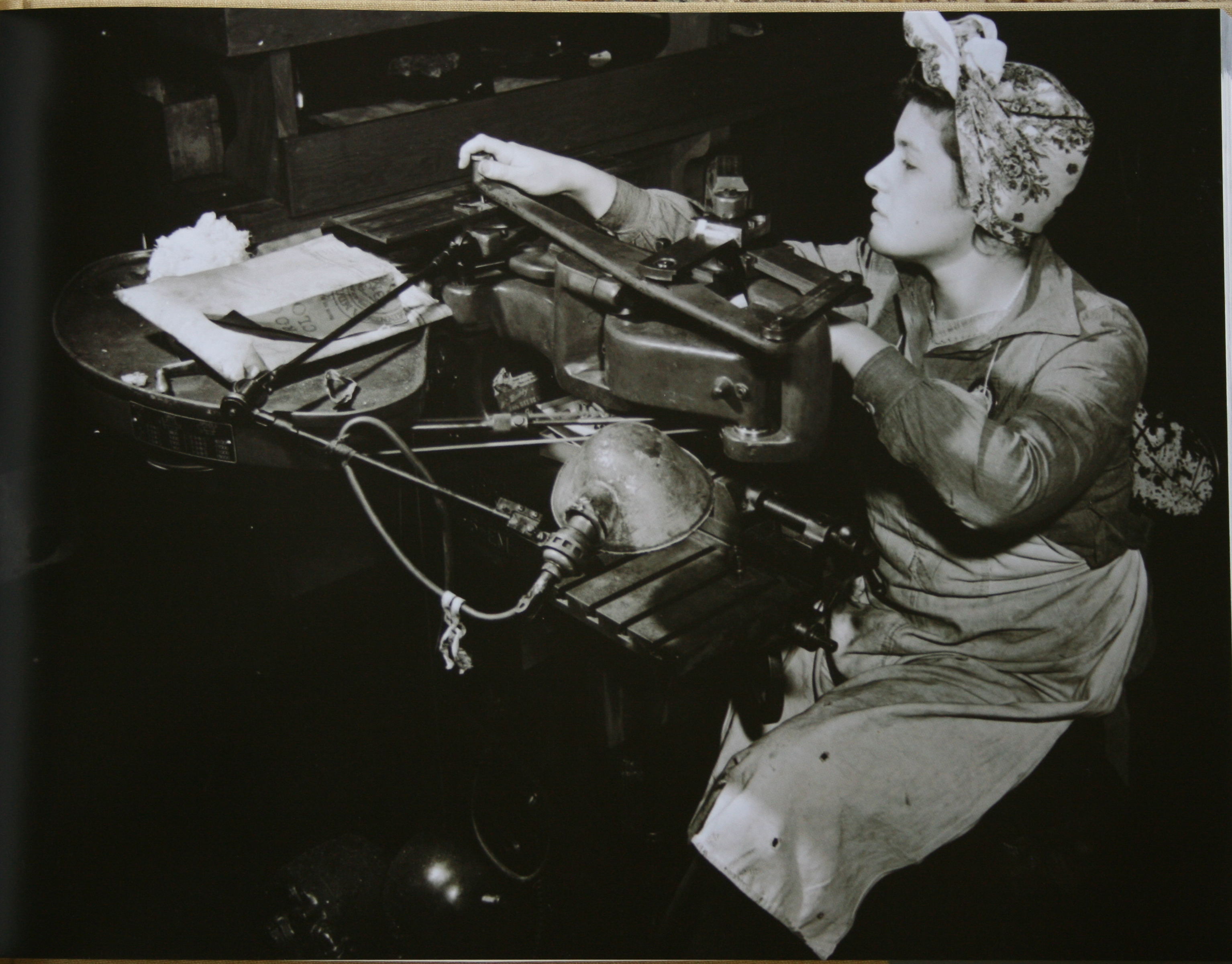
After giving a talk to folks from the National Archives, they gave me a book — Your Land, Our Land, edited by Monroe Dodd and Brian Burnes, on the staff of the National Archives — of photos from the regional archives. Beautiful stuff in it. Here are some samples. (I photographed them since the book doesn’t fit into my scanner very well.) Click on the samples to download large versions:

artillery shells
From the Watertown arsenal (Boston), WWI artillery shells

artillery shells
Woody Guthrie’s signed loyalty oath

artillery shells
vMinerva Markowitz working an engraving machine: Brooklyn Navy Yard, WWII

This book, published by Kansas City Star Books and the Foundation for the National Archives comes with the usual stern copyright warning:

“All rights reserved. No part of this book may be reproduced, stored in a retrieval system or transmitted in any form or by any means, electronic, mechanical, photocopying, recording or otherwise, without the prior consent of the publisher.”

But I checked with counsel: The copyright only extends to the selection and arrangement of the photos, plus any text they added. The photos themselves are public domain (I presume), and “in the US (unlike Europe), there is no copyright protection for the digitization or accurate reproduction of public domain works.”

[Tags: national_archives photos woody_guthrie artillery munitions rosie_the_riveter copyright ]

Tweet
Follow me

Categories: Uncategorized Tagged with: artillery • copyright • culture • digital rights • egov • munitions • photos Date: April 23rd, 2009 dw

5 Comments »

April 20, 2009

Pam Samuelson on the Google Books settlement

Pam Samuelson has written a brilliant piece about the Google Book settlement. It goes in the must-read (and highly readable) pile along with Robert Darnton’s eloquent NY Review of Books piece and James Grimmelmann’s more wonky explanation.

[Tags: google google_books publishing copyright copyleft everything_is_miscellaneous ]

Tweet
Follow me

Categories: Uncategorized Tagged with: copyleft • copyright • culture • digital rights • everythingIsMiscellaneous • google • libraries • publishing Date: April 20th, 2009 dw

1 Comment »

April 18, 2009

Hyperlink aggregation circa 1689

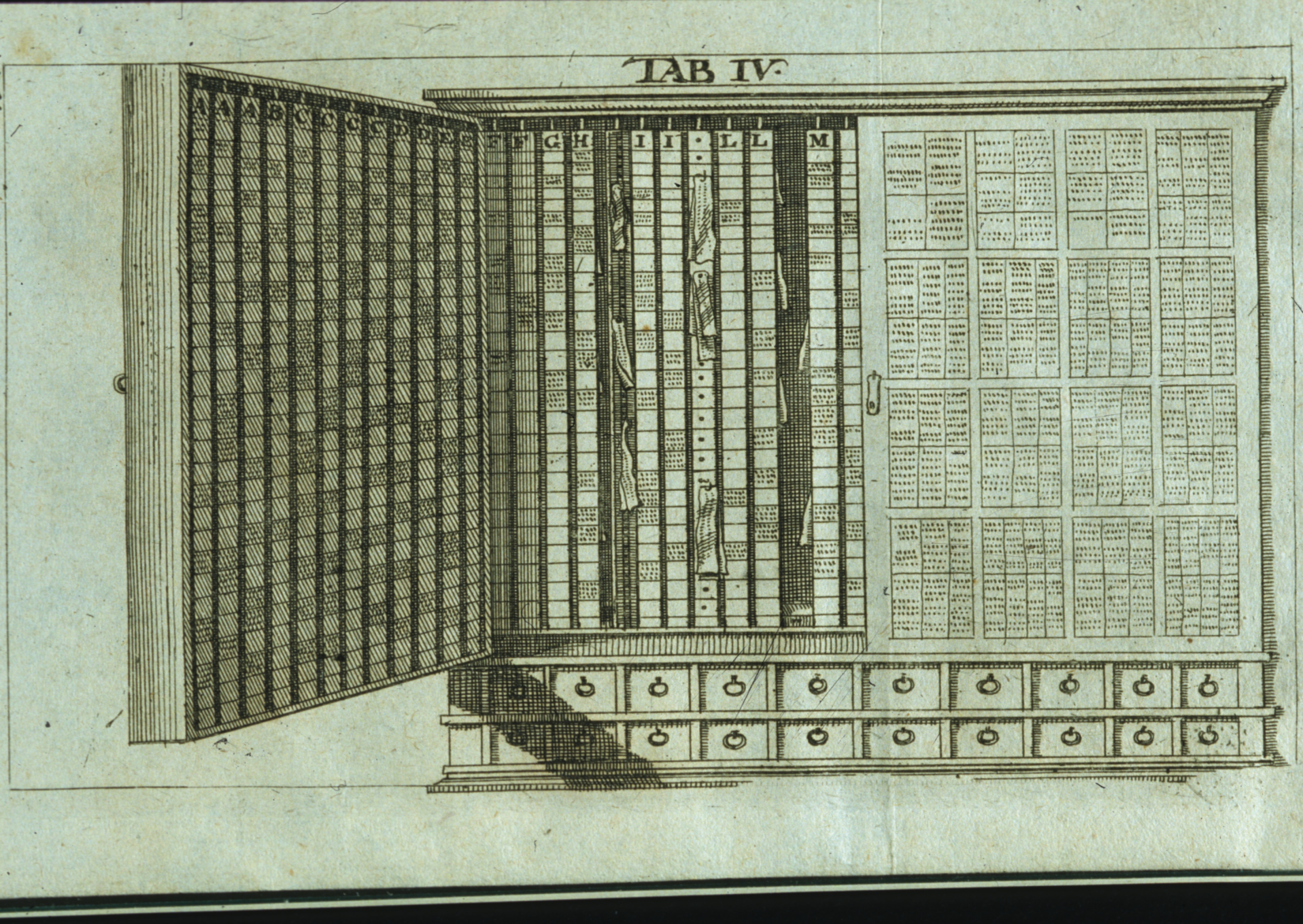
Ann Blair sent me an illustration she showed during her fascinating talk on the history of the book:

1689 cabinet for arranging notes
Click on image to download large version

The cabinet was designed by Vincentius Placcius. It had 3,000 hooks for topics, each with places where you could hang scraps of paper with notes pertaining to those topics.

BTW, I came across a fascinating blog on note taking that says that Leibniz had perhaps a million notes on scraps of paper, and owned a Placcius cabinet. Leibniz certainly corresponded with Placcius.

[Tags: note_taking knowledge placcius leibniz ann_blair everything_is_miscellaneous ]

Tweet
Follow me

Categories: Uncategorized Tagged with: culture • everythingIsMiscellaneous • knowledge • leibniz • libraries • philosophy • placcius Date: April 18th, 2009 dw

10 Comments »

April 17, 2009

[ugc3] Final panel

I went first. I talked about exceptionalism, responding to Eli Noam’s challenge at the beginning of the conference that if we’re going to think the Net is going to bring about substantial changes, we have to be able to point to characteristics of it that are different from other technologies that also looked revolutionary but that turned out to be rather prosaic.

NOTE: Live-blogging. Getting things wrong. Missing points. Omitting key information. Introducing artificial choppiness. Over-emphasizing small matters. Paraphrasing badly. Not running a spellpchecker. Mangling other people’s ideas and words. You are warned, people.

Len Downie was executive editor of Washington Post. He’s not going to propose any new form of delivery of the news. He’s not sure the old will die out completely. WaPo is reorganizing itself as a news operation and as a company. They have Facebook and iPhone apps, etc. When it comes to UGC, “this is not a zero sum game.” On WashingtonPost.com you find lots of user comments, participation in blogs, user photos and videos, crowd-sourcing. E.g., Amanda Michel’s “Off the Bus” crowd sourcing, which went through professional editors. (Amanda is now at ProPublica.) They hope the Net will help end the traditional alienation from their readers. And the Net has made their audience bigger than ever before.

The big problem is the loss of classified advertising. Hundreds of millions of dollars lost, hitting local newspapers especially hard. Also, display ads have been driven down. Local news stations are covering fewer stories. There’s less reporting. That’s the problem Len is going to examine in his new academic role at Arizon State.

There are some things the government could do, but not a “bail out,” Len says. Maybe newspapers will become 501C3’s. Maybe they’ll become LC3’s, so they could still be profitable and yet receive tax-exempt contributions. Maybe convert them into endowments, although Len says there isn’t enough money for that: You’d need a ginormous endowment to generate the requisite funds. There are more and more non-profit investigative reporting organizations. There’s a lot going on. It’s impossible to tell what’s going to happen.

Q: How much does investigative reporting cost?
A: At ProPublica, they do it in the best way, and it’s tens of thousands of dollars, mainly for the reporter’s time.

Q: In Germany they’re aggregating news and selling access [I got this wrong] …
A: I’d have to look at it.
Q: Isn’t that what AP does?
A: Don’t get me started. AP is supposed to be a collaborative. If we don’t all charge at the same time, we won’t be able to raise enough money. Alan Mutters [sp] suggests that we all decide on July 4 to start charging. The Obama admin is concerned about the future of news. They’re going to look at loosening anti-trust regs so newspapers can band together, but you don’t want to create another cartel like AP.

Q: If the NYT shut down its presses and went totally online, how would that affect their costs and prices?
A: The Times might save 40-50% of their costs, but it would take away 90% of their revenue. Kindle is great for books but not very good for newspapers. Looking forward to the big multimedia tablets.

Q: The NYT is doing well on the Web. But last year their Web revenue increased just 1%. What’s the future business model?
A: That’s what I’m trying to figure out.


Greg Lastowka (law prof, Rutgers) is going to talk about legal aspects of UGC. First question: What is UGC? It’s a fuzzy concept. “User” is an important term because of copyright. Copyright is not about monetizing the works of authors. Copyright is there to promote the progress of science and the useful arts. Our Constitutional mention is based on the earlier British Statute of Ann that took control away from publishers and gave it to authors, in order to promote education.

Greg predicts that copyright won’t change very much in the next ten years. Copyright law will probably ignore UGC and be large unaffected by it. UGC will be treated as a problem, it will change the rules somewhat (through litigation), but the fundamental shape of copyright law won’t change in response to UGC (says Greg). Ten years ago, he was more optimistic about it. He thought UGC was a huge social boon that was a very bad fit for copyright law, so copyright law would change to reflect that value. The Web was meeting the goals copyright law was established to meet.

Four changes to get copyright law to fit the Web: 1. Simplify the law. 2. People want credit for their work even when they’re happy to have it spread. People get copyright law mixed up with plagiarism. We should work the attribution right into it. 3. Reform terms of service and their enforcement. 4. Subsidize free access content. Copyright is a subsidy for authors.

Greg was arguing this ten years ago. Not much has changed, although there’s progress in open access to academic work. Why haven’t there been more changes? Maybe because our legislators don’t understand what’s happening. The better, sadder, answer is that Greg’s politics were naive. Copyright law today is realistically about protecting big money incumbents. Dan likes copyright and blockbuster movies, but thinks there should be an ecology that enables them and UGC. We’re unlikely to strike a new social contract that reflects the rights of amateur creators.

Q: To what extent is international trade motivating maintaining strict copyright?
A: Legislators certainly care about it.


Stefaan Verhuist (Markle Foundation) presents his model of UGC: Mediation 3.0. It has three new mediating functions that converge to create a new type of mediation. Those functions can be accelerated and made more valuable by making sure they are cheap, deep, and speed. The success depends on four challenges: the 4 Ps.

Setfaan draws a triangle: 1. Establish relations. 2. Provide a new kind of resource that has value for users and that may be created by the users. 3. Remix. Ensure a relation that creates a resource that may be remixed. Their convergence creates UGC. If you can provide resources that are cheap, deep (the value for its users, related perhaps to a geographical location), and speediness. But it can be hard to be cheap, deep and speedy; that’s the challenge.

The 4 Ps: Privacy (relationship), Property (remix), Public sphere obligations and responsibilities (resource), Push and pull (in the center of the triangle) of information. The push-pull presents the policy challenges.

[Posted without re-reading. Gotta run.]

[Tags: journalism media newspapers copyright copyleft creative_commons marketing ]

Tweet
Follow me

Categories: Uncategorized Tagged with: business • conference coverage • copyleft • copyright • culture • digital culture • digital rights • entertainment • everythingIsMiscellaneous • journalism • marketing • media • newspapers Date: April 17th, 2009 dw

Be the first to comment »

[ugc3] Scott McDonald

NOTE: Live-blogging. Getting things wrong. Missing points. Omitting key information. Introducing artificial choppiness. Over-emphasizing small matters. Paraphrasing badly. Not running a spellpchecker. Mangling other people’s ideas and words. You are warned, people.

Scott McDonald of Conde Nast gives the lunchtime talk. He reminds us of how big CN is: magazines, websites, events, digital apps.

His numbers show that lots of people are creating content.

UGC issues for “traditional” [the quotes are on Scott’s slide] media: Brand compatitiblity (vs. “snark/coarsening”. Commoditization of content (all gets treated the same). Value as “listening post” (media can hear their readers). DRM when everyone is an aggregator. Monetization.

Advertisers are reluctant to jump in, Scott says. They worry about brand. UGC video is cheap and plentifu. but it’s not selling. The CPMs are deeply discounted. Ad revenues are not going to UGC and marketing execs are pessimistic about this; only 22% think UGC is a “high-growth opportunity.” 73% of advertisers say they definitely will not run ads on UGC.

So, what are the other models? You can incorporate UGC on a site as a “retention device.” [CNN’s turn-the-channel “iReports”?] Authentication fees on microblogging sites? E.g., Twitter charges DominosPizza to assure that it in fact represents Dominos Pizza. How about sponsorships on crowdsourcing sites such as Digg? E.g., at Reddit, maybe a sponsor could be an “amplifier” that announces that each thumbs up counts 5x. [Wha??? Wouldn’t that destroy Reddit’s credibility?] Finally, there’s cross-platform marketing. Only 10% of visitors to a mag’s site are subscribers. So, cannibalization isn’t a worry. But how do you make money on the web site? Ads only work for very big sites. But,” online subscriptions sales are sweet.” People who subscribe that way have higher value than subscribers through other means: They’ve sought out the mag, they pay with a credit card, they are more likely to take an automatic renewal contract, they get added to the email list, etc.

He points to Conde Nast examples of UGC. Contests for designs, NYer caption contest, GQ tips on good grooming. [These are as much UGC as a man-in-the-street interview.]

He points to Reddit, a CN site. He acknowledges the bad language on the page. It produces no subscription revenues. They’re starting to have sponsored posts that still can be voted up or down.

Q: Are people dropping subscriptions because they can get the content for free online?
Scott: In general, no. The conditions for reading mags are special, e.g., reading one on the subway to create zone of privacy. [A good e-reader will destroy this.] For news mags, that’s more of an issue.

[Tags: ugc ugc3 conde_nast media mainstream_media advertising marketing ]

Tweet
Follow me

Categories: Uncategorized Tagged with: advertising • business • cluetrain • conference coverage • culture • digital culture • marketing • media • ugc • ugc3 Date: April 17th, 2009 dw

Be the first to comment »

April 15, 2009

The future of the book

I just came from a discussion of the future of the book at Harvard, although it was actually more like the propedeutic for that discussion. Quite fascinating though.

First spoke Ann Blair, a history professor at Harvard, who has a book on the history of information overload (particularly in the early modern period) coming out in the fall of 2010. She talked about how printed books were first received: Positively, the printing press was appreciated for the labor it saved (an early estimate said that four men in one day could create as many books with a printing press as ten could do with a quill in a year) and for driving down the cost of books. (You had to count on selling 300 copies before you’d break even, whereas hand-copied manuscripts were done on commission.) But people also complained because printed books were often shoddily done, and there were too many of them. Ann cited Pliny saying that here is no book so bad that some good cannot be made of it, balanced by Seneca who urged people to read a few books well. [Classic fox vs. hedgehog matchup.]

She then pointed to 16th-17th century references books, including dictionaries, collections of beautiful and elevating sentences (“florilegia”) [twitter, anyone?] and commonplace books. Printing made it possible to have very big books. One of the commonplaces started with 1.5M words, was revised to include 4.5M and had a sequel with 15M words. (Wikipedia had 511M words the last time Ann checked.) Conventions, therefore, arose for finding your way through all those words. Some techniques were typographical (Aristotle’s text in bigger letters, followed by commentaries, etc.) but indexes became more sophisticated. The 15M commonplace book had over 100 pages of entries on a single word, for example (“bellum,” “war”). The indices sometimes had mutliple levels of indentation.

Ann finished by showing an illustration of a 1689 piece of furniture the size of a closet, designed to organize knowledge. There were 3,000 hooks for headings, with multiple hooks for slips of paper under each heading.

I asked whether the availability of slips of paper encourage the de- and re-structuring of knowledge. Ann answered first by talking about the history of slips of paper — the printing press drove up the demand for paper and thus drove down its cost — and then said that it’s hard to gauge the effect on thought because writers were already collecting miscellanies, such as commonplace books.

Ann also explained that large alphabetical concordances had already been created before slips of paper by assigning a letter to each monk and having him go through the Bible looking for each word that begins with that letter.

Then John Palfrey gave a talk about how the world and books look to those born into the digital age. To these digital natives, said John, the world doesn’t divide into online and offline; it’s all converged. They assume digital access. (YouTube is the #2 search engine, JP said.) They expect to be co-creators. They also give away too much information and need to learn to do for themselves the gatekeeping that used to be done for them. The opportunities are huge, JP said, for creativity, reuse, and making knowledge together. JP expects libraries will continue to become social spaces where we learn and explore together, and he expects physical books to persevere because they are so well engineered for knowledge and extended argument. [Personally, I’m not convinced of that. I think books may turn out to be an accident of paper. Check back in 30 years to see who’s right.]

A fascinating afternoon. I wish it had gone on longer.

During the Q&A, Robert Darnton, Harvard’s head librarian, responded to a criticism of the new tools for navigating the university’s collection, by saying that it was still “in beta.” It’s open to all to suggest improvements, many of which have already been incorporated. For me, hearing Harvard’s chief librarian talk about a catalog being “in beta” says it all. (Darnton also talked about Harvard’s position on the Google Books settlement, about which he has been a prominent and eloquent critic.) [Tags: books history_of_books ann_blair john_palfrey robert_darnton libraries knowledge everything_is_miscellaneous google_books ]

Tweet
Follow me

Categories: Uncategorized Tagged with: books • culture • digital culture • everythingIsMiscellaneous • expertise • knowledge • libraries Date: April 15th, 2009 dw

5 Comments »

April 12, 2009

Animation and desire

A tweenbot is a humble little wheeled creature, clothed in cardboard with a magic marker smile, set traveling in a straight line on the sidewalks of a city, with its destination written clearly on a paper tag. Strangers with some inevitability point them in the right direction until they get to where they’re going.

I have no idea what to make of this — if it moves by itself, our loving but pathetic little brains assume it has a desire? — but it makes me happy.

[Tags: robots intentionality kindness_of_strangers urban_mysteries ]

Tweet
Follow me

Categories: Uncategorized Tagged with: culture • intentionality • robots Date: April 12th, 2009 dw

2 Comments »

Onion parody game more satisfying than Oliver Stone’s combined work

Last night I watched two things on TV.

First, I caught up with some of The Onion’s news clips. One was a report about a video game — “Close Range — that consists of nothing but shooting people in the face. Although the “news” item wasn’t The Onion at its hilarious best, it was at least brief.

Then we watched Oliver Stone’s “W.”

When will I learn? Stone continues to be the worst major director of his generation. Perhaps we can quantify this by saying that he’s the worst Academy Award-winning director in my lifetime. That’s not to say that everything about every movie he makes is awful. But it doesn’t matter, for all of those good moments put together are washed away by the mighty river of awfulness that goes by the name of “Alexander” [My review and followup]. So, yes, “W” has some ok moments. Well, actually it doesn’t. It has a good vocal impersonation of Bush, and the humorous revelation that Richard Dreyfuss actually sort of looks like Cheney. But otherwise it’s made out of 100% cliche and cardboard. It also has two more of Stone’s signature qualities: It goes on too long (it should have stopped when Bush wins the presidency) and it uses embarrassingly failed tropes that Stone thinks are arty. (In “W,” he cuts to Bush alone in a baseball field, as if in a dream. Or something.)

My conclusion: The four minutes parody news report from The Onion, of average quality, is far superior to all of Oliver Stone’s work put together. Especially if you were to put all that Stonage together and actually watch it.

PS: The Onion lets you play “Close Range” for free.

[Tags: movies tv the_onion oliver_stone reviews fps games ]

Tweet
Follow me

Categories: Uncategorized Tagged with: culture • fps • games • humor • movies • reviews • tv Date: April 12th, 2009 dw

Be the first to comment »

« Previous Page | Next Page »


Creative Commons License
This work is licensed under a Creative Commons Attribution-NonCommercial-ShareAlike 3.0 Unported License.
TL;DR: Share this post freely, but attribute it to me (name (David Weinberger) and link to it), and don't use it commercially without my permission.

Joho the Blog uses WordPress blogging software.
Thank you, WordPress!