


logo
EverydayChaos
Everyday Chaos
Too Big to Know
Too Big to Know
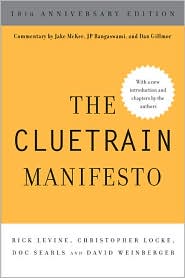
Cluetrain 10th Anniversary edition
Cluetrain 10th Anniversary
Everything Is Miscellaneous
Small Pieces cover
Small Pieces Loosely Joined
Cluetrain cover
Cluetrain Manifesto
My face
Speaker info
Who am I? (Blog Disclosure Form) Copy this link as RSS address Atom Feed

September 19, 2008

[irmc] Government 2.0 and beyond

I’m at the 20th anniversary celebation of the Information Resources Management College of the National Defense University in DC. David Wennergren (Deputy asst secty of defense for info mgt, and DoD deputy chief info officer) is leading a panel on Gov’t 2.0, with Anthony Williams (nGenera, and coauthor of Wikinomics), Bruce Klein (Cisco, US public sector) and Mike Bradshaw (Google, federal sector). [I’m live blogging, making mistakes, being incomplete, mishearing …]

The moderator and the panelists each take a turn at the podium.

David says that Web 2.0 (etc.) is a powerful opportunity “for us to change differently.” Agencies don’t have to be isolated. Mashups, mass collaboration, etc., enable rapid innovation. “We’ve grown up in a world of systems,” big systems. In the new world, we need to be able to “focus and converge.” [David is citing someone else, but I didn’t catch the name.] He refers to the book “Polarity Management.” We have to get both security and sharing right. E.g., focus on secure networks and you create a “self-inflicted denial of service attack” on yourself. [Nice] If you don’t get sharing right, we lose our edge as a nation of innovators.

Anthony Williams (Wikinomics) says he’s been working with governments on e-gov ideas. If we can do Wikipedia, Galaxyzoo, Curriki, there’s no telling what we can do as citizens. The five big ideas: 1. Rethink public service. We still treat citizens as passive recipients. 2. Make sure the information flows horizontally and through all the governmental layers. 3. Open up the boundaries of government, inviting input from citizens, non-profits, private e, etc. 4. New models of democracy, especially interactive models of political communication. 5. Rethink our core institutions, redraw the division of labor. Can we source government services globally?

Bruce (Cisco) talks about how Cisco is using tech to transfer its business. Web 2.0 is about collaboration. Collaboration accelerates productivity, mission success (or growth), and innovation. But it’s more about the culture and the processes than the technology. He shows a crowded slide of how Cisco is using Web 2.0. Their Directory 3.0 includes profiles and areas of expertise. Ciscopedia is an internal wiki. And they have a portal for employees that includes info and apps. Wiki use went up 5x over a year, blogs up 3x, and video up 12x. Cisco is changing from command and control to collaboration and teamwork.

Mike (Google) begins with a title slide that has Google in one corner but that shares the space equally with Skype, Wikipedia, the iPhone, Facebook, AOL, YouTube, the iPod, Second Life, and Bebo. 98% of Google’s revenues come from its free products. Only 2% comes from Mike’s federal group. The cost of switching is zero, he says, so companies have to constantly work on providing good features that are usable without training. “We take that philosophy now to the workplace.” 89% people say they use at least one “unsanctioned” technology at work (Yankee Group). 49% say the tech they have at home is more advanced than what they have at work. He gives some examples of government embracing Web 2.0 tech. E.g., Homeland Security in Alabama used Google Earth as a platform for satellite imagery. Then firefighters started populating it with info about buildings and equipment. Then students started adding info. Etc. He ends by talking about the importance of cloud computing. He compares it to the early corporate resistance to PCs because they were insecure, etc. In addition to providing applications and infrastructure, cloud computing can be a platform (as with Google aps and Salesforce.com). In its own data centers, Google assumes things will fail. They buy commodity hardware and hold the drives in with velcro. Every minute, 13 hrs of video are uploaded to YouTube. The search engine gets a billion queries a day. Google has had to build a huge infrastructure, which they now make available to the public for free.

Q: How do we reconcile the rapidity of innovation and the slowness of the gov’t acquisition process?
A: (david) It’s changing. We’re becoming beter about using what’s on the Web. And we’re learning to move incrementally rather than building the big honking system.

Q: What kind of test did Cisco do to weed about the execs who are not ready to move from the command and control structure?
A: At Cisco, we measure everything. John Chambers put together boards and councils to run the company. The councils are cross-functional. You quickly see who collaborates and who doesn’t. Cisco changed the compensation so that for some, 70% of their compensation comes from how the company overall does.

Q: The DoD blocks many social networking sites. The younger employees want to collaborate all the time. How do we bring them in, let them live in their culture, and modify the environment to meet their needs?
A: (david) Blocking access is a non-sustainable policy. These government institutions do change when leaders stand up.
A: (anthony) We interviewed 10,000 youths globally. The public sector is the least desirable place to work in the US, UK and Canada. I agree with Dave on the blocking of sites. Canada banned Facebook for gov’t empoloyees, so everyone moved to MySpace. Canada is now looking at rolling out a Facebook-like product for the entire government.
A: (mike) Google has “20% time”: Spend 20% of your week doing something of great interest to you. That’s how Gmail was created. It includes community service, solar energy, etc. That helps retention. The federal gov’t attracts very smart people, but they get frustrated when tools they’re using — Facebook, for example — gets shut down. The first thing that has to be addressed are the security issues. We open our data centers to let federal folks see how secure we are. The old certification process takes too long.

Q: In the new model of gov’t how do you make sure the voice of all the people, even those without cmputers, is heard?
A: Yes, we don’t want simply to amplify the traditional values. But we hope some of the gaps will close. This needs political attention.

Q: The Toffflers [who are in the audience] point to the variance of rates of change. What’s Google doing to help accelerate change in education and law, to keep it up with the speed at which business changes?
A: (mike) We do try to influence policy. And we try to get info out to the gov’t. My 20% time is spent in bringing tech to charitable orgs.
A: (bruce) Cisco thinks there has to be a major transformation in education: Change in curriculum, in how teachers teach, how students can use tech to learn. We have bunches of pilots in place.

Q: We don’t have standards. Should there be government regulation of the Net to produce standards? And how would this work internationally?
A: (anthony) Regulating the Internet is not so good. But having the government using open standards is important.
A: (bruce) You stifle innovation if you over regulate.
A: (mike) Disruptive tech disrupts cost structures as well. We like open source and open standards because if you use our stuff, you’ll also be using other stuff as well.

Last thoughts? What do you see coming down the road?
A: (mike) Watch for Android. Open source.
A: (bruce) Work on culture to take advantage of what’s out there.
A: (anthony) How does the gov’t source expertise? How does it tap into the collaborative intelligence?
A: (david) We have to work on trust. It’s the single biggest inhibitor to making this shift. [Tags: irmc government federal web_2.0 ]

Tweet
Follow me

Categories: Uncategorized Tagged with: business • cluetrain • conference coverage • digital culture • federal • government • irmc • web 2.0 Date: September 19th, 2008 dw

11 Comments »

September 6, 2008

[ae] Jonah Brucker-Cohen

Jonah Brucker-Cohen (link link) says open systems encourage audiences to become active co-ccreators, reconfigure rule sets and create opportunities for now types of engagement. He lists some open tools, both hardware (Aduino, Freeduino, OpenPCD, Sun Small Programmable Object Technology) software, and art (Open Museum of Open Source Art). He shows a video of a literal breadboard by Teppien [sp?]. [NOTE: Live blogging. Error-full. Posted without proofreading.]

What are the benefits of subverting network context? Altering rule-sets shifts the engagement structure of a system. Forcing openness creates opportunities for risk or plahy. Hacking into systems challenges their general use.

Public wireless space allows community groups to serve local citizens, creative projects engaging with users. In privatized wireless spaces (e.g., in airports), they’re claimed by individuals. This raises the question: How do we allocate public wireless resources. Two of his projects challenge these relationships: Wifi-Hog challenged Starbuck’s (et al.) assumption that its pay wifi should be allowed to drive out free public wifi. Wifi-Hog blocks everyone else’s use of wifi. Jonah was asking about the acceptable use policy of public wifi nodes and about the promise of the “public sphere as a social leveler” (Habermas).

Wifi-Liberator toolkit (hw and sw) allows you to get around security in locked hotspots. But it only gives you access if you share.

Q: (James) Jamming wifi is to openness as screaming so loud that no one else can hear is to free speech. How does this move us toward openness?
A: It points out the points of control. That’s a requirement for change.

Q: (yochai) How about creating a trivially implementable meshing algorithm for residential wifi.
A: Fon is doing this.
Q: Fon is still commercial and wants to be compatible with the business model of the carriers. [Tags: ae08_ars_electronica dyi wifi jonah_brucker_cohen ]

Tweet
Follow me

Categories: Uncategorized Tagged with: conference coverage • digital culture • digital rights • dyi • wifi Date: September 6th, 2008 dw

1 Comment »

[ae] James Boyle

James Boyle is chairman of Creative Commons and teaches law at Duke. He’s talking about the nature of openness. [Note: Live blogging. Error prone and error-full.]

We have patterns of behavior that economic theory does not predict. We are risk averse. For example, it makes no sense to buy a warranty; we buy them out of an absurd sense that buying the warranty affects the device’s outcome. There is another kind of bias that we wouldn’t predict from economic theory: A systematic bias against openness. We don’t expect openness and collaboration to generate what they do. We overestimate the risks. We underestimate the risks of closed systems and overestimate closed systems’ benefits.

Suppose in 1990 I came to you with two proposals: Build an open system. Or, build something like Minitel, Compuserv or AOL; it’s controlled and permission-based. Which would you pick? If you pick the first, you’ll have piracy, spam, massive amounts of crap, flame wars, massive violations of IP, use for immoral purposes. “I think you’d pick network #2” because those risks are foreseeable, but you couldn’t imagine wikis, blogs, Google maps, etc. It’s hard for us to imagine the benefits of open systems. It’s not intuitive.

Again, in 1990 you are asked to assemble the greatest encyclopedia, in most languages, updated in real time, adopt a neutral point of view. In 1990, you’d say that you need maybe a billion dollars, a hierarchical corporation, lots of editors, vet the writers you’re hiring, peer reviewers, copyright it all to recoup the money we’ve invested, trademark it. And someone else says, “We’ll have a web site, and people will like put stuff up and people will edit it.” How many of us would have picked #2. We don’t understand openness.

Free software is the same story.

What conclusions should we draw? Some people are raised in places where they learn how to drive in snow and ice. They learn to turn into the skid, contrary to our impulses. We can train ourselves to overcome our biases. But open doesn’t always work. Sometimes we do need closed, controlled. E.g., open won’t get us all the way to a phase 3 drug trial. Open doesn’t always work for privacy. We need a world with both open and closed.

So far, James says, we in the audience agree. Now for some things that will not flatter our sympathy.

He talks about Putnam’s “Bowling Alone” that talks about the loss of civil organizations in America. But, Putnam noticed that in the early 1900s American intellectuals noticed that the move to cities fragmented the old ties. But they didn’t say that history will just automatically correct itself. Instead, they created organizations like the Kiwanis, the Elks, etc. They invented institutions to make up for a problem they saw. Eventually, those institutions worked.

So, if we are bad at judging the boundaries between open and closed, if it’s important to get it right, then it’s beholden on us to create the institutions of civil society that enable us to get past our biases. Creative Commons is one such. It provides an infrastructure for sharing our work.

Science Commons is another such group. The Web was created to exchange scientific info, but the Web currently works much better for buying shoes or porn than doing that. The vast majority of scientific literature is behind the pay wall. You can find it but not read it. Nor can you build a sort of Google Maps mashup — take all the literature on malaria, find all the geo locations, all the proteins, overlay it, build a wikipedia for science. You can’t do that because it’s illegal, technologically impossible, and even if you could, you can’t reassemble it and do a click and buy. “The World Wide Web doesn’t work for science.” Science commons tries to address that…

Q: Is the bias a metaphor or an inherent inability to understand openness?
A: About 80% is explained by the fact that for most of my generation’s lives, our experience of property was with physical things; if I have it, you can’t. There are economic benefits to knowing who owns it. The closed intuitions generally work there.


[I have to stop to get read to give my talk …] [Tags: ae08 ars_electronica james_boyle creative_commons copyright ]

Tweet
Follow me

Categories: Uncategorized Tagged with: ae08 • conference coverage • copyright • digital culture • everythingIsMiscellaneous • knowledge • libraries • science Date: September 6th, 2008 dw

7 Comments »

[ae] AKMA

I’m sitting on the speakers panel at Ars Electronica, listening to AKMA. “Theological discourse intrudes awkwardly into tech conferences,” he says. Theologists and technologists frequently talk past one another, he says. They are mutually suspicious. Theologians sometimes suffer from “replacement panic,” the fear that online will replace real world interaction. The church needs to “indiginate” itself online. [Live blogging. Poorly. Omissions, typos, mistakes. That’s just the way it.]

Jacques Paul Migne discovered in the 19th century the most efficient means of editing a paper: outright plagiarism. He’d copy an entire article, while introducing it by noting where it was first published. “He scraped newsfeeds and republished them.” Migne owned five steam presses in 1861. He published a “universal theological library” comprising 25 vols of Biblical commentary, 25 vol encyc, 18 vol of Christian apologetics, 13 vols in praise of the blessed Virgin Mary, and many more. While most relied on public domain sources, he sometimes republished volumes still within copyright. It was a “theological literature Pirates Bay.” Charles Sheldon’s “In His Steps” (“What would Jesus do?”) had a technically flawed copyright notice, so it was republished without permission.

So, situate all of this in the transition to digital media, AKMA suggests. Theological might serve as a useful “fishbowl” for technological innovators. There are online libraries of theological works, but “no organization has broken through to offer open access digital works” in comfortable, readable formats. “The conditions for publishing will go through some sort of convulsive change.” It will not replace books. But it will enable a “vastly more open exchange of digital literature.” We need “shareable, searchable, downloadable, disposable” texts, as well as durable, ownable printed texts. We need an open, standard format with a direct correlation to print copies (because print will survive and will generate cash flow). This will provide users wioth the “tools and the incentive to particiapte in the production of knowledge.”

Q: (James Boyle) You say technologists should see in the theological domain an opportunity to expand the commons. Why have not the faithful seen IP issues as something that gets in the way of the practice of their faith? E.g., many pieces of sacred music is under copyright. The organist at a local church said that she has a parishoner who is dying of cancer and I want to send her a cd of the music. They want $5,000 for a hymn.” I told her to go ahead and when they sue you, come to me. Why isn’t the world of the faithful looking at these issues?
A: The Bible publishing industry was one of the startups in 19th century US because the King couldn’t enforce copyright on this side of the ocean. Replacement panic causes the church to fear that personal interactions will evaporate. And assimilation to the culture of property rights. [Tags: ae08 ars_technica akma religion theology ]

Tweet
Follow me

Categories: Uncategorized Tagged with: ae08 • akma • conference coverage • culture • digital culture • digital rights • religion • theology Date: September 6th, 2008 dw

2 Comments »

September 5, 2008

[ae] Wireless, open Linz

I’m listening to Leon Dubosch via a translator. (German is my best not-English, but it’s not good enough.) Leonard thought about projects that could be done in Linz.


Thomas Gegenhuber now speaks. Art reuses what has been created before. (He quotes Lessig.) What can a municipality do? Linz’s homepage is published under CC. Artists who publish their works under a free license gets more money from the government than those who don’t use free licenses. CC here is the default option, and that should be true for cultural funding.

Jakob p[missed last name] says free software is a matter of rights Protecting free software is a human right. Munich uses platform-independent software. It’s free to adapt it, free to partner, free to disseminate it, and has no license fees to pay. What will Linz have to do to be as free Munich: Decide to use open source software in administration, the business, and in education. Right now, all software in Austrian schools is Windows. Instead, schools should teach skills, not applications. Schools ought to have open source software.

Barbara Hofmann talks open courseware. She points to MIT and open coune.rseware. There are 200 schools that are members of the open courseware consortium. The Univ of Klagenfurt in Austria is a member. It takes institutional interest and organizational backbone.

Stefan Powel talks about web science at Univ of Linz. They want to pull together multiple disciplines, initially for a masters degree, by 2010. Bachelors degree by 2012.

Manuela Hiermair talks about overcoming the digital divide. We need free wifi. Communities can provide free access. In Linz, there are over 100 free wifi access points, and a public internet service provider.

Christian Forsterleitner talks about Digital public space. Every resident should receive a bit of Linz’s publis space, free. There are free storage offers from Google, Flickr, MySpace, etc. NBut you give up your rights and are subject to censorship. “We want public authorities to provide this basic service.” “We consider the Webspace to be a citizen’s right.”

[Time to move to Linz? :) ]

[Tags: ae08 ars_electronica linz wifi muni_wifi open_software ]

Tweet
Follow me

Categories: Uncategorized Tagged with: ae08 • conference coverage • culture • linz • whines • wifi Date: September 5th, 2008 dw

1 Comment »

[ae] Michael Tiemann

Michael Tiemann tells us a little of his story. He once wrote some software and sold it to a company that was unable to market it. He was torn up that his work would never be used because it was owned and locked up by someone else. The music industry also doesn’t work well for musicians. So, he’s begun a personal project to create a new way to solve this problem. [Note: Live blogging. Unreliably.]

He shows a video of a beautifully rendered music studio.

“Culture” comes from “cultivate.” Culture isn’t just about consumption, but about the processes that produce goods and that give them meaning. We need to preserve our creative topsoil. Trying to own culture kills it.

Now he talks about his project. He refers to The Crafter Manifesto. He quotes Tagore: “One man opens his throat to sing/ the other sings in his mind.” The song needs the listener. And the observer alters the reality observed. So, look at the slow food music. Why can’t we do the same thing for music, he asks. The artist, the engineer, and the audience (which he calls “the co-producers”) are in an collaborative project.

His project aims at creating an environment with superb sound, inviting co-producers in so they can participate much more fully. (now I’m confused. I’m not sure if he’s building a real or virtual. I’m pretty sure it’s virtual.) There will be a subscription model. [Tags: ae08 ars_electronica michael_tiemann music copyright creative_commons ]

Tweet
Follow me

Categories: Uncategorized Tagged with: ae08 • conference coverage • copyright • culture • digital culture • digital rights • music Date: September 5th, 2008 dw

1 Comment »

[ae] Tim Pritlove

Damn. I just irretrievably lost my entire post on Tim Pritlove‘s presentation. That’s really annoying.

So, in the three minutes before the next presentation: Tim is a hacker and founder of the Chaos Computer Club. Hackers are artists he says, and artists are hackers. Hackers don’t try to break in. Rather, they break things, to see how they work.

He talked about the Blinkenlight project that uses buildings as pixel displays. Very cool. Totally open sourced and Creative Commonsed. What’s displayed is also opened to the public.

[Tags: ae ars_electronica tim_pritlove hacking ]

Tweet
Follow me

Categories: Uncategorized Tagged with: ae • conference coverage • culture • digital culture • hacking Date: September 5th, 2008 dw

1 Comment »

[AE] Yochai Benkler

Yochai says he wants to leave the question: Can free culture survive systematization? [Trying to keep up with Yochai. Failing. Posting without proofreading or spell checking. Caveat lector.]

In 1835, it cost $10K (modern dollars) to start a daily newspaper. Now it costs millions. The startup cost causes a bifurcation between passive audiences and professional, commercial producers. The industrial structure of mass media characterizes the modern age. But, consider that SET@Home dwarfs the computing power of the supercomputers created in industrial ways. This is a radical decentralization of inputs and processes: material, processing, storage, communication, creativity, wisdom. For the first time, the most important inputs are broadly distributed in the population.

This takes social action that’s always been there, and moves it from being important socially and peripheral to the economy, to being at the core.

In Wikipedia vs. Britannica, the core issue isn’t price. It’s authority. The most important part of the Nature comparative study of the two was the editorial that urged scientists to update Wikipedia, sharing traditional authority with the new medium.

Yochai shows a 2×2: centralize or decentraliced vs market-based and non-market. Now we have a four-way interaction among all the old players, from traditional to social-sharing non-profits.

This engages distributed sensing of opportunities for action, solutions, experimentatino, adaptation. You get new and exciting possibilities. The increasing complexity and speed of change has been pushing businesses to go beyond the old technique of hiring what they need. “We can learn faster by loosening the structure of who gets to be effectively active in the world.”

But Yochai wants to focus on participatory culture and democracy. “Critical to the success and power of social production … is the decentralization of practical capacity to act…but also locating authority to act where the capacity to act resides.” This is where commons-based resources are important: We can act on them without permission. This is also where peer production systems (people cooperating without firms) matter because it allows people to work together without permission. “Ownership no longer equals or entails authority.” We get a more diverse , more transparent, and maybe a more critical self-reflective culture (although here he leaves a question mark).

Yochai shows a kickass video of a guy in a suit figuring out how to play the drums, followed by another guy in a split screen plahing piano. By someone named Lasse something? If you have the url, could you post it in the comments? He tells the story of the Daily Prophet, a 14 yr old who poste Harry Potter stories, and seven years later has started a distributed projeto t scan in fantasy illustrations from old books. Also, the site Learning To Love You More’s project of collecting photos of bed underneaths. Also, wikileaks.org. Also, Porkbusters.org. And Sunlightfoundation.com And distributed reportage (“Bomb bomb bomb, Iran”). “Yes We Can.”

YouTube lets individuals create and post. Revver and Metacafe tries to find ways to get artists paid. But, “once they introduced money, they introduced distrust.” Kaltura enables editing and has worked on engendering trust via open sourcing. Everything will be kept free. It binds its organization to a set of institutions that are free and open.

Politics isn’t just about politicians. It’s also about meaning. What things mean and how they mean.

So, human creativity decentralized can create a more democratic system, but it threatens the industrial model. For the past decade there’s been a rough stalemate over IP. But the most important actions have been social/cultural: Sharing practices. Increasingly institutionalized, e.g., Free Software Foundation, Creative Commons.

We’re seeing new models of market-cultural society relations: Credible commitment mechanisms, self-binding licenses, transparency, participation, styles of leadership. Authenticity and conversation become central. New ways to build trust, fairness, reciprocity.

He ends by taking Jonathan Coulton as an example. [What about Brad Sucks? :) ] He shows the Code Monkey videos.

“This is invoking a fundamentally different normative framework than ‘This is mine and you can’t have it.'”

The basic question: Can we create new social cultural spaces in the overlap of market and social relations, sustainable and not based on control and authority but on social and cooperative models? [Tags: yochai_benkler cooperation sharing peer_production economics open_source copyright ae08 ars_electronica ]

Tweet
Follow me

Categories: Uncategorized Tagged with: ae08 • conference coverage • cooperation • copyright • digital culture • digital rights • economics • sharing Date: September 5th, 2008 dw

1 Comment »

[AE] Ars Electronica

Ars Electronica is a festival with a conference embedded in it as one of dozens of tracks. It’s held in Linz, Austria, a beautiful city on Danube. Artists, geeks, academics and others gather, this year to discuss “A New Cultural Economy.” [Note: I am live-blogging, writing badly, making mistakes, missing stuff, and just generally going wrong. The conference is streamed, I believe]

This morning, Joi Ito, the conference “curator,” welcomes us. He talks about AE’s valuing of artists as those who (especially in Europe, he says) push technology forward by imagining uses. He shows a stack: Ethernet (computers), Internet (network), Web (content), and knowledge (Creative Commons). It took ten years to generate enough user-created content to be worth searching for, he says. But now we’re there. But we need to unlock the knowledge we’ve created via tech, open licensing, and the Semantic Web. We need to get past the copyright holders vs. the pirates bifurcation. We need to look at nuance and at the hybrid projects. And that’s what we’re going to do at AE, he says.

He argues against the idea that amateur vs. professional means good vs. excellent. Amateurs have access to high-quality tools and do what they do out of love. How do we adapt our culture, economy and government to adapt to a generation that would rather produce and remix than consume?

[This is a very rough overview of Joi’s remarks.]

[Tags: ars_electronica joi_ito copyright collaboration ]

Tweet
Follow me

Categories: Uncategorized Tagged with: collaboration • conference coverage • copyright Date: September 5th, 2008 dw

1 Comment »

August 25, 2008

Twitter vs. IRC for Convention groupsnark?

I love Twitter, but I’m wondering whether it’s the right tool for getting together to do a group-watch (we’ll laugh, we’ll cry) of the Democratic convention tonight. Would old-fashioned IRC be better?

I like IRC as a way of watching an event together. So, suppose I set up irc://www.freenode.net/democonvo tonight and opened it to anyone who wanted to join. As opposed to Twitter, the group would be smaller, it would consist of people who were there only to talk about the convention, and it would encourage more back and forth because the set of readers is the same as the set of potential writers. (With Twitter, the people you read don’t necessarily read you.)

On the other hand, Twitter brings together unexpected people who are highly unlikely to jump into any one IRC chat, especially mine. On Twitter, I’ll be able to read running commentary from Joe Trippi and Michael Turk (Democratic and Republican Net strategists). I can pretty well guarantee that neither will show up to an IRC chat that I throw.

So, I’m not sure what to do…

[Tags: twitter irc social_media politics ]


Dave Winer’s got an IRC going right now. He’s at the convention as a blogger…

Tweet
Follow me

Categories: Uncategorized Tagged with: conference coverage • digital culture • irc • media • politics • twitter Date: August 25th, 2008 dw

3 Comments »

« Previous Page | Next Page »


Creative Commons License
This work is licensed under a Creative Commons Attribution-NonCommercial-ShareAlike 3.0 Unported License.
TL;DR: Share this post freely, but attribute it to me (name (David Weinberger) and link to it), and don't use it commercially without my permission.

Joho the Blog uses WordPress blogging software.
Thank you, WordPress!