logo
EverydayChaos
Everyday Chaos
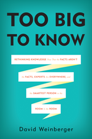
Too Big to Know
Too Big to Know
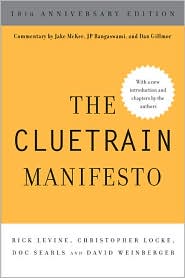
Cluetrain 10th Anniversary edition
Cluetrain 10th Anniversary
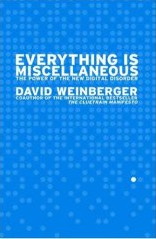
Everything Is Miscellaneous
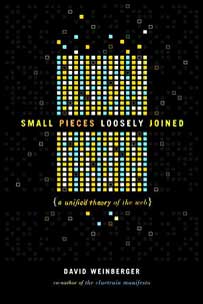
Small Pieces cover
Small Pieces Loosely Joined
Cluetrain cover
Cluetrain Manifesto
My face
Speaker info
Who am I? (Blog Disclosure Form) Copy this link as RSS address Atom Feed

February 22, 2011

[2b2k] Has the Internet killed our theory of medias effect on ideas and culture?

Heres a paragraph from the draft of the book Ive been working on. Its a draft, so contents are subject to settling during shipping.

…as revolution spread from Tunisia to Egypt at the start of 2011, a controversy arose about how much credit social media such as Facebook and Twitter ought to get. Malcolm Gladwell, the author of The Tipping Point, had written a New Yorker article in October 2010 arguing that social media are over-rated as tools of social change because they only enable “weak ties” among people, instead of the “strong ties” activists need in order to put themselves at risk. When some media and bloggers credited social media in the Mideast revolutions of 2011, Gladwell posted a two hundred word essay asserting that the influence of social media was “the least interesting fact.” Gladwells comments were a corrective to those who carelessly referred to the events as “Facebook revolutions” or “Twitter revolutions” as if they were the sole cause, but he also disputed those who thought social media played a significant role at all. Given Gladwells standing, and the fact that The Tipping Point is about the importance of social networks, his position surprised many. But, my point is not that Gladwell is mistaken although I think he is. Its that even if we do accept that social media played a role of some significance, its not at all clear what role they played. The more one looks at the question, the clearer it becomes that we dont even have an agreed-upon explanatory framework within which the question might be resolved. And this is true not only of questions touching the Internet. For example, a couple of months after the New Yorker ran the original Gladwell piece, it published an article by Louis Menand that wondered how to gauge the social and political effects of books such as Betty Friedans 1963 The Feminine Mystique. We look at social media at work in civil unrest and we wonder how much the media shape us? How does it happen? Does media influence have the same effects on all cultures? On all strata of society? How much of social unrest in general and in particular countries comes about as the result of having access to information? How much is the result of communication? Of sociality? If there were no social media, would the revolutions have happened, and, if so, how might they have been different?

As the Menand piece makes clear in its discussion of the effect of The Feminine Mystique, Silent Spring, and Unsafe at Any Speed, we used to think we knew at least part of how media influence ideas and policy. You write an important book, you go on Dick Cavett and Firing Line, and it changes minds and brings about changes. How? Well, um, it altered “the way we think about things” or some such phrase. We had a lot invested in the power of books.

Now, that theory seems not just hopelessly over-simplified, but wrong. I dont know if thats because single cultural items no longer have the impact that they once did, or if they never did but now we can see how influence actually spreads by following links and through up-and-coming tools such as the Berkman Centers MediaCloud. Or both. Or neither.

Tweet
Follow me

Categories: culture, libraries, too big to know Tagged with: 2b2k • books • communications • media Date: February 22nd, 2011 dw

2 Comments »

January 30, 2011

The more things (books) change…

Not many years ago ex-Governor Alfred E. Smith complained that his autobiography, Up to Now, was not being promoted vigorously enough. “But, Governor,” remonstrated his publishers, “we planted your book in every bookstore in the country.” “Bookstores,” snorted the Governor, unconsciously summing up every publisher’s grievance for the past five generations. “Who in hell goes to bookstores?”

From Try and Stop Me, by Bennett Cerf, 1944. (Simon & Schuster, p. 107)

Tweet
Follow me

Categories: libraries Tagged with: books • libraries Date: January 30th, 2011 dw

6 Comments »

January 29, 2011

The more things (like books) change…

Not many years ago ex-Governor Alfred E. Smith complained that his autobiography, Up to Now, was not being promoted vigorously enough. “But, Governor,” remonstrated his publishers, “we planted your book in every bookstore in the country.” “Bookstores,” snorted the Governor, unconsciously summing up every publisher’s grievance for the past five generations. “Who in hell goes to bookstores?”

From Try and Stop Me, by Bennett Cerf, 1944. (Simon & Schuster, p. 107)

Tweet
Follow me

Categories: humor, libraries Tagged with: books • humor • libraries Date: January 29th, 2011 dw

1 Comment »

January 26, 2011

McLuhan in his own voice

As a gift on the centenary of Marshall McLuhan’s birth, a site has gone up with videos of him explaining his famous sayings. Some of them still have my scratching my head, but other clips are just, well, startling. For example, this description of the future of books is from 1966.

Tweet
Follow me

Categories: libraries, media Tagged with: books • library • mcluhan Date: January 26th, 2011 dw

2 Comments »

July 28, 2009

Annals of openness in peril

1. The court has rejected Charlie Nesson’s basic defense of Joel Tenenbaum’s sharing of music files. The case is going to jury which may levy the same sort of insanely excessive fines as in the Jammie Thomas-Rassert trial. I hope Charlie’s team can convince the jury that the fines and the entire process are so onerous and disproportionate that the RIAA has been abusing the court system. Of course, IANAL, and IANAOTJ (I am not on the jury).


2. Barnes and Noble has launched its e-book software. It runs on iPhones as well as on PC’s and Mac’s. I’m having trouble finding which formats it supports, but judging from its Open dialogue, not PDF, .doc, .html, .mobi, or text. It does support .PBD books.

After a very very quick session playing with it, it seems quite competitive with the Kindle, and because I’m running it on my Mac and not on the little piece of crippled hardware I bought from Amazon — the Kindle is just barely adequate as a reader, and is still overpriced by more than 100% in terms of its value, imo — having the use of a keyboard and a mouse is a big step up. And, unlike the Kindle, you can use whatever fonts you have on your machine. Still, it’s only incrementally better than the Kindle’s software (again, on a quick look), not a great leap forward for readers.

One of B&N’s big advantages is that it’s hooked into Google Books, enabling you to download public domain books that Google has scanned in. You do this by searching for a book on the B&N site and noticing the “free from Google Books” label. Be sure to sort by price; otherwise B&N lists the for-pay versions first. If B&N wants to be aggressive in this space (= succeed), it should create an easy-to-find section that lets you browse Google’s free books. Get us using the ereader and then sell us the copyrighted books. (If B&N has such a section, I couldn’t find it quickly enough.)

BTW, I presume (and thus may be wrong) that Google did a special deal with B&N to enable this. If so, I find it worrisome. If Google is going to be granted a special right to scan in books without fear of copyright reprisals, it will be the de facto national e-library, discouraging others from undertaking similarly scaled scanning projects, and thus should be making its public domain books equally and maximally freely available. IMO.

2a. [Later that evening:] B&N stores are now providing free Wifi. Yay!


3. Apple is not permitting the Google telephone service into the Apple App store, thus simultaneously and inadvertently making the case for Zittrainian generativity.


4. [Later that day]: On the happy front, Google has open-sourced an implementation of Wave.

[Tags: copyright copyleft books e-books google libraries everything_is_miscellaneous charles_nesson jonathan_zittrain law fair_use amazon kindle b&n ]

Tweet
Follow me

Categories: Uncategorized Tagged with: amazon • books • cluetrain • copyleft • copyright • digital rights • e-books • everythingIsMiscellaneous • google • kindle • law • libraries • media Date: July 28th, 2009 dw

8 Comments »

July 11, 2009

Reslicing publications

The OCLC has an experimental site up that provides classification information for books and pubs. You type in the book’s title and author (or ISBN number, or other such ID), and it returns info about the various editions and how they’re classified in the OCLC’s Dewey Decimal Classification System or by the Library of Congress. You can then see the other books that share its Dewey Decimal number (for example, here’s Everything Is Miscellaneous, #303.4833>>Social sciences>>Social sciences, sociology & anthropology>>Social processes), at the OCLC’s useful Dewey Browser. Alas, when you click on the Library of Congress number, you get taken to a demand by the LC that you subscribe to Classification Web, instead of to the free LC Catalog (where my Misc book is listed like this).

Lots of metadata about the metadata…Gotta love it!

[Tags: everything_is_miscellaneous dewey_decimal oclc libraries books metadata ]

Tweet
Follow me

Categories: Uncategorized Tagged with: books • dewey_decimal • everythingIsMiscellaneous • everything_is_miscellaneous • libraries • metadata • oclc • taxonomy Date: July 11th, 2009 dw

4 Comments »

May 19, 2009

Brewster Kahle on Google Books

Brewster Kahle, founder of the Internet Archive, and the instigator of an open access effort to scan books, has a good op-ed in the Washington Post about the Google Books settlement (some links).

Brewster focuses on the monopolistic concerns about the proposed settlement. He concludes:

This settlement should not be approved. The promise of a rich and democratic digital future will be hindered by monopolies. Laws and the free market can support many innovative, open approaches to lending and selling books. We need to focus on legislation to address works that are caught in copyright limbo. And we need to stop monopolies from forming so that we can create vibrant publishing environments.

Personally, I do not want to see the deal approved unamended. There are some pretty clearly anti-competitive clauses that need to come out (the “most favored nation” one in particular). And the proposed Book Rights Registry has too much power, especially since its supervised by parties whose interests are not aligned first and foremost with the public’s interests (which are, I believe, to achieve the Constitutional desire “[t]o promote the progress of science and useful arts” and to achieve the Internet’s desire to provide maximal access to the works of culture).

(Here’s a much longer interview with Brewster).

[Tags: google google_books google_books_settlement copyright copyleft everything_is_miscellaneous libraries books ]

Tweet
Follow me

Categories: Uncategorized Tagged with: books • copyleft • copyright • digital culture • digital rights • everything_is_miscellaneous • google • google_books • google_books_settlement • libraries Date: May 19th, 2009 dw

1 Comment »

May 2, 2009

Andrew Lih and me on C-SPAN

C-SPAN’s monumentally, overwhelmingly, epically popular series, BookTV, this week is broadcasting the Berkman session with Andrew Lih on his The Wikipedia Revolution that I moderated. Andrew speaks for a few minutes, then I interview him, then the audience asks questions. I thought Andrew’s presentation was terrific, and the audience asked good questions. It’s on Sunday, May 3, at 12:30 AM, Sunday, May 24, at 4:30 PM and — for those for whom twice isn’t enough — at Monday, May 25, at 4:30 AM.

[Tags: andrew_lih wikipedia books everything_is_miscellaneous ]

Tweet
Follow me

Categories: Uncategorized Tagged with: andrew_lih • books • digital culture • education • everything_is_miscellaneous • knowledge • libraries • media • wikipedia Date: May 2nd, 2009 dw

Be the first to comment »

April 15, 2009

The future of the book

I just came from a discussion of the future of the book at Harvard, although it was actually more like the propedeutic for that discussion. Quite fascinating though.

First spoke Ann Blair, a history professor at Harvard, who has a book on the history of information overload (particularly in the early modern period) coming out in the fall of 2010. She talked about how printed books were first received: Positively, the printing press was appreciated for the labor it saved (an early estimate said that four men in one day could create as many books with a printing press as ten could do with a quill in a year) and for driving down the cost of books. (You had to count on selling 300 copies before you’d break even, whereas hand-copied manuscripts were done on commission.) But people also complained because printed books were often shoddily done, and there were too many of them. Ann cited Pliny saying that here is no book so bad that some good cannot be made of it, balanced by Seneca who urged people to read a few books well. [Classic fox vs. hedgehog matchup.]

She then pointed to 16th-17th century references books, including dictionaries, collections of beautiful and elevating sentences (“florilegia”) [twitter, anyone?] and commonplace books. Printing made it possible to have very big books. One of the commonplaces started with 1.5M words, was revised to include 4.5M and had a sequel with 15M words. (Wikipedia had 511M words the last time Ann checked.) Conventions, therefore, arose for finding your way through all those words. Some techniques were typographical (Aristotle’s text in bigger letters, followed by commentaries, etc.) but indexes became more sophisticated. The 15M commonplace book had over 100 pages of entries on a single word, for example (“bellum,” “war”). The indices sometimes had mutliple levels of indentation.

Ann finished by showing an illustration of a 1689 piece of furniture the size of a closet, designed to organize knowledge. There were 3,000 hooks for headings, with multiple hooks for slips of paper under each heading.

I asked whether the availability of slips of paper encourage the de- and re-structuring of knowledge. Ann answered first by talking about the history of slips of paper — the printing press drove up the demand for paper and thus drove down its cost — and then said that it’s hard to gauge the effect on thought because writers were already collecting miscellanies, such as commonplace books.

Ann also explained that large alphabetical concordances had already been created before slips of paper by assigning a letter to each monk and having him go through the Bible looking for each word that begins with that letter.

Then John Palfrey gave a talk about how the world and books look to those born into the digital age. To these digital natives, said John, the world doesn’t divide into online and offline; it’s all converged. They assume digital access. (YouTube is the #2 search engine, JP said.) They expect to be co-creators. They also give away too much information and need to learn to do for themselves the gatekeeping that used to be done for them. The opportunities are huge, JP said, for creativity, reuse, and making knowledge together. JP expects libraries will continue to become social spaces where we learn and explore together, and he expects physical books to persevere because they are so well engineered for knowledge and extended argument. [Personally, I’m not convinced of that. I think books may turn out to be an accident of paper. Check back in 30 years to see who’s right.]

A fascinating afternoon. I wish it had gone on longer.

During the Q&A, Robert Darnton, Harvard’s head librarian, responded to a criticism of the new tools for navigating the university’s collection, by saying that it was still “in beta.” It’s open to all to suggest improvements, many of which have already been incorporated. For me, hearing Harvard’s chief librarian talk about a catalog being “in beta” says it all. (Darnton also talked about Harvard’s position on the Google Books settlement, about which he has been a prominent and eloquent critic.) [Tags: books history_of_books ann_blair john_palfrey robert_darnton libraries knowledge everything_is_miscellaneous google_books ]

Tweet
Follow me

Categories: Uncategorized Tagged with: books • culture • digital culture • everythingIsMiscellaneous • expertise • knowledge • libraries Date: April 15th, 2009 dw

5 Comments »

April 13, 2009

Bricklin on blogs into books

Dan Bricklin carefully recounts what he went through to turn blog posts into a book, including those durn typographic issues. Learn from Dan!

[Tags: books blogs dan_bricklin publishing ]

Tweet
Follow me

Categories: blogs Tagged with: blogs • books • media • publishing Date: April 13th, 2009 dw

1 Comment »

« Previous Page | Next Page »


Creative Commons License
This work is licensed under a Creative Commons Attribution-NonCommercial-ShareAlike 3.0 Unported License.
TL;DR: Share this post freely, but attribute it to me (name (David Weinberger) and link to it), and don't use it commercially without my permission.

Joho the Blog uses WordPress blogging software.
Thank you, WordPress!