


logo
EverydayChaos
Everyday Chaos
Too Big to Know
Too Big to Know
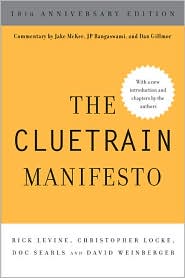
Cluetrain 10th Anniversary edition
Cluetrain 10th Anniversary
Everything Is Miscellaneous
Small Pieces cover
Small Pieces Loosely Joined
Cluetrain cover
Cluetrain Manifesto
My face
Speaker info
Who am I? (Blog Disclosure Form) Copy this link as RSS address Atom Feed

February 15, 2020

Internet Ritual and Trust

Well, here are two things I never heard of before. First:

Through this intriguing Register report I learned about the DNSSEC root-signing ceremony. It happens quarterly in alternating fashion on the east and west coasts of the US. The carefully scripted ceremony, lasting over two hours, is meant to anchor the web of trust in the DNS, the Internet’s domain name system. To this end it is streamed live and archived for posterity.

So writes Keith Dawson (twitter) in a post on the A Recovering Physicist blog.

Then he notes the resemblance to the second thing:

Reading about this modern ceremony, performed quarterly for 10 years now, immediately put me in mind of a similar ritual, the Trial of the Pyx, staged in London for 738 years, for a substantially similar purpose: anchoring trust in the English currency.

I’d bet against either of these on a “Bluff the Listener” game on Wait Wait Don’t Tell me. But they’re both real.

Here’s some information about the DNSSEC ceremony, taken from the post Keith links to:

The root DNS zone contains information about how to query the top-level domain (TLD) name servers (.com, .edu, .org, etc). It enables Internet users to access domain names in all TLDs, even brand new ones like .software and .bank, making it an integral part of the global Internet.

In How DNSSEC Works, we explained how trust in DNSSEC is derived from the parent zone’s DS resource record. However, the root DNS zone has no parent, so how can we trust the integrity and authenticity of its information?

The article ably describes the trust systems involved, which include trusted institutions and individuals, redundancy, and encryption. And ceremony.

Trust won’t anchor itself.

(Actually that’s quite contestable.)

Tweet
Follow me

Categories: culture, internet, policy Tagged with: dns • internet • trust Date: February 15th, 2020 dw

Be the first to comment »

February 10, 2020

Brink has just posted a piece of mine that suggests that the Internet and machine learning have been teaching companies that our assumptions about the predictability of the future — based in turn on assumptions about the law-like and knowable nature of change — don’t hold. But those are the assumptions that have led to the relatively recent belief in the efficacy of strategy.

My article outlines some of the ways organizations are facing the future differently. And, arguably, more realistically.

Tweet
Follow me

Categories: business, everyday chaos, future, too big to know Tagged with: business • everydaychaos • future Date: February 10th, 2020 dw

Be the first to comment »

January 28, 2020

Games without strategies

Digital Extremes wants to break the trend of live-service games meticulously planning years of content ahead of time using road maps…’What happens then is you don’t have a surprise and you don’t have a world that feels alive,’ [community director Rebecca] Ford says. ‘You have a product that feels like a result of an investor’s meeting 12 months ago.'”

— Steven Messner, “This Means War,” PC Gamer, Feb. 2020, p. 34

Video games have been leading indicators for almost forty years. It was back in the early 1980s that games started welcoming modders who altered the visuals, turning Castle Wolfenstein into Castle Smurfenstein, adding maps, levels, cars, weapons, and rules to game after game. Thus the games became more replayable. Thus the games became whatever users wanted to make them. Thus games — the most rule-bound of activities outside of a law court or a tea ceremony — became purposefully unpredictable.

Rebecca Ford is talking about Warframe, but what she says about planning and road maps points the way for what’s happening with business strategies overall. The Internet has not only gotten us used to an environment that is overwhelming and unpredictable, but we’ve developed approaches that let us leverage that unpredictability, from open platforms to minimum viable products to agile development.

The advantage of strategy is that it enables an organization to focus its attention and resources on a single goal. The disadvantages are that strategic planning assumes that the playing field is relatively stable, and that change general happens according to rules that we can know and apply. But that stability is a dream. Now that we have tech that lets us leverage unpredictability, we are coming to once again recognize that strategies work almost literally by squinting our eyes so tight that they’re almost closed.

Maybe games will help us open our eyes so that we do less strategizing and more playing.

Tweet
Follow me

Categories: business, everyday chaos, games Tagged with: everydaychaos • future • games • internet • machine learning • strategy Date: January 28th, 2020 dw

Be the first to comment »

January 13, 2020

In the public domain, but encumbered

It is fantastic that 14 Paris museums have put images of 150,000 artworks into the public domain. Go take a look. It makes the world visibly better.

But …

…The images are easily accessible one at a time for a human who is browsing. You can also click to download it, and then do whatever you want with it. But they are, apparently purposefully, difficult to batch download. That deprives us of the ability to set computers onto the images and their metadata so that they can discover relationships, and patterns of relationships, among them. That’s a lost opportunity.

I understand it’s hard for institutions to give up on the credit they deserve for maintaining these artworks. Items put in the public domain can be passed around and duplicated without any reference to the source that made them available, or even to the artist who created them. But in return, the culture gets to freely share those images, and to incorporate them into new works, which helps to preserve and extend our shared culture.

So I don’t want to be ungrateful for this enormous gift to the world. But one more step – say, an open API that enables batch download – and the world can benefit even more from these museum’s awesome generosity.

(Hat tip to Keith Dawson.)

Tweet
Follow me

Categories: culture, free culture, open access Tagged with: art • culture • free culture • museums • open access Date: January 13th, 2020 dw

Be the first to comment »

January 8, 2020

Y2K’s 1% solution

Just over twenty years ago, computer scientists were racing the clock to fix a possibly devastating error brought about by an over-estimation of the pace at which tech becomes obsolete, which is an over-estimation of the pace of change itself. It turns out that one of the two popular solutions to the problem made the same mistake. And now we’re paying for it, but mainly through some annoyances, not the sort of world-stopping calamity that the prior error threatened.

The problem twenty years ago was that software developers had with some frequency thought that storing the year could be done with two digits, so that 1970 would be saved as 70. After all, the program wouldn’t still be used in 2000! Would we also still be driving around on earth-bound cars, or giving poodles ridiculous haircuts? Ridiculous!

But, if those apps were in fact still be used as the new millennium began, then the two digits internally representing the year would be taken internally as 00, which would be likely to confuse a computer that would assume – based on the way numbers work – that 00 (2000) comes before 70 (1970). And 2001 would look like 1901, etc.

One approach developers took to preempt the Y2K (year two thousand) bug was to change the way the programs expressed date data, allotting four digits to the year. We shall call this “the right way.” But it’s more complex than it seems. For example, you may have to find every place in a complex, integrated set of programs where the date is referred to. You may have to recompile ancient code, unearthing compilers from ancient crypts guarded by three-headed dogs. It was a freaking nightmare for many organizations.

The second approach was to write a little code that looked for year dates between 00 and 20, and write an except that takes them as referring to 2000-2020. Most applications aren’t dealing with dates going back to the beginning of the 20th century, so that worked. Chris Stokel-Walter (twitter: @stokel) in his excellent, brief explainer in New Scientist, says that an estimated 80% of Y2K solutions took this approach, known as “windowing”, but which we shall refer to it as the “Please don’t do this” approach.

Well, now it’s 2020 and some indeterminate number of windowed apps haven’t updated the fix. Thus, some traffic meters have stopped working. As Chris writes, “The theory was that these windowed systems would be outmoded by the time 2020 arrived…”

So, exactly the same over-estimation of the pace of tech obsolescence has led to exactly the same problem. Surprise?

It’s not at all clear, however, who has made this mistake. The developers implementing the windowing patch were staving off an imminent, plausible crashing of globally crucial systems. Windowing was a reasonable approach to forestalling this crisis … but only if there was a system – a human system – to remember to allocate resources for fixing the problem that the patch postponed.

Conclusion: “Human system” is an oxymoron.

Tweet
Follow me

Categories: tech Tagged with: everydaychaos • systems • tech • y2k Date: January 8th, 2020 dw

Be the first to comment »

January 5, 2020

“Just fucking blog”

This title is the last line of a post from Bix.

Here is the post’s opening:

So, this research from Orbit Media (via Andy McIlwain) should actually be read as a list of all the things we should ignore if we truly want to revive the blogosphere.

Bix’s post is correct.

Tweet
Follow me

Categories: blogs Date: January 5th, 2020 dw

Be the first to comment »

December 31, 2019

Early animation

Here are links to the earliest cartoons in Riochard Brody’s excellent article, “Draw Stars,” in the Dec. 30, 2019 New Yorker. (Note: Racist and other stereotypes below.)


Emile Cole, Fantasmagorie, 1908, restored. (Original)

Winsor McCay, Little Nemo, 1911:

McCay, Gertie the Dinosaur, 1914:


Max and Dave Fleischer, Out of the Inkwell: The Tantalizing Fly, 1919 (remastered):

The Fleischers, Jumping Beans, 1922 (remastered):

Wallace Carlson (Bray Studios), How Cartoons Are Made, 1919:

Wallace Carlson, He resolves not to smoke, 1914:

Gregory La Cava, The Breath of a Nation, 1919:


Joseph Sunn claymation: Green Pastures, 1919:


Wallace McCutcheon’s merging of Green Pastures with live action, in The Sculptor’s Nightmare:


Howard S. Moss stop action, Mary & Gretel, part 1, 1916:


Mary & Gretel, part 2:


Walter Ruttmann’s abstract Opus 1, 1921:


Lette Reiniger’s silhouette Cinderella, 1921:


Bryant Fryer’s silhouette Follow the Swallow, 1927:

Tweet
Follow me

Categories: culture, free culture, liveblog Tagged with: animation • culture • history • movies Date: December 31st, 2019 dw

Be the first to comment »

November 24, 2019

It’s official

I did an image search on this photo to see whether it’s openly licensed. Google couldn’t find it, but here’s what it told me:

Nailed it.

Tweet
Follow me

Categories: humor Tagged with: old man Date: November 24th, 2019 dw

Be the first to comment »

November 18, 2019

It’s official: You MUST read Everyday Chaos

Inc. magazine has named Everyday Chaos as one of its 11 “must read” books for entrepreneurs. “For product makers, industry shakers, and folks who want to be their best selves, these are the titles to read now.”

The article’s author, Leigh Buchanan, does an excellent job encapsulating the book:

Weinberger, for decades one of the most prescient and philosophical thinkers about the internet, here tackles the broader subject of how technology influences the way we understand and function in the world. Moving back and forth between ancient history and 10 minutes from now, Everyday Chaos explains that fixed-future ideas like progress and preparation are insufficient in the face of multiplying layers of complexity. Yet as our decision-making is overtaken by machines, it becomes possible to operate without our own hypotheses about what will work. Weinberger advocates for operating in a state of “unanticipation” in which we leave options open (think minimal viable products, agile development, and black swans). In this way of looking at the world, traditional strategy can be dangerous. Obscurity is your friend.

Tweet
Follow me

Categories: everyday chaos Date: November 18th, 2019 dw

Be the first to comment »

The inefficiency of order. The efficiency (and beauty) of chaos

In “The Efficiency-Destroying Magic of Tidying Up“, Florent Crivello (twitter: @Altimor) has written a clear, convincing, and compact critique of the assumption that efficient organization is tidy, neat, and rectilinear. “[E]fficiency tends to look messy, and good looks tend to be inefficient.”

This is because complex systems — like laws, cities, or corporate processes — are the products of a thousand factors, each pulling in a different direction. And even if each factor is tidy taken separately, things quickly get messy when they all merge together

He applies this to management organization, the tool sets used by collaborators, city planning, science fiction visions of the future, parenting, and pizzas.

Not to mention that in one brief, beautiful essay he unites the themes of two of my books: Everything Is Miscellaneous and my new Everyday Chaos.

Tweet
Follow me

Categories: everyday chaos, everythingIsMiscellaneous, machine learning Tagged with: chaos • everydaychaos • everythingismisc • neatness Date: November 18th, 2019 dw

Be the first to comment »

« Previous Page | Next Page »


Creative Commons License
This work is licensed under a Creative Commons Attribution-NonCommercial-ShareAlike 3.0 Unported License.
TL;DR: Share this post freely, but attribute it to me (name (David Weinberger) and link to it), and don't use it commercially without my permission.

Joho the Blog uses WordPress blogging software.
Thank you, WordPress!