logo
EverydayChaos
Everyday Chaos
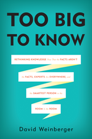
Too Big to Know
Too Big to Know
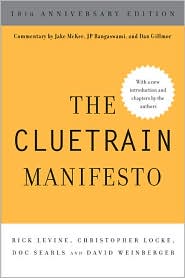
Cluetrain 10th Anniversary edition
Cluetrain 10th Anniversary
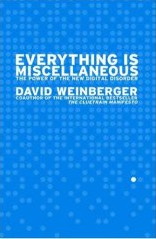
Everything Is Miscellaneous
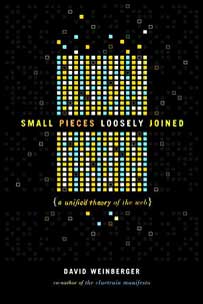
Small Pieces cover
Small Pieces Loosely Joined
Cluetrain cover
Cluetrain Manifesto
My face
Speaker info
Who am I? (Blog Disclosure Form) Copy this link as RSS address Atom Feed

October 20, 2015

How the Berkman Fellows program works

The Ford Foundation was wondering what it could learn from the success of the Berkman fellows program, and Berkman asked me to write it. It’s titled “Fifteen Lessons from the Berkman Fellows Program,” and it’s just been posted [pdf].

And, yes, as someone on the Berkman mailing list pointed out, we should have done this in listicle form, adding “And #6 will change your life!”
Tweet
Follow me

Categories: misc Tagged with: fellows • harvard Date: October 20th, 2015 dw

Be the first to comment »

October 19, 2015

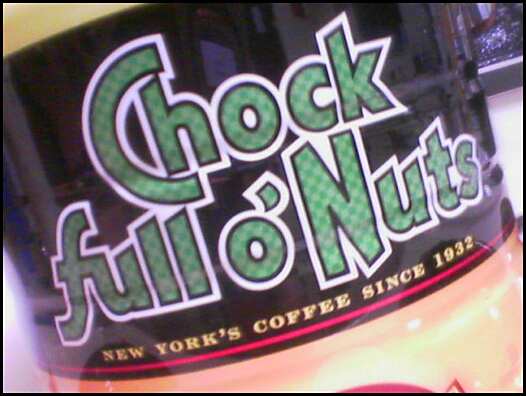
Seven questions for Chock Full o’ Nuts

chockfull
  1. Who buys this?

  2. Why did I buy it?

  3. Why would any major store give it shelf space?

  4. Can someone please get its lying jingle out of my head? (“Better coffee a millionaire’s money can’t buy.”)

  5. Can someone please get its bitter tastelessness out of my mouth?

  6. In ten years when I am about to give it another try, would someone please send me a link to this post?

  7. WHERE ARE THE NUTS YOU PROMISED?


Photo linked to a 404 page at WNYC by Sheri at Flickr.com who posted it with a CC license, saying that WNYC published it “with permission,” which doesn’t mean that it can be republished without permission, but who knows at this point? So if this is your goddamn “intellectual property” I am sooooo sorry for depriving you of all the money you were going to make from this glorious piece of work. Also, thank you.

Tweet
Follow me

Categories: misc Tagged with: better coffee millionaires money cant buy • coffee • marketing • nostalgia • nyc Date: October 19th, 2015 dw

6 Comments »

October 16, 2015

A victory for fair use

The Second Circuit Court of Appeals today upheld the decision that permits Google Books to scan and index books to make them searchable and for data mining. The court agreed that this is fair use. It also generalized the prior court’s finding so now libraries can also scan their own collection, so long as they provide access as limited as Google Books does. Woohoo!

Here’s the surprisingly readable decision [pdf].

The Authors Guild has now vowed it’s going to appeal to the Supreme Court. But I don’t get it.

Not that this necessarily matters to the legal case, but has the Authors Guild been able to attribute any actual damage to Google Books? Their site today says:

America owes its thriving literary culture to copyright protection. It is because of that success that today we take copyright incentives for granted, and that courts as respected as the Second Circuit are unable to see the damaging effect that uses such as Google’s will have on authors’ potential income.

If Google Books hasn’t produced any visible damage so far, shouldn’t that count as evidence that “uses such as Google’s” are unlikely to damage the interests of AG’s constituency?

In a longer piece on its site, the AG says:

Google Books will indeed harm the market for books,

and

Further, if Google’s doing so is fair use, then it sets a precedent allowing anyone to digitize books for similar purposes, which inevitably will lead to widespread, free, and unrestricted availability of books online.

But at this point, eleven years after the beginning of the suit, shouldn’t they be able to demonstrate some of that inevitable harm? Did the prior ruling lead to any increase in the unrestricted availability of free books online?

Haven’t we tested The Authors Guild’s hypothesis?

Tweet
Follow me

Categories: misc Tagged with: copyleft • fair use • google Date: October 16th, 2015 dw

Be the first to comment »

October 15, 2015

Samuel Butler's early technodeterminism

“If all machines were to be annihilated at one moment, so that not a knife nor lever nor rag of clothing nor anything whatsoever were left to man but his bare body alone that he was born with, and if all knowledge of mechanical laws were taken from him so that he could make no more machines, and all machine-made food destroyed so that the race of man should be left as it were naked upon a desert island, we should become extinct in six weeks. A few miserable individuals might linger, but even these in a year or two would become worse than monkeys. Man’s very soul is due to the machines; it is a machine-made thing: he thinks as he thinks, and feels as he feels, through the work that machines have wrought upon him, and their existence is quite as much a sine quâ non for his, as his for theirs.”

Samuel Butler, Erewhon, Chapter XXIV, 1872.

This is less rhapsodic than it may seem, for it continues:

“This fact precludes us from proposing the complete annihilation of machinery, but surely it indicates that we should destroy as many of them as we can possibly dispense with, lest they should tyrannise over us even more completely.”

Tweet
Follow me

Categories: misc Tagged with: andy clark • future • technodeterminism Date: October 15th, 2015 dw

Be the first to comment »

September 30, 2015

The miracle of the one network

The Open University of Catalania just posted a very brief article of mine about the importance of the fact that Big Data is also Networked Big Data. Upon reading it in “print” I see that I buried the lede.

The amazing thing is that the same network that connects our machines also connects us. This enables a seamless conversation: “if you can get at the data, you can get at people talking about the data”if you can get at the data, you can get at people talking about the data.

Not only does the same network connect the data and the people making sense of the data, but layers of interoperability have grown on top of it. Increasingly the data is accessible in ways that make it easier and easier for humans to mash it up. And, of course, the sense that humans make of those mashups gets expressed in ways that are interoperable for humans: in language, with links.

That we take this awesomeness for granted makes that awesomeness awesome.

Tweet
Follow me

Categories: misc Tagged with: big data • net neutrality • network architecture Date: September 30th, 2015 dw

Be the first to comment »

September 20, 2015

One of these things is not the same

To judge by the plaints of educators and employers the pressing danger of the republic is inaccuracy: the school-boy does not know how to add, nor the biological assistant to dissect, nor the graduate student in history to tell a story truly. We know that the daily press has little regard for truth, because every evening paper is constantly convicting every morning rival of falsehood. Public speakers make up their anecdotes and distil wrong deductions into the minds of their hearers; the records of Congress are full of speeches that were never spoken, and omit much of the raciness of actual debate.

That’s the opening paragraph of “Imagination in History” by Albert Bushnell Hart, published in 1910. Replace “every evening newspaper” with “every news medium” and to bring this paragraph up to date we’d only have to drop the assumption that there’s actual debate in Congress.

A source of consolation or a reason to despair?

Since Hart’s article’s point is that this complaint goes back centuries when it comes to the study of history. E.g.,

  • “The Middle Ages much enjoyed fabricating the ancients.”

  • “The eighteenth century is the golden age of imaginary historians…”

  • “Of the multitude of forgeries in the nineteenth century the palm goes to the French artist in vellum, Lucas, who fairly carried on a jobbing trade in spurious letters. Among the 27,000…”

Tweet
Follow me

Categories: misc Date: September 20th, 2015 dw

Be the first to comment »

September 10, 2015

Hannibal and blurring the line between authors and fans even further

[NO SPOILERS NON-ALERT]

Here’s Bryan Fuller, creator of the Hannibal TV series:

…I don’t think I’ll be able to accurately articulate my appreciation for the enthusiasm of this fanbase that has taken this show, made it their own and created parallel worlds of fan fiction to this work of fan fiction — because that’s very much what this show is. I feel like it was a unique experience of myself as a fannibal, writing the show as I imagined it — it was my fan fiction — and then sharing it with other fan fiction writers who then elaborated on it in their own ways. It was a wonderful communal experience. I’ve never had a show in the thick of the Twitterverse like I did with “Hannibal,” and it was a really fantastic, exciting experience…

Tweet
Follow me

Categories: misc Tagged with: fan fiction Date: September 10th, 2015 dw

1 Comment »

September 9, 2015

Colbert’s promising (and worrying) first show

What follows is my opinion. As such, it is correct. [NO SPOILERS NON-ALERT: The following gives away the segments but no jokes.]

I thought Stephen Colbert’s first show was uneven, in some ways promising and in other ways worrying.

Worrying was the mediocrity of the opening monologue. When you have nine months to come up with jokes, you ought to be able to come up with better jokes than those. So say I who did not have to come up with any jokes. (Colbert was nervous during it, but he’ll get over that.) On the other hand, I thought that the Trump/Oreos bit was Colbert Report caliber material. And I liked that it was media criticism more than Trump criticism.

Also worrisome: I thought the Clooney interview was an almost total disaster. He stuck with the prepared questions, for example not following up on Clooney’s Darfur answer. The prepared bit it awkwardly segued into might have worked if the discussion had been improvised, but was really disappointing as a sketch. I did like, however, the admission that they’re not actually friends. And Clooney, of course, was gracious, deferential, and charming.

If this is what the celebrity interviews are going to be like, we’re in trouble.

But then we had the very promising interview with Jeb! Bush. It was unscripted, funny, and sharp. And it was a relief to see Colbert unshackled from the conservative persona that made the interviews on his prior show hit-or-miss. If Colbert can engage in that level of discussion with his future guests, we’re in for something good — if only because that will require him to invite smart guests who have something significant to talk about.

As for the music, well, these all-star jams feel awfully gimmicky to me. I mean, if you’re going to have Mavis Staples singing, don’t give her a quick slice of our attention. Likewise for Buddy Guy. It’d be more efficient if the invited musicians all just signed a greeting card instead.

Tweet
Follow me

Categories: misc Tagged with: colbert • comedy Date: September 9th, 2015 dw

Be the first to comment »

September 6, 2015

Lessig: Winning by losing

As of this morning, Lawrence Lessig is $9,000 short of his million dollar Kickstarter goal of funding his presidential bid. It look very much like Larry will be running for president.

It is a weird bid with virtually no chance of winning. Which makes it easier to support it.

Ethan Zuckerman’s post is what you should be reading about this. You should stop reading this post and go to his now.

Still here? Ok, that’s a mistake, but it’s up to you.

Ethan and I agree about Larry’s brilliance, his dedication, and his good heart. I’ve know Larry for about fifteen years, and I trust him twice as much as I distrust every other politician in the race. I completely agree with him that we’re never going to get to where we need to be so long as money buys elections and thus buys politicians. I think Larry would be a better president than almost all the people running. I love the cleverness of the electoral hack that Larry’s come up with.

But here’s my concern.

I agree with Ethan that Larry has no real chance of winning. If so, then his campaign is a “winning by losing” tactic: if it demonstrates that there is wide support for real campaign finance reform, then we’ve all won. Big Time, as one esteemed politician once said.

We will have won if Larry garners enough support in the early part of the campaign to force the issue onto the agenda. Thinking about him at the debates bringing the conversation back to the funding issue makes me happy.

But, there is one slightly longer-term danger that worries me. When Democrats step into the voting booth on primary day, some percentage of people who think campaign finance reform is important are going to cast their vote for Bernie, Hillary, or Joe because they don’t want to “waste” their vote on a symbolic gesture. But there are virtually no people who think finance reform is important but not all-important who are going to vote for Larry instead of for a “real” candidate. The result could very well be, I’m afraid, that Lessig’s totals in the primaries will under-represent support for campaign finance reform. His candidacy may therefore make finance reform look more marginal than it actually is.

So, there’s a possible lose-by-losing outcome here. That’s my fear.

But I find this very hard to think about without knowing who his VP candidate will be, for this is not really a referendum. In a referendum, your vote on an issue is independent of your vote for a candidate. In this case, though, you’re also voting for a president-in-waiting who will take over once Larry resigns. If you favor campaign reform but don’t like his VP, will you still vote for Larry? And vice versa? The results are going to be hard to parse, which is not true of actual referenda.

If the primary results undercount the support for the issue, my hope is that that actual vote count will be far less influential than Larry’s presence in the campaign before the voting begins. Assuming that he can’t actually win, I and all (?) of his supporters hope that Larry does well enough on the campaign trail that his campaign gets coopted by one of the more electorally plausible candidates, so that campaign finance reform becomes a major issue in the campaign.

For that to happen, we need to support his campaign now. Which I do. But, weirdly, I don’t support only his campaign.


This addendum will self-destruct, possibly very soon.

My family talked briefly this morning about who Lessig’s VP might be. One of us thinks it’ll be a conservative. I have an odd hunch that I recognize makes no actual sense: Al Gore for VP?

But another had the interesting idea that Lessig will promise it will be whoever comes in second in the Democratic primaries. That way, if you prefer, say, Sanders to Lessig as an actual president, but you support campaign finance reform, you could get both by voting for Lessig. Of course, Sanders wouldn’t want his vote split. I find this all difficult to think about…

Tweet
Follow me

Categories: misc Tagged with: corruption • lessig Date: September 6th, 2015 dw

2 Comments »

September 1, 2015

Is it time to start newsletters again?

My Boston Globe op-ed yesterday argued that blogging still matters. But it’s also got me wondering: Is the time ripe for newsletters again?

I wrote a personal newsletter for about ten years. It started out as an in-house mailer at Open Text where I was VP of Strategic Marketing in the mid-1990s. It came out every week or two and was titled DWOTIO: David Weinberger’s Open Text Inside Out (I think). News, views, humor, witty repartee with people who sent me email about it.

I’d coined the phrase “hyperlinked organization” there, and when I left I started a new newsletter called “Journal of the Hyperlinked Organization,” or JOHO. Hence the name of this blog. The phrase “hyperlinked organization” didn’t quite catch on (Deniro decided to make “Analyze This” instead), but I stuck with it and started sending out a free newsletter about every three weeks.

Each issue had one substantial essay, a couple more that were lighter and quicker, and witty repartee with people who sent me email about it. It also had a a humorous contest that no one ever entered, a “cool tool,” and a very brief write-up of an article about a company doing something interesting with the Web.

It took a lot of time, and not just to write it. It took me way longer to create HTML and text versions than you’d think; back then not all email readers supported HTML. Even just had formatting the HTML was a pain in the tuchus. (It’s way easier now, kids.)

But it was totally worth it. I had a direct connection to 7,000 people. They wrote in and I responded in the newsletter itself. It got me writing. When I wrote “In the future, everyone will be famous to 15 people,” that’s what I meant.

Then blogging happened.

For about ten years, I posted every day, often more than once. It took more and more of my energy. RSS let you subscribe to my blog. So what did my newsletter add? It faded away.

But now I’m thinking it might be time to start it up again.

Blogs are a pull medium, but not a lot of people pull on this blog. Newsletters are an opt-in push medium. I don’t know (and I don’t want to know — really, don’t tell me) how many people check my blog with any frequency, but I suspect it’s in the dozens. I love those people deeply, but that means that if I want to each a wider audience, I have to publish in the equivalent of online magazines. I do that and I’m truly glad for the opportunity. It’s a privilege. But that doesn’t establish the sort of intimacy that ritualized reading can.

It also means that my voice as an author works only for that one article, and the reader only hears me in that one voice. Turn the web page and the next author has to her establish her own presence. But a newsletter is a space that more fully expresses the author. JOHO was famously garish, ugly and amateurish. Welcome to me, people!

So, it’s tempting. I would still blog, of course. But: Can I come up with enough mid-range articles? Can I come up with a set of repeating pieces — like the old “Cool tools” — that will be interesting enough but won’t paint me into a corner? Would anyone read it? Would it be worth the commitment?

I don’t know.

But I’m not the only blogger in this situation. With mainstream web magazines providing a way to reach a lot of people with longer-form articles, blogs working for shorter and more informal pieces (or for anything you want), Facebook for quick personal posts, and everything else for everything else, the ecosystem might be ready for the next round of personal newsletters. Maybe.

Tweet
Follow me

Categories: misc Tagged with: blogging • media • newsletters Date: September 1st, 2015 dw

5 Comments »

« Previous Page | Next Page »


Creative Commons License
This work is licensed under a Creative Commons Attribution-NonCommercial-ShareAlike 3.0 Unported License.
TL;DR: Share this post freely, but attribute it to me (name (David Weinberger) and link to it), and don't use it commercially without my permission.

Joho the Blog uses WordPress blogging software.
Thank you, WordPress!