

logo
EverydayChaos
Everyday Chaos
Too Big to Know
Too Big to Know
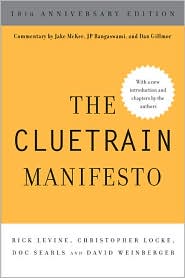
Cluetrain 10th Anniversary edition
Cluetrain 10th Anniversary
Everything Is Miscellaneous
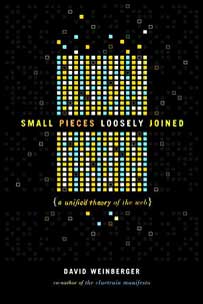
Small Pieces cover
Small Pieces Loosely Joined
Cluetrain cover
Cluetrain Manifesto
My face
Speaker info
Who am I? (Blog Disclosure Form) Copy this link as RSS address Atom Feed

June 29, 2012

[aspen][2b2k] Ideo’s Tim Brown

Tim Brown of Ideo is opening his Aspen Ideas Festival talk with a slide presentation called “From Newton to Design”. He says he’s early in thinking it through.

He points to a problem in how we’ve thought about design, trained designers, and have practiced design. The great thing about designing simple products is that you can know almost everything about them: who made them, who they’re for, how they were produced, etc. But as products get more complicated, it gets harder even for a team of designers to really understand what’s going on. They get so complicated that there are lots of places design can fail.

When we go out to urban planning , that becomes even more obvious, he says. He shows Union Sq. when it was designed and how wildly NYC has grown around it. Or, at the Courtyard Marriott chain, every element of the user’s experience has been thought through. He shows a script that specifies every interaction. But you can’t anticipate everything. E.g., JetBlue is one of the best designed customer experiences and even they got it wrong a couple of winters ago.

What’s going on? It’s all about complexity. Henri Poincaré in the 19th century tried to solve the three body problem that had been set by the French govt as an open source competition. HP couldn’t solve it. It sounds like a simple problem, but it’s very hard. [BTW, there’s a fascinating history of three French aristocrats hand-computing the movement of Halley’s Comet, which depended on calculating the gravitational influences of multiple bodies. Can’t find the ref at the moment]

Our basic ideas about design have been based on Newton, says Tim. Design assumes the ability to predict the future based on the present. We need to think more like Darwin: design as an evolutionary process. Design is more about emergence, never finished.

He presents a few principles of Darwinian design that he’s been exploring.

1. Design behaviors, not objects — the behaviors that come from our interactions with objects. If you’ve traveled on the high speed trains in Europe, there are signs urging men to be more accurate when peeing. But at Schiphol Airport, they print a fly at the right spot in the urinal; men became 80% more accurate. That’s designing behavior; the actual object doesn’t matter.

2. Design for information flow. Nicholas Christakis has looked at how networks affect behavior. Tesco uses its loyalty card — which cost them 20% of their margins — to increase sales.

3. Faster iteration = faster evolution. Viruses evolve faster than we do because they iterate faster than we do. E.g., State Farm tried out a new idea how to build relationships with the new generation. They built one storefront for this, and learned from it. “Launch to learn.”

4. Use selective emergence. This intrigues him, alathough he doesn’t know how useful it will be in design. Rather than random mutations, you choose what might be interesting and design things that get us there through many iterations. I.e., genetic algorithms. E.g., the Strandbeest walks along beaches with a hip joint unlike any in nature because the artist used genetic algorithms.

5. Take an experimental approach. I.e., testing hypotheses. Cf. Eric Ries, the Lean Startup (build, measure, learn). E.g., Ideo.org has been working on sanitation in Ghana. Where you can’t dig septic pits, Ideo has been experimenting with low cost receptacle toilets (with bio-digesters). But people didn’t want to pay for the service. So, they gave some to families and went away for three days. All the families changed their minds and said they are willing to pay for the service (which is provided by a local franchise).

6. Focus on simple rules. This comes from emergence theory. E.g., complex bird flocking patterns are based on simple rules. [Canonical example: Termite mounds.] E.g., Bi-Rite stores in SF uses simple rules: If an employee is within 10′ of a customer, you look the customer in the eye. If within 4′, you talk with them. This creates a wonderful service experience.

7. Design is never done. E.g., World of Warcraft is constantly being designed by its players.

8. The power of purpose. This creates the self-governance these complex environments succeed. Arab Spring and Occupy Wall Street are examples. Companies are experimenting with new ways of thinking about their business and products. E.g., Patagonia tells you not to buy its products because it also wants to preserve the environment.

The prototypical design artefact is a blue print. Once you created the blue print, the design was done. It was the instruction set for someone to make it. That’s how we think about design: finish and done. What replaces it: Code. It might be DNA (and Tim has people researching this), but more often it’s programming code. It’s an instruction set that can continue to evolve.

Now James Fallows [swoon] interviews him.

JF: You embody your principles. The rules are differen from a prior version. [ACK! Crash. Missed about 2 minutes]

TB: We’ve just finished designing the prototype experience for the new health care exchanges. It will affect how people choose which health care insurance to choose. Today it’s done with paper. Under the new health care laws, lots of people will get to make these choices. We worked with the CA Healthcare Foundation to prototype the user experience. What are the key pieces are parts? How can we keep the choices reasonably simple? Then each state will use this a platform to develop their own.

JF: And the govt had the wit to come to you to do this?

TB: The CA Health Care Foundation…

JF: What are the barriers? Does it cost more to do it your way?

TB: It’s often less costly. Most often they don’t have a good understanding of what their customers go through. When a health care org comes to us, relatively frequently we find out that a senior exec had to go through the health care experience. It’s true of all organizations. We don’t ask the right questions. The urgency to change is not there, and the resistance to change is always huge.

JF: Has the TSA come to you?

TB: Yes, but … well, we learned a lot. In the previous admin, we worked with them to find areas of change. Although going through the scanners has to improve, a lot of it has to do with the behavior of the people. They looked at a training program that was intended to take away some of the rule-based system they used. The more rules you apply, the less sensitive the system is. You need to give the people in that system much more independence to make judgments.

JF: Who do you hire?

TB: We look for a wide range of people. Many disciplines. We look for deep skills, and for empathy. It’s hard to solve problems for others without that. Also, most of what we do is too complex for individuals, so we work in teams, and thus people need an enthusiasm for empathy.

JF: Any unusual interview techniques?

TB: We put people into a situation in which they’re practicing design. E.g., intern program. Also, competitions. And we use Open Ideo as a way of seeing how people work.

JF: Beyond the toilet, what else are you doing for “design for poverty.”

TB: I got excited when I saw the opportunities for design in some social design work. At Open Ideo we’re working on clean water, early ed programs, etc. Ideo.org is a non-profit org. We want it to be sustainable and scalable so we look for external funding for it.

JF: How do you approach environmental sustainability?

TB: We try to build that into every project. Every project affects the environment. We try to bring sustainable thinking around systems, materials, energy flows, etc.

JF: What projects are you proudest of?

TB: The work we do in health care, including with Kaiser Permanente. Also, consumer-facing, post-crash financial services. PNC digital wallet. “Keep the change.” Etc. This is not an area where design has had much to do.

JF:

TB: For physical objects, it peaked maybe 20-30 years ago (with Apple as an exception). But we’re in ascendance for behavior-based designed. We get 25,000 apps a year for 100 openings. We’re a 600-person company. Etsy, Kickstarter, sw designed better than ever before…great things are happening. Soon if not already the number of digital designers will be greater than all other designers combined.

Q & A

Q: Your principles are so close to Buckminister Fuller’s [says the guy from the Fuller institute]. But the boundary between social and evolutionary systems is illusory.

TB: Yes, Fuller figured this out a long time ago. We’re perhaps resurrecting ideas, as every generation does. Design has operated as a priesthood for too long. When I started, I was only interested in how beautiful something is. That’s so much simpler. Opening design up to many more will convince us all that we’re all part of this big design ecosystem and have a responsibility to be thoughtful about the contributions we’re making to the world around us. I hope professional designers learn to enable that, more than controlling it. The B School at Stanford is introducing non-designers to design, which is great.

Q: What can we do to simplify the rules?

TB: The unstated bit of my thesis is that you still have to stop and design something. We develop an idea, perhaps more through iteration. That process doesn’t change. For rebuilding a complex system, maybe big data will help us to see patterns that allow us to understand what we’re designing’s complex effects…but I don’t think we’re there yet. We should be thinking about the hooks we’re building in. I’m big into APIs that allow other people to build with what you’ve built.

Q: Is it training or DNA that determines a good employee for you?

TB: Both. We hire people straight out of grad school because they’re moldable. We hire older people, but it’s harder for them to adapt. I don’t have much control as CEO. The future of all businesses is to have cultures that are a s self-governing as possible. That’s much more resilient and agile than cultures built on inflexible rule sets.

Q: I chair a land conservancy. We create parks in urban areas. Does Ideo have much experience in designing to create behaviors that will get people to use parks? What’s your view of the state of park design?

TB: We don’t have a lot of expertise in designing anything because we like designing everything. The High Line and the West Side park in NYC are remarkable examples. Projects like that show that parks can be remarkable assets to the city. We’re working with High Line on the third phase of that project. NYC’s life expectancy has gone up 3 yrs. Two explanations: People are closer to health facilities, and people walk more.

Q: What are the logistics of running a decentralized org? Mentoring? Sharing a vision?

TB: Purpose creates a sense of direction, so we talk about why the heck we’re doing what we’re doing. We think we should measure everything we do based on the impact it has on the word. We’ve done an occasionally decent job of mentoring; that can be a problem with a decentralized org. It’s a tension. Most of our employees probably want more mentoring, but we also want autonomy. We are not big believers in warehousing knowledge. Designers hate reusing other people’s ideas. It’s much better to have knowledge systems that inspire people to think in new ways. So we’re a storytelling culture. It’s a bit of an obsession of ours. If you do a piece of work, your job is to have some stories to tell about it. That’s more effective than big reports that live in a database somewhere.

(JF calls for all remaining questions)

Q: My group works with at-risk youth. Education is increasingly standards based, but your work is collaborative.

Q: How do you look at chaos? People in open markets are open and affectionate. In corporate controlled spaces, people shut down.

Q: Does form drive function or vice versa?

Q: Apple is a closed system. Google wants more control. Open vs. controlled systems?

TB: 1. University ed is not always the best way to teach entrepreneurship. Apprenticeships are interesting. 2. Great markets are vibrant, but not chaotic. I take clients to the Ferry building to point out all the interrelated pieces that make that such a great experience. It’s not top down, but you can see the patterns and use them as inspiration. 3. Form follow function? Hard to kick that notion because I believe in beautiful engineering, but most things we’re designing today have hundreds of functions, so you can’t get a single form for it. 4. I love closed systems but I think they’re inevitably part of an open system. IOS is part of an open system of everything else that I do with it. We need both. [At last! Something I disagree with! Sort of! :)]

[Fantastic. I’ve been a huge fan of Ideo’s work, and Ideo’s organizational ethos, and Tim Brown, for a long time. So I felt particularly narcissistic as I heard this talk through Cluetrain and Too Big to Know lenses. Substitute “knowledge” for “design” and you get a lot of the ideas in 2b2k. To hear them coming from Tim Brown, who is a personal idol of mine, was a self-centered thrill.]

Tweet
Follow me

Categories: business, cluetrain, culture, liveblog, too big to know Tagged with: 2b2k • aspenideas • cluetrain • design • innovation • liveblog Date: June 29th, 2012 dw

7 Comments »

June 28, 2012

[aspen] Amanda Michel and Matt Thompson on how the media have changed recently

Amanda Michel, who I know from her time at the Berkman Center, is being interviewed by Matt Thompson. She’s pretty amazing: Howard Dean campaign, Huffpo’s Off the Bus, Pro Publica, and now social media at The Guardian. She’s talking with Matt Thompson from NPR.

NOTE: Live-blogging. Getting things wrong. Missing points. Omitting key information. Introducing artificial choppiness. Over-emphasizing small matters. Paraphrasing badly. Not running a spellpchecker. Mangling other people’s ideas and words. You are warned, people.

She says that the Off the Bus effort now strikes her as surprisingly structured and profesionalized. For a year and a half, they recruited citizen journalists. Of the 12,000 of the people who participated, only 14% wanted to write articles on their own. The formalized approach Off the Bus took has been adopted by sites that invite readers to contribute their photos, their thoughts, etc.

The biggest shift, she says, is how much the campaigns rely upon data. E.g., how did Romney think he could win Iowa with just a few offices? The people who worked for him had identified die-hard supporters, who were asked to call other supporters, who were also then asked to call. In 2004, we the people were making media constantly. Now the engines driving the campaign are largely under the hood. So, if you’re reporting on campaigns today, you’re doing email analysis to understand the candidates’ strategies

Matt: It’s amazing how much media people now have woven into their days. A study shows that people are now spending 700 mins a day on media. Media is now a layer on top of people’s everyday experience. We looked at how a persistent story — a storm damaging a town — has been told throughout history. The single thing that stood out: We’ve gone from medium as an appointment you keep to media as a constant texture that both succors and buffets you.

Amanda: That’s why in 2008 we used a formalized approach — asking reporters to sign up and giving them assignments — and now people know if they go to a campaign event, they’ll be asked to post photos and twist.

Amanda: How has the shift between media and people changed?

Matt: We used to broadcast. We used to send out msgs. Now people use their mobile devices to talk with one another. We sit in this space, right alongside them. For us at NPR, that position is sweet. Radio is intimate. People can now carry us with them. That intimacy has created a drastically new dynamic for us.

Amanda: At Pro Publica, we worked on “explainers,” explaining questions people have. Readers told us they were particularly useful. I’m interested in how we can hold those in power accountable. We did the “stimulus spotcheck” to see how the economic stimulus money was being used. We asked our readers if we could tell what was going on. I asked readers to help us identify sites. Readers checked 550 sites around the country — 4.5% of construction sites aroiund the country — and we found that that gusher of work was further down the pipeline.

After making multiple phone calls, readers would sometimes say, “Journalism is hard,” which helps them understand the value of journalism.

The big challenge for media institutions is to keep their eye on the ball. The ubiquity of media can give you the false confidence that you’re seeing all there is. You’re checking Twitter, but many stories are much more difficult to find, and there are many people who don’t have a voice.

Amanda: Matt, what do you see coming?

Matt: I try to work through with the journalists the idea that we’re moving from stories toward streams. Humans have told one another stories forever, and will do so. But stories with beginnings, middles, and ends, are being augmented by the constant stream of info. Andy Carvin is constantly tracking events in the Middle East over Twitter. It’s a very different experience — no beginning, middle, end. Twitter gives you a sense of the texture of the lives of the people you follow. “We’re encountering the end of endings,” said Paul Ford. At NPR we’re trying to pull back to tell a longer story, a quest.

Amanda: There is this real need to see the context. Other trends: We’re going to be making sense of the world through the visual. We’re moving from the written word toward the image. At The Guardian, we think about how to bring people along in an ongoing process. How do you tether together items in the stream?

[Great session. My fave so far. But I’m a pretty big fan of both of these people.]

Tweet
Follow me

Categories: cluetrain, liveblog, media, social media Tagged with: aspen • aspenfuture • cluetrain • journalism • liveblog • npr Date: June 28th, 2012 dw

2 Comments »

June 2, 2012

Distribution models that work. Are we finally getting it (them) right?

Is it just me, or are we in a period when new distribution models are burgeoning? For example:

1. Kickstarter, of course, but not just for startups trying to kickstart their business. For example, Amanda Palmer joined the Louis CK club a couple of days ago by raising more than a million bucks there for her new album. (She got my $5 :) As AFP has explained, she is able to get this type of support from her fans because she treats her fans honestly, frankly, with respect, and most of all, with trust.

2. At VODO, you can get your indie movie distributed via bittorrent. If it starts taking off, VODO may feature it. VODO also works with sponsors to support you. From my point of view as a user, I torrented “E11,” a movie about rock climbing, for free, or I could have paid $5 to stream it for 10 days with the ability to share the deal with two other people. VODO may be thinking that bittorrenting is scary enough to many people that they’ll prefer to get it the easy way by paying $5. VODO tells you where your money is going (70% goes to the artist), and treats us with respect and trust.

3. I love Humble Bundle as a way of distributing indie games. Periodically the site offers a bundled set of five games for as much as you want to pay. When you check out, you’re given sliders so you can divvy up the amount as you want among the game developers, including sending some or all to two designated charities. If you pay more than the average (currently $7.82), you get a sixth game. Each Bundle is available for two weeks. They’ve sold 331,000 bundles in the past three days, which Mr. Calculator says comes to $2,588,420. All the games are all un-copy-protected and run on PCs and Macs. Buying a Humble Bundle is a great experience. You’re treated with respect. You are trusted. You have an opportunity to do some good by buying these games. And that’s very cool, since usually sites trying to sell you stuff act as if buying that stuff is the most important thing in the world.

4. I’m hardly the first to notice that Steam has what may be the best distribution system around for mass market entertainment. They’re getting users to pay for $60 games that they otherwise might have pirated by making it so easy to buy them, and by seeming to be on the customer’s side. You buy your PC game at their site, download it from them, and start it up from there. They frequently run crazy sales on popular games for a couple of days, and the game makers report that there is enough price elasticity that they make out well. If I were Valve (the owners of Steam), I’d be branching out into the delivery of mainstream movies.

There’s of course much much more going on. But that’s my point: We seem to be figuring out how to manage digital distribution in new and successful ways. The common threads seem to be: Treat your customers with respect. Trust them. Make it easy for them to do what they want to do with the content. Have a sense of perspective about what you’re doing. Let the artists and the fans communicate. Be on your customers’ side.

Put them all together and what do you have? Treat us like people who care about the works we’re buying, the artists who made them, about one another, and about the world beyond the sale.

Tweet
Follow me

Categories: business, cluetrain Tagged with: business • cluetrain • games • video Date: June 2nd, 2012 dw

5 Comments »

May 25, 2012

[mesh] Michael O’Connor Clarke

Yesterday at the Mesh conference I caught the second half of Michael O’Connor Clarke‘s presentation, to a packed house, about how not to use social media for marketing. I’ve known Michael since the Cluetrain days, and it was great to warch him argue against viewing social media as a messaging vehicle.

Michael has long championed understanding the Net as, well, a conversation that needs to be respected. Keeping that conversation as open and vibrant as possible is more important than your business’s tawdry ambitions, he says. (I am not just paraphrasing here, but entirely putting words in his mouth.) If your business wants to engage with it — and not every business has to, he says — then it should be engaged with by actual people, with actual names, actual interests, and actual personalities. Completely transparently, of course.

Great teaching, great examples, plus Michael’s hilarious. [Michael on twitter]

Tweet
Follow me

Categories: cluetrain, marketing, social media Tagged with: cluetrain • marketing • michaelocc • pr • social media Date: May 25th, 2012 dw

5 Comments »

April 13, 2012

[2b2k] The power of extreme diversity

Brian Millar has a brief article in FastCompany about his company’s strategy of consulting “extreme customers” to get insight into existing products and ideas for new ones. He writes, “You can learn a lot about mobile phones by talking to a power user. You can learn even more by talking to somebody who’s deliberately never bought one.” And

We recently worked with some Brazilian transsexuals on hair-removal products, looking at ways of making the process less painful. I can assure you, we had their full attention. Some are still sending us ideas.

It’s a great illustration of the fact that innovation tends to come from the intersection of orthogonal streets.

Tweet
Follow me

Categories: business, cluetrain, marketing, too big to know Tagged with: 2b2k • creativity • diversity Date: April 13th, 2012 dw

Be the first to comment »

March 28, 2012

The Gettysburg Principles for keeping your customers

I’ve got a post at the Harvard Business Review site about what I’m calling (not too seriously) The Gettysburg Principles. The point is that you can keep your customers buying from you if your business is of your customers, by your customers, and for your customers. “Of” means that your business is made up of people like your customers. “By” means that your customers are contributing to the creation of your product. “For” your customers means you put them first. These three terms give a handy way of analyzing why customers stick with some businesses even if they have to pay a bit more or make some other adjustments.

Anyway, there’s more over at HBR…

Tweet
Follow me

Categories: business, cluetrain, marketing Tagged with: business • cluetrain • marketing Date: March 28th, 2012 dw

5 Comments »

March 12, 2012

Time for the Patent Office to move off of TIFF?

Look up a patent at the US Patent Office site, click on “Images” to see the image, and the chances are very good that you’ll get the sense that people are patenting white paper over and over and over again. The images generally do not show up. (Example)

A little exploration (which you shouldn’t have to do) explains that this is knowingly broken:

These full-page images are not directly viewable using most Web browsers.They are in 300 d.p.i. Tagged Image File Format (TIFF). However, there are many variants — or “flavors” — of TIFF, including different ways of compressing the image data within the TIFF file. The TIFF flavor used by PTO and other countries’ intellectual property offices is international standard ITU T.6 or CCITT Group 4 (G4) compression. Displaying them requires either a TIFF G4 plug-in for your browser, or a properly installed and configured application to which your browser sends G4 TIFF images for display. Note that relatively few image viewers and plug-ins handle G4 compression.

So, here’s an idea: Convert the images to a format that browsers can handle. Post those. Make TIFF the format you have to ask for specially.

Would a business post links to images that they know won’t show up, and make you go to a Help page to discover why? (Thanks to Greg Cavanagh for the alert.)

Tweet
Follow me

Categories: cluetrain, egov Tagged with: patents • tiffs • usability • uspto Date: March 12th, 2012 dw

3 Comments »

February 6, 2012

How to go viral at Kickstarter

Julianne Chatelain investigates why Rich Berlew’s Kickstarter project became one of the top ten of all time, and the #1 in the creative category. She provides a concise, insightful look at why user experience counts for a lot, even when you’re supposedly just making a business proposal: give me $57,750 and I’ll reprint one of my “Order of the Stick” web-comic compilations. Berlew received $400,000 in the first 12 days.

Tweet
Follow me

Categories: business, cluetrain, culture, marketing Tagged with: kickstarter • ux Date: February 6th, 2012 dw

1 Comment »

January 30, 2012

Why I hate Verizon, Reason #254

How much do I owe Verizon this month for a connection at a summer cottage I share with my siblings? $38.04. For not having service.

That breaks down to $12.70 for a suspended phone line, $9.99 for a suspended Internet connection, $5.50 for having them turn off our long distance service, and taxes. (They didn’t record my initial request in early October to turn off the Internet, rather than suspend it, but go argue.)

I’m only surprised Verizon isn’t charging me more per month for not having a higher level of service.

Tweet
Follow me

Categories: cluetrain Tagged with: cluetrain • verizon Date: January 30th, 2012 dw

4 Comments »

November 8, 2011

Warm Birthday Wishes to [your_name_here]

It used to be that on my birthday I’d get untouched-by-humans birthday wishes from my dentist’s firm and perhaps a local car company and real estate agent. Now I get them from sites I once age-verified for (gaming sites, not porn, fellas), a Prius forum, a diabetes forum, and — one level of abstraction up — from Xing itself.

If these groups are going to issue pro forma birthday wishes, I think they ought to be required to hire someone who has to sit there and actually think warmly about each person before pressing the “send” button.

And then, as a special birthday present, keep your stupid marketing messages to yourself.

Tweet
Follow me

Categories: cluetrain, marketing, whines Tagged with: birthday • cluetrain • marketing Date: November 8th, 2011 dw

2 Comments »

« Previous Page | Next Page »


Creative Commons License
This work is licensed under a Creative Commons Attribution-NonCommercial-ShareAlike 3.0 Unported License.
TL;DR: Share this post freely, but attribute it to me (name (David Weinberger) and link to it), and don't use it commercially without my permission.

Joho the Blog uses WordPress blogging software.
Thank you, WordPress!