



logo
EverydayChaos
Everyday Chaos
Too Big to Know
Too Big to Know
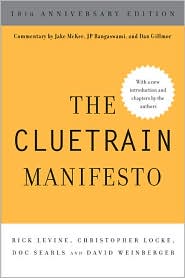
Cluetrain 10th Anniversary edition
Cluetrain 10th Anniversary
Everything Is Miscellaneous
Small Pieces cover
Small Pieces Loosely Joined
Cluetrain cover
Cluetrain Manifesto
My face
Speaker info
Who am I? (Blog Disclosure Form) Copy this link as RSS address Atom Feed

May 23, 2012

Customer support (and collateral PR) at Reddit: How it’s done

A user who goes by the name Loyal2nes (NES = Nintendo gaming platform) had a problem: the game Civilization 4 kept crashing. So s/he posted about it on the game maker’s customer support site. Two days later, a customer support agent, Alexis L, replied that the problem is that Loyal2nes’s device only has 4096mb of RAM, whereas it needs at least 2 gigabytes. Unfortunately, Alexis did not understand that 4096 megabytes is the same as 4 gigabytes. Ooops.

Loyal2nes posted a screencapture of the exchange under a sarcastic headline, and opened up a thread about it at Reddit, where it climbed to the front page.

And the top-voted comment among the 460+ comments is from the Reddit user dahanese. Here’s her response:

Hey Loyal –

I’m Elizabeth Tobey and I’m the head of customer service – first off, I want to apologize because that’s a pretty embarrassing mistake. Secondly, I want to let you know I’m reopening your ticket and escalating it up. Chances are, I won’t get a response from the team who can help test out tonight and we’ll have a bit more back and forth in the coming days to try and troubleshoot the issue, but I promise I won’t tell you 4096MB is under spec and close your ticket.

Let me know if you have more questions now (although we can use the Support system and not reddit if you want!)

-e.

It doesn’t end there, though. Elizabeth stays with the thread as it expands and diverges. She’s frank, funny, and, as the thread continues, makes it clear that she’s not an interloper at Reddit. In fact, she’s been a Redditor (participant) for a while, participating in the threads that interest her. Often those threads are about gaming, but she also comments on ther serendipitous topics that make Reddit so much fun.

So, what’s so right about how Elizabeth handled this?

  • Her reply was frank, helpful, non-defensive, and understood the customer’s point of view

  • She identified herself by name and position

  • She exhibited a genuine interest in the overall thread, not simply in patching up a problem

  • She was speaking for 2K but very clearly also as herself and in her own voice

  • She spoke in a way that did not just serve her employer but, more importantly, served the conversation

  • She was already a member of the community — an enabler for the rest of this list

The only thing that could have made this a better example of how customer support and public relations is changing would be if Elizabeth were not the head of Customer Support but was an empowered customer support rep. But all the other main themes are there. Clear as day.

Tweet
Follow me

Categories: business, marketing Tagged with: cluetrain • customer support • marketing • pr Date: May 23rd, 2012 dw

2 Comments »

May 22, 2012

Documents: Dead or grizzled survivors?

My friend Frank Gilbane has unearthed anissue of my old e-zine from 1998 in which I proposed that documents are dead, and in which he counter-proposed that they are not. This morning Frank writes: “I was gratified to find that I still agree with my 1998-self, and will check with David to see whether he is the same self he was.”

I will acknowledge that there is one itsy-bitsy way in which Frank was right and I was wrong: Documents are not dead. And it’s also undeniably the case that Web sites have not taken over from them. But I do think I was sort of right about some points in that post.

So, we still write and read documents. Just today, for example, I was at a contentious meeting of a task force at which we debated what the structure of our final report should be. The finality of the document is serving as a forcing function for getting us literally on the same page. It’s not a very elegant mechanism, but neither is a 15-pound sledge hammer, yet it’s sometimes the tool for the job.

But, we write and read old-style documents in a context saturated with documents that are more like the Web sites my old post describes. Indeed, the document the task force is working on is a Google Doc where we are tussling by writing (and over-writing) collaboratively, using the built-in, minimal chatting function. Not a lot like an old document…until the moment we have to declare it done and settled. It lives once we pronounce it dead, so to speak.

And the task force is pulling into our report material posted on the Web site we created for the project. The one with drafts and plenty of places for people to comment.

In 1998 blogging wasn’t yet a thing, and a whole bunch of old style document work has moved onto the Web — and has taken up webby characteristics — in that form. The task force’s web site uses blogging software. (Actually, I think it may not. But it could have.)

Then there are the streams of tweets that match some of the characteristics my old post describes as the future of documents. And the rise of wikis that are never fully done. And the wild aggregation and re-aggregation of content. And RSS feeds. Etc. etc.

So, no, documents live. But they are surrounded be an ecosystem that is overflowing with variants on documents that have the characteristics my old post pointed to. I was wrong about the death of documents, but not so wrong about the direction we were headed in.

Still, let me be clear: I was wrong.

Happy, Frank? :)

Tweet
Follow me

Categories: business Tagged with: documents • frank gilbane Date: May 22nd, 2012 dw

Be the first to comment »

April 13, 2012

[2b2k] The power of extreme diversity

Brian Millar has a brief article in FastCompany about his company’s strategy of consulting “extreme customers” to get insight into existing products and ideas for new ones. He writes, “You can learn a lot about mobile phones by talking to a power user. You can learn even more by talking to somebody who’s deliberately never bought one.” And

We recently worked with some Brazilian transsexuals on hair-removal products, looking at ways of making the process less painful. I can assure you, we had their full attention. Some are still sending us ideas.

It’s a great illustration of the fact that innovation tends to come from the intersection of orthogonal streets.

Tweet
Follow me

Categories: business, cluetrain, marketing, too big to know Tagged with: 2b2k • creativity • diversity Date: April 13th, 2012 dw

Be the first to comment »

March 28, 2012

The Gettysburg Principles for keeping your customers

I’ve got a post at the Harvard Business Review site about what I’m calling (not too seriously) The Gettysburg Principles. The point is that you can keep your customers buying from you if your business is of your customers, by your customers, and for your customers. “Of” means that your business is made up of people like your customers. “By” means that your customers are contributing to the creation of your product. “For” your customers means you put them first. These three terms give a handy way of analyzing why customers stick with some businesses even if they have to pay a bit more or make some other adjustments.

Anyway, there’s more over at HBR…

Tweet
Follow me

Categories: business, cluetrain, marketing Tagged with: business • cluetrain • marketing Date: March 28th, 2012 dw

5 Comments »

February 6, 2012

How to go viral at Kickstarter

Julianne Chatelain investigates why Rich Berlew’s Kickstarter project became one of the top ten of all time, and the #1 in the creative category. She provides a concise, insightful look at why user experience counts for a lot, even when you’re supposedly just making a business proposal: give me $57,750 and I’ll reprint one of my “Order of the Stick” web-comic compilations. Berlew received $400,000 in the first 12 days.

Tweet
Follow me

Categories: business, cluetrain, culture, marketing Tagged with: kickstarter • ux Date: February 6th, 2012 dw

1 Comment »

January 3, 2012

[2b2k] Marketplace Tech on Too Big to Know

Today is the official launch of Too Big to Know. Yay!

Marketplace Tech ran a 4 minute interview with me about it this morning. More interviews etc. are coming up, including on WNPR (Connecticut public radio) with Colin McEnroe at 1 pm today.

I will, alas, be noting media/marketing stuff on this blog over the next few weeks.

Tweet
Follow me

Categories: business, too big to know Tagged with: 2b2k • business Date: January 3rd, 2012 dw

5 Comments »

December 11, 2011

If credit card companies cared about security…

1. When there’s a security issue, they wouldn’t robocall people and ask them to provide personal information. They would robocall people and ask them to call the number on the back of their cards.

2. They would put people’s photographs on their credit cards. Citi used to offer that as a free option, but apparently has discontinued the practice.

Tweet
Follow me

Categories: business Tagged with: credit cards • security Date: December 11th, 2011 dw

1 Comment »

November 2, 2011

Social media at work — top down, bottom up

A Cisco study finds that when deciding on job offers, a startlingly high number of college students and recently employed grads value access to social media at work more than salary. And an article by Ann Bednarz at Network World finds that “[e]ven some of the most buttoned-down institutions are rethinking bans and relaxing access to social networks and social media sites.”

So, it looks like everyone should be happy for a change.

Tweet
Follow me

Categories: business, cluetrain, social media Tagged with: business • social media Date: November 2nd, 2011 dw

7 Comments »

November 1, 2011

Eric Frank on Creative Commons textbooks

Eric Frank is the co-founder of Flat World Knowledge, a company that publishes online textbooks that are free via a browser, but cost money if you want to download them. It’s a really interesting model. I interview him here.

Tweet
Follow me

Categories: business, copyright, education, libraries, open access Tagged with: education • podcasts • textbooks Date: November 1st, 2011 dw

Be the first to comment »

September 15, 2011

Iain Tait: the Old Spice man

I’m at a conference in Helsinki. The speaker before me is href=”http://www.crackunit.com/”>Iain Tait, creative director of Weiden + Kennedy, the agency behind the genius of the Old Spice man commercials.

NOTE: Live-blogging. Getting things wrong. Missing points. Omitting key information. Introducing artificial choppiness. Over-emphasizing small matters. Paraphrasing badly. Not running a spellpchecker. Mangling other people’s ideas and words. You are warned, people.

He says the secret of going viral is to find a beautifully attractive man who men feel safe liking, do a personalized social media campaign, etc. It is, in short, completely unrepeatable advice, which is his point.

He talks about how they did 186 personalized videos responding to influential bloggers who had commented favorably on the ad. It was taking 10-15 mins for the text to come in, to tape it, and to post it. To decide who to respond to, they looked at reach but also the creative opportunity: could they find something funny to say. They were careful not to reply only to celebrities, so that everyone would feel they might get a response. They got 40M views in week. And sales went up. And it helped to rebrand Old Spice “which used to be how your grandfather smelled.”

One approach to Web marketing is to go for the “big sneeze”: Create something big and push it hard through every channel you can find. The Old Spice ad went viral through lots of little sneezes: ordinary folks pointing and reposting. The world now works through little sneezes.

You should also try to create “lubrication,” making the act of sharing as frictionless as possible. The personalized videos were all re-shared. To do this, you need something that is “good, funny, or interesting”? It also should be easy to describe to someone else. And “what does the content say about me?” And “Will I get kudos for posting it?” Also, it’s good to respond in human time, not in “brand” time.

“Think about content creating its own media spaces.”

The secret formula for guaranteeing viral effect:

(Big Sneeze) x (Tiny Sneezes to the power of the number of tiny sneezes) x Shareability x (Content and Distribution that play together) x The Intangible. But what is that intangible? What was the magic ingredient in the Old Spice ad? The six pack? The writing? The acting? The rapid response? Unfortunately, the magic is not itself subject to a formula. And if you don’t have any magic, the viral campaign will never amount to anything.

Tweet
Follow me

Categories: business, marketing Tagged with: marketing • viral marketing Date: September 15th, 2011 dw

1 Comment »

« Previous Page | Next Page »


Creative Commons License
This work is licensed under a Creative Commons Attribution-NonCommercial-ShareAlike 3.0 Unported License.
TL;DR: Share this post freely, but attribute it to me (name (David Weinberger) and link to it), and don't use it commercially without my permission.

Joho the Blog uses WordPress blogging software.
Thank you, WordPress!