



logo
EverydayChaos
Everyday Chaos
Too Big to Know
Too Big to Know
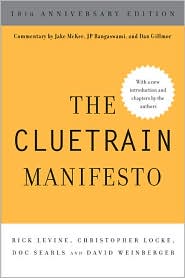
Cluetrain 10th Anniversary edition
Cluetrain 10th Anniversary
Everything Is Miscellaneous
Small Pieces cover
Small Pieces Loosely Joined
Cluetrain cover
Cluetrain Manifesto
My face
Speaker info
Who am I? (Blog Disclosure Form) Copy this link as RSS address Atom Feed

June 16, 2009

Google: Make security the default (Now with Iranian tweets)

Chris Soghoian has posted an open letter to Google, asking it to make encryption the default. This is in line with the talk he gave recently at the Berkman Center.

[Update later that day: Two hours after releasing the letter, Google agreed to try setting encryption as the default for a subset of users, as a trial. If it works out, they’ll consider expanding it.]

Also, Jonathan Zittrain has posted about why the Iranians have problems blocking Twitter. [Tags: google security iran twitter ]

Tweet
Follow me

Categories: Uncategorized Tagged with: digital rights • google • iran • security • twitter Date: June 16th, 2009 dw

Be the first to comment »

[berkman] Beth Kolko: Form, Function and Fiction

Beth Kolko is giving a Berkman lunchtime talk on what her group, Deiagn for Digital Inclusion, has been doing. It’s an interdisciplinary group.

NOTE: Live-blogging. Getting things wrong. Missing points. Omitting key information. Introducing artificial choppiness. Over-emphasizing small matters. Paraphrasing badly. Not running a spellpchecker. Mangling other people’s ideas and words. You are warned, people.

[Beth talks quickly. Hard to keep up.] The questions driving her group’s work: What ICTs are adopted in diverse communities and why. What do they do with ICTs? The aim is to design better technologies and policies.

When we name a technology, she says, we assume technologies have consistent meanings across cultural contexts. But that’s not true. There’s a whole lot of slippage. If you study diversity across disciplines, there’s a lot of research that says that diversity lends robustness. Without diversity, systems are fragile. He groups wants to make design more aware of diversity.

How do you have a conversation that brings in the hardware and software folks, and the social science folks? She says that in her talk, the division between form and function will get smudgy.

Beth says that if you say you study the developing world, they get sleepy because they don’t see how it relates to what they’re doing. So, she and others have reframed this as “resource constraint.” This removes the geographic focus. It also makes it dynamic, not static. Resources can be anything from economic and educational to screen size. The question is: How do you design to accommodate this complexity.

She goes through the methods for the Central Asia portion of her work. It’s quantitative and qualitative. Surveys every year, four countries, 1000 people in each. Interviews with different populations, usabilities tests, ethnography.

Form of tech in resource-constrained environments

1. Internet as weather-dependent technology. In Cambodia in a small village, the Net goes down after it rains because it interrupts the satellite access. The Net is neither ubiquitous nor constant. In Central Asia, access is far more sporadic and they are on for far less time in each session than is typical in, say, Cambridge, MA.

2. Internet as a public resource. Beth’s Central Asian research use the Net about equally at a home, at a friend’s home, and at school/work.

3. Mobile phone as bank. The use of phones for banking has design implications, e.g., how visible is your password?

Function of tech in resource-constrained environments

1. ICTs as strengthener of social neworks. With demographics taken off the table, people who use conventional social networks are more likely to use technology. And people who use technology are more likely to trust others. [I think I got that wrong.] Most people in Beth’s studies use their mobile phones at least once a day.

2. Mobiles as a platform for fraud. Beth got a 419 Nigerian scam SMS msg when in Kenya. “What we use mobiles for is complex.”

3. SMS as a weapon. The role of SMS in revolution. She points to Iran.

4. Games as tech training. Games provide the first touch of ICT for many people. It’s cheaper in Cental Asia to play LAN games than access the Net. About 64% of game players are urban, and 63% are men.

From understanding to building

In one project, they studied how people used mobiles, they’re use of social networks, and the pain points of everyday life. (This is “design ethnography.”) They decided to look at mobile social software (MoSoSo), and a public transporation project (Starbus). They tried to adopt the notion of “personas” based on their surveys and interviews. (Personas are models of typical users.) MoSoSo allows recommendations filtered through one’s social network. Starbus addresses the problem that intercity buses don’t depart until they’re filled. Starbus puts a GPS box on the buses so they can send SMS msgs about where the bus is. You can text it to find out when it will come to the stop near you.

MoSoSo and Starbus both arise from the research that drills down into what it means to be an Internet user.

Q: When do porn and gambling enter the equation?
A: Not gambling because of banking issues. Plenty of porn.

Q: Why do people who use the Net report higher levels of trust?
A: Don’t know.

Q: Correlation between quality of life and Internet use?
A: Hard to know what that means.

Q: Are the public access centers set up by gov’t agencies or entrepreneurial people?
A: The latter.

Q: [me] If I were a businessperson designing for a market…
A: Avoid generalizations about that people X do Y. Get real data about how people are actually using the tech. E.g., if people don’t have GPS in their phones, Starbus opens up the GPS on the bus as a community resource.

Q: [lokman] You have longitudinal studies. Does the slower adoption rate come because of a lack of local content.
A: We’ve done captures of web sites from ’03 or ’04. We’ve looked at the change over time. Until ’07 or ’08, the government site at Uzbekistan said the purpose of the site was to restrict info. I suspect the variance in adoption rate has to do with the split between communication and information tech. Abstract info doesn’t resonate in resource-constrained environments.

Q [colin]: Also, the lack of new media literacy. How does trust and social networks feed into that?
A: The issue of info literacy gets complicated in a post-Soviet context. What looks like media illiteracy may be a different type of media literacy. People sometimes mimeograph materials off the Net and distribute them, which is a different type of media literacy. [Tags: design ux central_asia ethnography beth_kolko ]

Tweet
Follow me

Categories: Uncategorized Tagged with: bridgeblog • culture • design • digital culture • ethnography • ux Date: June 16th, 2009 dw

5 Comments »

Intimacy defined

As Cluetrain’s 10th Anniversary Edition launches, it seems appropriate to note that today I received a notice that the Australian Central Credit Union is now using Consona customer relationship management solutions to overcome its fear of intimacy:

Today, member intimacy is now a core component of ACCU’s competitive advantage, and the Consona CRM solution allows ACCU to:

  • View members’ holdings and interactions across all channels of the organization at a glance;

  • Easily locate or compose customized documents and correspondence in order to respond to an enquiry or provide customer guidance;

  • Reduce and streamline manual and semi-manual work processes, enhancing productivity and providing a more effective audit trail functionality; and

  • Expand its business strategy to adopt an integrated advice model and link members to personalized products and services.

By the way, tonight Doc and I are going to be interviewed by Jonathan Zittrain about Cluetrain. You’re invited: 6pm, Austin Hall. [Tags: cluetrain markting crm vrm ]

Tweet
Follow me

Categories: Uncategorized Tagged with: cluetrain • crm • marketing • markting • vrm Date: June 16th, 2009 dw

4 Comments »

June 15, 2009

How much is the Boston Globe worth?

Ken Doctor says (via Joe Trippi) it’s worth $1:

A buck essentially represents a gentleman’s agreement: I take a liability, headache and a distraction off your hands, says the buyer. I give you the great potential of the Globe brand, a top-25 news web site and improved ability to re-jigger the pieces, thanks to our new contracts and cost-cutting, says the Times.

I think maybe it’s worth $0. But, of course, my financial sense is not very good. So, here’s what I actually mean.

If I were the NY Times, I’d be considering letting the Globe fail entirely, if there’s a way to do that that would wipe the Globe’s debt off the books. Then I’d re-hire some of the columnists and editors, and some of the local reporters (news, sports, business, arts, features, etc.). And I’d announce the new daily Boston insert into the NY Times.

Of course, if the Times can get a buyer willing to pony up substantial cash, and assuming any deal would prevent the Times from hiring current Globe staff, my idea may be quite stupid. Wouldn’t be the first time. [Tags: ]

Tweet
Follow me

Categories: Uncategorized Tagged with: business • everythingIsMiscellaneous • media Date: June 15th, 2009 dw

3 Comments »

June 13, 2009

Microsoft out, Quicken in

Microsoft has announced that as of June 30, it’s no longer going to sell Microsoft Money because the ecology has changed, diminishing the need for products of that sort.

Quicken has announced that as of this summer, it’s going to start selling Quickenan updated version of Quicken for the Mac.

Hmmm.

[Tags: quicken intuit microsoft ]

Tweet
Follow me

Categories: Uncategorized Tagged with: business • intuit • microsoft • quicken Date: June 13th, 2009 dw

1 Comment »

June 12, 2009

Tenth Anniversary of Cluetrain celebration at Berkman

The Berkman Center is putting on a little book launch for the tenth anniversary edition of Cluetrain. Doc and I will be interviewed by the estimable Jonathan Zittrain on the topic “Cluetrain at 10: So How’s Utopia Working Out for Ya?” at 6pm, Tuesday, June 16, at Austin East at Harvard Law [map.

If you can’t make it, or if you’ll only show up if there’s pizza (there isn’t), it’s being webcast.

BTW, the tenth anniversary edition has the complete original text (available here for free), as well as new chapters by each of the four authors, plus an intro to the intro by me, plus articles by Dan Gillmor, Jake McGee, and J.P. Rangaswami.

[Tags: cluetrain ]

Tweet
Follow me

Categories: Uncategorized Tagged with: business • cluetrain • digital culture • marketing Date: June 12th, 2009 dw

1 Comment »

Newsy is meta-newsy

Newsy, a project in collaboration with Univ. of Missouri’s Journalism School, pulls together a half-dozen media reports on a topic, stringing them together with their own reporter-at-a-desk commentary. The sources include mainstream news and less mainstream news. For example, here’s Newsy’s meta-coverage of China’s new Net blockage:

Newsy is a manual curation and production project. At least during this beta phase, it seems to be doing one or two a day, which means they may have more luck getting their stories embedded elsewhere than in drawing a regular crowd to their own site. In fact, the site has announced a syndication deal with Mediacom to provide stories for mid-Missouri cable tv subscribers. (The project is also probably a Fair Use lawsuit magnet, unfortunately.)

[Tags: media news missouri global_voices everything_is_miscellaneous newspapers journalism copyright copyleft fair_use ]

Tweet
Follow me

Categories: Uncategorized Tagged with: copyleft • copyright • everythingIsMiscellaneous • everything_is_miscellaneous • fair_use • global_voices • journalism • knowledge • media • missouri • news • newspapers Date: June 12th, 2009 dw

Be the first to comment »

June 11, 2009

[newmedia] Measuring social media’s effects

NOTE: Live-blogging. Getting things wrong. Missing points. Omitting key information. Introducing artificial choppiness. Over-emphasizing small matters. Paraphrasing badly. Not running a spellpchecker. Mangling other people’s ideas and words. You are warned, people.

Q: How do you define social media at Whirlpool?
Brian Synder: It has to be defined separately for each area, and we tie it back to business objectives. We track share of voice and favorability. On customer service, we do interesting text mining.
Lee Aase (Mayo Clinic): We use the free tools that are available. “The need for measurement varies inversely with the amount of money you spend on it.” We use the measurement tools to prove the value of what we’re doing.

Q: Your biggest challenge?
Marcel Lebrun (Radian6): We only measure if there’s a practical purpose. Social media are now multi-purpose. We use social media for every possible purpose. So, it’s disrupting everything in the enterprise that has to do with reaching out to customers. But those different practices have different business goals and thus different needs for measurement.

Q: Where it’s going?
Marcel: In the past six months, we’ve gone from explaining what social media is, to businesses understanding that their brand is the sum of all the conversations about it.

[Missed some. Sorry]

Q: How do you measure influencers for a brand?
Marcel: We integrate a bunch of digital breadcrumbs and social metrics. We measure things like how often a person talks about a subject, how much comments, how many unique comments, inbound links, which ones of those are also talking about that topic. Influence is very topic-centric. You sometimes want to see total reach, and sometimes you just want to find the topic geeks.

Q: How do you determine sentiment?
Brian: Synergy1 has humans reading the posts. The Tensity program automates this.
Lee: We eyeball it. And we’re looking for the really positive ones so we can spread the word and engage.
Brian: We look to engage by actually talking about product issues. E.g., an unhappy customer was tweeting about a product arriving damaged three times. We talked with him and redesigned the packaging based on his suggestions. We’ve taught some of our customer care phone folks how to engage via social media.
Marcel: The bulk of brands are at the listen stage. But Dell has a full blogger outreach team, focused on different kinds of users. The measure quantitatively and qualitatively (e.g., stories).

Marcel: The fastest way to get a new feature into a product is to tweet it. The developers get excited. They like being in touch.

[Tags: nms09 marketing twitter pr social_media cluetrain ]

Tweet
Follow me

Categories: Uncategorized Tagged with: business • cluetrain • conference coverage • marketing • nms09 • pr • social networks • social_media • twitter Date: June 11th, 2009 dw

1 Comment »

[newmedia] Engagement and transparency in government

Clay Johnson of the Sunlight Foundation and David Almacy (Edelman’s public affairs VP and former Director of Internet Operations, White House) are talking about government and engagement.

NOTE: Live-blogging. Getting things wrong. Missing points. Omitting key information. Introducing artificial choppiness. Over-emphasizing small matters. Paraphrasing badly. Not running a spellpchecker. Mangling other people’s ideas and words. You are warned, people.

Clay says he’s a product guy who likes building things. Coming out of the Dean campaign, he co-founded Blue State Digital. When asked why Obama was successful online, he says he replies “Because Howard Dean had bad lawyers.” He could just build stuff there without consulting lawyers. Now, when they try to apply this stuff to governing, the lawyers are involved, and creativity is coming to a screeching halt, Clay says. But, he says, there’s another way: Publishing data. Data.gov aggregates data from the executive branch. Lots of businesses have been built using gov’t data, and this will be a seed bed.

Clay says that Twitter is as important to a political campaign as email. “I’m willing to go on record that in 2012 Twitter will be a bigger fund-raiser for campaigns than email.” Obama raised 80% of his funds through email. E.g., Tim O’Reilly has 200,000 subscribers.

He talks about Apps for America, a contest for apps that do useful things with open data. The new round has people working with the data at data.gov.

Q: [me] How can we encourage the gov’t and others to produce data in open formats?
Clay: I’m more focused on just getting the data out. I don’t care about the format. We should tell them just to do it in plain text, if that’ll get it out faster. Once the gov’t starts pumping it out we can have the debate about which standards.

[Tags: politics e-gov egov e-government transparency ]

Tweet
Follow me

Categories: Uncategorized Tagged with: conference coverage • e-gov • e-government • egov • everythingIsMiscellaneous • politics • transparency Date: June 11th, 2009 dw

Be the first to comment »

[newmedia] New media in a regulated industry (health)

NOTE: Live-blogging. Getting things wrong. Missing points. Omitting key information. Introducing artificial choppiness. Over-emphasizing small matters. Paraphrasing badly. Not running a spellpchecker. Mangling other people’s ideas and words. You are warned, people.

Marc Monseau (Johnson & Johnson): 50% of people change their behavior based on the medical advice they read on line. And most people are looking for info from other people like themselves. But that info isn’t always accurate. That means that the healthcare industry has an obligation to get out into the online world to present accurate info. We have lots of information, and we are companies of relationships: We have close relations with physician groups, patient groups, advocacy groups, gov’t organizations. We can tap into those resources of information and relations. E.g., we have an ADD product. The best info patients receive often come from other parents. at ADHD Moms at Facebook, there’s info, but also the possibility of linking to other patients. We set it up, but it’s unbranded.

Virginia Cox (Consumer Healthcare Products Association) gives an example: Teens getting high on cough medicine. There were 200 videos on YouTube about how to get high that way. So, we used social media to build awareness among mothers. We were completely transparent about who we are. Another example: We recruited five moms because people want to hear from other people like them. We put it on Gather and then on Facebook. We wanted to have them talking. It meant giving up control over what they’re saying.

Earl Whipple (AstraZeneca) says that while you want to provide accurate information, you don’t want to encroach on the physician-client relationship. You also have to be mindful of gov’t regulations, of course. He also notes that the search results are more often coming from bloggers than from sites of credentialed providers. The most controversial posts get pulled up first, frequently, and many people assume that those are the most reliable. Therefore, the question isn’t what’s the risk of engaging in the new social media space; the question is what’s the risk of not engaging.

Q: How are things changing? How authentic can you be?
Earl: The concept of spokespeople is now laughable. People want to hear directly from the content area expert.
Marc: You can be authentic while talking about highly regulated products by being transparent about what you can talk about and what you can’t. People understand we’re under limitations. And we can at least direct the traffic to the right place.

Q: Info across a global world?
Earl: When we put out information, we include who the information is intended for. It’s an unbounded environment.

Q: What is it that you can’t tell people because of regs?
Marc: The FDA limits what pharmas can say about approved products. If people notice a new use for a product, you have to go back to the script and say what’s on the product label. It doesn’t prevent you from engaging. But you can’t get into a detailed conversation about unapproved uses. And if you come across someone who’s had a problem with the product, you have to report that back.
Virginia: There are strict regulations around advertising. Companies have to be careful about what counts as advertising.
Earl: There are many unanswered issues. E.g., if you’re in a genuine dialog and someone brings up an unapproved use, what exactly is your responsibility?

Q: How do you monitor the Five Moms site, for example?
Virginia: We don’t have to monitor it for content. The Moms respond on their own. But we are required to monitor it for adverse reports, etc.

Q: What should all students know about social media and health if their in the communications field?
Virginia:


From the Five Moms Site:

Tips to monitor your kids online.

* Make sure that your children are never online without your permission.
* Be clear with your kids about your rules on Internet use at home and outside of the home.
* Place your computer in an area of the house where you can easily supervise their Internet activity.
* Ask your children about who they talk to and what activities they do online.
* Use parental filters to block access to questionable sites.
* Build an open and trusting relationship with your kids about their online use.

The last point is an unintentional punchline. [Tags: nms09 pr marketing health_care pharmaceuticals social_media social_netowrking cluetrain ]

Tweet
Follow me

Categories: Uncategorized Tagged with: business • cluetrain • conference coverage • marketing • nms09 • pharmaceuticals • pr Date: June 11th, 2009 dw

1 Comment »

« Previous Page | Next Page »


Creative Commons License
This work is licensed under a Creative Commons Attribution-NonCommercial-ShareAlike 3.0 Unported License.
TL;DR: Share this post freely, but attribute it to me (name (David Weinberger) and link to it), and don't use it commercially without my permission.

Joho the Blog uses WordPress blogging software.
Thank you, WordPress!