

logo
EverydayChaos
Everyday Chaos
Too Big to Know
Too Big to Know
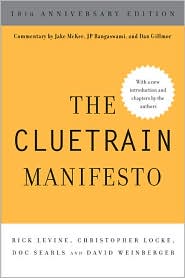
Cluetrain 10th Anniversary edition
Cluetrain 10th Anniversary
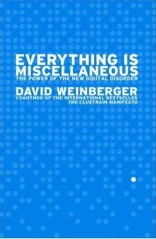
Everything Is Miscellaneous
Small Pieces cover
Small Pieces Loosely Joined
Cluetrain cover
Cluetrain Manifesto
My face
Speaker info
Who am I? (Blog Disclosure Form) Copy this link as RSS address Atom Feed

May 5, 2009

Scanning in a book

Over the past year, I’ve digitized a bunch of my family’s old photo albums by photographing the pages with a digital camera. This is far faster than scanning them, and the quality is good enough and infinitely better than not having any digitized versions.

Now I’m contemplating using the same technique to make a digital copy of my 1978 doctoral dissertation. The object consists of 350 pages of typed, double-spaced 8.5″x11″ pages, bound. At 15 secs per page, that’s about 1.5 hours of time (= 4 Daily Shows, or 3 SNLs with the dross fast-forwarded).

I’d appreciate advice about the digital side of it, given that I’d like the “scans” to be readable online and, ultimately, be OCR-able.

1. My camera goes up to 10 megapixels, which I assume is way more than I need for this project. I don’t care about reproducing the pages as physical artifacts. I’m only interested in the text on them. How many mpixies should I be shooting at?

2. What would be the most convenient way to post these from a reader’s point of view? Anything other than PDF? (Google Books lets you submit your books in PDF format, so I’d like to produce a PDF version in any case.)

3. Depending on your answer to #2, do you have any suggestions of tools to use? (I’m doing this on a Mac.)

4. Any other advice?

Thanks!

[Tags: scanning pdf ]

Tweet
Follow me

Categories: misc Tagged with: misc • pdf • scanning Date: May 5th, 2009 dw

14 Comments »

May 4, 2009

How important is WolframAlpha?

The Independent calls WolframAlpha “An invention that could change the Internet forever.” It concludes: “Wolfram Alpha has the potential to become one of the biggest names on the planet.”

Nova Spivak, a smart Semantic Web guy, says it could be as important as Google.

Ton Zijlstra, on the other hand, who knows a thing or two about knowledge and knowledge management, feels like it’s been overhyped. After seeing the video of Wolfram talking at Harvard, Ton writes:

No crawling? Centralized database, adding data from partners? Manual updating? Adding is tricky? Manually adding metadata (curating)? For all its coolness on the front of WolframAlpha, on the back end this sounds like it’s the mechanical turk of the semantic web.

(“The mechanical turk of the semantic web.” Great phrase. And while I’m in parentheses, ReadWriteWeb has useful screenshots of WolframAlpha, and here’s my unedited 55-minute interview with Wolfram.)

I am somewhere in between, definitely over in the Enthusiastic half of the field. I think WolframAlpha [WA] will become a standard part of the Internet’s tool set, but is not transformative.

WA works because it’s curated. Real human beings decide what topics to include (geography but not 6 Degrees of Courtney Love), which data to ingest, what metadata is worth capturing, how that metadata is interrelated (= an ontology), which correlations to present to the user when she queries it (daily tonnage of fish captured by the French compared to daily production of garbage in NYC), and how that information should be presented. Wolfram insists that an expert be present in each data stream to ensure the quality of the data. Given all that human intervention, WA then performs its algorithmic computations … which are themselves curated. WA is as curated as an almanac.

Curation is a source of its strength. It increases the reliability of the information, it enables the computations, and it lets the results pages present interesting and relevant information far beyond the simple factual answer to the question. The richness of those pages will be big factor in the site’s success.

Curation is also WA’s limitation. If it stays purely curated, without areas in which the Big Anyone can contribute, it won’t be able to grow at Internet speeds. Someone with a good idea — provide info on meds and interactions, or add recipes so ingredients can be mashed up with nutritional and ecological info — will have to suggest it to WolframAlpha, Inc. and hope they take it up. (You could to this sorta kinda through the API, but not get the scaling effects of actually adding data to the system.) And WA will suffer from the perspectival problems inevitable in all curated systems: WA reflects Stephen Wolfram’s interests and perspective. It covers what he thinks is interesting. It covers it from his point of view. It will have to make decisions on topics for which there are no good answers: Is Pluto a planet? Does Scientology go on the list of religions? Does the page on rabbits include nutritional information about rabbit meat? (That, by the way, was Wolfram’s example in my interview of him. If you look at the site from Europe, a “rabbit” query does include the nutritional info, but not if you log in from a US IP address.) But WA doesn’t have to scale up to Internet Supersize to be supersized useful.

So, given those strengths and limitations, how important is WA?

Once people figure out what types of questions it’s good at, I think it will become a standard part of our tools, and for some areas of inquiry, it may be indispensable. I don’t know those areas well enough to give an example that will hold up, but I can imagine WA becoming the first place geneticists go when they have a question about a gene sequence or chemists who want to know about a molecule. I think it is likely to be so useful within particular fields that it becomes the standard place to look first…Like IMDB.com for movies, except for broad, multiple fields, with the ability to cross-compute.

But more broadly, is WA the next Google? Does it transform the Internet?

I don’t think so. Its computational abilities mean it does something not currently done (or not done well enough for a crowd of users), and the aesthetics of its responses make it quite accessible. But how many computational questions do you have a day? If you want to know how many tons of fish France catches, WA will work as an almanac. But that’s not transformational. If you want to know how many tons divided by the average weight of a French person, WA is for you. But the computational uses that are distinctive of WA and for which WA will frequently be an astounding tool are not frequent enough for WA to be transformational on the order of a Google or Wikipedia.

There are at least two other ways it could be transformational, however.

First, its biggest effect may be on metadata. If WA takes off, as I suspect it will, people and organizations will want to get their data into it. But to contribute their data, they will have to put it into WA’s metadata schema. Those schema then become a standard way we organize data. WA could be the killer app of the Semantic Web … the app that gives people both a motive for putting their data into ontologies and a standardized set of ontologies that makes it easy to do so.

Second, a robust computational engine with access to a very wide array of data is a new idea on the Internet. (Ok, nothing is new. But WA is going to bring this idea to mainstream awareness.) That transforms our expectations, just as Wikipedia is important not just because it’s a great encyclopedia but because it proved the power of collaborative crowds. But, WA’s lesson — there’s more that can be computed than we ever imagined — isn’t as counter-intuitive as Wikipedia’s, so it is not as apple-cart-upsetting, so it’s not as transformational. Our cultural reaction to Wikipedia is to be amazed by what we’ve done. With WA, we are likely to be amazed by what Wolfram has done.

That is the final reason why I think WA is not likely to be as big a deal as Google or Wikipedia, and I say this while being enthusiastic — wowed, even — about WA. WA’s big benefit is that it answers questions authoritatively. WA nails facts down. (Please take the discussion about facts in a postmodern age into the comments section. Thank you.) It thus ends conversation. Google and Wikipedia aim at continuing and even provoking conversation. They are rich with links and pointers. Even as Wikipedia provides a narrative that it hopes is reliable, it takes every opportunity to get you to go to a new page. WA does have links — including links to Wikipedia — but most are hidden one click below the surface. So, the distinction I’m drawing is far from absolute. Nevertheless, it seems right to me: WA is designed to get you out of a state of doubt by showing you a simple, accurate, reliable, true answer to your question. That’s an important service, but answers can be dead-ends on the Web: you get your answer and get off. WA as question-answerer bookends WA’s curated creation process: A relatively (not totally) closed process that has a great deal of value, but keeps it from the participatory model that generally has had the biggest effects on the Net.

Providing solid, reliable answers to difficult questions is hugely valuable. WolframAlpha’s approach is ambitious and brilliant. WolframAlpha is a genius. But that’s not enough to fundamentally alter the Net.

Nevertheless, I am wowed.[Tags: wolfram wolframalpha wikipedia google search metadata semantic_web ]

Tweet
Follow me

Categories: Uncategorized Tagged with: digital culture • education • everythingIsMiscellaneous • expertise • google • infohistory • knowledge • libraries • metadata • science • search • web 2.0 • wikipedia • wolfram • wolframalpha Date: May 4th, 2009 dw

19 Comments »

May 3, 2009

Whitehouse.gov turns on the comments. Sort of.

To me, the coolest thing about WhiteHouse.gov going all social media on us is not that it shows that the White House knows about this stuff, or even that it understands that we now want the news to come to us. It’s that at the White House Facebook page, the comments are turned on.

I do understand why the WhiteHouse.gov site has been reluctant to allow us to leave comments on the official site. Oh, sure, you can fill out a form and submit it, but this knowingly commits the Fallacy of Scale, i.e., believing that anyone is going to read your message. We want at least to be able to read one another’s messages. But, I assume the staff is afraid that open commenting on White House blog posts will enable situations that are sticky beyond escape. What do you do when people get racist, anti-Muslim, and all around stupid? There are answers, but none are as good (from the White House media point of view) as not enabling the problem in the first place.

So, now WhiteHouse.gov is cross posting to its Facebook page. If you want to comment, go there. Because it’s not the White House’s site, trashy comments don’t littering the White House lawn. Facebook allows WhiteHouse.gov to distance itself sufficiently from the commenters to enable commenting. It’s a great step forward.

The next step: WhiteHouse.gov should respond to some of the comments, either in the comments area or in blog posts themselves.

Meanwhile: Well done, WhiteHouse.gov! Well done.

[Tags: white_house whitehouse.gov egov e-gov cluetrain e-government blogging facebook ]

Tweet
Follow me

Categories: Uncategorized Tagged with: blogging • cluetrain • digital culture • e-gov • e-government • egov • facebook • white_house Date: May 3rd, 2009 dw

15 Comments »

May 2, 2009

Andrew Lih and me on C-SPAN

C-SPAN’s monumentally, overwhelmingly, epically popular series, BookTV, this week is broadcasting the Berkman session with Andrew Lih on his The Wikipedia Revolution that I moderated. Andrew speaks for a few minutes, then I interview him, then the audience asks questions. I thought Andrew’s presentation was terrific, and the audience asked good questions. It’s on Sunday, May 3, at 12:30 AM, Sunday, May 24, at 4:30 PM and — for those for whom twice isn’t enough — at Monday, May 25, at 4:30 AM.

[Tags: andrew_lih wikipedia books everything_is_miscellaneous ]

Tweet
Follow me

Categories: Uncategorized Tagged with: andrew_lih • books • digital culture • education • everything_is_miscellaneous • knowledge • libraries • media • wikipedia Date: May 2nd, 2009 dw

Be the first to comment »

And now, medieval music for cockatoos

I love the dancing cockatoos.

And I love the research that’s found a connection between animals with language skills and animals that can dance.

But I wonder what it means that cockatoos probably can’t dance to most of the music our culture has created throughout its history.


Canconier by Canconier

Did it take until the 20th century for us to de-evolve music to the point that cockatoos could dance to it?

Prednisone: A powerful anti-inflammatory medication that requires careful administration.

Did you know that the timing and dosage of prednisone can significantly impact its effectiveness? This corticosteroid is typically taken orally, but the schedule varies based on your specific condition.

Key points to remember:

• Follow your doctor’s instructions precisely

• Take with food to minimize stomach upset

• Don’t stop abruptly – tapering is often necessary

Curious about potential side effects or interactions? Consult your healthcare provider or pharmacist for personalized advice.

(Note: I also love Magnatune, and the occasional Monty Python reference.)

[Tags: birds cockatoos language dancing monty_python ]

Tweet
Follow me

Categories: misc Tagged with: birds • cockatoos • dancing • language • misc • monty_python Date: May 2nd, 2009 dw

3 Comments »

Facebook doesn’t make your stupid. Whoops.

Remember how the media leapt on the study that showed that being on Facebook lowered your grades in school? The study was, shall we say, flawed. But it was a media-seeking rocket. Now, 2.5 weeks later, Josh Pasek, eian more, and Eszter Hargittai have published “Facebook and academic performance: Reconciling a media sensation with data” at First Monday, a peer-reviewed site.

Here’s the abstract:

A recent draft manuscript suggested that Facebook use might be related to lower academic achievement in college and graduate school (Karpinski, 2009). The report quickly became a media sensation and was picked up by hundreds of news outlets in a matter of days. However, the results were based on correlational data in a draft manuscript that had not been published, or even considered for publication. This paper attempts to replicate the results reported in the press release using three data sets: one with a large sample of undergraduate students from the University of Illinois at Chicago, another with a nationally representative cross sectional sample of American 14– to 22–year–olds, as well as a longitudinal panel of American youth aged 14–23. In none of the samples do we find a robust negative relationship between Facebook use and grades. Indeed, if anything, Facebook use is more common among individuals with higher grades. We also examined how changes in academic performance in the nationally representative sample related to Facebook use and found that Facebook users were no different from non–users.v

And what are the chances that the media are going to trumpet these results that are based on actual data and careful analysis?

[Tags: facebook social_networks media ]

Tweet
Follow me

Categories: Uncategorized Tagged with: digital culture • education • facebook • media • social_networks Date: May 2nd, 2009 dw

1 Comment »

May 1, 2009

Rageboy on the Cluetrain

Chris Locke reflects on Cluetrain then and now. Except “reflects” is way too sober a word. Funny and heartfelt.

[Tags: cluetrain christopher_locke marketing business ]

Tweet
Follow me

Categories: Uncategorized Tagged with: business • cluetrain • marketing Date: May 1st, 2009 dw

Be the first to comment »

On being a fool in a foreign public

Yet another important post from Ethan Zuckerman. He’s working through what it takes to connect with others who are unlike us, and why the Internet has not done much of a job replacing airplane tickets as the way to learn to love difference. Most of the post — which proceeds by telling several stories — puts it in terms of the value of dorkiness. But at the end, Ethan expresses its fuller form: We have to be willing to be a fool in public — and a foreign public, in this case — if we are to forge the bonds that will let us love the difference in others. And all I’d add to this magnificent post is that (it seems to me) in the moment we let ourselves become the fool, we acknowledge the dignity of the place, and we become the foreigner in a homeland.

[Tags: ethan_zuckerman homophily difference everything_is_miscellaneous peace ]

Tweet
Follow me

Categories: Uncategorized Tagged with: bridgeblog • culture • difference • digital culture • ethan_zuckerman • everythingIsMiscellaneous • everything_is_miscellaneous • homophily • peace Date: May 1st, 2009 dw

1 Comment »

« Previous Page


Creative Commons License
This work is licensed under a Creative Commons Attribution-NonCommercial-ShareAlike 3.0 Unported License.
TL;DR: Share this post freely, but attribute it to me (name (David Weinberger) and link to it), and don't use it commercially without my permission.

Joho the Blog uses WordPress blogging software.
Thank you, WordPress!