


logo
EverydayChaos
Everyday Chaos
Too Big to Know
Too Big to Know
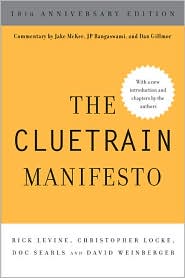
Cluetrain 10th Anniversary edition
Cluetrain 10th Anniversary
Everything Is Miscellaneous
Small Pieces cover
Small Pieces Loosely Joined
Cluetrain cover
Cluetrain Manifesto
My face
Speaker info
Who am I? (Blog Disclosure Form) Copy this link as RSS address Atom Feed

May 9, 2009

n00b guide to digital photography

PC Magazine has a useful guide to taking your digital camera off automatic.

David Sifry’s 2007 guide to buying a digital camera still gives good guidelines, although the particular models he recommends are of their day.

ABetterBounceCard.com tells you how to use a piece of paper to vastly improve the results of flash photos. (via Tim Bray) And here’s a way to make a diffuser for your built-in popup flash. (I haven’t tried it.) Here’s one for $20, which I also have not tried.

[Tags: photography digital_photography cameras flash_diffuser ]

Tweet
Follow me

Categories: misc Tagged with: cameras • digital_photography • flash_diffuser • misc • photography Date: May 9th, 2009 dw

5 Comments »

May 8, 2009

Robin Chase on the smart grid, smart cars, and the power of mesh networks

Pardon the self-bloggery-floggery, but Wired.com has just posted an article of mine that presents Robin “ZipCar” Chase’s argument that the smart grid and smart cars need to be thought about together. Actually, she wants all the infrastructures we’re now building out to adopt open, Net standards, and would prefer that the Internet of Everything be meshed up together. (Time Mag just named Robin as one of the world’s 100 most influential people. We can only hope that’s true.)

The article is currently on Wired’s automotive page, but it may be moved to the main page today or tomorrow.

[Tags: smart_grid mesh infrastructure stimulus ]

Tweet
Follow me

Categories: Uncategorized Tagged with: broadband • everythingIsMiscellaneous • infrastructure • mesh • policy • smart_grid • stimulus • web 2.0 • wifi Date: May 8th, 2009 dw

1 Comment »

WolframAlpha vs. Google

David Talbot at Technology Review has run the same queries through Google and WolframAlpha. (WA isn’t yet open to the general public, i.e., to you and me.) The queries tend to be of the sort that WA will be better at: comparisons and computations. WA comes out well, but be sure to read David’s writeup of comments on his article.

The overall conclusion is, I think, that it’s going to take a while for WA to train us on the sorts of questions it can answer and how best to ask those questions.

(Some me-centric links: Live blog of Wolfram’s presentation at Harvard. Video of that presentation. My podcast interview with him. My too-early assessment of WA.)

[Tags: wolfram everything_is_miscellaneous google wolframalpha ]

Tweet
Follow me

Categories: Uncategorized Tagged with: everythingIsMiscellaneous • everything_is_miscellaneous • google • metadata • wolfram • wolframalpha Date: May 8th, 2009 dw

1 Comment »

Verizon wholesales FIOS access

According to Tim Poulus, citing DSL Reports, Verizon is acting as a wholesaler, allowing DSL Extreme to sell Internet access over Verizon’s FIOS fiber lines. So, if FIOS comes to your premises, you’ll be able to buy your Net access from DSL Extreme (under the name “Fiber Extreme) instead of from Verizon, and it will cost you less than getting access via Verizon: 50Mbps for $99 instead of $150. Verizon will continue to offer a bundle of Net, TV, and telephone at a bundled price. DSL Extreme does not mention Verizon or FIOS in its press release, which is impressive in its own way.

There are subtleties, and perhaps grossnesses, of this deal that I don’t understand. (For example, Tim writes: “This is a WBA (wholesale broadband access) deal, not unbundling (ODF access, which is not really an option on PON networks anyway)…”) But it sounds like a welcome development, since open competition (which this is not (?) because Verizon is picking one particular company to allow onto its fiber) would commoditize access, driving prices down. And it might tend toward neutral, open networks for the same reason that Web browsers want to show you every page you care to point at: Browsers — and networks — that don’t show you every page look broken.

[Tags: net_neutrality verizon fcc broadband ]

Tweet
Follow me

Categories: Uncategorized Tagged with: broadband • fcc • net neutrality • net_neutrality • verizon Date: May 8th, 2009 dw

1 Comment »

May 7, 2009

Stars and Stripes: Blogs away! (OR: The great default switch)

According to Stars and Stripes, military service people are being enabled and encouraged to blog. That military blogging is going on is hardly news, but the degree to which it’s being embraced is remarkable.

It’s part of the Great Default Switch we’re living through in everything from privacy to “piracy.” Where the military default was security and secrecy, now the “Why not?” is becoming “Sure, go ahead — talk and be social.” Within limits, of course. But the news isn’t the blogging and isn’t the limits. It’s the change in defaults.

[Tags: military blogging milblogs defaults ]

Tweet
Follow me

Categories: blogs Tagged with: blogging • blogs • defaults • digital culture • milblogs • military Date: May 7th, 2009 dw

3 Comments »

BradSucks, animated

BradSucks continues to post one new song a month for free download. Of course, you can always download his music for free, or, better, buy it in order to support the webbiest musician on the Web. Here’s his latest (demo): Model Home.

Here’s a music video done by Allen, a pal of his:

[Tags: bradsucks music music_videos ]

Tweet
Follow me

Categories: Uncategorized Tagged with: bradsucks • digital culture • entertainment • music • music_videos Date: May 7th, 2009 dw

4 Comments »

Wolfram podcast

My interview with Stephen Wolfram about WolframAlpha is now available. Some other me-based resources:

The unedited version weighs in at a full 55 minutes. The edited version will spare you some of my throat-clearing, and some dumb questions.

A post about what I think the significance of WolframAlpha will be.

Live blog of Wolfram’s presentation at Harvard.

Wolfram’s presentation at Harvard.

[Tags: wolfram wolframalpha search google metadata science ]

Tweet
Follow me

Categories: Uncategorized Tagged with: education • everythingIsMiscellaneous • expertise • google • knowledge • metadata • science • search • taxonomy • web 2.0 • wolfram • wolframalpha Date: May 7th, 2009 dw

Be the first to comment »

May 6, 2009

Evidence-based journalism

Richard Sambrook, director of the BBC‘s World Service and Global News, has posted an excellent engagement with Jay Rosen’s piece on He Said/ She Said journalism. He agrees that that type of journalism is a problem, but the problem isn’t with the He Said/She Said format. The problem is lazy journalism, says Richard. He points to some cases where we want a juxtaposing of views, which I’m sure Jay agrees with. Richard says his real concern is that some may take Jay’s piece as license to simply spout off. He writes:

Evidence-based reporting, the basis of objectivity (as distinct from impartiality) is in retreat and needs to be bolstered. He Said, She Said started life a hundred years ago as a journalistic discipline to counter yellow-journalism as Pulitzer and others tried to establish a degree of civic responsiblity in the press. It may have run its course but there are many who simply favour journalism of opinion – under the cloak of “calling the story”. I maintain we need evidence, fact-based reporting more than ever in a world awash with information rumour and opinion. That sometimes calls for a journalism of restraint – in which the New York Times (and the BBC) has an honourable tradition.

Evidence-based is a nice way of cutting through the argument about objectivity’s corrupt philosophical underpinnings. Of course, people are going to argue about what counts as evidence and what the evidence means — that is, I disagree with the implication of Richard’s blog’s tagline — “Everyone is entitled to his own opinion but not to his own facts,” Daniel Patrick Moynihan — but evidence is an important term not used often enough in these discussions. Evidence provides a way to disagree that can progress towards truth, or at least towards agreement, or at a minimum, an understanding of where the actual disagreement lies.

Of course, I offer this opinion without any evidence :).

[Tags: journalism objectivity evidence media ]

Tweet
Follow me

Categories: Uncategorized Tagged with: evidence • expertise • journalism • knowledge • media • objectivity Date: May 6th, 2009 dw

Be the first to comment »

May 5, 2009

[berkman] Elizabeth Losh on Obama’s use of social media

Elizabeth Losh of UC Irvine is giving a Berkman lunchtime talk called “From the Crowd to the Cloud: Social Media and the Obama Administration.” She looks at “institutions as digital content creators.”

NOTE: Live-blogging. Getting things wrong. Missing points. Omitting key information. Introducing artificial choppiness. Over-emphasizing small matters. Paraphrasing badly. Not running a spellpchecker. Mangling other people’s ideas and words. You are warned, people.

She begins by pointing to a Congressional hearing in which someone unknowingly referred to some footage from Battlefield 2, in which you can play on either side, as proof that Jihadists are recruiting on the Net.

In the 2008 election, McCain had a series of rhetorical disasters when using social media, Liz says. McCainSpace, she says, was “an unmitigated disaster.” She also points to the mashups done with greenscreen videos of McCain. The Obama campaign, on the other hand, used social media well. It used low bandwidth interactivity effectively (e.g., online tax calculator). And third parties injected memes.

So, how much change has happened now that Obama is president?

It’s not all that difference. She compares 4parents.gov, an abstinence site put up by the Bush administration. The Obama administration has kept it pretty much the same, except that some of the conversation starters have been slightly modified. Ready.gov/kids has moved from featuring mountain lions as the guardians of children (an odd choice, says Liz) to Muppets. The Bush admin did some health initiatives using SecondLife, she points out.

How much privacy? Whitehouse.gov uses YouTube.com and has responded to concerns about the privacy implications. When you leave a .gov domain, it signals that you are leaving a protected area. Liz wonders about the efficacy of using disclaimer language, however. At Change.gov, if you decided to apply for a job, you start getting a lot of emails from the transition team.

The State Dept. Blog, “unfortunately named DipNote,” has been expanded. They twitter now. On Twitter, they’ve responded to citizen questions. E.g., Rebecca MacKinnon pointed out that a Chinese citizen had been arrested. The State Dept. tweeted that they were looking into it, although that tweet was deleted from Twitter shortly afterward. Rebecca also noticed that State Dept. photos posted on Flickr were marked as copyrighted; State now gives them Creative Commons licenses. Liz points to the CC notice and the DMCA takedown notice on the same page at Change.gov and says that there we see the manifestation of the conflict between acknowledging the culture of sharing and the support of existing rules.

She worries about the “googlization of government,” i.e., commercial entities hosting info that is part of the public record. E.g., gov’t sites that use Google Maps.

At Recovery.gov, you are encouraged to “share your story.” But what happens to those comments? How are they archived? Which ones will be displayed. They say in six months they’ll start posting that material, but it’s not clear how.

Q: [me] Whitehouse.gov has started posting at Facebook where people can comment…
A: And this is a disaster for archiving.
Q: What would you do with comments at Whitehouse.gov blog?
A: I’d like to see moderated comments. I do understand that there are limited government resources. Creating digital versions of Congressional records would maybe be a better way to spend the money.

Q: By going onto Facebook, the Admin is reaching out into civic society. That conversation would have been in coffee shops and not part of the public level. So maybe this shouldn’t be archived. How do we draw the lines as the lines between public and private are being blurred?
A: It’s a complicated thing. Suppose there are responses from officials to comments on FB? These are always difficult issues. [Paraphrasing!]

Q: Does government data include the back and forth between citizens? If we say it’s part of the public record, the gov’t won’t be able to participate, or build helpful stuff, as quickly. Would we want an archived federal Twitter that was crappy but kept a permanent record? Should the gov bring more of these social tools in house, or use existing, commercial sites and give up on including everything in the permanent record?
A: I tend toward wanting more stuff in public and archived. Let’s think about harvesting some of the discourse going on in the crowd.

Q: It seems like they’re doing lots of experimentation without the backbone of a full, stable archive behind it. Is this experimentation is leading us into an unknown state…?
A: The Archive is archiving some material on third party sites. The WhiteHouse.com blog is impersonal and press-release-y, while the TSA blog (started under Bush) is folksy. So, some of these experiments have histories.

A: I’d give Recovery.gov low marks for transparency because the PDFs are packed with charts that are not reusable.

Q: Social media is relatively new but and people express things that they don’t want known 5 years later…
A: A student applying for a job as a police officer found that they looked at his FB page and the pages of his friends. In the old days, they would have called his friends and asked questions.
Q: We’ve shifted the line between public and private life. Are we going to be able tor retract things from the public record?
A: That will be an issue.

Q: Any examples of the next frontier or participation, namely direct democracy
A: They still count emails. It’s quantitative, not qualitative. I worry about pseudo-interactivity, such as town hall meetings and the use of the Internet for political spectacle. That’s why I worry about these “share your stories” sites.

Q: During the Malagasi coup, people in Madagascar started talking about the deposed president finding sanctuary in the US Embassy, using Twitter. That could have flash-mobbed the embassy. Within 7 mins, the US embassy had responding, tweeting that the rumor was false. Can we give Obama a little bit of a break? All of us engaged in social media will screw up dozens of times …
A: That’s why we shouldn’t be cheerleaders. “I’m impressed by many of the social media efforts, but I think this form of criticism is important to do.”
Q: How do we encourage people to experiment in these spaces? As people go into these tools, they’re inept at first. At what point does the criticism discourage government officials from experimenting?
A: Many of my criticisms are that they’re not doing enough. Not enough commenting, with data representation, experimenting with new forms of participation.

Q: How much of out-of-the-box thinking are they doing with social media?
A: Theyre usually using them the way people already do. I wish they’d be more experimental.

Q: A crowd consists of the people who are uninformed. Government is about managing uncertainty. But if the info you get is biased and uninformed, you can’t manage. What’s the role of the crowd?
A: I don’t take as dark a view of the crowd. You can create political spectacles where a crowd is just a display, but you can get more participatory forms. There can be smart mobs. There are ways they can participate that are meaningful. The Obama admin is trying to take advantage of social occasions that are oriented around civic identity, not persuasion. “As a rhetorician, this is an interesting administration to watch.”

Q: Are Republicans inherently bad at social media?
A: Not at all. Sam Brownback had a great Web site. It does not divide easily along partisan lines.
Q: It depends in part on the demographics of the party. Libertarians have an incredible presence on line.
Q: Markos Moulitas says that Republican’s political philosophy leads them to be uncomfortable with bottom-up media…
A: Republicans do seem to like talk radio, where only a few get to participate.

Q: There was a time when there were a small number of leftwing political blogs and they bemoaned the fact that they had so little Web presence compared to conservative and libertarian blogs, around 2002-3. The populist element is present in all parties and drives a lot of social media. Some believe that the Dean campaign derailed because it thought the comments on its blog were representative of the world…
A: The postmortems are still being done.

Q: I’m not sure how I feel about the gov’t investing enough in social media to do it well. Experimentation is great, but totally botching it at the federal level isn’t good for anyone…
A: Good search on gov’t websites should be a top priority. To get all of Bush’s signing statements, you’d have to know to search on “shall construe.”

Q: Don’t you need a proprietary company to provide those services?
A: We need to be asking questions. [Tags: egovernment egov e-gov social_media facebook twitter transparency ]

Tweet
Follow me

Categories: Uncategorized Tagged with: e-gov • egov • egovernment • facebook • social networks • transparency • twitter Date: May 5th, 2009 dw

1 Comment »

Philosopher’s Digest digests philosophers

Here’s a useful and provocative resource, suitable for browsing: The Philosopher’s Digest provides juicy engagements with articles in the current philosophical literature, and encourages conversation among readers. (Nit: How about tags?)

[Tags: philosophy ]


Also from Leiter Reports comes a link to The Philosophers Carnival, which talks about philosophy as if it were actually fun.

Tweet
Follow me

Categories: Uncategorized Tagged with: everythingIsMiscellaneous • philosophy Date: May 5th, 2009 dw

Be the first to comment »

« Previous Page | Next Page »


Creative Commons License
This work is licensed under a Creative Commons Attribution-NonCommercial-ShareAlike 3.0 Unported License.
TL;DR: Share this post freely, but attribute it to me (name (David Weinberger) and link to it), and don't use it commercially without my permission.

Joho the Blog uses WordPress blogging software.
Thank you, WordPress!