


logo
EverydayChaos
Everyday Chaos
Too Big to Know
Too Big to Know
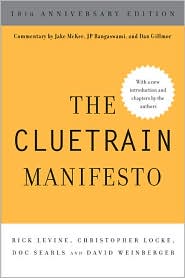
Cluetrain 10th Anniversary edition
Cluetrain 10th Anniversary
Everything Is Miscellaneous
Small Pieces cover
Small Pieces Loosely Joined
Cluetrain cover
Cluetrain Manifesto
My face
Speaker info
Who am I? (Blog Disclosure Form) Copy this link as RSS address Atom Feed

January 20, 2006

Request for Program: Notetella

I remain surprised that I can’t find a program that lets me do the most basic of research tasks: Take notes. on books…you know, the paper-based web sites we used to read.

Oh, sure, there are word processors and various outliners, some of which are terrific. But note-taking has some specific requirements. So, here’s my RFP for a program I’m calling Notetella for purposes of discussion. (“RFP” is short for “Easy for you to say.”)

It’s got a stand-alone client and a Web portion.

Client

The client lets me enter the bibliographic data for a source I’m reading. The form defaults to showing me all the other notes I’ve created for this source…as if I were writing my notes on a piece of paper.

I can enter notes about the book, with a field for the page the note refers to and a field for my comments

I can tag each source, author and note with multiple tags. It shows me a list of tags I’ve used for this book or project.

The app lets me create a project (e.g., “Article on Pitchers”) and associate a set of sources with that project. The tags I create while working on that project stay associated with it.

Projects can apply to a single article or a cluster of chapters.

I can slice, dice and cluster all those notes at will.

When I put a note into my article, it preps a footnote entry for me suitable for pasting into my article.

It can turn bibliographic entries into text formatted and marked up according to the style I specify.

If I use a note when writing an article in my word processor, I can easily (not sure how) let Notetella know that I’ve used it so I don’t use the same quote twice inadvertently. (This is probably the only feature that couldn’t be implemented as a straightforward database app.)

Web

Why should I have to enter all that data myself? If anyone else has created a bibliographic entry for my source, the Web piece shows it to me.

It also shows me everyone else’s notes on that book.

I can search by book, author, tag, Noteteller (i.e., other participants in the system).

I can leave comments on other people notes.

Every Noteteller gets her own page at the site, as at Delicious.com.

Notetellers can declare particular books or projects to be private, although public is better

I can upload/download notes and projects from my client.

I know there are pieces of this around. There are some great outliners. There are Web-based systems such as Cluebacca and Clipmarks (which got a nice mention in the WSJ today), but they’re also not aimed exactly at my particular needs…and I think my needs in this case are fairly common among people reading books for research.

Sure wish I were a software developer. A really good one. With lots of free time. And an Hawaiian beach house. (Why not?)

Tweet
Follow me

Categories: misc Tagged with: misc Date: January 20th, 2006 dw

5 Comments »

January 19, 2006

Google holding the line

I know lots of people don’t trust Google, and the company certainly has its faults, but I still think it’s the biggest company around that’s on our side in the battle over the future of the Internet.

Two recent issues trying Google’s mettle:

1. Preston Gralla reports that Google has refused to pay special fees to BellSouth and Verizon as part of a tiered service approach that would let the carriers decide who and what type of content gets preference on the Internet.

2. Howard Mintz reports in the Mercury News that Google last year refused to comply with a Bush administration subpoena asking for all the Google searches from any one-week period. They’re apparently trying to catch guys who masturbate to pornographic images of children.

In both these cases, Google could be acting in a purely self-interested way. I actually believe it’s a mix of self-interest and principle. Either way, it’s good to read about a company with clout standing up for what turn out to be our interests as well.

[Tags: google digitalRights]


Mark Hall makes the interesting point that Google’s stand on the subpoena might become a competitive advantage that inspires others to adopt the same stand…engendering market forces that protect us against government intrusion. He points to newspapers as an example. But, as he says, we shouldn’t have to rely “on the power of market forces and profit incentives to secure our fundamental constitutional rights.”

Tweet
Follow me

Categories: Uncategorized Tagged with: digital rights Date: January 19th, 2006 dw

6 Comments »

Blogging an IA paper

Jason Toal had a paper accepted for presentation at the IA Summit. It’s called “The Life of Tags,” (abstract) : “Our paper will pursue potential opportunities for adding a usable layer of rules to the process of tagging.” The sorts of rules are like those in cellular automata systems, such as the game of Life. The abstract puts aside using ontologies to disambiguate tags. Sounds interesting.

So, the first thing Jason did upon hearing his (their?) paper had been accepted was to set up a blog to work on it in public. I know doing this isn’t news, but it still gives me just a smidgeon of hope. What a difference from how research was done ten years ago!

By the way, at the blog I found a link to STEVE — Social Terminology Enhancement through Vernacular Engagement — a project developed by a group of museums to enable social filtering of their collections. Jason writes: “Steve is an attempt to democratize a collections catalogue, not by replacing the curators perspective, but by adding an additional layer of information provided by the public.” Cool. [Tags: jasonToal iaSummit ia taxonomy EverythingIsMiscellaneous museums cellularAutomata]

Tweet
Follow me

Categories: Uncategorized Tagged with: everythingIsMiscellaneous • taxonomy Date: January 19th, 2006 dw

3 Comments »

FYA*: Little bloopers of content, metadata and evolution

Headline in the Brookline Tab:

Vatican Denies Church’s Appeal

No, the Pope has not stated that Catholicism is unappealing. Rather, a local church’s appeal not to be closed was denied.


While I like being told metadata such as what’s the maximum number of stars used in a rating system, I found this from the Boston Globe’s Calendar section to be odd:

Restaurants reviewed by the Globe’s regular critic, Alison Arnett, are rated on a scale of zero to four stars, four being the highest. [Emphasis added.]

Is there a single instance of a rating system using stars to indicate negatives? Just wondering…


And there’s this, which was sent to my sister without attribution:

quarterhorse
Quarterhorse

*FYA= For Your Amusement.

Tweet
Follow me

Categories: Uncategorized Tagged with: humor Date: January 19th, 2006 dw

6 Comments »

January 18, 2006

Rebecca Blood interviews me

Rebecca has posted an email interview with me. The topic is blogging. [Tags: rebeccaBlood blogging]

Tweet
Follow me

Categories: blogs Tagged with: blogs Date: January 18th, 2006 dw

3 Comments »

Dan Bricklin’s wikiCalc

Yesterday, I saw Dan Bricklin demo his new project, wikiCalc. It’s a wiki spreadsheet. Like a spreadsheet, it does calculations on figures in a grid, and lets you enter formatted, cell-straddling text. Like a wiki, it lets anyone with permission make changes. It’s such a good idea that I thought we must already all be using it.

It’s in alpha, so it’s not yet a full-featured spreadsheet, but it’s getting there quickly. Because it’s AJAX-y, the cell editing is interactive. And it’s open source.

Great idea and looks like a cool implementation.

[Tags: wikicalc wikis danBricklin spreadsheets “web 2.0″]

Tweet
Follow me

Categories: Uncategorized Tagged with: web Date: January 18th, 2006 dw

1 Comment »

Accountability vs. anonymity

Bruce Schneier replies to Kevin Kelly’s warnings about anonymity.

I’m with Schneier on this one because of the practical consequences, in the real world, of limiting anonymity and increasing the ability to tie our online identities back to our real world ones. [Tags: anonymity bruceSchneier kevinKelly]

Tweet
Follow me

Categories: Uncategorized Tagged with: digital rights Date: January 18th, 2006 dw

1 Comment »

What went wrong in Iraq?

Andrew Sullivan reviews two books and starts to piece together how “a noble and necessary decision to remove the Saddam Hussein regime result[ed] in such a chaotic occupation.” I find it a plausible explanation. No big surprises in the piece except that the sources are Paul Bremer and Bush pal Fred Barnes. [Tags: iraq georgeBush andrewSullivan politics paulBremer]

Tweet
Follow me

Categories: Uncategorized Tagged with: politics Date: January 18th, 2006 dw

1 Comment »

Filibustalito

You can get your Senators’ phone numbers here if you’re inclined to urge them to filibuster Alito.

I’ve been trying to call Kennedy and Kerry, and I’m happy to report that their lines are busy. [Tags: politics alito filibuster]

Tweet
Follow me

Categories: Uncategorized Tagged with: politics Date: January 18th, 2006 dw

Be the first to comment »

January 17, 2006

The end of coverage

[Note: I think I may be saying something tired, obvious, and oft said. So what else is new?]

Thinking about Dan Gillmor’s talk today it seemed to me that the journalistic conniption we’re going through is going to be resolved in part by giving up on the notion of coverage. (I asked Dan about this afterwards; he hopes I’m wrong.)

The notion that a newspaper can “cover” the day’s events has always been a myth. Just ask Ethan about “coverage” of Africa in even the best US newspapers. In the post-paper world, we’re not going to be able to even pretend we’re achieving coverage. And even if citizen reporters around the world provide more information about more events than were dreamt of in the MSM’s philosophy it’ll be clear that we’re each reading a tiny slice based on personal and social interests. The concept of “coverage” doesn’t make sense in the post-paper world.

That’s scary, the way losing values and assumptions in serious transitions is scary. But I think it’s inevitable. (And that’s almost always an indication that I’m wrong.) [Tags: media journalism]

Tweet
Follow me

Categories: Uncategorized Tagged with: media Date: January 17th, 2006 dw

5 Comments »

« Previous Page | Next Page »


Creative Commons License
This work is licensed under a Creative Commons Attribution-NonCommercial-ShareAlike 3.0 Unported License.
TL;DR: Share this post freely, but attribute it to me (name (David Weinberger) and link to it), and don't use it commercially without my permission.

Joho the Blog uses WordPress blogging software.
Thank you, WordPress!