



logo
EverydayChaos
Everyday Chaos
Too Big to Know
Too Big to Know
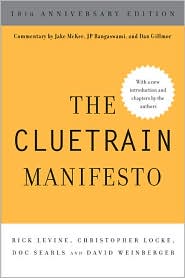
Cluetrain 10th Anniversary edition
Cluetrain 10th Anniversary
Everything Is Miscellaneous
Small Pieces cover
Small Pieces Loosely Joined
Cluetrain cover
Cluetrain Manifesto
My face
Speaker info
Who am I? (Blog Disclosure Form) Copy this link as RSS address Atom Feed

February 21, 2005

Smaller than a googol

Enter a mathematical expression into Google and it will return the results. E.g., if you enter “1+2” (no quotes), it will tell you the answer is 3. Enter “half a cup in teaspoons” and it tells you that that’s 24 US teaspoons.

So, the lunatic journal, WordWays (I’m a long-time subscriber and love it) writes briefly about Eric Iverson’s attempt to see “which alphabetic phrase without any repreating letters generated the largest and smallest number.” Why? For that we’d need a psychiatrist and a pick axe. But who cares? Eric has found that the smallest is

nm to parsec = 3.24077649 × 10⁻²⁶ Parsec

and the largest is

six e pc to nm = 5.03264913 × 1026 nanometers

I am so not tempted to outdo Eric.


WordWays — “The Journal of Recreational Linguistics” — continues to get harder to read thanks to computers. A typical article treats words as collections of letters and tries to find ones that meet some odd constraint. Typical articles used to be about word pyramids and hyphenated words whose letters immediately before and after the hyphen cover every possible pairing. But now that word lists are computerized, the best of the WordWaysians have to come up with challenges that would not only stump a human but come close to stumping computers. I often can’t figure out what the hell the challenge is. For example, Simon Norton has an article wondering if all words can be expressed as sumagrams. Here’s the second paragraph:

This is what is called a free abelian group, where the second word derives from the name opf the Norwegian mathematician Abel. The elements of this group are sequences of (upper case) letters and antiletters…

Some I can follow, though. Eric Iverson, for example, publishes a list of words made only with letters with diagonals in them, from akavit to zanza. He finishes with a list of the longest words without any diagonal letters, starting with bioelectricities. And Darryl Francis lists all 300 tube stations in London and tries to find something interesting about their names. For example, did you know that Bond Street transadds to deobstruent and sober-tinted? I didn’t!

In the current issue, there’s also an article by Will Nediger speculating that Douglas Adams took his fascination with the number 42 from Lewis Carroll. And my son and I particularly enjoyed Fender Tucker’s list of 11 heterograms placed in perfectly ambiguous sentences, such as:

After breaking into the Sherriff of Nottingham’s armory, the flamboyant actor/thief Robin Hood took a bow.

Unfortunately, WordWays has a minimal Web presence — some samples and an opportunity to subscribe. It’s just about tailor-made for living on line. [Technorati tag: wordways ]

Tweet
Follow me

Categories: Uncategorized Tagged with: entertainment Date: February 21st, 2005 dw

1 Comment »

February 20, 2005

Lawrence Summers: Worse than I expected

Lawrence Summers, president of Harvard, talked semi-informally to a conference held at the university, offering three hypotheses about why women are under-represented in science and engineering: 1. They are less willing than men to work the long hours because they value family more than men do; 2. Women are inherently worse at science; 3. There are “different socialization and patterns of discrimination in a search.”

The discrepancy between the transcript and the public statement

Before Summers released the transcript, I blogged that, from what he said and what others reported, I thought he wasn’t really just putting forward three hypotheses worth looking at. I thought he betrayed a subtle preference for one of them. Now that the transcript has been released, we know it wasn’t subtle. He was arguing explicitly for the first two hypotheses: Women choose not to succeed and most women cannot succeed in the sciences. Either way, it’s their fault. He said:

So my sense is that the unfortunate truth—I would far prefer to believe something else, … is that the combination of the high- powered job hypothesis and the differing variances probably explains a fair amount of this problem.

And:

So my best guess, to provoke you, of what’s behind all of this is that the largest phenomenon, by far, is the general clash between people’s legitimate family desires and employers’ current desire for high power and high intensity, that in the special case of science and engineering, there are issues of intrinsic aptitude, and particularly of the variability of aptitude, and that those considerations are reinforced by what are in fact lesser factors involving socialization and continuing discrimination.

But in Summers’ initial public statement on the controversy he says that in his remarks he was “offering some informal observations on possibly fruitful avenues for further research.” Now that we see the entire transcript, we know that’s not the whole truth. He wasn’t simply offering three hypotheses. He was arguing for two of them.

His initial public statement tries to put a gloss on matters. For example:

Despite reports to the contrary, I did not say, and I do not believe, that girls are intellectually less able than boys, or that women lack the ability to succeed at the highest levels of science. As the careers of a great many distinguished women scientists make plain, the human potential to excel in science is not somehow the province of one gender or another.

If you read the public statement, you come away thinking that he sees no inherent differences in men and women when it comes to scientific aptitude. But, after reading the transcript, you realize his public statement fudges the issue by leaving out a modifier: The fact that some women become distinguished scientists doesn’t mean that women in general aren’t innately inferior in the sciences. From the transcript, we learn that Summers in fact does believe that women’s under-representation is caused by inherent inabilities, although, to be fair, he repeatedly admits he could be wrong.

So after the controversy broke, Summers put a better gloss on what he’d said. That’s a human thing to do. But it detracts from the claim of his supporters — especially the right wingers shouting that this is a case of PC-ness gone wild — that Summers was only engaging in the sort of open inquiry we should applaud. Yes, taking bold stands is a value we should cherish; being disingenous about them afterwards is not.

Summers’ view of discrimination

In the transcript Summers makes the odd argument (attributed to Gary Becker) that if discrimination were pervasive, an institution that wasn’t discriminatory should be able to gather up a whole bunch of worthy hires quite cheaply. So, we should see a few institutions with science and engineering faculties overloaded with incredibly talented women. But we don’t. Therefore, he concludes, there isn’t pervasive discrimination. and the first two hypotheses explain the situation.

Transpose this to major league baseball’s discrimination against African-Americans before the color barrier was broken. By Summers’ reasoning, the fact that teams were all white proved that there wasn’t pervasive discrimination, a peculiar argument to say the least. So, you have to add in the particularities of women’s situation. If you add in the real situation — schools are actively recruiting women — the argument doesn’t apply either. It only applies if one believes that discrimination means having a no “No Girls Allowed” sign on the recruitment office door, except at a handful of institutions that have realized they can scoop up brilliant faculty members at bargain prices if they end their discriminatory policies.

That’s not how discrimination works these days. It’s not something that occurs just at the moment of hiring. It happens in the socializing of men and women and in the structure of institutions that lead men and women in different directions. That encouragement need not be as explicit as being put on the Science Team in junior high. It can also result from the culture of science being hostile to women or how the scientific community is structured — It is telling that Summers doesn’t introduce the structure of institutions as a fourth hypothesis. That’s because, while he’s a brilliant intellectual, he has a ham-fisted view of discrimination. He sees it as a set of false beliefs through which a sufficiently enlightened person — or an enlightened recruitment committee — could see, rather than as a complex set of assumptions, behaviors and body language pervasive throughout a culture.

I believe that Larry Summers sincerely would like to make Harvard’s faculty more diverse. But I also think that his remarks are themselves evidence of the environment in which women struggle, one that assumes that reasons and policies can get over discrimination. Discrimination can come about not only through judgment but, more dangerously, through the environment that conditions judgment.

Larry: Stay or go?

Personally, open inquiry is under attack from so many quarters that I would vote against firing Summers. People need to be allowed to be bone- headed, self-interested, defensive, and imperfectly non-discriminatory. We need to be able to introduce hypotheses and examine them, even if our examinations are flawed. In this case, I think those needs outweigh the degree of insensitivity apparent in Summer’s statements and behavior…yes, even if he had made similar remarks about Jews or African- Americans. But it’s a hard judgment to make and, as Summers would say, I’m not confident I’m right.

[Disclosure: I’m a Fellow at Harvard Law’s Berkman Center. I’ve never met Summers. I am not a member of the faculty and have no voice in such issues.] [Technorati tags: harvard LawrenceSummers ]

Tweet
Follow me

Categories: misc Tagged with: uncat Date: February 20th, 2005 dw

29 Comments »

Bloggers meetup

Chapel Hill bloggers have started using MeetUp to get together in the real world. Given the success of the Berkman weekly blogging meeting, it seems like a great idea. Good luck to them.

A search at MeetUp on “blog” turns up interesting results: 450 meetup groups for LiveJournal, 34 for Persian Blogging, 54 fgor MovableType, 3 for Video Blogging. It’d be interesting to see how many meetups spawn group blogs… [Technorati tag: meetup ]

Tweet
Follow me

Categories: Uncategorized Tagged with: web Date: February 20th, 2005 dw

5 Comments »

February 19, 2005

Shiny points

Jon Stewart on blogs, thanks to onegoodmove.

A photo diary of a day in the life of Tom Peters.

[Technorati tags:DailyShow TomPeters]

Tweet
Follow me

Categories: misc Tagged with: misc Date: February 19th, 2005 dw

6 Comments »

Thursday night blog meeting video

Steve Garfield recorded the Thursday night meeting at Berkman that was taped by Nightline. He’s posted a 5-min (approx) version of it. So now the discussion about what’s on and off the record is totally on the record. Thanks, Steve!

And Mike Walsh has posted an MP3. Thanks, Mike!
[Technorati tags: berkman media]

Tweet
Follow me

Categories: Uncategorized Tagged with: media Date: February 19th, 2005 dw

1 Comment »

Worst watch instructions…ever

I used my Chanukah money from my in-laws (thanks Grandma and Grandpa!) to buy a watch on eBay that I’ve been admiring for a couple of years. It’s a Citizen Eco-Drive — the Eco means it runs on light, thus saving .0000000000000000005 kilowatts per year for the children of Mother Earth — and I like it, except for the instructions. Often watch instructions fail because they’re too brief. These fail because, although they are full, they are incomprehensible. Here’s an example, under the subhead “O-Position Correction of Function Hand and Date Wheel”:

Citizen watch instructions

The whole thing is like that. Page after page.

We need a Watch Setting Wiki where our civilization can pitch in and, using our combined brainpower, create understandable instructions for setting our watches. [Technorati tags: watches eco-drive]

Tweet
Follow me

Categories: Uncategorized Tagged with: whines Date: February 19th, 2005 dw

20 Comments »

February 18, 2005

Shiny lights

Robert Scoble made the blogosphere a little shinier by congratulating Firefox on its success.


RageBoy’s new High-Beam blog was a pick of the day at The Guardian making The Guardian a little shinier and sanding down a carbunkle on RB’s craggy butt which is as close as RB gets to being shiny. (Here’s RB on Scoble.)


Reading AKMA’s talk – sermon? invocation? – at the marriage of his friends Juliet and John will make you and your life companion feel shiny. For me, AKMA is a BridgeBlogger except instead of giving insight into another country, we learn what’s remarkable about another religion.


I got a shiny copy of a new magazine in the mail a few days ago: Make. It’s packed with cool stuff and would appeal to the tinkerer in me if I had one of them in me. It’s off to a great start. (Dan Bricklin loves it.)


EthanZ is doing some powerful blogging from India, shining his light on a place that is unfamiliar to most of us on this side of the world.


Liz Lawley will be spending her time adding to the wattage of Microsoft Research’s Social Computing Group. It’s an impressive and congenial group. Congrats, Liz.


Bob “Ethernet” Metcalfe has won a shiny National Medal of Technology for technological innovation. Congrats!

I’m puzzled, though, about why this medal, announced three days ago, is for 2003. Not quite keeping up in Internet time, are we, Department of Commerce?


(Why the surge of miscellany? Because I just turned in a looong article on taxonomies and tags that will be the next issue of Esther Dyson’s Release 1.0, so now I have time to poke around the Web some more.)

Tweet
Follow me

Categories: Uncategorized Tagged with: uncat Date: February 18th, 2005 dw

2 Comments »

IBM puts money into linux on the desktop

IBM plans on spending $100M over the next three years on getting linux onto desktops. According to eChannelLine the money will be used to:

…expand Linux support and technology across its Workplace software portfolio, which is used in a server-managed client model.

The investment will be focused on ISV support programs, channel and partner enablement and promotion, research and development, sales and marketing, and various technology and integration centers.

I’m actually surprised they’re not spending more. How much would it be worth to IBM to dethrone Windows? ,

Tweet
Follow me

Categories: Uncategorized Tagged with: tech Date: February 18th, 2005 dw

1 Comment »

Blogs and journalism, again

At the end of last night’s weird Berkman blogging meeting, recorded by ABC News for some upcoming episode of Nightline, the producer expressed surprise that anyone would blog about the presence of the cameras in the meeting. There were some very smart replies by bloggers there — Go Lisa, who concluded “Yes, my life is interesting to me” — but the producer’s comment indicated to me that we failed to make the point that blogging isn’t a sub-species of journalism. Of course we’re blogging the event because it’s something in our lives that we find interesting: We’re not in front of the cameras every day and it’s pretty damn fascinating to see how the mere presence of a camera creates a distortion field. But is “Cameras record meeting” news? Of course not; it’s a condition for there being news. (Hmm. I think I’m saying what Brendan Greeley of PRX said last night.)


By the way, to read a surprisingly sympathetic view of the effect of blogging on journalism, see Peggy “Reagan’s Speechwriter” Noonan’s take on it. Wow. [Thanks, Dave, for the link.]

[Technorati tag: media]

Tweet
Follow me

Categories: Uncategorized Tagged with: media Date: February 18th, 2005 dw

5 Comments »

February 17, 2005

Larry Summers on the record

Pres. L. Summers has at last posted a transcript of his comments from a couple of weeks ago. So, now maybe (maybe) we can get a sense of the sense of his remarks. (Ironically, we learned about this at the Berkman Thursday blogging meeting which was discussing what’s on and off the record.)

Tweet
Follow me

Categories: Uncategorized Tagged with: uncat Date: February 17th, 2005 dw

10 Comments »

« Previous Page | Next Page »


Creative Commons License
This work is licensed under a Creative Commons Attribution-NonCommercial-ShareAlike 3.0 Unported License.
TL;DR: Share this post freely, but attribute it to me (name (David Weinberger) and link to it), and don't use it commercially without my permission.

Joho the Blog uses WordPress blogging software.
Thank you, WordPress!