



logo
EverydayChaos
Everyday Chaos
Too Big to Know
Too Big to Know
Cluetrain 10th Anniversary edition
Cluetrain 10th Anniversary
Everything Is Miscellaneous
Small Pieces cover
Small Pieces Loosely Joined
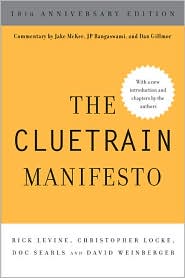
Cluetrain cover
Cluetrain Manifesto
My face
Speaker info
Who am I? (Blog Disclosure Form) Copy this link as RSS address Atom Feed

March 19, 2004

[poc] Influentials

[I came late to this.] Influentials are more Republican and less Democratic than the general public, but less likely to be undecided.

The top concerns of the influentials are terrorism, foreign relations, but they are less interested in terrorism than the general public and more interested in foreign relations. Terrorism is trending up. The breakdown of the family is trending down. The only domestic issue trending up is health care.

Who are the online influentials? They did a a phone survey of 1,000 poeople and an online survey of 1,400 people. 7% of the phone surveyees counted as online political citizens (OPC) while 35% of those surveyed online were.

62% are male
59% have college degrees
42% have incomes over $75,000
36% are between 18-34
81% are white (compared to 86% in gen pop)
44% have never done any political work or contributed
49% are Democrats
29% are Republicans
46% have made a donation
24% have made a donation online

Compared to the general population, the OPCs are far more likely to have attended a meeting, written a politican, etc. The numbers franged from 2x to 8x.

Q: What’s the relative importance of the media?

Guy from Slate: The blog community is real important here, extending stories indefinitely.

Another guy: The influentials watch a little more TV than everyone else. They’re the biggest consumers of media. So, yeah, the media are important.

Tweet
Follow me

Categories: Uncategorized Tagged with: conference coverage Date: March 19th, 2004 dw

Be the first to comment »

[poc] Media panel

Cam Barrett, ex of Clarke, now consulting to Kerry, starts. At Clarke, he built an infrastructure for online community. Everyone got to have their own voice and point of view.

Gary Kebbel, News Director for AOL, says that only online news is growing. It’s not just the medium. It’s the audience. [We are not an audience!] That’s why at AOL we’ve created an election site that hits all the audiences. We’re most proud of our “SideShow” page, a partnership with Comedy Central, the Onion, Bill Mahr and others. He reads some cynical definitions from The Onion. It’s got audio essays.

Vaughn Ververs is the editor of Hotline (a for-pay offering from The National Journal). He says some stuff about how he uses lots from the Internet but doesn’t trust everything. E.g., he doesn’t trust Drudge.

Stirling Newberry says that the Net is becoming mainstream. It’s like TV in 1952: it can break stories but not drive the discussion. And pay attention to the rhythm of the news cycle. Push messages out from your center — your community.

Q: How do you find that influential center?

A: Technorati.com and other such sites.

Morra Aarons, moderator and director of Internet Communications, asks “Is it our message?” but the audience seems to think, yeah, it is our message.

Q: [Me] You’re all using the language of broadcasting: consumers, audiences, messages. Is it possible that that vocabulary is getting in the way?

Stirling: Yes. Cam, what do you think?

Cam: Yes. At Clarke, we built a community.

Gary: What sort of terms could we use instead?

Me [snottily, sorry] The marketing vocaabulary comes from the industrial revolution and the military. We don’t need a specialized vocabulary because we have ordinary language to talk about who we like talking with.

Stirling: We do have a technical vocabulary: “Flaming,” for example.

Q: How do you pitch to an Internet news source?

Cam: Don’t pitch. Let them come to you.

Q: How do they find you?

Cam: Google, industry news partners…

Gary: I use the word “community” instead of “blog” because communities are bigger things. Blogs are just another word for home pages.

Q: How do we create news?

Morra: Personally, I still believe in traditional PR.

Cam: One of the most successful ways to get it done is to have the community talking about your news.

Hotline: The traditional methods are still the best. Call the reporters.

Stirling: Create a story and people will cover it. [My advice: Be interesting.]

Tweet
Follow me

Categories: Uncategorized Tagged with: conference coverage Date: March 19th, 2004 dw

Be the first to comment »

[poc] Opening Plenary Panel

I’m at the Politics Online Conference, put on by the Institute for Politics, Democracy and the Internet. It seems to be te place to be. With 400+ paid attendees, it’s the biggest conference the IPDI has put on.

The attendees ain’t no Internet hippies. The guys dressed informally are the ones whose navy blue suits don’t have pin stripes. Well, there is a Net brigade here, including Cameron Barrett, Mathew Gross, Joe Trippi, Dick Bell, Scott Heiferman, Joe Trippi. I’ve heard Zephyr is coming, too. (Yay!)

[NOTE: Much of what follows is in the voice of the speakers.]

Phil Noble (PoliticsOnline) is the moderator: It’s a revolution. Are you having fun? Even TV didn’t change politics as much as the Internet will. We’ve come so far so quickly: It was in 2004 that the first home page for a candidate was created, for Diane Feinstein. Two years later, Bob Dole, “the most unwired white man in America,” talked about his home page in a debate. Then Jesse Ventura, then John McCain. The digital revolution is here.

Panelists: Charles Buchwalter (Nielsen ratings), Ed Kellerr (RoperASW), Mathew Gross (Dean blogger), Scott Heiferman (MoveOn.org) and Jimmy Orr (Internet News Director, The White House…yes, that White House).

Charles Buchwalter (Nielsen Net Ratings). People use TV because it’s what they’ve done. The Bush and KErry TV campaigns are the ultimate brand campaigns, trying to distill their brands into just afew words. [Which is why they’re evil. Oh, wait, that’s my conclusion.]

There’s definitive evidence that online is going mainstream. Whether you’re talking about seniors, or Hispanics, there are groups across the board going online.

Do online media offer unique opportunities to reach new voters? Yes. [He shows some slides of data, but there are props on the sage obscuring my view.] Web users seems to be about 15% more likely to be interested in politics than a typical American. Web users are less likely to say that TV is their main source of news. Web users also vote at much higher rates. Overall, in the US population: 28% are Dem, 32% are Republican, and 40% are independent; the Web population significantly skews Republican. Buchwalter suggests that this is because of the digital divide. The conservative sites are more homogeneously conservative; the liberal sites have more independent visitors.

He ends with a pitch for using Nielsen to figure out which sites to advertise on.

Ed Keller (RoberASW) is a co-author of The Influentials. Who are these influentials? [He uses the rhetoric of “conversation,” maybe because the theme of the conference is “The Conversation is Changing” — Markets are conversations and so are elections…at least they should be.] “Decisions are conversations,” he says. From 1977 through today, word of mouth has become the dominant factor in conversations. The Internet enables word of mouth. The influencers are 10% of the population. [Ed goes through his standard slides about the demographics of the influentials. I sort of stopped caring, for no particular reason.] The influentials are connected to groups. [“The Influentials” is starting to sound like a bad Harold Robbins novel. “Gig Young and Kim Novak are The Influentials…in Panorama!”]

Scott Heiferman (Meetup). Scott shows photos of recent MeetUps, starting with a Bush MeetUp in Florida. Scott dispells myths about MeetUp: It’s not just Dean, it’s not just young, it’s not just for “decideds,” it’s not just bottom-up, it’s not just about raising money to buy TV ads (“Cut out the middleman”). and the idea that people want to get together is not new. Scott holds up a placard from an event sponsor and says: “This is not good.” It’s from a company that sells video-enhanced banner ads. “This is not what it’s about.” [Go, Scott!]

Mathew Gross (Dean blogger). I love Ed’s numbers because a year ago it was hard to convince people that the Web sphere matters. Blogs let you do communication and community. Simply having the tool won’t change politics; it’s how you use it and what you say. The Web is and will continue to be a written medium. Home pages may start to disappear in favor of weblogs. Weblogs won’t succeed if it’s just press releases posted in reverse chronological order. The challenge is to make the site engaging. We did that in part by engagingi n the conversation alaready going on in the blogosphere. People read blogs looking for a filter. And weblogs and commenting gives everyone the ability to interact with the campaign.

Scott Orr (Internet News Director for the White House) was advised by White House counsel not to show up.

Q: David Halberstam says that the Internet isn’t as transformative as TV. It’s good for outsiders coming in, but not a big deal otherwise.

Charles: Yes.

scott: The lines are blurry. Suppose a campaign promotes its MeetUp campaign via TV.

Keller: It’s too early to tell.

Q: Mr. Keller, what are the age demographics of the influentials?

Keller: They’re found in every age group. There are more boomer influentials because there are more boomers.

Q: [Micah Sifry] Charles, what makes someone count as a “net user”?

Charles: It’s a wide spectrum.

Q: Ed, are you saying that influencers are the same whether you’re talking about SUVs or voting. I’ve never seen anyone genericize influencers across all categories.

Keller: If you step back from the individual point of view, that’s what we look at. [?]

Q: [Henry Copeland from BlogAds] What percentage of influentials are online political citizens?

Keller: 7% of the population are OPCs.

Henry: That means half the influentials are OPCs.

Q: The Dean campaign raised $22M. Why did the campaign spend so little on Internet stuff, and most of it on Iowa and NH TV ads?

Mathew: We invsted far more in the Internet than any other campaign in history. We’re not at the point at which the Internet can solve all problems. When you’re 4-6 weeks out from Iowa, it’s TV. The online communities are tremendous because they help you put the resources on the grouhd or on the air. The Internet is more powerul, at this stage, at the initial stage of the compaign.

Scott: Because most online advertising doesn’t work.

[My point of view: Good panel. But not enough about what makes the Net special. Or, maybe I’m just wrong. Noooooo!]

Tweet
Follow me

Categories: Uncategorized Tagged with: conference coverage Date: March 19th, 2004 dw

2 Comments »

On the road:

I’m at the DC Politics Online Conference, put on by the Institute for Politics, Democracy and the Internet, where Markos Zuniga of the Daily Kos and I are supposed to be “debating” Zack Exley of MoveOn.org and someone from RightMarch.com on the topic: “One lesson from the Dean campaign is that centralization and control are the keys to using the Internet to win campaigns.”

Sure they are. And so are decentralization and the willingness to give up some control.

Tweet
Follow me

Categories: Uncategorized Tagged with: politics Date: March 19th, 2004 dw

Be the first to comment »

March 17, 2004

Michael OO’s generational blogging

Michael O’Connor Clarke‘s father has started telling the family story.

And Michael’s son, Charlie, at 6.5 years has started writing stories. Not blogged yet. All I can is that I hope Queen Isabelle gets better. Oh, and, “Scramble!” :-)

Tweet
Follow me

Categories: misc Tagged with: misc Date: March 17th, 2004 dw

2 Comments »

March 16, 2004

Rumsfeld video and noose of words

While we’re all enjoying the Rumsfeld stutter video, here’s a link to Billmon’s list of quotations out of which the Administration wants to weasel.

Tweet
Follow me

Categories: Uncategorized Tagged with: politics Date: March 16th, 2004 dw

2 Comments »

A Friendster moment

I’m sitting in a chair backed up against the wall in the large room where Jonathan Abrams gave his keynote address to the sxsw conference. He’d left the room about ten minutes earlier, but I was still there, blogging and checking email.

Continued at Many2Many…

Tweet
Follow me

Categories: Uncategorized Tagged with: web Date: March 16th, 2004 dw

Be the first to comment »

[sxsw] Friendster cont’d

The CEO of Friendster finished his talk here by inviting us to take some swag from the podium. You know what it was? Friendster condoms.

Staying on message…

Tweet
Follow me

Categories: Uncategorized Tagged with: conference coverage Date: March 16th, 2004 dw

3 Comments »

[sxsw] Friendster

The awesome Heath Row has posted his near-transcript of Abrams’ talk.

Jonathan Abrams, the founder of Friendster, is giving a keynote. Unfortunately, I missed almost all of it because lunch went long.

Real vision of Friendster: Experience the Internet with your friends. That goes beyond dating. In 2004, we’ll see lots of other applications.

Everything is different when you look at the net as social, using your social network as a filter. I look people and tell them I know someone who knows someone who knows you, and people are fascinated. [Seems irrelevant to me.]

He says Friendster is hiring. [If you’re looking for an introduction, I have a friend of a friend of a friend of a friend of a friend who works there…]

Q: Was Six Degrees an inspiration?

A: 90% was addressing problems I and my friends had. But Ryze was an inspiration also. Another guiding idea: To reduce the level of stupidity on the Internet to the level of stupidity you have generally. I can’t stop people from being an asshole. But on a computer, with the anonymity and without seeing reactions, people act that much stupider.

He says people want a “break up alert.”

Q: You dispelled the rumor that you’re a CIA front, but what branch of government do you represent?

A: There are bigger databases with more interesting information in them. What your favorite movie is really doesn’t interest the government. [Unless it’s The Battle of Algiers, etc.]

Q: What about fakesters (i.e., fake personages)?

A: We’ve been so busy with scaling that we haven’t add functionality. But we’ll be doing that now. We’ll provide the features that some people use fakesters for (e.g., Burning Man, Stanford Alumni).

Q: Are you going to open up APIs?

A: I’d love to, but we have to deal with privacy and security issues.

Q: Politics?

A: Various politicians are using Friendster. Kerry, for example. Friendster is looking at allowing rock bands, etc., to be available on Friendster so you can link to them as a supporter. [Ah, mission creep!]

Q: Are you really only for the youngsters?

A: Right now our users are first adopters and skew young. But Friendster is for anyone who has at least one friend. If you’re over 50 and are looking for a date…[Hmm, the dating purpose seems central to his thinking despite saying that it’s about more than that.]

Q: Privacy?

A: We won’t sell your info. We will use it for targeting ads. And remember, you can delete your account at any time.

Tweet
Follow me

Categories: Uncategorized Tagged with: conference coverage Date: March 16th, 2004 dw

Be the first to comment »

[sxsw] Bruce Sterling

I’ve never heard him speak before. He’s instantly likable, a sort of magic. I’m not going to try to summarize. Just a disjointed set of remarks, without an attempt to capture his thread:

For the Bush administration, getting it spun is job one.

This administration’s commitment to bad science will drive scientists away. 19,000 people dead in France from the heat, but there’s no climate change. Nooooo.

The concern over offshoring is short sighted. If you really want some part of the human race to remain poor and ignorant, why not do it within your own country? The Indian flag has Gandhi’s spinning wheel on it. He spun as a symbolic act to say that India shouldn’t rely on foreign economies.

It scares me to see Brazil as the future of politics. Even the Brazilians like to say that Brazil is the country of the future…and always will be.

Outlook is like a flaw with a mailer attached to it.

“Someone in a village in China gets a computer, plugs it in, and out comes this torrent of filth from all over the world.” This is how we Americans look to the world.

“it’s like a terrifying army, whom we’ve given carte blanche to go into our homes, and attack people less sophisticated than ourselves. and *this* is the “blooming orchid” of american culture?”

The Bush administration could have done something about these problems. IT would have been hard-core right wing but at least they could have been competent at it.

The Spaniards threw out the government on Sunday because they were angry at the government for lying to them about who planted the bombs.

Sir Martin Rhees thinks there’s a 50-50 that we’ll kill ourselves. Bruce is cheered up by this: “You mean it’s 50-50! That’s great damn odds!”

He’s watching microbial threats to health like SARS and bird flu. “Real spooky.” They mainly kill old people and this is the most top-heavy in heavy.

He’s waiting for Somali khat to show up in the US. It’s a bundle of straw you chew, “purple foam appears,” and you get in your technical and drive through the streets “wasting people.”

He ends by saying that “hope is the conviction that what you were doing made sense no matter how things turned out.”

Tweet
Follow me

Categories: Uncategorized Tagged with: conference coverage Date: March 16th, 2004 dw

3 Comments »

« Previous Page | Next Page »


Creative Commons License
This work is licensed under a Creative Commons Attribution-NonCommercial-ShareAlike 3.0 Unported License.
TL;DR: Share this post freely, but attribute it to me (name (David Weinberger) and link to it), and don't use it commercially without my permission.

Joho the Blog uses WordPress blogging software.
Thank you, WordPress!