


logo
EverydayChaos
Everyday Chaos
Too Big to Know
Too Big to Know
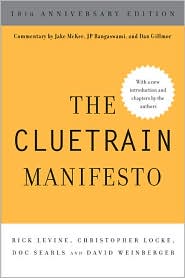
Cluetrain 10th Anniversary edition
Cluetrain 10th Anniversary
Everything Is Miscellaneous
Small Pieces cover
Small Pieces Loosely Joined
Cluetrain cover
Cluetrain Manifesto
My face
Speaker info
Who am I? (Blog Disclosure Form) Copy this link as RSS address Atom Feed

January 13, 2003

MIT SESSION 2: Moral Implications of the Web’s

On Tuesday night, 7-9, Building 1, Room 390, I’ll be teaching the second of three sessions of my mini-course at MIT. Here are my notes for your comments and improvement:

Three basic approaches to morality. Something is moral because:

(a) Deontological: it fits under a principle (e.g., many religions, natural rights)

(b) Consequentialist: something is moral based on its effects (e.g., utilitarianism, selfishness)

(c ) Virtue: Moral actions comes from good habits of character

How do we decide about moral philosophy? We see if the theory sorts known cases into the right bins. E.g., if utilitarianism lets us hang an innocent person, we’ll reject that version of utilitarianism.

But this means that we come into this with a sense about what’s right and wrong. At its root, IMO, this moral sense is a sympathy for others, a caring about others. This occurs within a shared world. Sympathy in a shared world — that is, a shared caring about our world — is at the root of morality.

This is at odds with the current view of sympathy as a “tuning fork” that vibrates in us as it vibrates in others. The current view assumes we are first and foremost individuals and wonders how we could ever get beyond the self to care about others.

Now look at the Web’s architecture. Links come first. Every time I put in a link to a site, I am sending people away from my site, a little act of selflessness and generosity. The Web is characterized by generosity throughout. The Web is a shared world created out of shared interests. It is fundamentally connected, sympathetic and moral.

Obviously, many immoral awful things occur on the Web. But its architecture reflects our moral nature. And it’s exciting to so many of us because of the promise it offers for moving the species forward not only technologically but also morally.

QUESTIONS FOR DISCUSSION

Are we more or less moral online? Are we the same?

Is the Web a reflection of who we are or a reflection of our “better nature.”

Is there a developing online ethics or ethos? In what is it rooted?

Can a technology be moral or immoral, or do the terms not apply?

Is the Internet political? Does the value-free transmission of bits have its own value? What did the Taliban make of the Internet? China? Fundamentalists? Are they wrong?

What’s the best we could hope for (= work for) WRT the Web?

Tweet
Follow me

Categories: Uncategorized Tagged with: philosophy Date: January 13th, 2003 dw

11 Comments »

DMCA: Extensions ad Absurdum

In today’s Boston Globe, Hiawatha Bray reports on an example of why the DMCA needs to be thrown out. Lexmark printers look for a particular chip embedded in ink cartridges. Without that chip, the cartridge won’t work, thus forcing owners to use only Lexmark brand cartridges. Static Control makes chips that enable third-party toner cartridges to work in Lexmark printers. Lexmark is suing Static Control contending that

“any attempt to circumvent its killer chip system violates the DMCA. The Static Control chip lets a user access Lexmark’s printer software without Lexmark’s permission, and is therefore illegal.”

So a law designed to keep hackers from distributing stolen digital merchandise is now a law against using a different brand of toner cartridges.”

Bray points to a future in which you can only replace Ford parts with Ford parts and you can’t plug a Kenmore appliance into a Whirlpool-networked house. But that’s ok, because by then we’ll all be using Disney appliances anyway.

You can read Bray’s column here today and here tomorrow.

Tweet
Follow me

Categories: Uncategorized Tagged with: web Date: January 13th, 2003 dw

4 Comments »

Drug Ad#2: Surrogate Couple

The infuriatingly smug and specious television ads from the Office of National Drug Control Policy have an obvious subtext. In the ads, which you can view here, we see a young-ish businessman having a meal in a fancy restaurant with another businessman in the next generation up. The young man thinks the relationship between drugs and terrorism is “very complex.” The older man sighs Gore-ishly and lowers his eyelids in exasperation, as if he’s talking to a slow-witted child. He patiently explains in one-syllable words how drugs and terrorism are connected. The younger man gets a Jeff Spicoli look as he processes the information and then concedes defeat.

Let us choke down the bile arising from the administration’s despicable attempt to use September 11 to manipulate opinion on unrelated issues and instead just look at the pictures:

Callow youth in drug ad 1

Callow youth in drug ad 2

Wise but abrasive older man in drug ad 1

Wise but abrasive older man in drug ad 2

Rich, callow, shallow, stupid, drug-using young businessman? Hmm, I wonder who that could be. And he’s being advised by a man his father’s age who patiently explains what his position should be? Lemme think, lemme think! And the young man changes his mind on an issue of international importance within 5 seconds?

The George character’s facial expressions are too close to Bush’s to be accidental. The older man looks and sounds too much like a combination of Rumsfeld and Cheney for it to be accidental. The only question is whether the ad agency did this because their research showed it would be more effective or because they were taking a backhanded swipe at their clients.

Tweet
Follow me

Categories: Uncategorized Tagged with: politics Date: January 13th, 2003 dw

9 Comments »

Drug Ads #1: Bored Straight

The official collection of 26 anti-drug print ads from the Office of National Drug Control Policy is here.

Interesting reading. The arguments are of three sorts:

1. Marijuana interferes with what you want to achieve in real life

2. Marijuana is dangerous: you’ll get arrested, you’ll crash into a truck, etc.

3. Buying marijuana gives money to gangsters who kill people [which is actually an argument for legalization]

In addition, some tell parents that they can prevent their kids from smoking dope through (1) Love (spend time with your kids) or (2) Discipline (lay down the law). The photos of the Love ‘Em group show people of color, particularly Latino and Native American. The photos in the Discipline ‘Em group are of white kids. Does the research show that white parents are too soft and non-whites are too neglectful? Is this conscious or unconscious racism?

None of the photos in any of the 26 ads show an African American. Apparently the War on Drugs has been won in that particularly demographic. Congratulations, America!

Tweet
Follow me

Categories: Uncategorized Tagged with: politics Date: January 13th, 2003 dw

Be the first to comment »

January 12, 2003

RIAA Comes to Its Senses. I.e., RIAA Is Hacked Again?

The RIAA site has been hacked at least twice recently. But is this page a hack?

It announces a new policy for the RIAA that sounds like it was written by the EFF: Dropping copy protection, dropping lawsuits against file-sharing neworks. ..

Way too good to be true. And the fact that we can’t tell if it’s truth or a parody indicates just how absurd the RIAA’s position has been.

(Thanks to Seth Johnson for the pointer.)

Tweet
Follow me

Categories: Uncategorized Tagged with: web Date: January 12th, 2003 dw

2 Comments »

Much Ado about Schmidt

I just posted a review of About Schmidt on BlogCritics, but it hasn’t shown up yet. I seem to be having account woes there, which are probably my fault. Anyway, here’s the review:

Yeah, the critics are gaga over About Schmidt. But then they loved American Beauty. And like that other film, About Schmidt swings between the predictable and the implausible, with plenty of moments that are both. And have I mentioned how smug and condescending it is?

There are things to like about it. Jack Nicholson is capable of showing more than one emotion at a time. Howard Hesseman brings some depth to a badly written role. Dermot Mulroney’s sports a world class mullet. I chuckled out loud four or five times. And the movie wants to be about something.

But go back to that mullet. You can tell almost everything about each character in this movie simply based on the way she or he looks: Mulroney’s got a mullet so he’s shallow. Kathy Bates looks like an earth mother so she is. In fact, this movie lost me in the first five minutes when we are introduced to Nicholson who is an actuary for an insurance company. Guess what? He’s repressed emotionally! Can you imagine that! An actuary who’s repressed! How original!

Actually, I suspected we were in trouble in the first shots, “artfully” framing Omaha. Static shots of office buildings. No people. Gray. Omaha. Uh oh. Then we’re shown the “Woodman” building, home of the Woodman Insurance Company where Nicholson works. “Woodman”? “Made of wood.” Get it? Beware of movies that use symbolic names.

And has there ever been a movie that told so much and showed so little? Towards the beginning of the movie, Nicholson becomes a “foster parent” to a child in Africa — one of those $22/month arrangements — to whom he writes letters. The letters allow Nicholson to do voice overs throughout the movie as he talks about his feelings about the people around him. In the first letter, for example, we find out how angry Nicholson is at his wife. That’s how we find out how important his daughter is to him. On and on. What happened to making a movie that showed us those feelings?

The letters ploy really put me off for another reason. The letters are meant to amuse us because Schmidt writes to this 6-year-old African kid as if he were an American adult, advising him to join a fraternity when he goes to college and complaining about “rattling around” his big house. Some of it’s funny, but it requires turning Nicholson’s character into a moron without the slightest sense of what life is like for his foster son. It’s wildly implausible, it’s a cheap and uninvolving way to tell a story, and it shows the film’s willingness to betray its characters for the sake of a laugh.

But there aren’t any real characters in the movie anyway. Just ideas for characters. “Emotionally repressed actuary.” “Sleazy, shallow fiance.” “Earth mother.” “Imbecilic brother.” Sometimes the characters do reveal something more about themselves. But we’re never sure why. For example, you’ll end up liking Mulroney’s character more at the end than at the beginning, but he’s done and said nothing to deserve that change. We come to know more about Nicholson’s daughter (Hope Davis) as the movie progresses but that’s only because at first all we know of her is the idealized sentences Nicholson writes to his foster son. There’s no real character change or revelation, just some overly-dramatic scenes in which carefully scripted angers emerge. The acting is better than the script, but there’s only so much an actor can do with wooden characters and predictable set pieces.

Ultimately, the script and direction are unbearably smug. This is a movie about an “ordinary guy” who has made it to retirement age without facing his feelings or those of the people around him. Ok. But its point of view is outside and above: Laugh at Schmidt. Pity Schmidt. Never: Feel what Schmidt feels. Never: Think the way Schmidt thinks. Never: Be Schmidt.

Because the script is so bad, this movie is just about a shoo-in to win the Oscar for Best Screenplay. Because Kathy Bates plays an earth mother who brings an embarrassingly predictable sense of life to the film, and because it’s a “brave role” (= she gets naked in it), she’ll be nominated for Best Supporting Actress. Because it is set in America’s heartland and defies normal narrative conventions (= it’s disconnected and really boring), it’ll be nominated for Best Director. Because it’s smug and thinks it’s about despair, it’ll be nominated for Best Picture.

Tweet
Follow me

Categories: misc Tagged with: misc Date: January 12th, 2003 dw

11 Comments »

January 11, 2003

Game, Set and Tivo

Michael Powell, chairman of the FCC, was given a TiVo for Christmas. He’s already called it “God’s machine.” It’s only a matter of weeks before he’ll find himself at a staff meeting reaching for the rewind button so he can re-hear what someone just said.

I’d heard that Powell was a part-time tech junkie. Excellent. We want our tech policy driven by lust. (Thanks, Lawmeme via Doc for the link.)

Tweet
Follow me

Categories: Uncategorized Tagged with: tech Date: January 11th, 2003 dw

Be the first to comment »

Doc’s Life on the Edge

First, congratulations to Doc and his community on their underdog victory. It’s quite a story.

Second, Doc points us to some fresh blood in the digital ID discussion. But I still disagree with his bottom line. Today he cites the first thing he wrote on the subject: browsers need features like a “purse” that contains credit card info to make online transactions easier, and a cross-site shopping cart. Both of those are good features but they can – and should – be done way on the edge of the network.

We – the market – are already solving the problems we actually want solved. DigID isn’t only a solution looking for a problem, it’s a solution that’s a problem-enabler.

Tweet
Follow me

Categories: Uncategorized Tagged with: web Date: January 11th, 2003 dw

4 Comments »

McLuhan Course of Course Blogs

I heard from Mark Federman of the McLuhan Program in Culture and Technology. He teaches a graduate course in “Mind, Media and Society” at the University of Toronto, my alma mater. He writes: “Essentially the course teaches people to think like Marshall McLuhan did… you know… come up with cute aphorisms, predict the future, that sort of stuff…” The course has a blog jam-packed with ideas. Here’s part of an entry:

We began the “Applied McLuhanistics” course last evening. If the nature of the discussion at the first class is any indication, this will be a lively and most interesting term! We left the seminar with the following probe: The invention of the phonetic alphabet changed us from a primarily oral culture to a primarily literate culture (starting in ancient Greek times, and accelerated by Gutenberg). The effect of this transition was, among other things, to create private, silent reading (via books), hence private ideas and therefore personal identity and individuality. Now that the acceleration of instantenous, multi-way communications has put us back into “acoustic space” (centre is everywhere/anywhere, boundaries are nowhere), we are regaining our oral culture. (This is one aspect that led Marshall McLuhan to note that we are “retribalizing” in the sense that we move back to acoustic space, from which the Global Village metaphor emerged.) What effect might the nature of Internet as acoustic space have on personal identity, individuality, privacy and so on? Do we still have privacy, or is there a new medium of “publicy” that emerges?

Whew! Nice paragraph!

Tweet
Follow me

Categories: Uncategorized Tagged with: uncat Date: January 11th, 2003 dw

1 Comment »

Self-Fulfilling Threats

Event Set #1: The Bush Doctrine of preemptive attacks is announced. The buildup against Iraq shows that we’re serious, even eager, to act on it. North Korea, an oppressive and delusional state, is included in the Axis of Evil.

Event Set #2: North Korea escalates its nuclear threat dramatically.

Gee, do you think there might be a relationship between these two sets? Nah, I’m sure it’s just coincidence. After all, when the world’s only super power announces its new policy is to threaten and then invade countries that worry it, those other countries would just give up, right? After all, that’s what Americans would do if we were threatened with attack.

Policy, meet Reaction. Reaction, meet Policy.

Tweet
Follow me

Categories: Uncategorized Tagged with: politics Date: January 11th, 2003 dw

2 Comments »

« Previous Page | Next Page »


Creative Commons License
This work is licensed under a Creative Commons Attribution-NonCommercial-ShareAlike 3.0 Unported License.
TL;DR: Share this post freely, but attribute it to me (name (David Weinberger) and link to it), and don't use it commercially without my permission.

Joho the Blog uses WordPress blogging software.
Thank you, WordPress!