


logo
EverydayChaos
Everyday Chaos
Too Big to Know
Too Big to Know
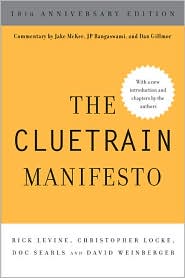
Cluetrain 10th Anniversary edition
Cluetrain 10th Anniversary
Everything Is Miscellaneous
Small Pieces cover
Small Pieces Loosely Joined
Cluetrain cover
Cluetrain Manifesto
My face
Speaker info
Who am I? (Blog Disclosure Form) Copy this link as RSS address Atom Feed

July 31, 2008

Pithy comment on post-Feyerabend philosophy

From an interview with Gonzalo Munévar by Paul Newall about Paul Feyerabend:

PN: How would you describe the relevance of Feyerabend’s thinking today and his legacy for the future?

GM: The big philosophical problem about science was that the scientific method worked but we could not prove so: classical skepticism, Popper’s efforts notwithstanding. Feyerabend came in and cleaned house: the so-called “scientific method” did not work; it actually got in the way of scientific progress (as defined by the empiricists themselves). I think this is a finding of the greatest importance, although not his only contribution. Philosophy cannot – should not – be the same after that, even though professional philosophers will keep on doing pretty much the same things for as long as they can get away with it. I am reminded of Romero’s film “The Dawn of the Dead”, in which the zombies go to the shopping mall to walk around and window-shop as they used to do when they were alive. Analytic philosophy no longer makes sense, in great part thanks to Feyerabend, but there you have it: a philosophy for zombies. But the zombies are still in charge, so who knows how Feyerabend’s legacy will play in the years to come.

Based on Gonzalo’s recommendation, I have ordered a copy of Feyerabend’s posthumous book, The Conquest of Abundance.

[Tags: feyerabend gonzalo_munevar philosophy science ]

Tweet
Follow me

Categories: Uncategorized Tagged with: feyerabend • philosophy • science Date: July 31st, 2008 dw

2 Comments »

July 9, 2008

The month in taxonomic writing, taxonomized

Nick Sly has taxonomized the month’s best posts on “biodiversity, taxonomy, and systematics.” Some great stuff in it.

[Tags: everything_is_miscellaneous taxonomy biodiversity nick_sly ]

Tweet
Follow me

Categories: Uncategorized Tagged with: biodiversity • everythingIsMiscellaneous • science • taxonomy Date: July 9th, 2008 dw

Be the first to comment »

June 6, 2008

Open education and Publius

Berkman‘s Publius project keeps rolling along. There’s already lots of excellent stuff there, exploring how the Net is constituting its own governance mechanisms and norms. For example, today Peter Suber and Melissa Hagemann discuss open access, science, research, and education. But you can just browse through the topics and be pretty sure you’ll hit on something well worth reading.

[Tags: berkman publius governance ]

Tweet
Follow me

Categories: Uncategorized Tagged with: berkman • digital culture • digital rights • education • everythingIsMiscellaneous • governance • knowledge • publius • science Date: June 6th, 2008 dw

1 Comment »

May 21, 2008

Health Commons launched

Science Commons, in its relentless drive for product line expansion (I kid because I love), has posted a white paper proposing a Health Commons. In it, the authors, Marty Tenenbaum and John Wilbanks, lay out the problems and suggest a solution.

They write:

We are no longer asking whether a gene or a molecule is critical to a particular biological process; rather, we are discovering whole networks of molecular and cellular interactions that contribute to disease. And soon, we will have such information about individuals, rather than the population as a whole. Biomedical knowledge is exploding, and yet the system to capture that knowledge and translate it into saving human lives still relies on an antiquated and risky strategy of focusing the vast resources of a few pharmaceutical companies on just a handful of disease targets.

After citing more problems with the current system, the authors propose a Health Commons:

Imagine a virtual marketplace or ecosystem where participants share data, knowledge, materials and services to accelerate research. The components might include databases on the results of chemical assays, toxicity screens, and clinical trials; libraries of drugs and chemical compounds; repositories of biological materials (tissue samples, cell lines, molecules), computational models predicting drug efficacies or side effects, and contract services for high- throughput genomics and proteomics, combinatorial drug screening, animal testing, biostatistics, and more. The resources offered through the Commons might not necessarily be free, though many could be. However, all would be available under standard pre-negotiated terms and conditions and with standardized data formats that eliminate the debilitating delays, legal wrangling and technical incompatibilities that frustrate scientific collaboration today.

The paper emphasizes the need for metadata standards: “Providing such standards, Heath Commons improves and extends the public domain by
integrating hundreds of public databases into a single framework…” The Commons also provides the needed “social and legal infrastructure,” and a portal that provides the right set of services.

They hope that by lowering research costs, some of the 5,000 tropical diseases currently “uneconomical to address,” for example, will become the target of pharmaceutical R&D. “Health Commons makes it cost effective for small groups of researchers to conduct industrial scale R&D on rare diseases by exploiting the economies of scale afforded by an ecosystem of shared knowledge…”

The authors see the benefits going beyond the Commons’ value to non-profits. “Every pharmaceutical company sits on a wealth of promising targets and leads that they won’t develop themselves.”

The Health Commons could be a huge step forward. But it will take some work. “To realize the full potential, existing companies need to rethink their business models to leverage the commons.” As an example, the paper points out that “Only six out of the 1800 biotechnology companies funded since 1980 have made more money than was cumulatively invested in them.” Rather than counting striking it rich with proprietary drugs discovered via proprietary R&D platforms, perhaps companies could profit by opening up their platforms and taking a cut of any drugs discovered with them.

Finally, Health Commons will provide a way to continuously publish research, along with comments, to supplement the traditional publishing model.

Health Commons can and should be a big deal. It requires lots of pieces coming together over time, but its acknowledgment of the role of profit is encouraging, and it is in the hands of serious, committed, and wickedly smart people. [Tags: health science science_commons health_commons pharma everything_is_miscellaneous ]

Tweet
Follow me

Categories: Uncategorized Tagged with: everythingIsMiscellaneous • health • knowledge • metadata • pharma • science Date: May 21st, 2008 dw

2 Comments »

May 16, 2008

The elements of interference

The Union of Concerned Scientists has published a Periodic Table of the Elements, except instead of elements, it’s instances of US government interference in science.

[Tags: science ]

Tweet
Follow me

Categories: Uncategorized Tagged with: politics • science Date: May 16th, 2008 dw

1 Comment »

April 20, 2008

Open Science Directory

Can you guess what the Open Science Directory might be a directory of? Score 0 points if you guess “open science sources,” but subtract -10 if you guessed anything else…

[Tags: science open_access ]

Tweet
Follow me

Categories: Uncategorized Tagged with: digital culture • digital rights • open_access • science Date: April 20th, 2008 dw

2 Comments »

April 1, 2008

Thoughtcloud scrapes neurons

The Media Re:Public group at Berkmanhas announced a breakthrough technology that promises to take the “conference” out of “un-conference.”

Tweet
Follow me

Categories: blogs Tagged with: blogs • business • conference coverage • culture • digital culture • digital rights • folksonomy • humor • science • social networks • taxonomy • tech • uncat • web 2.0 • wifi Date: April 1st, 2008 dw

Be the first to comment »

February 21, 2008

[cyberinf] Designing for Integration and Collaboration

Linda Katehi (U of Illinois) asks how we can design an infrastructure that enables and sustain collaborative work. [Standard live-blogging disclaimer holds: hasty, error-free, subjective, unworthy.]

John Wilbanks of Science Commons talks about the cultural infrastructure that enables content to move so rapidly and easily around the Net. He’s posted his comments on his blog. [Thank you!] “We are swimming in cultural infrastructure for content, but not for knowledge.” He is going to argue against having an end goal for the Network. “The end goal is to create a world we cannot imagine.” We shouldn’t even be talking about “papers,” etc. on the Net. We should be talking about namespaces, not just ontologies. “If we can’t use the same names for things, we can’t have knowledge.” Intermediate goals: End to End. We should make it easy to get answers to difficult questions. And we need to build human capacity. We should focus on getting greater throughput so data turns into knowledge and innovation. [Read his remarks on his blog.]


Mackenzie Smith from MIT Libraries asks what a knowledge infrastructure is. Now that John has given us the why, she’s going to talk about the “what.” There are seven layers, she suggests:

1: Repositories.

2 : Data management.

3. Linking (interoperable semantics). We need namespaces and identifiers, and encoding standards (e.g., RDF), and ontologies like Object Reuse and Exchange.

4. Discovery. Finding data on the Web.

5. Delivery.

6. Social.

7. Business models. Policies.

The IT view, Mackenzie says, is what you can plug into the layers. She talks about some of the various tools available.

The organizational view: Different areas of the U are responsible for the various layers. The one layer generally no one is addressing is the business layer.

Chris Mackie (Mellon Foundation) wonders how many infrastructure “successes” are really just “steaming piles of integration.” What’s the right way to do design? Bottom up? Top down? Knowledge needs to emerge and for that it has to be bottom up and open. But that won’t get us where we need to be. We also need it to be top down; we need global optimization. How do we pull these things together?

We cannot allow our cyberinfrastructure to be so top-heavy that it flattens all other organizations, including community colleges, etc. We need the diversity of the educational ecology, Chris says.

Sara Kiesler (CMU) has been studying collaborative research projects. About a third are successful, but about a third are failures, and a third struggle. What surprised her was that the problems in collaborating were not due to differences in how different disciplines approach their work. The biggest problems were inter-institutional. The two institutions have different bureaucratic procedures, regulations and cultures. No one in the institutions watches out for the welfare of inter-institution collaborations. And they don’t like it if the budget goes to the other institution.

John: We need both top down and bottom up. The key is to make sure they use the same standards. Standardize around names and transactions. You want to make it easy to stitch them all together.

Q: This is the first time the full range of institutions has been brought up, probably because the attendees come from major research institutions. So, good to have acknowledged there are other types of educational institutions.

Q: Physicists are used to collaborating. And the funding agencies drove the senior scientists to collaborate. Don’t underestimate the role of the funding agencies.

In the context of U’s, are there any warnings the panel has for us?
Chris: The challenges to collaboration are getting more real all the time. E.g., IP issues prevent some collaborations.
A: There’s the centralize-everything clique, the decentralize clique. Any preferences?
Linda: The totally centralized one doesn’t work in the US.
John: You can’t order people to innovate. You have to build systems that enable explosive innovation, based on standards. Making control the default doesn’t work. Harvard’s Open Access policy switches the default to sharing, with an opt-out. I think that’s the right way, but we don’t have the evidence yet.
Mackenzie: The decentralized model is a little more maintainable.

Sara: The collaborations that succeed tend to be the ones that have some practice doing it.

Q: Collaborative technology is still bad. And IP gets in the way. Also, U-industry collaboration seems to work best when the academic wants to have an effect in the real world.
John: The standard contracts for the life sciences depends on your tax status. Every collaboration with a commercial entity, even at a very early stage, gets complex very quickly. A simple design decision has made this hard.

Q: How do you align interests for collaboration?
Sara: Interdependence.

Q: The right question isn’t decentralized or centralized. It’s what you’re going to do that’s between those two, because neither of those will work.
Mackenzie: Dropping a governance onto a project at the beginning can kill it. There are many approaches.

[I’ve begun to fade — didn’t get much sleep last night, and live-blogging is really tiring… [Tags: cyberinf education standards universities ]

Tweet
Follow me

Categories: Uncategorized Tagged with: conference coverage • culture • cyberinf • digital culture • education • science • standards • universities Date: February 21st, 2008 dw

2 Comments »

[cyberinf] Cyber-enabled knowledge

Peter Freeman of the Washington Advisory Group introduces the first panel, on “Cyber-Enabled Knowledge”, by asking how the infrastructure can support the university’s essence as the creator, transmitter and preserver of knowledge. [As always, I’m paraphrasing, typing quickly, and undoubtedly getting things wrong.]

Guru Parulkar of Stanford says that we must build the cyberinf on the right foundation. That’s one that enables many layers. It requires supporting the end-to-end principle because that facilitates innovation. We should make the infrastructure programmable so that providers can give users empowering services. [Seems non end-to-end to me. But I think he’s talking about university infrastructure providers enabling experimental services, not having, say, Comcast build services.] It’s not enough to deploy vendors’ infrastructure on campuses. The CIO and researchers ought to get together on this.

Simon Porter, eScholarship Research Center, U of Melbourne, wonders what the world looks like when we can find about all the research going on in our university. We could manage portfolios of research under an overall university agenda. [Hmm. Possibly scary.] They could develop a data research plan. The university could plan its storage needs. The way the research is represented to the public will change: it won’t be left to the researchers to be the lead communicator about the project. There will be a single portal — like Amazon or eBay, perhaps — where you can find out about research. We will be able to evaluate research by the effect it has on other projects. Researchers will be able to cooperate more, especially if there are standards. Crystallographers have software that lets people annotate online models; this is promising.

Q: Simon and Guru both pointed to gaps between network engineering folks and the CIO. What’s blocking progress here?
Simon: It’s not a natural progression. You have to take a leap.
Guru: The infrastructure is so complex, there’s a reluctance to “muck it up.” But at Stanford there’s a lot of openness.
Peter: Market forces will bring about the healing of the gap.

Q: The infrastructure didn’t arrive on a gold cloud all at once. It’s built on standards. In a recent survey, only 30 universities (G7) had courses on standards. Standards aren’t taught or shared at universities.
Guru: I disagree with you completely. Universities should be doing research much before people think about standards.
A [we’ve been asked not to identify speakers without asking permission :( ]: The U’s are incredibly creative now. I believe the next thing will come primarily out of U’s. Things bubble up, and the standards follow after that.
Simon: Standards are fundamentally important for development of cyberinf.

Q: How do we change the research processes to take advantage of the new cyberinfrastructure. This is not a decision for the CIOs but for the college presidents, etc.
Peter: By acclamation, we agree.


Q: [me] Knowledge currently reflects the old infrastructure: You get published or not. Knowledge is binary, fenced in and managed. How will the new infrastructure change the nature of knowledge itself?
Simon: Especially with shared standards, research can be more open.
Peter: Simon has proposed a specific way to make available info about current reseach projects. That’s key to enabling cooperation and the development of standards.
Guru: The cyberinfs we deploy on our campuses should allow experimentation in networking, cooperation, etc. That type of infrastructure doesn’t exist because we haven’t been asking for that leel of programmability and flexibility.

Q (John Wilbanks): When we try to move from network standards to knowledge standards, we get into semantics. It’s hard to have enduring semantics because they change as research happens. We could have project-based standards and allow people to share what they mean about something, not just sharing the content. So we have to change the idea of standards. [Go John!

Q: Is it the U’s role to fund research into infrastructure? You can’t make a case to the provost unless you show some dollars coming from somewhere.
Guru: Yes, someone has to pay for it. Maybe vendor partnerships will help.
Simon: If it’s strategically important to the U, the U ought to do it.

A: I’m in bioinformatics. BTW, my U doesn’t teach any of the standards. Anyway, industry folks tell us we’re training students to be like you, not to be what we in industry need. E.g., not team players. How can we make more industry-academic partnerships?

A: There is something big going on that we don’t understand. We’re good at big networks, etc., but we don’t understand how to solve problems for small groups of collaborating domain scientists. Universities don’t just store, transfer and develop knowledge…

I direct one of the portals where project-based info can be shared. People keep asking what the incentive is for professors. Right now the reward structures are not geared towards publishing on the Internet. What can be done to fix the incentive system?
Simon: Making info available is always going to be a chore to researchers. But Facebook makes it possible for marketers to find info based on participation by users. We need something equivalent for researchers, surfacing info about projects without requiring additional work by the researchers.
Guru: If it’s a problem of aggregation? People are very eager to make their work public. Where is the disconnection?
Peter: It largely depends on the field.

A: I develop provenance metadata in my field. There are problems. Ontologies don’t exist yet. They require expertise in RDF as well as domain expertise, and that’s hard to find in the same person. The ontologies have to be developed internationally.

A: Maybe there are some Web 1.0 opportunities that haven’t been take advantage of yet. E.g., we could make available to any NSF researcher a Web page at the NSF site. That would also provide some authentication.
Simon: It’s not a web page. Every researcher needs a persistent identifier. [researcher or proejct??

A: Standards that have followed research experimentation and productization have been the most successful. E.g., Internet, LANs, the Web. The most spectacular standards failure was the OSI in the 1980s because they did it before they had the sw and the experiments.

A: At my [hardware infrastructure] company, we do a lot of rolling out of products internally that are not quite ready. We are probably more willing to risk failure than universities are. And we are seeing more demand for programmable infrastructure hardware.

I urge us to adopt a more expansive, active and empirically-grounded notion of infrastructure. We shouldn’t think of infrastructure as being primarily hardware. 1. The layer model encourages thinking of the hardware as the “real” stuff. 2. We need to be teaching our students the practices by which interoperability is made possible. The standards in ten years will be different, but the tensions and dynamics will stay roughly the same. 3. We should learn from previous attempts to build infrastructure.

A: Infrastructure is extremely important but that occurs in a multicultural environment that we should bear in mind. Second, it all comes down to open access. [Tags: cyberinf research science universities ]

Tweet
Follow me

Categories: Uncategorized Tagged with: conference coverage • cyberinf • education • research • science • universities Date: February 21st, 2008 dw

2 Comments »

December 27, 2007

NIH goes open access

The US National Institute of Health has become the first major US agency to require those who receive public money to make their results available to the public. Within twelve months of publication researchers have to make their articles available at PubMed Central, the National Library of Medicine’s online archive, according to an article at Science Codex.

This news was slashdotted here. [Tags: open_access science ]

Tweet
Follow me

Categories: Uncategorized Tagged with: education • everythingIsMiscellaneous • science Date: December 27th, 2007 dw

2 Comments »

« Previous Page | Next Page »


Creative Commons License
This work is licensed under a Creative Commons Attribution-NonCommercial-ShareAlike 3.0 Unported License.
TL;DR: Share this post freely, but attribute it to me (name (David Weinberger) and link to it), and don't use it commercially without my permission.

Joho the Blog uses WordPress blogging software.
Thank you, WordPress!