



logo
EverydayChaos
Everyday Chaos
Too Big to Know
Too Big to Know
Cluetrain 10th Anniversary edition
Cluetrain 10th Anniversary
Everything Is Miscellaneous
Small Pieces cover
Small Pieces Loosely Joined
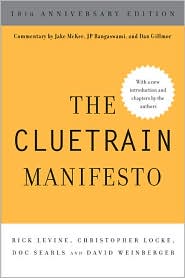
Cluetrain cover
Cluetrain Manifesto
My face
Speaker info
Who am I? (Blog Disclosure Form) Copy this link as RSS address Atom Feed

July 15, 2009

Senator, would you be ok with an all-white Court? Really?

The relevant paragraphs from Sonia Sotomayor’s “wise Latina” speech:

Whether born from experience or inherent physiological or cultural differences, a possibility I abhor less or discount less than my colleague Judge Cedarbaum, our gender and national origins may and will make a difference in our judging. Justice O’Connor has often been cited as saying that a wise old man and wise old woman will reach the same conclusion in deciding cases. I am not so sure Justice O’Connor is the author of that line since Professor Resnik attributes that line to Supreme Court Justice Coyle. I am also not so sure that I agree with the statement. First, as Professor Martha Minnow has noted, there can never be a universal definition of wise. Second, I would hope that a wise Latina woman with the richness of her experiences would more often than not reach a better conclusion than a white male who hasn’t lived that life.

Let us not forget that wise men like Oliver Wendell Holmes and Justice Cardozo voted on cases which upheld both sex and race discrimination in our society. Until 1972, no Supreme Court case ever upheld the claim of a woman in a gender discrimination case. I, like Professor Carter, believe that we should not be so myopic as to believe that others of different experiences or backgrounds are incapable of understanding the values and needs of people from a different group. Many are so capable. As Judge Cedarbaum pointed out to me, nine white men on the Supreme Court in the past have done so on many occasions and on many issues including Brown.

However, to understand takes time and effort, something that not all people are willing to give. For others, their experiences limit their ability to understand the experiences of others. Other simply do not care. Hence, one must accept the proposition that a difference there will be by the presence of women and people of color on the bench. Personal experiences affect the facts that judges choose to see. My hope is that I will take the good from my experiences and extrapolate them further into areas with which I am unfamiliar. I simply do not know exactly what that difference will be in my judging. But I accept there will be some based on my gender and my Latina heritage.

Sotomayor is saying something designed to inspire those against whom expectations have run: In American culture, the image of a wise judge generally is that of an old white man. Sotomayor is asking her audience to embrace a different image. In fact, she says, the very life experiences that traditionally have worked to disempower people make one wiser than those who haven’t had those experiences. The unfortunate implication of Sotomayor’s rhetoric (or, at least the inference taken by some white male Senators) is that race is the differentiator, not the experiences…an inference that does not survive reading the rest of the passage. Clearly, Sotomayor is saying exactly what all Americans are taught: We are a melting pot made stronger by the diversity of our culture.

So, here’s what I’d ask the Republican Senators who are questioning her about that line in her speech:

Senator, would you be ok with an all white, all male Court?

That is, if all else were equal, Senator, would you prefer to have a Supreme Court made up of nine white men from similar backgrounds, or a Court that includes men and women, people of various hues, and people from a variety of backgrounds?

If you’re ok, Senator, with a lily-white, male Court, you may sit down. Thank you.

If, however, you think we are better now for having some diversity among our Justices, then don’t you agree that “a difference there will be by the presence of women and people of color on the bench”? Don’t you agree that diversity strengths the Court — makes it wiser — because it brings different points of view to bear? So, Senator, you agree that one’s background affects one’s judgment, and that we are better off having multiple life-experiences represented on the Court.

So, Senator, don’t you think it’s a great for the Court to have, say, a wise Latina woman in the discussions? Me, too!

In creating a Supreme Court rather than one Supreme Justice, our founders recognized that wisdom is more reliably a property of a system than of an individual. Wisdom is most likely to emerge from a network that embraces diversity.

Especially a diversity of people who are empathetic. But that’s another issue… [Tags: sotomayor scotus wisdom expertise everything_is_miscellaneous wise_latina_woman ]

Tweet
Follow me

Categories: Uncategorized Tagged with: culture • everythingIsMiscellaneous • expertise • politics • scotus • sotomayor • wisdom Date: July 15th, 2009 dw

9 Comments »

July 10, 2009

Internet freedom, but not equality

From the National Journal:

Sens. Arlen Specter, D-Pa., and Sam Brownback, R-Kan., secured $30 million in federal funding for the State Department’s efforts to promote Internet freedom as part of the agency’s fiscal year 2010 spending bill. The program must be approved by the full Senate and the House before it makes its way to President Obama’s desk. The money would promote widespread, secure Internet use by individuals residing in countries practicing repressive Internet monitoring, censorship and control. The outlay is “a low-cost method of allowing people, especially those living under repressive regimes, to access all-source, uncensored, unfiltered information,” the senators said in a Friday press release.

“Tearing down these Internet cyberwalls can match the effect of what happened when the Berlin Wall was torn down,” Specter said. “This funding seeks to enable freedom of thought, expression and the unimpeded flow of ideas and information, and I am pleased my colleagues have recognized the program’s importance.” Brownback added the battle being waged in the streets of Iran and China is also being fought on micro-blogging site Twitter, social network Facebook and other platforms. “This is a pivotal moment for people living in oppressive regimes. The best way to ensure their ability to communicate and share their story with each other and the world is to keep the Internet open,” he said.

The House passed a State spending bill Thursday that did not include Web freedom funding but Energy and Commerce Committee member Mary Bono Mack, R-Calif., earlier this week urged lawmakers to hold a hearing on the role of the Internet in giving a voice to those in repressive countries. Rep. Chris Smith, R-N.J., who in the 109th Congress chaired a high-profile Internet freedom hearing of the House subcommittee that oversees global human rights, has repeatedly introduced legislation that would prevent U.S. tech firms from working with nations that capture and convict citizens for engaging in democracy promotion and human rights advocacy online.

The NY Times reports on danah boyd’s kick-butt keynote at PDF09, in which she pointed to the class divisions in the Net:

Is the social-media revolution bringing us together? Or is it perpetuating divisions by race and class?

Many of us would like to believe the Internet is a force for unity, but danah boyd, a social-media researcher at Microsoft Research New England and a fellow at Harvard Law School’s Berkman Center for Internet and Society, thinks we’re deceiving ourselves.

Speaking last week at the Personal Democracy Forum, an annual conference that explores how technology is changing politics, Ms. boyd asked a packed audience of activists, political operatives, entrepreneurs and journalists to raise their hands if they use Facebook. Almost every hand in the place went up. Then she asked who uses MySpace, and barely a hand was seen.

How could that be? Sure, Facebook is growing much faster. But MySpace is far from dead. In May, Web-traffic tracker comScore reported that Facebook and MySpace are neck and neck in terms of U.S. visitors, with 70.28 million that month for Facebook, up 97% from a year ago, and 70.26 million for MySpace, down 5% from last year.

vMs. boyd got some answers from group of people she’s been hanging out with over the last four years: U.S. teens. During the 2006-2007 school year, her conversations with high-school students began showing a trend of white, upper-class and college-bound teens migrating to Facebook–much like the crowd in the conference hall has. Meanwhile, less-educated and non-white teens were on MySpace. Ms. boyd noted that old-style class arrogance was also in view; the Facebook kids were quicker to use condescending language toward the MySpace kids.

“What we’re seeing is a modern incarnation of white flight,” Ms. boyd said. “It should scare the hell out of us.”

More in the article, including research by Eszter Hargittai… [Tags: internet class social_class sociology politics e-democracy ]

Tweet
Follow me

Categories: Uncategorized Tagged with: class • digital culture • digital rights • e-democracy • egov • everythingIsMiscellaneous • internet • politics • sociology Date: July 10th, 2009 dw

1 Comment »

July 4, 2009

Top Ten Reasons Sarah Palin Quit

Putting on her old red campaigning suit caused an unstoppable urge to call a press conference, and, well, she had to announce something.

Part of careful plan to capture the White House in 2012 by convincing Americans that she’s the leading incoherent, out of control Republican.

She can see crazy from her backyard.

That’ll show the world McCain made a great choice in picking her!

Only way to exorcise those chain-rattling Ghosts of Machine-Gunned Moose Past.

Bridge to Nowhere, meet Leaper.

Michael Jackson so needed to be knocked out of first place on Twitter.

You don’t understand? Just wait for Mark Sanford’s next press conference.

Face it: Alaska’s a dump. [Hey, these are her reasons, not mine!]

Desperate bid to be mocked by Tina Fey one last time.

[Tags: palin humor ]

Tweet
Follow me

Categories: Uncategorized Tagged with: humor • palin • politics Date: July 4th, 2009 dw

10 Comments »

June 30, 2009

[pdf09] Mark Pesce on global politics in the hyperconnected universe.

Mark Pesce is talking about the new global power. [I didn’t liveblog Michael Wesch’s talk because it was too hard to. It’s was close to his popular YouTube lecture about YouTube. He got and deserved a standing ovation.]

NOTE: Live-blogging. Getting things wrong. Missing points. Omitting key information. Introducing artificial choppiness. Over-emphasizing small matters. Paraphrasing badly. Not running a spellpchecker. Mangling other people’s ideas and words. You are warned, people.

The distribution of power has changed but it comes with a loss of control, which means our culture might start hydroplaning. We need to watch the collisions, but remember that people are going to get hurt. We need a political science for the 21st century.

Last month, Wikipedia banned Scientology from editing WP. The Scientologists compared WP to Nazis. Scientology is highly hierarchical. WP is a social agreement to share what we know for the good of all. What happens when they crash? Scientology uses law suits. How does Scientology deal with a social agreement. If Scientology wanted to declare war, it would attack the social agreement, wearing away at the bonds of trust. ckobama,

Mark points to the phenomenon of “communication overload.” E.g., the NY my.barackobama site was overwhelmed by supporters, so O supporters moved elsewhere, using older media. We haven’t yet seen a hybrid beast that can operate hierarchically but interact with the ad hocracy. Project Houdini (tracking who voted) crashed on Election Day, overwhelmed by info. These both were “friendly fire” incidents. We need to learn how to crush the gulf.

“The next decade will be completely hellish” for parties and campaigners.

Hyperempowered communities face a mismatch with the hierarchical mechanisms of the state, even with the best of intentions. But the catastrophes are the first sign of success. So, the state has to radically reform its means of communication, moving out of hierarchies, becoming more chaotic. But this is asking the leopard to change its spots.

We need to watch hyperintelligences emerge and see how governments react. The rules of the game are changing. “The best first step is observation.” The O administration provides the “perfect lab.” This will give us the first snapshot of a political science for the 21st century. Powerful, hyperconnected communities wil sometims struggle against or work with hierarchical institutions. But in each case the hierarchical will have to adapt itself to a new order.

[Tags: pdf09 egov e-gov e-government e-democracy ]

Tweet
Follow me

Categories: Uncategorized Tagged with: conference coverage • e-democracy • e-gov • e-government • egov • pdf09 • politics Date: June 30th, 2009 dw

1 Comment »

[pdf09] Todd Herman – A conservative in Oz

NOTE: Live-blogging. Getting things wrong. Missing points. Omitting key information. Introducing artificial choppiness. Over-emphasizing small matters. Paraphrasing badly. Not running a spellpchecker. Mangling other people’s ideas and words. POSTED WITHOUT BEING REREAD You are warned, people.

Todd Herman is a conservative who wants his team to be using the new tools better. Conservatives need to understand the rules of engagement better. The ecosystem favors Obama. How is that working and how can Conservatives work it? “Chairman Steele said ‘Take the lid off.” What would you do if you were me?” E.g., he’s excited by Vivek Kundra’s announcement and wants to bring the data to his site where Republicans can comb it for info. But how open should a political be? How open can it be? “Can a political party really be open?” “Can we be as open as Twitter? I would love it if we could.”

He points to a 1997 Republican site: A virtual town. Very 1997-cool. USAToday rated it as more fun than the Disney site. The Republicans “have been here before. There’s nothing genetically stopping us from using them.” He shouts out to http://en.wikipedia.org/wiki/Saul_Alinsky.

Q: How do you envision this change in tech with the underlying philosophical approaches changing the Rep party?
A: I love that our elected leaders can have pretty direct communication with the voters. I think it’s changing that way. But we need to change the rules of engagement, e.g., away from gotcha.

Q: [jay rosen] Cognitive dissonance while listening to you: You seem to address us as if you didn’t know that the Bush admin had an opacity agenda. E.g., Ashcroft’s 2001 memo saying err on the side of not honoring FOIA requests. So, I’d think the Reps should be asking why it was in favor of opacity.
A: It’s a long conversation. Todd points to some instances of the Obama admin’s lack of transparency. “I’d gladly buy you dinner to have a long conversation about it…”
Jay: Good enough! Where are we going?

You picked on DemocraticUnderground, but missed FreeRepublic. But you asked us socratically what we would do if we were you. What would you do if you were us and saw the way the REpublicans manipulated voter roles?
A: I don’t accept the premise, but my question goes both way.

[Great to have a conservative speaking. IMO, it’d would have been better if he hadn’t used it as a way to address his political grievances, and instead solely focused on the issues of tech, politics, governance where we genuinely share interests. But, that’s just me.]

[Tags: egov everything_is_miscellaneous e-gov pdf09 e-government e-democracy politics ]

Tweet
Follow me

Categories: Uncategorized Tagged with: conference coverage • e-democracy • e-gov • e-government • egov • everythingIsMiscellaneous • everything_is_miscellaneous • pdf09 • politics Date: June 30th, 2009 dw

Be the first to comment »

June 29, 2009

[pdf09] Mark McKinnon and Joe Rospars

On stage at PDF, Mark McKinnon and Joe Rospars, the Net guys for McCain and Obama.

NOTE: Live-blogging. Getting things wrong. Missing points. Omitting key information. Introducing artificial choppiness. Over-emphasizing small matters. Paraphrasing badly. Not running a spellpchecker. Mangling other people’s ideas and words. You are warned, people.

Andrew Rasiej begins the interview by asking Mark about the way the media took up his statement at PDF08 that “John McCain is aware of the Internet.”

MM: This shouldn’t be viewed as left v. right but old v. new. “Joe’s a genius, I’m a woolly mammoth.” I’m not the Rospars of the right, I’m old media. We have our own Joe Rospars. It’s all about democratization. Back in 2000, we were creating content via analog. In 2004, it changed radically. We could create longer content digitally and send it out to millions of supporters. In 2008 we saw the effect of YouTube, which means campaigns are losing control. What Obama did: The real key is not tech but harnessing energy. Create the excitement.

JR: All of the online stuff was integrated with the traditional, offline aspects of the campaign.

AR: The power of the Net crystalized for me when I saw my dad emailing Obama YouTubes to people. How do you convince traditional pols that the online is an opportunity?

JR: It’s not a replacement. It’s an integrated thing. It wasn’t clear from the beginning that it was going to happen. In my job interview, Plouffe said we’re only going to be able to build national campaign, we’re going to have to use the online new media to build the love. The old and new media directors sat at the same table. Obama and Michelle said when we first met that they wanted to run the campaign in a way that would leave the political process better off, even if they lost.

AR: What about bumps in the road, e.g., Obama’s support of the FISA bill?

JR: It was hard. But Obama was the candidate, not the plurality of web sites. So he took the time to write a note explaining his position. It was a testimony to the maturity of the campaign and the supporters. After we sent back the donations disappointed donors wanted back, the majority of those were returned because they appreciated how we handled it.

AR: Now that Obama is running the White House, there seems to be more of a disconnect with bloggers, etc.

JR: I dispute that characterization. This is the most transparent WH ever. And we’re not starting from scratch when governing, as opposed to when you’re building a campaign.

AR: Mark, for the next campaign, how much of it will be tools and how much will be candidate?

MM: It’s 95% energy and ideas, 5% tools. Did Obama revolutionize campaigning? Yes, the way Secretariat revolutionized horse racing… How many Republicans are in the audience? [Look like about ten people out of 1,000 raised their hands.]

AR: What advice would you give MM, JR?

JR: Get new candidates. Even Mark’s language is off: He talks about “embracing technology.” We got millions of people who hadn’t been involved in politics to get out and do something. I don’t see any Republican on the horizon doing this.

MM: I agree with JR. It’s about connecting, interacting with people, fundamental issues that matter to them. The best part is day you’re elected; it gets tougher and tougher from then. I hope Pres. Obama is extraordinarily successful for the sake of country, but the hard stuff is just beginning, and people will get disillusioned, and REpublicans will have an opportunity…

MM: Do you have any thoughts about tech is playing out in Iran?

AR: I’m fascinated by our willingness to accept info we can’t verify.

JR: It’s not the tech. It’s the desire.

AR: Micah and I have been thinking that making info “public” should be redefined as accessible and searchable online. Public shouldn’t mean it’s in a drawer in DC.

MM: Transparency is key to effective democracy.

[I missed some questions. Working on my presentation, which I have worked on obsessively for weeks, making it less coherent with each rev.]

Q: Privacy protection hasn’t kept pace with tech…
AR: Privacy is being redefined by the new generation.

JR: I hope people are using the online tools they used during the campaign to organize smaller group now that the campaign is over.

MM: Info is power and tech is providing info.

AR: Bills ought to be posted for 72 hours after it’s finalized and before it’s voted on.

JR: Blue State’s clients are only 25% political. This goes beyond politics.

MM: Fascinating to watch. Campaigns and companies understand they have to tell better stories, opening up the doors so that all the constituencies understand their business.

Q: What are the risks?
JR: We need to make clear to everyone what we’re doing.
MM: Setting expectations

[I did a particularly crappy job of liveblogging this, mainly because of Twitter and the rewriting of my presentation. Sorry.] [Tags: pdf09 e-government e-gov politics ]

Tweet
Follow me

Categories: Uncategorized Tagged with: conference coverage • e-gov • e-government • egov • pdf09 • politics Date: June 29th, 2009 dw

Be the first to comment »

June 11, 2009

[newmedia] Engagement and transparency in government

Clay Johnson of the Sunlight Foundation and David Almacy (Edelman’s public affairs VP and former Director of Internet Operations, White House) are talking about government and engagement.

NOTE: Live-blogging. Getting things wrong. Missing points. Omitting key information. Introducing artificial choppiness. Over-emphasizing small matters. Paraphrasing badly. Not running a spellpchecker. Mangling other people’s ideas and words. You are warned, people.

Clay says he’s a product guy who likes building things. Coming out of the Dean campaign, he co-founded Blue State Digital. When asked why Obama was successful online, he says he replies “Because Howard Dean had bad lawyers.” He could just build stuff there without consulting lawyers. Now, when they try to apply this stuff to governing, the lawyers are involved, and creativity is coming to a screeching halt, Clay says. But, he says, there’s another way: Publishing data. Data.gov aggregates data from the executive branch. Lots of businesses have been built using gov’t data, and this will be a seed bed.

Clay says that Twitter is as important to a political campaign as email. “I’m willing to go on record that in 2012 Twitter will be a bigger fund-raiser for campaigns than email.” Obama raised 80% of his funds through email. E.g., Tim O’Reilly has 200,000 subscribers.

He talks about Apps for America, a contest for apps that do useful things with open data. The new round has people working with the data at data.gov.

Q: [me] How can we encourage the gov’t and others to produce data in open formats?
Clay: I’m more focused on just getting the data out. I don’t care about the format. We should tell them just to do it in plain text, if that’ll get it out faster. Once the gov’t starts pumping it out we can have the debate about which standards.

[Tags: politics e-gov egov e-government transparency ]

Tweet
Follow me

Categories: Uncategorized Tagged with: conference coverage • e-gov • e-government • egov • everythingIsMiscellaneous • politics • transparency Date: June 11th, 2009 dw

Be the first to comment »

[newmedia] Shrum and Blankley

I’m at the New Media Academic Summit for a second day. [Disclosure: Edelman PR is the main sponsor of this, and I’ve consulted to them in the past. In fact, it looks like I’ll be doing some more consulting to them.]

NOTE: Live-blogging. Getting things wrong. Missing points. Omitting key information. Introducing artificial choppiness. Over-emphasizing small matters. Paraphrasing badly. Not running a spellpchecker. Mangling other people’s ideas and words. You are warned, people.

Bob Shrum and Tony Blankley are talking. Shrum is a long-time Democratic political consultant and campaign manager. Blankley is his Republican counterpart (roughly). Shrum begins by saying that the Internet can be a tremendous tool for political persuasion. Blankley agrees and says the Net is weakening parties. And, says Blankley, this is the first communication tech that allows us to move from mass to more customized messaging. Congress is better at “sending out than capturing,” Blankley says.

Shrum: Obama has defied conventional wisdom about over-exposure. People now want the immediacy of their leaders. Second, his program is far more ambitious than usual. Blankley agrees that the exposure isn’t overdone, although he notes that O’s negatives have gone up faster than his positives have gone down. (“He’s still doing fine,” he notes.) It’d be better to have a bench of people who can speak, he says. (“Biden is not turning out to be a good communications device.”)

Q: If it’s a new era, why are the experts on the Sunday shows still male and pale?
Tony: I’m not sure it’s a new era. I thought we did see an increase in people of colors among the commentators during the campaign. Who gets booked for these shows isn’t a conspiracy. The bookers see someone on a show and devide to get him for their show. They’re desperately trying to find someone and they fall back on the people they know.
Shrum: The networks are trying, but they’re facing three centuries of discrimination.

Q: Is it now easier to mount an oppositional change?
Shrum: O has organized YouTube, etc., so well that it works in their favor.

Q: [me] Is it a generational change? If so, at the maximum, what does that change consist of?
Shrum: Yes. In fact, we may be at the end of the Reagan era. There may be a fundamental realignment in American politics. But we won’t know for ten years.
Blankley: Obama won in part because he won among the Millennials, because of his use of the new tech. There has been a generational shift in technology usage. Mass communication will just luck archaic. Will there be a new era? Possibly. But it won’t be based on the demographic shift. It will depend on O convincing us that there’s a better way to do politics.

[Tags: nms09 politics ]

Tweet
Follow me

Categories: Uncategorized Tagged with: conference coverage • nms09 • politics Date: June 11th, 2009 dw

Be the first to comment »

June 10, 2009

[newmedia] Mike Slaby on Obama’s use of social media

NOTE: Live-blogging. Getting things wrong. Missing points. Omitting key information. Introducing artificial choppiness. Over-emphasizing small matters. Paraphrasing badly. Not running a spellpchecker. Mangling other people’s ideas and words. You are warned, people.

At the Edelman-sponsored NewMedia conference, a panel is beginning on “advancing reputation,” with Mike Slaby (CTO of Obama for America), Debbie Curtis-Magley (UPS), and David Liu (AOL). Premise: Companies can now advance their reputations through the channels they choose, without going through media distributors.

Mike (Obama): A lot of success came from Obama’s skills as a candidate. There was a movement, and our job in the new media departent was how to get the candidate in front of people more. Going into these spaces, you are an equal member with everyone else. It’s not broadcasting. If you tread on people’s space, you’ll piss them off. It’s hard for companies to find a persona and a personality for talking online, but it’s easy with a political campaign because you have a candidate. You have to have one set of values and one story, and you need to talk in the language of your audience. If you’re going to use Twitter, you have to have people in your organization who know how to tweet. And you have to trust your people and the people you’re talking about. We only filtered out comments that were truly, truly offensive. Sean Hannity came after us because someone at our social network made it look like the Black Panthers endorsed Obama on our social networking site, so we set up a profile for Hannity to show him that this was an open space.

We gave out our logos and let people make their own sites. There was an art exhibit of what people made out of this, called “Officially Unofficial.” Some of it I wish hadn’t been made, but so what? It made people feel that the campaign was theirs. This makes marketing people uncomfortable if they’re used to managing messages. You should give up control. It worked for us.

But social media works for politics only if it gets people out into the real world to vote. You have to convert your users into donors, volunteers, and voters. About 30% of our email was doing something in the real world … I’m proud of that.

He adds: Not every business should have a facebook page; it depends on what you’re trying to do.

Also: There are no switching costs online, which is a reason not to build your own social networking site. We had a multi-million person base ready to go, but that may never happen again in politics, and it probably never happens in business.

Q: Why did the campaign refer to Obama as Barack? Wasn’t that too informal?
A: People want an emotional connection. They want to know his story. We needed to talk about him as a person. But now I never refer to him as that. He’s president.

[Tags: newmedia politics obama social_media nms09 ]

Tweet
Follow me

Categories: Uncategorized Tagged with: conference coverage • digital culture • newmedia • nms09 • obama • politics • social networks • social_media Date: June 10th, 2009 dw

Be the first to comment »

June 4, 2009

Gay marriage becomes ho-hum

“New Hampshire OKs gay marriage” was the fourth item on the NPR news broadcast this morning. Which is itself great news. Legalizing gay marriage becoming ho-hum is an important step toward it becoming inevitable.

[Tags: gay_marriage same_sex_marriage opposite_marriage ]

Tweet
Follow me

Categories: Uncategorized Tagged with: culture • gay_marriage • opposite_marriage • politics • same_sex_marriage Date: June 4th, 2009 dw

3 Comments »

« Previous Page | Next Page »


Creative Commons License
This work is licensed under a Creative Commons Attribution-NonCommercial-ShareAlike 3.0 Unported License.
TL;DR: Share this post freely, but attribute it to me (name (David Weinberger) and link to it), and don't use it commercially without my permission.

Joho the Blog uses WordPress blogging software.
Thank you, WordPress!