


logo
EverydayChaos
Everyday Chaos
Too Big to Know
Too Big to Know
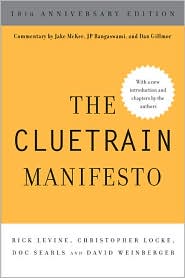
Cluetrain 10th Anniversary edition
Cluetrain 10th Anniversary
Everything Is Miscellaneous
Small Pieces cover
Small Pieces Loosely Joined
Cluetrain cover
Cluetrain Manifesto
My face
Speaker info
Who am I? (Blog Disclosure Form) Copy this link as RSS address Atom Feed

September 7, 2007

John Edwards anti-terrorism policy

John Edwards has given a major speech outlining his anti-terrorism policies. (Disclosure: I’m a volunteer advisor on Net policy to the campaign.) I read it and I think: This is a lot better than our current policies. Orders of magnitude better. But do I think each of the agenda items is the best thing to do? Nah, but that’s because I don’t think there is a set of best things. If only. So, I look for the general understanding of how the world is made more peaceful. And for that, I think Edwards is right on.

But Edwards doesn’t say the one thing I think any anti-terrorism policy should acknowledge: Terrorism is not going away, any more than crime is going to end. Kerry said something along those lines and got creamed for it, even though Bush had muttered something similar a few weeks earlier. But it’s the truth that ought to be setting our sense of what constitutes success. [Tags: john_edwards terrorism politics]

Tweet
Follow me

Categories: Uncategorized Tagged with: peace • politics Date: September 7th, 2007 dw

5 Comments »

August 14, 2007

Globalization of corporate ethics

John Palfrey and Jonathan Zittrain, of the Berkman Center, have an article at C-NET on the ethical difficulties of doing business in tyrannical countries.

The more promising route is for one or more groups of industry members to come up with a common, voluntary code of conduct to guide the activities of individual firms in regimes that carry out online censorship and surveillance. Such a process has begun. Google, Microsoft, Vodafone, Yahoo and TeliaSonera are actively working together on a code. This process includes nongovernment organizations (NGOs)&mdashincluding Business for Social Responsibility and the Center for Democracy and Technology…

As JP and Jonathan say, “The development of a code of conduct itself solves only a small part of the problem.” But it’s a key part. I’m proud to say that the Berkman Center is one of the NGOs working on this project. [Tags: berkman john_palfrey jonathan_zittrain corporate_responsibility ethics google microsoft yahoo ]

Tweet
Follow me

Categories: Uncategorized Tagged with: business • culture • digital rights • globalvoices • peace Date: August 14th, 2007 dw

3 Comments »

June 21, 2007

[supernova] Denise Caruso on anti-social software and Clay Shirky’s lovefest

Denise Caruso, author of the new book Intervention, has been thinking about risk. She looks at innovations that have had nasty unanticipated consequences. The way to avoid it? “Have a conversation.” Talk with people before hand. E.g., the company that was going to incinerate chemical weapons in Oregon talked with environmentalists and their ilk and came up with better means of disposal. People don’t always do this because they fear it.

And, Internet tolols and culture exacerbate it. Targeted search taks away serendipity. Blogger bubbles, etc.

There are “potential dealbreakers” for the Net, she says, including copyuright bs. social media. So, we need to re-socialize the Net. We should automate serendipity.


Clay Shirky begins by talking about a disagreement in Japan about whether a temple is old even though it’s been rebuilt as part of continuing process. The dispute is over “solidity of edifice, not solidity of process.”

Then he talks about a big development contract he got many years ago with AT&T in which he was challenged to provide support. “We get our support from a community,” Clay said, but to them it was like he’d said “We get our Thursdays from a banana.” So, he showed them it working in practice. They couldn’t see it work in practice because they already knew it couldn’t work in theory. He points to comp.lang.perl. “It’s doing fine,” but how is AT&T doing? Not so well. The solidity of the thing is evanescent.

Perl is like the temple, says Clay. It continues because the people doing it love Perl enough to stop what they’re doing and help one another. “No contracts are written, no money changes hands.” “We don’t often talk about love” at these conferences. But tools for coordinating and talking — simple things like mailing lists — turn love into a renewable building material. This leads to unexpected, unanticipated consequences. the better predictor of longevity is not the business model but do the people care about one another.

There’s lots of commercial opportunity. We’re not going to all live together in a commune. But the ability to get people together outside of management and profit motive creates a huge opportunity. And traditional work will be intertwined with this way of working.

Within 24 hours of Linus posting his first message, he had a global network of people eager to collaborate. The monitoring of Nigerian election through people using SMS and Flickr, the responses to terrorist actions, the anti-immigration-law protests coordinated through MySpace…we will see much more of that.

Add collaboration tools to love and you can write an operating system.

We can now do big things with love.

[This was a classic and beautiful statement of why the Net works and why it matters…and the fact that those two things are the same is what’s most hope-giving about the Net. Clay is such a phenomenal combination of insight, brilliance as a writer, and, well, love.]

[Tags: supernova2007 supernova07 clay_shirky denise_caruso love social_software everything_is_miscellaneous]


[The next day] Nick Douglas – who is hilarious to have on a backchannel chat – video interviewed me right after Clay’s talk, so the conversation turned to love and community.

Tweet
Follow me

Categories: Uncategorized Tagged with: business • conference coverage • digital culture • everythingIsMiscellaneous • for_everythingismisc • peace Date: June 21st, 2007 dw

1 Comment »

May 13, 2007

Ethanz on the the Internet’s globalism

Ethan Zuckerman, one of the co-founders of Global Voices [Disclosure: Ethan is a good friend, and I am on a GV board] asks whether the Net is letting us hear voices unlike our own. He founded GV precisely so we could easily find bloggers in other nations opening up a window into their world. But now he wonders if that was “a phenomenon for a specific moment in time.” As the communities of bloggers have become available in many cultures where previously there had been only a handful, they are talking amongst themselves. “[T]hese conversations are taking place in a public medium, but I’m not part of their intended audience,” Ethan writes.

I am not arguing that bridge blogs are dying out – though there’s evidence that some, like Sandmonkey in Egypt, are – or that they’ve lost importance. My point is that when you’re one of the few people in your real world community who is online, the tendency is for you to address your thoughts to a global audience. When a larger segment of your real-world community comes online, there’s good reasons for you to start talking to that audience using the Internet, a global medium used for a local purpose.

Ethan seems wistful for a time when you could fool yourself into believing (as he says) that “a knowledge of English and a little curiosity was all you needed to explore the world of blogs.” Now it takes much more — Global Voices relies on over a hundred people putting in serious time and effort. He contrasts this with the pronouncements of the “cyberutopians” that the Net would make us all one people, engaged with one another and at peace.

But we need to ask whether they saw the Internet bringing people together into a single, unitary net culture, or whether they saw that the Internet could be a space that allowed people from all different cultures to meet on common ground. The former is a fun club to belong to, where we can trade All Your Base jokes and cat macros. But the latter is powerful, political, and potentially transformative. It’s something worth fighting for.

Indeed.

The global conversation isn’t all-to-all, for the reasons Ethan cites. For one thing, the fact that no one speaks every language means that all-to-all is impossible until we discover Babel fish. The Net is not going to erase all culture. Who would want it to? We don’t need homogeneity to be at peace. We need to live with difference.

For that, we don’t need everyone talking with everyone else. But we do need more people talking with more other people. We need to hear some voices, not all voices. We need Global Voices, plus many more global voices. [Tags: ethan_zuckerman globalVoices ]

Tweet
Follow me

Categories: Uncategorized Tagged with: bridgeblog • culture • peace Date: May 13th, 2007 dw

3 Comments »

May 2, 2007

Open Source National Intelligence conference

The Director of National Intelligence invites us all to a public conference, July 16-17 in DC called “DNI Open Source Conference 2007: Expanding the Horizons”:

The conference will raise awareness about open source and encourage information sharing among the Intelligence Community and its partners in academia, think tanks, private industry, and with federal, state, local and tribal entities and international partners. The two-day conference will host participants from local, national, and international organizations from both the public and private sector. Over 25 panels will explore the following topics:

*Social Sciences and the Human Terrain* Regional Focus: OS in Asia* The Need for Speed*

*Managing the Information Tsunami* Regional Focus: OS in Africa*

*Academic Outreach* Open Source on the Web* Meeting IC Collection Priorities*

*Technology: Improving the Use of Open Sources* Media: Telling the Story through Open Sources*

* Data Fusion and Data Enrichment* Training on Accessing Open Sources*

*Maximizing Information Sharing Access* Media as the Open Source*

*Libraries of the Future* Private Sector Partnerships*

*Regional Focus: OS in Latin America* Private Sector Sources of Information*

* Enabling Civil Liberties through Open Source* The Academic-Open Source Connection*

*Regional Focus: OS in the Middle East* Improving OS Analysis and Production* Open Source 101 Training*

*International Partnerships* Outreach to State, Local, and Tribal Partners*

*Knowledge Management* Trends in Business Intelligence* Beyond Simple Searching*

You can register here. (I can’t go, but I’m impressed that they’re having this conference.) [Tags: open_source intelligence dni ]

Tweet
Follow me

Categories: Uncategorized Tagged with: peace Date: May 2nd, 2007 dw

2 Comments »

May 1, 2007

[berkman] Social networking and medicine

Tony Ferraro and David Stone are giving a Berkman lunchtime talk on on “Applications of Social Networking Technology to Medical Treatment.” They’re talking about applying social networking to victims of trauma and torture. David recommends Richard Mollica’s Healing Invisible Wounds. [As always, I’m typing quickly, summarizing, missing points, getting stuff wrong…But the podcast will be available on the Berkman media site.]

There are three technology components to David’s model for using social networks for victims of trauma and torture: Psiphon to build community for people in closed countries , 360Hubs, and using SecondLifeSecondLife for the victims of trauma. He starts up SecondLife and visits a genealogy island, Adam ondi Ahman. It offers lanterns to those who are grieving. “SecondLife could be a valuable tool in the treatment of trauma.”

Q: How about much of the world that doesn’t have access to SecondLife?
A: Psiphon allows some communication between those who have left and those left behind.

Q: [me] What would a SecondLife therapeutic community for victims of torture and trauma be like?
A: I’ve been observing SecondLife communities engage constructively to support one another. I think it’s possible to intentionally create such a community.

Q: Would there be therapists identified as such?
A: There already are. Maybe someone at Berkman knows the law about licensing therapists in SecondLife…

Now Tony talks about 360Hubs. “The world is changing,” he says. He points to OneBillionBulbs.com, an organization encouraging people to switch out ther incandenscent lightbulbs. “How can we use the Internet to impact the society in which we live.”

Affinity Hubs are “specialized, web-based relationship networks where hub mumbers have a common interest or practice, i.e., a professional practice, an alumni association, or sports affiliation.” 360Hubs’ tools are: Web content management, knowledege management, online collaboration and social networking. “If we can connect researchers across the Web and put them in touch with victims of trauma, the inter-agency infrastructure the patient communities, social support, information…bringing them together in these Web communities…”

360Hubs typically has dealt with businesses. Now they’re applying it to trauma victims. It enables a community to aggregate and focus.

Q: How do you screen out quacks?
A: [david] We’re trying to empower a population that’s already doing work — manage it, measure, etc. — so they can be more effective at it.

A: [tony] We can build in identity validation.We can keep people out of the community until they’ve been validated.

Q: Where are you in the process? What are some of your strategies for bringing together experts and users?
A: [david] We’re just getting launched. Over the next six months, we’ll be writing funding proposals.

Q: Are you trying to engage notable people in the field first? How do you build a community?
A: The communities are already there. They just don’t have the technical infrastructure/ There are maybe 60,000 people in Atlanta who have undergone torture and trauma.

A: [tony] David needs to identify exactly the needs of the infrastructure. He’s refining the vision.

Q: You will inevitably be seen as validating people.
A: [tony] the Internet already does that.

A: [david] I use the Internet to supplement real life interaction.

Q: As more and more counseling services are available in SecondLife and other Web services, it enables people who don’t get out never to get out. It becomes one more way to sit and get what they want without ever interacting with real humans.
A: [tony] For some people, it enables people who can’t deal with going out to connnect with others.

Q: Are you familiar with grouploop.com for kids dealing with cancer. There are therapists and various levels of privacy.
A: [tony] Our software lets you manage privacy, so can specify who has access to what you write.

Q: What’s the policy for putting up information?A: [tony] It’s different for every org we deal with.

Q: Isn’t there more room for government involvement, coordinating agencies, ensuring the privacy of shared medical data, etc.
A: [tony] Those are all real concerns.

Q: [me] Beyond the technology, how are you going to get people involved?
A: [david] Everyone I’ve talked with wants to be involved, mainly people at agencies and organizations.

Q: And the policies, affordances, etc.?
A: I’ve created self-sustaining communities before. We’re just beginning to think this through for this particular application. We are beginning together a team, to go out and learn from people, etc. It’s a stone soup situation: Everyone who participates brings something to it.

A: [tony] The community will work this out. It’ll change through the community. [Tags: trauma torture therapy tony_ferraro 360hubs secondlife berkman]

Tweet
Follow me

Categories: Uncategorized Tagged with: everythingIsMiscellaneous • peace Date: May 1st, 2007 dw

Be the first to comment »

April 24, 2007

[berkman] Open Net Initiative

Rob Faris and John Palfrey are giving a talk on “The Practice and Policy of Global Internet Filtering,” a talk about the Open Net Initiative . The ONI is a joint project by Oxford, Cambridge, U of Toronto and Berkman. About 50 people have worked on gathering this data.The new study (coming out as a book called Access Denied) reports on forty countries that block access one way or another. Countries can’t do this on their own, he says.

Over the past five years, the states doing filtering have gone for a few to dozens. East Asia, Central Asia and the Middle East are the main places that filter.

How can the ONI involve more people, John asks. How can the ONI make the data more relevant? Already you can suggest sites to test and you can submit a URL and see where it’s blocked.

Rob talks about a “taxonomy of Internet content restriction strategies.” There are many ways to limit information on line. A state can take down illegal sites, remove search results, filter content, arrest and intimidate, require registration and licensing and ID, hold ISPs responsible, and monitor. There’s no filtering in Egypt, for example, but a blogger was just imprisoned. Bahrain took down access to Google Earth just as a politically uncomfortable mashup was circulating. China blocks Wikipedia. Gay and lesbian sites are blocked in many countries. The Gulf states comprehensively block gambling sites. Thailand blocks access to the book “The King Never Smiles.” Anonymizers and The Onion Router are frequently blocked. (Rob mentions the great ONI page where you can see the search results at Google.com and Google.cn for the same term.)

To comprehensively block the Internet, countries rely on software, using automatic ways of identifying offensive material, which makes lots of mistakes. “Internet filtering is inherently flawed.” You get over-blocking, underblocking and mis-categorization. Some countries are transparent about the blocking, but many do not.

“Once you put in the infrastructure for social filtering,” says Rob, you also seem to institute political blocking.

Q: [yochai benkler] This is important work. But the most important part of it is the detail your work covers. “The level of detail that goes into the country studies suggests” a different way of presenting it. E.g., transparency. How do you do as someone who respects democracy deal with the transparent process in Saudi Arabia? The Saudis say exactly what they’re doing. They say they’re protecting a cultural discourse. They let people add to it or subtract to the list of blocked sites. Mapping these differences among countries would be very helpful.
A: [jp] We’ve spent three years collecting data. That’s been our aim. Now the challenge is how to make it useful. Do we want to give an open API to all the sites that are blocked? Do we want to give this list to everyone including the censors? And how much should we write in our country studies? The first ones were very long, with lots of context, but not many people read them. So, we’ve shifted to shorter reports, more coverage, and deep dives at times. And we’ve done a book that gives straightforward data, plus a series of contextualizing chapters. We’re trying to have it all ways. [I.e., they’re being miscellaneous. :) ] Also, we’re working with several companies on a code of conduct for international companies.

Q:[ethanz] People in filtered countries are often desperate just to get confirmation that they’re being blocked. It’s been tough to get rapid response out of ONI. Activists are writing their own tools, often not as good as ONI’s tools. And it’d be great if you had a handbook that others could use who are not as technical as you.

Q: There’s a lot of data to be gathered about how countries are changing their laws to achieve the aims of filtering.
A: We’ve started doing that. We’ve sent clinical students to countries to look into this.

Q: What do you do to help bloggers?
A: We’re not advocating, at least at this point. We’re just describing.

Q: ONI is done by a localized group. How do we get the average user to take part in checking on filtering, etc.?
A: We’re definitely thinking about this. Jonathan Zittrain wants to do a distributed app, like Seti@Home . We’ve started the design of this.

Q: As you’ve said, American high tech companies provide filtering technology. Corporate responsibility has been discussed forever…
A: For the past two days, a group has been meeting in London, drafting principles. Google, Microsoft, Yahoo and Vodaphone are there, as well as the ONI.

Q: How can you release the information listing the censored applications?
A: We have a tool under development that lets you see which countries block a site. We’re struggling with making it available because we are reluctant to give this information to censors. [The demo shows that Technorati is blocked in China and Iran and BoingBoing is blocked in Iran, Saudia Arabia, Sudan and Tunisia.]

Q: How has filtering changed since you started monitoring it in 2002?
A: We haven’t collected enough data. When we started we only looked at a few countries.

Q: [catherine bracy] How do you know what countries want to join the filtering club?
A: They’re debating legislation. There are a half dozen in Latin America. A bill is floating in Norway that’s breathtaking in its breadth…

Q: [ethan] Should you be helping people filter better? Thailand blocks all of YouTube to get rid of one offensive video. You could help them out…
A: [jp] I had a frank conversation with the Thai censor. Fascinating. I see us doing more of that.

A: [rob] That is remarkably close to The Google Question.

[Conclusion: Not only can the Internet be blocked, it’s way easier than we’d thought. There are so many ways to do it. And it can be done at multiple levels, from tech to legislation. Hence, is there no single way to unblock it?]


Seth Finkelstein figured out why BoingBoing got banned from Boston’s free wifi. Omigod. Censorship shouldn’t be this stupid. Unfortunately, it just about always is.

[Tags: oni censorship digital_rights berkman]

Tweet
Follow me

Categories: Uncategorized Tagged with: bridgeblog • culture • digital culture • globalvoices • peace • politics Date: April 24th, 2007 dw

1 Comment »

April 23, 2007

Web of Ideas: Civility, Codes of Conduct, and the Implicit

This Wednesday at 6pm at the Berkman Center, I’m leading a discussion about civility, codes of conduct, and the price of the explicit. I will make some conversation-opening remarks at the beginning, and then we will discuss the topic(s), presumably civilly…although the Law of Irony dictates that it’ll turn into fistacuffs.

Pizza will be served. All are welcome. [map] [Tags: civility cyberbullying ethics berkman]

Tweet
Follow me

Categories: Uncategorized Tagged with: digital culture • peace Date: April 23rd, 2007 dw

Be the first to comment »

April 11, 2007

Code? Nah. Codes? Maybe.

We’ve all got a real problem. On some sites comments are so nasty that they are driving people off the Web. Even if the comments on your own site are always respectful and sweet-natured, the verbal violence on other sites is your problem. Our problem. It’s not as bad as some in the media portray it, but when Kathy Sierra gets over a thousand messages, mainly from women, saying they’ve been stalked or bullied, it’s an issue we can’t ignore.

Unfortunately, there is no easy solution. A Blogger Code of Conduct goes down the wrong path. Codes only can play a role if they’re plural. Very plural.

Lisa Stone puts it all well when she explains why a “one-stop-shopping” code can’t work for all:

Images that are appropriate for a blog devoted to the war in Iraq would never work on a parenting site, for example. They shouldn’t have to play by the same rules. And we all know how I feel about the First Amendment. :)

So, here’s a longer way around to the same point. (More of Lisa here.)

The first and least debatable Blogger Code of Conduct is the body of law that sets limits on what we can say in public. Death threats, libel, and giving away state secrets are all out. But when we try to get more specific than “No death threats! No nuclear secrets!” what do we really all agree about? A Code of Swimming Pool Conduct that says “Swim safely!” is of little use. The only code worth posting poolside says things like “No diving. No swimming without a buddy. ” But what’s the equivalent for blogging, that is, for talking together in public? A single code of conduct would need to drive down into specifics about which bloggers disagree.

Further, no single code could cover all the different ways we want to talk. Conversation shapes itself to its topic, venue, goal and personal relationships. For example, if I’m arguing with a like-minded friend about politics, my social group’s norm allows me to be more interruptive and use more curse words than if I’m talking with an acquaintance from the other side of the fence. Our norms tell us exactly how much bad language we can use with our family, at work, at the sports stadium, and when meeting our future in-laws for the first time. We know how loud we can talk whether it’s sermon time at the synagogue or South of the Border Night at the bar. There is no possibility of coming up with a single code of conduct because there are too many circumstances in which we conduct ourselves. We are left, ultimately, with our judgment.

Behind the drive for a single code of conduct is often the idea that there is one particular type of conversation at the pinnacle of all conversations: The rational discourse in which two people who disagree work toward the truth. Civility is important there. I’m thrilled to be at an institution — the Berkman Center — where those sorts of conversations happen every day. But those are not the only sorts of conversations we should, could, would, will or do have. Some conversations should be raucous. Some should get people red in the face. Some should have us leaving muttering under our breath. Polite, respectful civil conversations are not the only ones worth having because conversation is about much more than the mutual discovery of truth. Conversation is how we’re social, and thus is as rich, ambiguous, implicit, and multipurpose as we ourselves are. Yes, as Tim O’Reilly says, “Free speech is enhanced by civility.” Definitely. We need more civility. But free speech is also enhanced by healthy doses of incivility. In our drive to limit harmful speech, we need to be careful to preserve risky speech.

Of course, that’s assuming a particular model of civility. If, instead, by “civil” one means only that the conversation should be respectful, then I agree that many more conversations need to be civil. But: (a) Respect is not always the highest value of a conversation. (b) What constitutes disrespectful or injurious speech depends upon the target, the speaker and the context (again, ruling out posts that cross the boundaries of the law and our shared sense of decency). (c) A code of conduct that says that, for example, we should be “respectful” will founder on the details of implementation since there are so many norms about what constitutes respectful discourse — sitting in a quiet room with our hands on the table and our heads cocked attentively being only one scenario. Without the implementation details, the code is as useful as the “Swim safely” poster at the pool.

But then we come back to the problem: People violated – threatened, bullied and stalked – by thugs wielding keyboards. When those comments cross the legal boundaries, there may be legal recourse, although usually that’s not practical. It is a problem with no easy or short-term solution. When the comments are posted on the victim’s own site, there are tools for dealing with them, although none works perfectly. A blogger can moderate the comments, perhaps add a reputation system, or even forbid anonymity. A code of conduct is one more tool in the box. Such a code makes explicit the rules already implicitly governing a comment space. As we come across blogs more and more randomly, it often doesn’t hurt to be told that a site won’t tolerate bad language or wants commenters to stay on topic, if those are the local norms. Bloggers can of course state that already — there’s an infinite supply of sentences — and many do, but coming up with standard ways of expressing the rules would encourage their expression.(That’s what I was suggesting 1.5 wks ago, and it’s what I like in Tim’s idea.) Transparency generally is good.Posting rules of the pool that make explicit the existing implicit norms can be a worthwhile tool…although pasting a long list of precise rules can indeed inhibit free swim.

As for encouraging civility: Absolutely. I like civility. Truly. I encourage it on this blog’s comment pages, and I even try to model it on occasion. But I also like a good fart and a high five now and then.

[Tags: blogs civility kathy_sierra bullying cyberbullying convesation free_speech lisa_stone tim_oreilly everything_is_miscellaneous berkman]


Heather Havenstein of ComputerWorld interviews Lisa Stone on this very topic…

Tweet
Follow me

Categories: blogs Tagged with: blogs • digital culture • everythingIsMiscellaneous • peace Date: April 11th, 2007 dw

11 Comments »

April 8, 2007

P2P philanthropy

You know the charities that let you “adopt a child,” but not in the Brangelina way? For just a few dollars a month, you can feed a kid and get her school books, etc., and every month you get a photo and a letter? Based on nothing but cynicism, I never trusted those ads, but you can’t deny their effectiveness.

In the p2p world of the Web (where p2p = people-to-people and not necessarily peer-to-peer), we can be in direct contact with people we are in a position to help, without the sense that there is a major organization filtering — and possibly professionally ghostwriting — the communications. Here are two organizations that take different approaches…

Kiva.org lets you make a loan to a specific entrepreneur in the developing world. It is a loan, not a gift. The recipients are charged interest by the local microfinance institution through which the loans are vetted and managed. Kiva’s FAQ says that so far its payback rate is 100% and that the general payback rate worldwide for micro-loans is 97%.

Unfortunately, Kiva is not yet posting what interest rates their microfinance partners are charging. You’d think that Kiva, which claims to vette their partners thoroughly, would have this basic information.

DonorsChoose also lets you decide which project you want to fund, confining itself to US projects requested by teachers — it was started by teachers who were digging into their own pockets to provide what their kids need. The group doesn’t hand out cash to teachers. Instead, it pays the vendors directly for what the project requires. This removes any questions about whether the money is making it into the projects, but it does require DonorsChoose to maintain a staff to manage the fulfillment process. Donors can opt to include the 15-25% fullfilment costs in their donation.

DonorsChoose has started a “Blogger Challenge.” You pick a project to support and then post a form on your site, inviting your readers to contribute. For example, here’s the Joho Challenge:

This particular challenge is raising money for read-along tapes for a 4th grade class where about half the kids are learning English. (More here.)

I really like the idea of P2P philanthropy. It gets us past the abstractions. But, I also have concerns. Our sympathies aren’t always the best guide: We may do more good by building a prosaic community water filtering system than by giving a loan to the family with doe-eyed child…or by buying read-along tapes for an American 4th grade class. We have trouble responding sympathetically at the level of systems. So, my family will continue to give every month to Oxfam. Also.

Fortunately, there are many ways to give. Unfortunately, there are so many needs. [Tags: charity philanthropy ]

Tweet
Follow me

Categories: Uncategorized Tagged with: culture • peace Date: April 8th, 2007 dw

8 Comments »

« Previous Page | Next Page »


Creative Commons License
This work is licensed under a Creative Commons Attribution-NonCommercial-ShareAlike 3.0 Unported License.
TL;DR: Share this post freely, but attribute it to me (name (David Weinberger) and link to it), and don't use it commercially without my permission.

Joho the Blog uses WordPress blogging software.
Thank you, WordPress!