



logo
EverydayChaos
Everyday Chaos
Too Big to Know
Too Big to Know
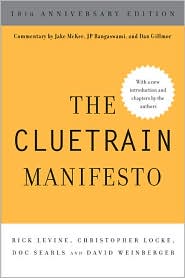
Cluetrain 10th Anniversary edition
Cluetrain 10th Anniversary
Everything Is Miscellaneous
Small Pieces cover
Small Pieces Loosely Joined
Cluetrain cover
Cluetrain Manifesto
My face
Speaker info
Who am I? (Blog Disclosure Form) Copy this link as RSS address Atom Feed

April 27, 2011

America is not so easily fooled!

So, sure, “President” Obama has released his long-form birth certificate. But where’s the proof that Hawaii is a state?

WHERE’S HAWAII’S BIRTH CERTIFICATE? WHAT IS IT TRYING TO HIDE? DEMAND THE TRUTH AMERICA! OTHERWISE THIS USURPER WILL MAKE US LOOK LIKE FOOLS!!!!!

Tweet
Follow me

Categories: politics Tagged with: birther • obama • satire Date: April 27th, 2011 dw

6 Comments »

November 9, 2010

Reading Obama

Here’s a short article (and semi-puff piece) about James Kloppenberg’s new book Reading Obama, that situates Obama within America’s intellectual history. Kloppenberg says (according to the article) that Obama’s two books lay out quite clearly how he thinks and how he approaches problems.

Kloppenberg says in the interview that Obama’s “commitment to bipartisanship is rooted, not just in a desire to be strategic, but instead in what I see as a really sophisticated and robust conception of deliberation — that you cannot have at the beginning of a process of debate the same understandings that you have at the end of that process.” And, says Kloppenberg, his books show that he is a pragmatic problem solver.

Exactly. Read Obama’s books and tell me why you’re surprised at how he has behaved in office.

Tweet
Follow me

Categories: politics Tagged with: obama • politics Date: November 9th, 2010 dw

4 Comments »

August 13, 2009

8 ways health care reform helps

From my close, dear, intimate, personal, BFF, David Axelrod (Hi, David, you remember me, I was the one in row 32, on your left, that time you gave that talk…):

8 ways reform provides security and stability to those with or without coverage

1. Ends Discrimination for Pre-Existing Conditions: Insurance companies will be prohibited from refusing you coverage because of your medical history.

2. Ends Exorbitant Out-of-Pocket Expenses, Deductibles or Co-Pays: Insurance companies will have to abide by yearly caps on how much they can charge for out-of-pocket expenses.

3. Ends Cost-Sharing for Preventive Care: Insurance companies must fully cover, without charge, regular checkups and tests that help you prevent illness, such as mammograms or eye and foot exams for diabetics.

4. Ends Dropping of Coverage for Seriously Ill: Insurance companies will be prohibited from dropping or watering down insurance coverage for those who become seriously ill.

5. Ends Gender Discrimination: Insurance companies will be prohibited from charging you more because of your gender.

6. Ends Annual or Lifetime Caps on Coverage: Insurance companies will be prevented from placing annual or lifetime caps on the coverage you receive.

7. Extends Coverage for Young Adults: Children would continue to be eligible for family coverage through the age of 26.

8. Guarantees Insurance Renewal: Insurance companies will be required to renew any policy as long as the policyholder pays their premium in full. Insurance companies won’t be allowed to refuse renewal because someone became sick.

Learn more and get details: http://www.WhiteHouse.gov/health-insurance-consumer-protections/

Yes, I know you’re probably one of the millions of people who got this email also, but I think it’s important to say these things, given that some of those campaigning against health care reform have taken lying to a new level of ridiculousness.

[Tags: hcr health_care obama politics ]

Tweet
Follow me

Categories: Uncategorized Tagged with: hcr • health_care • obama • politics Date: August 13th, 2009 dw

2 Comments »

July 24, 2009

A twisty path to Chrome in the enterprise

Despite the title of Andrew Conry-Murray’s article in InformationWeek — “Why Business IT Shouldn’t Shrug Off Chrome OS” — it’s on balance quite negative about the prospects for enterprises adopting Google’s upcoming operating system. Andrew argues that enterprises are going to want hybrid systems, Microsoft is already moving into the Cloud, Windows 7 will have been out for a year before Chrome is available, and it’d take a rock larger than the moon to move enterprises off their legacy applications. All good points. (The next article in the issue, by John Foley is more positive about Chrome overall.)

A couple of days I heard a speech by Federal CTO Aneesh Chopra at the Open Government Innovations conference (#ogi to your Twitter buffs). It was fabulous. Aneesh — and he’s an informal enough speaker that I feel ok first-naming him — loves the Net and loves it for the right reasons. (“Right” of course means I agree with him.) The very first item on his list of priorities might be moon-sized when it comes to enterprise IT: Support open standards.

So, suppose the government requires contractors and employees to use applications that save content in open standards. In the document world, that means ODF. Now, ISO also approved a standard favored by (= written by) Microsoft, OOXML, that is far more complex and is highly controversial. There is an open source plug-in for Word that converts Word documents to those formats (apparently Microsoft aided in its development), but that’s not quite native support. So, imagine the following scenario (which I am totally making up): The federal government not only requires that the docs it deals with are in open standard formats, it switches to open source desktop apps in order to save money on license fees. (Vivek Kundra switched tens of thousands of DC employees to open source apps for this reason.) OOXML captures more of the details of a Word document, but ODF is a more workable standard, and it’s the format of the leading open source office apps. If the federal government were to do this, ODF stands a chance of becoming the safe choice for interchanging documents; it’s the one that will always work. And in that case, enterprises might find Word to be over-featured and insufficiently ODF-native.

Now, all of this is pure pretend. And even if ODF were to become the dominant document standard, Microsoft could support it robustly, although that might mean that some of Word’s formatting niceties wouldn’t make the transition. Would business be ok with that? For creators, probably yes; it’d be good to be relieved of the expectation that you will be a document designer. For readers, no. We’ll continue to want highly formatted documents. But, then ODF + formatting specifications can produce quite respectably formatted docs, and that capability will only get better.

So, how likely is my scenario — the feds demand ODF, driving some of the value out of Word, giving enterprises a reason to install free, lower-featured word processors, depriving Windows of one of its main claims on the enterprise’s heart and wallet? Small. But way higher than before we elected President Obama.
TAGS: [Tags: odf ooxml microsoft microsoft_office open_office open_source aneesh_chopra obama standards sgml ]

Tweet
Follow me

Categories: Uncategorized Tagged with: business • digital rights • egov • everythingIsMiscellaneous • microsoft • obama • odf • ooxml • sgml • standards Date: July 24th, 2009 dw

Be the first to comment »

July 1, 2009

PDF: The takeway

PDF was an unusually rich conference. Great folks there and an especially good year to be talking about the effect of the Net on politics and governance.

My take-away (although having a single take-away from a conference I just said is rich is rather contradictory, don’t you think?): The Web has won in a bigger way than I’d thought. The people President Obama is appointing to make use of the Web for increased citizen participation and greater democracy (well, at least as access to the Web and the skills required are distributed more evenly) are our best, brightest, and webbiest. And they are doing remarkable things.


Douglas Rushkoff interviewed me for his radio show yesterday or was it the day before? Anyway, here it is. We talked about PDF and about my presentation there, which was about transparency and the changing role of facts.

[Tags: pdf obama rushkoff e-democracy e-government e-gov egov pdf09 ]

Tweet
Follow me

Categories: misc Tagged with: e-democracy • e-gov • e-government • egov • misc • obama • pdf • pdf09 • rushkoff Date: July 1st, 2009 dw

2 Comments »

June 10, 2009

[newmedia] Mike Slaby on Obama’s use of social media

NOTE: Live-blogging. Getting things wrong. Missing points. Omitting key information. Introducing artificial choppiness. Over-emphasizing small matters. Paraphrasing badly. Not running a spellpchecker. Mangling other people’s ideas and words. You are warned, people.

At the Edelman-sponsored NewMedia conference, a panel is beginning on “advancing reputation,” with Mike Slaby (CTO of Obama for America), Debbie Curtis-Magley (UPS), and David Liu (AOL). Premise: Companies can now advance their reputations through the channels they choose, without going through media distributors.

Mike (Obama): A lot of success came from Obama’s skills as a candidate. There was a movement, and our job in the new media departent was how to get the candidate in front of people more. Going into these spaces, you are an equal member with everyone else. It’s not broadcasting. If you tread on people’s space, you’ll piss them off. It’s hard for companies to find a persona and a personality for talking online, but it’s easy with a political campaign because you have a candidate. You have to have one set of values and one story, and you need to talk in the language of your audience. If you’re going to use Twitter, you have to have people in your organization who know how to tweet. And you have to trust your people and the people you’re talking about. We only filtered out comments that were truly, truly offensive. Sean Hannity came after us because someone at our social network made it look like the Black Panthers endorsed Obama on our social networking site, so we set up a profile for Hannity to show him that this was an open space.

We gave out our logos and let people make their own sites. There was an art exhibit of what people made out of this, called “Officially Unofficial.” Some of it I wish hadn’t been made, but so what? It made people feel that the campaign was theirs. This makes marketing people uncomfortable if they’re used to managing messages. You should give up control. It worked for us.

But social media works for politics only if it gets people out into the real world to vote. You have to convert your users into donors, volunteers, and voters. About 30% of our email was doing something in the real world … I’m proud of that.

He adds: Not every business should have a facebook page; it depends on what you’re trying to do.

Also: There are no switching costs online, which is a reason not to build your own social networking site. We had a multi-million person base ready to go, but that may never happen again in politics, and it probably never happens in business.

Q: Why did the campaign refer to Obama as Barack? Wasn’t that too informal?
A: People want an emotional connection. They want to know his story. We needed to talk about him as a person. But now I never refer to him as that. He’s president.

[Tags: newmedia politics obama social_media nms09 ]

Tweet
Follow me

Categories: Uncategorized Tagged with: conference coverage • digital culture • newmedia • nms09 • obama • politics • social networks • social_media Date: June 10th, 2009 dw

Be the first to comment »

June 4, 2009

White House bloggers get names

The bloggers who write the posts at the White House blog now are putting their names on their posts. I think this is a terrific move.

As I posted a couple of weeks ago, my interest isn’t in accountability. On the contrary. Usually, we think that along the Continuum of Responsibility, putting your name to something will push you toward the Staying In Line side, while being anonymous lets you run toward the Recklessness goal post. But, it doesn’t always work that way. At a site like WhiteHouse.gov, the anonymity of bloggers reinforced the notion that the blog is a faceless voice of authority, with an adjoining door to the Office of Press Releases. I’m hoping that now that the bloggers are signing their posts, they will feel free-er to speak in their own voices, and present shades of view that are a bit more off-angle, and thus more interesting than the Official View. That’s already been true of the posts of the guest bloggers on the site. Now I hope the official bloggers will feel ok about occasionally saying “OMG!!!! I CAN’T BELIEVE I’M IN THE WHITE HOUSE!!!!!!” except maybe a little more constructively and definitely with the caps only implied.

[Tags: white_house whitehouse obama e-gov e-government e-democracy egov blogs anonymity accountability ]

Tweet
Follow me

Categories: blogs Tagged with: accountability • anonymity • blogs • digital culture • e-democracy • e-gov • e-government • egov • everythingIsMiscellaneous • obama • whitehouse • white_house Date: June 4th, 2009 dw

1 Comment »

May 31, 2009

Andrew McLaughlin joins the Obama administration

According to CNet:

Andrew McLaughlin, currently listed as Google’s director of global public policy, will leave Google to accept a position within the Obama administration reporting to the nation’s new chief technology officer, Aneesh Chopra, according to a report in The New York Times. McLaughlin’s new title will be deputy chief technology officer, and he would become the third high-profile Google executive to join the government since Obama was inaugurated in January.

I know Andrew. He was a Berkman fellow and I’m happy to be one of the many people who call him a friend (not to overstate our relationship). Andrew is incredibly smart and very thoughtful. (He’s also kind and funny.) You may disagree with his policy recommendations on, say, Google’s presence in China or how to handle Turkey’s desire to block YouTube videos that mock Mustafa Kemal Ataturk but if you have a chance to hear Andrew talk about such issues, you will come away impressed by his knowledge, his seriousness, his vision, and his empathy. He is committed to open access and understands the power of the Net. I’m very happy to have him in our government.

[Later: Here’s Ethanz on Andrew.]

[Tags: andrew_mclaughlin obama google policy politics ]

Tweet
Follow me

Categories: Uncategorized Tagged with: andrew_mclaughlin • digital rights • google • obama • policy • politics Date: May 31st, 2009 dw

3 Comments »

May 20, 2009

The White House wants comments on open government

The White House is looking for help formulating a directive on open government:

Executive Office of the President
Office of Science and Technology Policy
Transparency and Open Government

SUMMARY: The President’s January 21, 2009, memorandum entitled, Transparency and Open Government, directed the Chief Technology Officer, in coordination with the Office of Management and Budget (OMB) and the General Services Administration (GSA), to develop a set of recommendations that will inform an Open Government Directive. This directive will be issued by OMB and will instruct executive departments and agencies on specific actions to implement the principles set forth in the Presidents memorandum. Members of the public are invited to participate in the process of developing recommendations via email or the White House website at http://www.whitehouse.gov/open offering comments, ideas, and proposals about possible initiatives and about how to increase openness and transparency in government.

DATES: Comments must be received by June 19, 2009.
ADDRESSES: Submit comments by one of the following methods:
http://www.whitehouse.gov/open
E-mail: [email protected]
Mail: Office of Science and Technology Policy, Attn: Open Government
Recommendations, 725 17th Street, ATTN: Jim Wickliffe, Washington, DC 20502.

More here.

[Tags: open_government egov e-gov e-government obama ]

Tweet
Follow me

Categories: Uncategorized Tagged with: e-gov • e-government • egov • obama • open_government Date: May 20th, 2009 dw

5 Comments »

May 16, 2009

Whitehouse.gov: Give your bloggers’ names!

The Whitehouse.gov blog continues to improve, by which I mean it’s getting less like the glass-topped version of White House press releases. But it’s missing a big opportunity by keeping the blog posts anonymous.

The White House bloggers seem quite aware that a press release isn’t a post and are trying to create a difference between the two. For instance, the blogger begins the post on President Obama’s speech on credit card reform with a friendly paragraph about the citizen who introduced him. It’s not much and it’s still directly tied to the President’s remarks, but that paragraph doesn’t read like a press release or like a speech. And, that post ends with the blogger’s evaluation of the President’s proposal: “Long overdue.” That last phrase, expressing some personal enthusiasm, is uncalled for, and thus is refreshing, for blogging is a medium for the uncalled and the uncalled-for. (Which is why I love it.)

Still, it’s hard to see how the posts can blow past this minimal level of bloggishness…unless and until the bloggers start signing them.

The problem, I believe, is that the bloggers feel (and are made to feel) the awful weight of speaking for the White House. Their posts come straight from the offices behind the long lawn and the pillared portico. In some weird, ineffable way, they represent the building, its inhabitants, and its policies, just as press releases do. Press releases have authority because they’re not an individual expression. They have authority because they are unsigned and thus speak for the institution itself. Blog posts come from the same building, and, if they’re unsigned, maybe they’re supposed to have similar authority, except written in a slangier style. So, we don’t yet know exactly what to make of these unsigned posts. And neither do the bloggers, I think. It’s too new and it’s too weird.

But, if the bloggers signed their posts, it would instantly become clear that bloggers are not speaking for the institution of the White House the way press releases do. We would have something — the bloggers — that stands between the posts and the awesomeness of the White House. That would create just enough room for the bloggers to express something other than the Official View. They would be freed to make the White House blog far more interesting, relevant, human, and central to the Administration’s mission than even the most neatly typed press releases ever could be.

Already most of the bloggiest posts at Whitehouse.gov come from guest bloggers who are named and identified by their position. They feel free-er to speak for themselves and as themselves, in their own voice. Now, I don’t expect the official White House bloggers to speak for themselves exactly. They are partisans and employees; they work for the White House because they love President Obama. But, if they signed their names, they could speak more as themselves.

This might let them do more of what the White House blog needs to do, in my opinion. For example, I’d like to read a White House blogger explaining the President’s decision to try some Guantanamo prisoners using the military tribunals President Bush created. White House communications officials probably consider it bad politics to acknowledge the controversy by issuing a defense. But bloggers write about what’s interesting, and hearing a spirited, partisan justification would be helpful, and encouraging. I personally think that Pres. Obama probably has good reasons for his decision in this matter, but the “good politics” of official communications are too timid. I want to hear a blogger on the topic. And I would love to learn to go to the White House blog first on questions such as this. And isn’t that where the White House would like me first to go?

Bloggers with names are the best way to interrupt the direct circuit from politics to official public expression. That would put people in the middle…which is exactly where we want them. [Tags: blogs white_house obama blogging media egov e-gov e-government ]


Posted in slightly improved form at HuffingtonPost and TechPresident.

Tweet
Follow me

Categories: blogs Tagged with: blogging • blogs • e-gov • e-government • egov • media • obama • politics Date: May 16th, 2009 dw

39 Comments »

« Previous Page | Next Page »


Creative Commons License
This work is licensed under a Creative Commons Attribution-NonCommercial-ShareAlike 3.0 Unported License.
TL;DR: Share this post freely, but attribute it to me (name (David Weinberger) and link to it), and don't use it commercially without my permission.

Joho the Blog uses WordPress blogging software.
Thank you, WordPress!