logo
EverydayChaos
Everyday Chaos
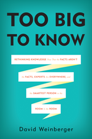
Too Big to Know
Too Big to Know
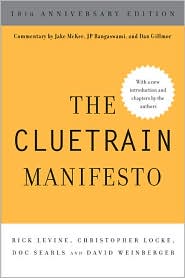
Cluetrain 10th Anniversary edition
Cluetrain 10th Anniversary
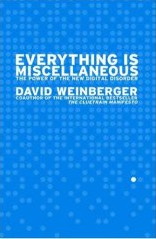
Everything Is Miscellaneous
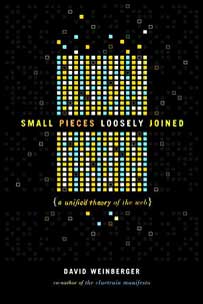
Small Pieces cover
Small Pieces Loosely Joined
Cluetrain cover
Cluetrain Manifesto
My face
Speaker info
Who am I? (Blog Disclosure Form) Copy this link as RSS address Atom Feed

April 27, 2007

Chris Lydon’s interview posted

Radio Open Source has posted the mp3 of yesterday’s show about everything being miscellaneous, with me, Karen Schneider, and Tim Spalding. Chris being Chris, he drives it more towards than the broad and philosophical than, well, anyone else on radio. And best of all, you can hear me get the name of the author of Moby-Dick wrong! [Tags: everything_is_miscellaneous radio_open_source christopher_lydon karen_schneider tim_spalding media taxonomy folksonomy]

Tweet
Follow me

Categories: Uncategorized Tagged with: business • culture • digital culture • everythingIsMiscellaneous • media • philosophy • taxonomy Date: April 27th, 2007 dw

4 Comments »

April 25, 2007

Web of Ideas tonight, Open Source Radio tomorrow

1. Tonight at 6pm at the Berkman Center, I’m leading an open discussion about civility, codes of conduct, and the price of making rules explicit. We serve pizza. You’re invited! [map]

2. Tomorrow night at 7pm I’m the guest on Chris Lydon’s Radio Open Source, talking about Everything Is Miscellaneous. It’ll also be available as a podcast, of course, because that’s what the estimable Radio Open Source does. [Tags: everything_is_miscellaneous cyberbullying codes_of_conduct radio_open_source berkman]

Tweet
Follow me

Categories: Uncategorized Tagged with: digital culture • everythingIsMiscellaneous • media Date: April 25th, 2007 dw

5 Comments »

April 24, 2007

NPR and democacy – Andy Carvin reports

On the second day of NPR’s annual meeting, Andy Carvin reports on a discussion about how NPR can enhance our democracy. [Tags: npr democracy politics andy_carvin media ]

Tweet
Follow me

Categories: Uncategorized Tagged with: digital culture • media • politics Date: April 24th, 2007 dw

5 Comments »

Media revenge

Dave Winer writes, “I want a checkbox that tells MSNBC that I don’t want any more Virginia Tech stories.” Exactly. (He’s making a point about checkboxes, not about Virginia Tech.)

In fact, for the past few weeks, as a part of my “stump” speech, I’ ve been showing a screen capture of USA Today‘s redesigned site. It includes a button you can click on to give a Digg-like thumbs up to an article. Great, except, um, where’s the thumb down? We want to be able to say to the Britney or Justin or We-Should-Teach-Our-Students-Judo article “No no no no no no no no.” We want to tune our news. But we also want our revenge. [Tags: news media digg dave_winer everything_is_miscellaneous ]

Tweet
Follow me

Categories: Uncategorized Tagged with: culture • digital culture • everythingIsMiscellaneous • media Date: April 24th, 2007 dw

7 Comments »

April 17, 2007

[berkman] Wendy Seltzer on ChillingEffects and copyright take-downs

Wendy Seltzer is a founder of ChillingEffects.org. She talks about her “run in” with the National Football League.

Wendy waits for the room to fill by running a very funny YouTube clip of the Daily Show segment about Viacom vs. YouTube. (The room is now packed.)

She was watching the Super Bowl and saw the notice: “This telecast is copyrighted by the NFL for the private use of our audience. Any other use of this telecast or of any pictures, descriptions, or accounts of the game without the NFL’s consent, is prohibited.” She took the clip off her MythTV and posted it to YouTube under the title “Super Bowl Highlights,” with a caption that said: “The NFL’s overreaching copyright claim.” That was on Feb. 8. Five says later, she got a notification from YouTube saying that they had taken the clip down because the NFL claimed it was infringing under the DMCA .

YouTube had received a list of 158 clips the NFL claimed was infringing. It’s likely that the NFL had a robot search for anything that was titled or tagged as NFL. Wendy asked to see the list and received it.

Wendy believes her clip was Fair Use of copyrighted material. That copyright doesn’t protect people from giving accounts of the game or describing the game. It doesn’t even prevent people from making some pictures from the telecast. Wendy’s clip was Fair Use because:

My use is for nonprofit educational purposes; the copyright in the telecast is thin; the portion of football that follows the copyright warning is a minute portion of the whole, with no significant action or commentary, useful to show people what it was the NFL claimed its copyright covered; and the effect on the market for or value of the work is non-existent.

At ChillingEffects, there is a counter-notification generator form that requires the claimant to get specific about why the piece is infringing. Wendy filled it in. This gives YouTube the ability to re-post the material without penalty; the poster now takes the heat if the complainant still complains. Wendy says this isn’t quite an even balance because YouTube’s terms of service protect it from complaints by users anyway, so while Viacom can sue YouTube for not taking a clip down, users can’t really sue YouTube if it doesn’t put the clips back up upon receipt of a counter-claim.

YouTube put Wendy’s clip back up.

Then, on March 18, YouTube once again removed it because the NFL again complained. Wendy says that the DMCA has no explicit mention of a second take-down notice. If a company doesn’t like a counter-notification, it can sue.

This time, it was clear that an individual from the NFL had actually watched the clip. But, Wendy thinks they were falling foul of 512f of the DMCA, which makes a person liable for damages (including lawyers’ fees) for knowingly misrepresenting that a clip is infringing. YouTube was required to pass along Wendy’s original counter-notification, so the NFL knew that Wendy was saying that the clip was for educational purposes.

Wendy sent back the same counter-notification. The Wall Street Journal blog and the Newark Star Ledger covered it, resulting in a letter from the NFL saying that Wendy clearly “doesn’t understand” the DMCA. They objected to the fact that Wendy included 20 seconds of game play around the ten-second copyright notice. But, the letter said, she has their permission to use just the copyright notice. (She included the 20 seconds as context. It does not show a complete play.)

Wendy wrote back, saying that she thinks the clip in its entirety is covered under Fair Use.

They replied with an email, saying that “there is a substantial difference of opinion us on this matter that cannot be reconciled.” So, the clip is still on line. But the NFL says it can offer no assurance they won’t complain again.

YouTube is built on the DMCA safe harbor (512c) that says that it doesn’t have to screen or filter content, or check the copyright of each piece posted. Instead, YouTube has to reply to claims of infringement. No one has alleged that YouTube has not responded. It’s followed the DMCA to the letter. Instead, Viacom et al. say that it’s “too hard” to send YouTube all these notices, so they want to shift the burden to YouTube. Even if YouTube could manage to do all that work, the next startup would find that too high a hurdle; it’d badly hurt innovation…a chilling effect. “I think they’re trying to renege on the deal that was struck with the DMCA.” Wendy would like to see the DMCA reformed “to address some of the burdens on speech” but not thrown out.

Q: (catherine bracy) Why do you think the NFL is “materially misrepresenting”?
A: They know that this is non-infringing. The second notification makes it harder to claim it was a good faith mistake.

Q: (bracy) Can I take a camera into the stadium, tape it, and put it onto YouTube?
A: The guards frisk you and say that your ticket is a contract that prevents you from using a camera. You could look on from a rooftop and tape it from there.

Q: Could you sell it?
A: There’s no copyright in the game itself, so yes. But if you tape a concert you can hear from your house, there’s copyright in the music itself. And “Super Bowl” is trademarked, which is why ads for, say, chips say things like “Stock up for the big game.”

The “knowingly misrepresents” phrase, Wendy says, was added by the entertainment industry to make it harder to sue complainants.

Q: (john palfrey) What’s their strongest case against your Fair Use claim?
A: Their strongest claim against the 20 seconds of football is that I haven’t transformed it or added educational material into the clip itself. They’ll say the announcers describing the plays is a creative work. And there are markets for licensing virtually everything, they’ll say. If they want phone companies to continue paying them to stream clips to cellphones, this is a market into which I’m intruding.

Q: What might your damages be under 512f?
A: It’s hard to quantify damages from speech. I didn’t lose money from students not attending class because I couldn’t talk about the clip, etc.

Q: (gene koo) How long can this take-down and put-back dance go on?
A: California recognizes that legal process can be used to squelch legitimate speech, so if this process continued, I might have a claim.

Q: (me) Someone posted an aggregation of Couric’s questions of the Edwards. It was taken down. Was that fair use? And if this had been done by Jon Stewart, would it be protected the same way it was for the amateur who posted it.
A: Yes, it sounds like fair use, and Stewart and the poster are protected by the same law. But there is no DMCA coverage for broadcast. I don’t know if Stewart licenses his clips or just asserts they’re fair use.

[Tags: berkman fair_use copyleft copyright nfl youtube dmca]

Tweet
Follow me

Categories: Uncategorized Tagged with: business • digital rights • entertainment • everythingIsMiscellaneous • media Date: April 17th, 2007 dw

6 Comments »

April 11, 2007

HIV workers’ social knowledge

Partners in Health is going live with an HIV website that “allows visitors to share insights about the manual and experiences in the field, to ask questions of each other, to answer others’ concerns, and to foster a community of care.” The editor-in-chief, Joia Mukerhjee, says: “This on-line manual is distinctly a work in progress. We intend to keep it that way. ”

Excellent.

(Needless disclosure: My cousin-in-law is an engineer on this project.) [Tags: science health_care publishing knowledge science everything_is_miscellaneous ]

Tweet
Follow me

Categories: Uncategorized Tagged with: education • media Date: April 11th, 2007 dw

3 Comments »

April 7, 2007

danah, Trebor and Ethan – Together live!

Here’s the announcement of an evening of thoughtful thought thoughtfully presented by at The New School on April 13:

danah boyd will argue four points. 1) Networked publics are changing the way public life is organized. 2) Our understandings of public/private are being radically altered 3) Participation in public life is critical to the functioning of democracy. 4) We have destroyed youths’ access to unmediated public life. Why are we now destroying their access to mediated public life? What consequences does this have for democracy?

Trebor Scholz will present the paradox of affective immaterial labor. Content generated by networked publics was the main reason for the fact that the top ten sites on the World Wide Web accounted for most Internet traffic last year. Community is the commodity, worth billions. The very few get even richer building on the backs of the immaterial labor of very very many. Net publics comment, tag, rank, forward, read, subscribe, re-post, link, moderate, remix, share, collaborate, favorite, write. They flirt, work, play, chat, gossip, discuss, learn and by doing so they gain much: the pleasure of creation, knowledge, micro-fame, a “home,” friendships, and dates. They share their life experiences and archive their memories while context-providing businesses get value from their attention, time, and uploaded content. Scholz will argue against this naturalized “factory without walls” and will demand for net publics to control their own contributions.

Ethan Zuckerman will present his work on issues of media and the developing world, especially citizen media, and the technical, legal, speech, and digital divide issues that go alongside it. Starting out with a critique of cyberutopianism, Zuckerman will address citizen media and activism in developing nations, their potential for democratic change, the ways that governments (and sometimes corporations) are pushing back on their ability to democratize.

Friday, April 13, 2007, 6:30 – 8:30 p.m.
The New School, Theresa Lang Community and Student Center
55 West 13th Street, 2nd floor
New York City
Admission: $8, free for all students, New School faculty, staff, and alumni with valid ID

I wish I could be there. [Tags: danah_boyd trebor_scholz ethan_zuckerman sociology economics media ]

Tweet
Follow me

Categories: Uncategorized Tagged with: digital culture • media • philosophy Date: April 7th, 2007 dw

3 Comments »

April 4, 2007

Flu beats CNN

I’d like to respond to the CNN piece about cyberbullying, but I have the flu and am unable to think longer than a sentence in advance. You can see the piece here. And here is my worry-wart post about my participation in it. Briefly my take is: It didn’t do the flat-out, ominous chords scare-mongering, but it nevertheless was perilously close to self-parody. [Tags: cnn media kathy_sierra chris_locke rageboy cyberbullying blogs ]


By the way, I should note that CNN got my attribution wrong. They say I’m a professor at Harvard. In fact, I’m a Fellow at Harvard. To be precise, I’m a Research Fellow at Harvard Law’s Berkman Center for Internet & Society. (The ampersand is an official part of the name.) And I was very clear about this attribution when CNN asked. There are major differences between professors and fellows, affecting everything from teaching to pay-scales to voting to having to wear a silly cap and picking up dry-cleaning for professors. (I’ve written about being a fellow here.)

Tweet
Follow me

Categories: blogs Tagged with: blogs • digital culture • media Date: April 4th, 2007 dw

8 Comments »

March 26, 2007

Some would say…

Here’s a YouTube of Katie Couric’s negative questions in her interview of John and Elizabeth Edwards, including her cowardly use of the “Some would say…” locution. Take some responsibility, Couric!

On the other hand, Couric’s husband died of colon cancer at age 42. Who knows what’s going through her mind.
Here‘s a six-minute clip of the interview; I found it moving. Here‘s Elizabeth answering Couric’s question about “staring death in the face.” Here‘s Couric saying she was moved by the Edwards’ initial announcement of the return of Elizabeth’s cancer. (Disclosure: I’m doing a little volunteer work for the Edwards’ campaign.) [Tags: media john_edwards elizabeth_edwards katie_couric politics]

Tweet
Follow me

Categories: Uncategorized Tagged with: media • politics Date: March 26th, 2007 dw

6 Comments »

Campaign conversations

Newt Gingrich is calling for nominees to agree to holding an open, 1.5-hour conversation once a week from Labor Day 2008 until the election.

Great idea. Of course they won’t do it…unless some of them just start and it goes YouTubular and then there’s pressure on the front-runners to drop in, and the front-runners look all pat and programmed, and we end up electing someone actually good.

Why wait until Labor Day 2008?

Tweet
Follow me

Categories: Uncategorized Tagged with: media • politics Date: March 26th, 2007 dw

3 Comments »

« Previous Page | Next Page »


Creative Commons License
This work is licensed under a Creative Commons Attribution-NonCommercial-ShareAlike 3.0 Unported License.
TL;DR: Share this post freely, but attribute it to me (name (David Weinberger) and link to it), and don't use it commercially without my permission.

Joho the Blog uses WordPress blogging software.
Thank you, WordPress!