



logo
EverydayChaos
Everyday Chaos
Too Big to Know
Too Big to Know
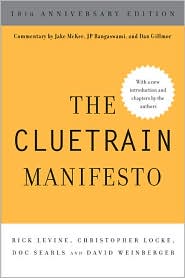
Cluetrain 10th Anniversary edition
Cluetrain 10th Anniversary
Everything Is Miscellaneous
Small Pieces cover
Small Pieces Loosely Joined
Cluetrain cover
Cluetrain Manifesto
My face
Speaker info
Who am I? (Blog Disclosure Form) Copy this link as RSS address Atom Feed

August 17, 2008

Best. Explanation of sub-prime mortgage crisis. Ever

Jay Rosen calls the special This American Life episode on the mortgage/credit crisis “probably the best work of explanatory journalism I have ever heard.” After listening to the podcast yesterday, I’ve got to agree. Not only do I now understand what happened, I think I’m actually going to remember the explanation.

Furthermore, the show focuses on the question that really bothers most of us: What the hell were we thinking? Didn’t we know that offering huge loans to anyone who walked in was unlikely to end well? The show interviews people at different levels in the process, and asks them exactly that.

It is a great piece of journalism. And be sure to read Jay’s piece about it, which is both insightful and wise.

[Tags: journalism media mortgage jay_rosen ]

Tweet
Follow me

Categories: Uncategorized Tagged with: infohistory • jay_rosen • journalism • media • mortgage Date: August 17th, 2008 dw

27 Comments »

August 13, 2008

The Guardian does LOLbush

The Guardian turns 9 photos of Bush at the Olympics into LOLcats. Funny!

[Tags: guardian lolcats bush ]

Tweet
Follow me

Categories: Uncategorized Tagged with: bush • digital culture • guardian • humor • lolcats • media • politics Date: August 13th, 2008 dw

2 Comments »

August 8, 2008

Small public-interest media grants

The Media Research Hub has announced the availability of small-ish grants for advocacy groups working on media reform:

Small grants of up to $7,500 are available for research that supports public-interest efforts to change the media / telecommunications infrastructure, practices, policies or content. The grants are intended for short-term, advocacy-centered research, completable and usable by advocacy partners within the next 4-12 months. Recent small grants recipients were announced November 16, 2007. To be considered for the next round of small grants, please submit your proposal online by September 8, 2008.

Applicant Criteria

Proposals must be:

* Submitted by a US-based nonprofit advocacy, organizing or community group working on media and/or telecommunications issues. Groups with nonprofit fiscal sponsorship are also eligible. (A limited number of international non-profit organizations will be solicited by invitation only.)

* Structured as a partnership with an academic researcher based at a university, college or other research institution. This can include advanced graduate students.

There are no citizenship requirements for participants in these projects.

If you win, don’t forget my finder’s fee! :)

[Tags: grants media ]

Tweet
Follow me

Categories: Uncategorized Tagged with: grants • media Date: August 8th, 2008 dw

1 Comment »

August 7, 2008

How to make the debates interactive

Jose Antonio Vargas at the Washington Post wonders how we could make the upcoming presidential debates interactive, given that the teaming with MySpace is disappointing.

If given a choice between having more YouTube snowmen asking questions or hearing McCain and Obama talk with one another for an hour with no moderator and no questions, I would completely go for the YouTubeless version.

But, since that’s not going to happen except in “West Wing” reruns, I think the best we can hope for is a two-parter that makes everything around the debates interactive.

In part one, we the people have an official forum by which we can raise and debate questions beforehand. Maybe the moderators will be moved to ask something that actually matters to us. (The Berkman Question Tool is great for people in an audience to use during a session. It’s been open-sourced. Maybe it could be beefed up for national or regional use. Or maybe, if the debates really had a representative audience, it could be used during the debate. Sigh. Just daydreaming.)

In part two, we the people carry on a simultaneous debate and discussion as the debate proceeds. And before it. And after it. This already happens, of course, albeit these days frequently through Twitter, which is not well designed for this. But we ought to be able to debate along with the debate. And we will, one way or another. [Tags: politics debates question_tool jose_antonio_vargas ]

Tweet
Follow me

Categories: Uncategorized Tagged with: debates • digital culture • media • politics Date: August 7th, 2008 dw

Be the first to comment »

August 4, 2008

HelpAReporter.com

Peter Shankman, a marketing/PR practioner/speaker, has set up a service called HelpAReporter.com that intends to bring together journalists and sources. It’s free and very informal — you sign up for emails, you respond to requests for help — which is an appropriate way to start. But it’s so ripe an opportunity for abuse by people pushing their clients’ points of view, or just pushing their clients’ brands, that it’ll be interesting to see whether journalists avail themselves of it. Because it’s a mailing list that arrives up to three times a day, my guess is that it’ll mainly be PR folks and lobbyists who attend to it closely enough, and that will (?) drive down its utility for journalists. But, I’m rarely right, so we’ll see…

[Tags: marketing pr journalism media ]

[Later that day: See Peter S’s comment about how he handles abusers. Sounds pretty effective to me :)

Tweet
Follow me

Categories: Uncategorized Tagged with: journalism • marketing • media • pr Date: August 4th, 2008 dw

8 Comments »

July 31, 2008

Blogs, journalism, community

Terrific piece, out of Harvard’s Nieman Foundation, by Dan Kennedy on getting news within the embrace of one’s community. It won’t settle the hash about the danger of only talking with like-minded people (a danger I’m less worried about than others), but it puts the positive well.

Here’s the final paragraph:

Critics of blogs have been looking at the wrong thing. While traditionalists disparage bloggers for their indulgence of opinion and hyperbole, they overlook the sense of community and conversation that blogs have fostered around the news. What bloggers do well, and what news organizations do poorly or not at all, is give their readers someone to sit with. News consumers — the public, citizens, us — still want the truth. But we also want to share it and talk about it with our like-minded neighbors and friends. The challenge for journalism is not that we’ll lose our objectivity; it’s that we won’t find a way to rebuild a sense of community.

[Tags: journalism media blogging objectivity echo_chambers dan_kennedy nieman ]

Tweet
Follow me

Categories: Uncategorized Tagged with: blogging • journalism • media • nieman • objectivity • uncat Date: July 31st, 2008 dw

3 Comments »

July 29, 2008

Reason #12,563 I love the Web

I’m a-lovin’ Marijn Haverbeke’s Eloquent Javascript, an interactive javascript tutorial. It’s clear, nicely written, nice looking, handy (what with its embedded console for trying scripts out), free, and Creative Commons licensed. It’s easily downloadable so you can run/read it even when you don’t have any of that newfangled “broadband” the kids are so excited about.

Thank you, Marijn. [Tags: javascript javascript_tutorial marijn_haverbeke ]

Tweet
Follow me

Categories: Uncategorized Tagged with: digital culture • javascript • media • tech Date: July 29th, 2008 dw

Be the first to comment »

July 27, 2008

Citizen media satire

The Guardian’s satire of citizen media has some biting lines, but it’ll be interesting to see how funny — that is, truthful — it seems in, say, five years.

[Tags: satire media journalism citizen_journalism ]

Tweet
Follow me

Categories: Uncategorized Tagged with: humor • journalism • media • satire Date: July 27th, 2008 dw

Be the first to comment »

July 24, 2008

HuffingtonPost starts providing topic pages

HuffingtonPost today announced that, in addition to its usual front-page layout, it’s aggregating its content around 75 (so far) top-level topics. For example, here’s the Barack Obama page. This takes a page (so to speak) from the NY Times Topic pages, which pull together the NYT’s topic on something like 3,000 topics. The NYT Topic pages not only give a centralized place to read about something, they also give people a place to link to, which apparently happens a lot given the strength of those pages in Google rankings. Likewise, the Huffpo “Big News” pages can be linked to and are widgetized.

I’m not sure how the new HuffPo pages differ from the old pages you’d see when you clicked on a tag. Presumably, there’s been some level of hand editing, but I’m not sure

[Tags: huffington_post huffpo ny_times media everything_is_miscellaneous ]

Tweet
Follow me

Categories: Uncategorized Tagged with: everythingIsMiscellaneous • huffpo • media Date: July 24th, 2008 dw

15 Comments »

More journalism links

More links that have come up at the Berkman discussion about keeping hard journalism sustainable:

snagfilms.com

reelchanges.org

glam.com

Tweet
Follow me

Categories: Uncategorized Tagged with: media Date: July 24th, 2008 dw

1 Comment »

« Previous Page | Next Page »


Creative Commons License
This work is licensed under a Creative Commons Attribution-NonCommercial-ShareAlike 3.0 Unported License.
TL;DR: Share this post freely, but attribute it to me (name (David Weinberger) and link to it), and don't use it commercially without my permission.

Joho the Blog uses WordPress blogging software.
Thank you, WordPress!