


logo
EverydayChaos
Everyday Chaos
Too Big to Know
Too Big to Know
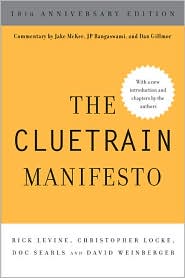
Cluetrain 10th Anniversary edition
Cluetrain 10th Anniversary
Everything Is Miscellaneous
Small Pieces cover
Small Pieces Loosely Joined
Cluetrain cover
Cluetrain Manifesto
My face
Speaker info
Who am I? (Blog Disclosure Form) Copy this link as RSS address Atom Feed

July 3, 2008

The fallacy of examples

Nicholas Kristof has a terrific column today about how the donation of a goat to a family in Uganda ultimately led to one of the children, Beatrice, earning a degree from Connecticut College, and beginning a path of service for her community. It’s a wonderful story, the point of which is what Jeffrey Sachs calls the “Beatrice Theorem” of development economics: “small inputs can lead to large outcomes.”

Well, yes, of course. In fact, small changes have determined the success or failure of us all. And I have no misgivings whatsoever about this past Channukah having given our children certificates announcing that Oxfam had given goats in their name. Yes, I am a goat-giver, and proud of it.

But…

…I’ve noticed in business writing in particular the frequency of what we can call the Fallacy of Examples (a type of Fallacy of Hasty Generalization). You read some story about a successful CEO as if we should learn from his (yes, usually it’s a him) example. But we are struck by examples frequently because they’re exceptional. As exceptions, examples are the last thing you want to learn from.

Not always, though. Sometimes examples are typical. That’s different. The trick is determining which are which.

An even when you can, you’re still not done. Is Beatrice and her goat an exception? Yes. That’s why her story is so inspiring. As an exception, it may be exactly what we should not be emulating. After all, if she’d won the lottery, we wouldn’t think that giving lottery tickets to the poor is a sensible approach to the problem of world poverty. But, even though Beatrice is an exception, the typical effect of donated goats (and other such small-ish gifts) may be quite good.

That’s why the Fallacy of Examples is a fallacy. Reasoning from examples doesn’t always lead to false conclusions. The reasoning just isn’t enough to tell you what the valid conclusions are.

And in the absence of valid conclusions, here’s Kristof’s list of ways to donate goats or their equivalents. And here’s Oxfam’s program. And, because it’s the Internet, here’s samizdata’s warning that goats cause poverty. [Tags: philanthropy nicholas_kristof beatrice goats ]


Ethanz brilliantly contextualizes this post. Thanks, Ethan!

Tweet
Follow me

Categories: Uncategorized Tagged with: beatrice • globalvoices • goats • peace • philanthropy Date: July 3rd, 2008 dw

15 Comments »

July 1, 2008

Global Voices Summit roundups

A thoughtful overview of the Global Voices Summit from Evgeny Morozov. Also, see Joi Ito.

[Tags: global_voices ]

Tweet
Follow me

Categories: Uncategorized Tagged with: globalvoices Date: July 1st, 2008 dw

Be the first to comment »

June 28, 2008

Ethanz on PDF and GV

Conference coverage like this and this makes me sorry that Ethan Zuckerman is chairing the Global Voices meeting instead of live blogging it. We need an “and,” not an “or” here. Clearly it’s time that Ethan cloned himself.

[Tags: ethan_zuckerman global_voices pdf ]

Tweet
Follow me

Categories: Uncategorized Tagged with: conference coverage • ethan_zuckerman • globalvoices • global_voices • pdf Date: June 28th, 2008 dw

1 Comment »

June 3, 2008

[berkman] Berkman lunch: Walter Bender, Sugar Labs

Walter Bender, who was president of the One Laptop Per Child project, is now the founder of Sugar Labs. [Live blogging. Getting it wrong. Missing stuff. That’s just the way it is. Also, this will be much choppier than the talk actually is.]

The aim of OLPC, says Walter, was to transform education around the world. Laptops aren’t the solution the world’s problems, but learning is. And laptops can help with that. “It’s all in service to learning,” he says. He refers to the book Predictably Irrational. Chapter 2 is on “anchoring.” Walter says that he’s anchored to the idea that a “connected computer is the most powerful tool we have” for knowledge creation and sharing. It’s not a panacea, and you can’t just throw the laptops over the wall and wait for the magic to happen, but laptops can be a catalyst.

School reform is impossible, he says, if it’s top down. But it will be accomplished by students bottom up.

Walter’s talk to us is titled “Confessions of a Fundamentalist.” His Open Source fundamentalism was taken as “distorting OLPC in a way that distorted its mission.” He is a fundamentalist about what are the best ways of enabling learning, of planting seeds for learning. He’s willing to bend his principles about Open Source but not about learning.

He subscribes to constructionism, a theory of learning developed by Seymour Papert. Papert was a student of Paiget. “You learn through doing. If you want more learning, you want more doing. And what’s a better tool for doing than a computer?” The corollary is that “love is a better master than duty, so you want to engage people in things they’re passionate about.” Computers, as Turing machines, can do anything. Computers are a “damn good” vehicle for working on what matters to you. He gives an eample of a Thai village where the children used computers to figure out where the reservoir should be built.

Everyone is a learner and everyone is a teacher. “It’s just inherent in our being.” And we’re expressive and social. The teacher-student dichotomy is false. We should instead by learning centric, Walter says.

“Proprietary tools are often associated with the delivery of knowledge,” he says. The criticism is that we’re trying to turn every kid into a Linux kernel hacker. “Yeah. we are,” he says, to chuckles. But they don’t expect every kid to become one. They really want kids to appropriate rather than merely access knowledge. “Open Source has a culture around appropriation that’s important to the culture of learning.” (Of course, he says, you can do constructionist learning with proprietary, or service-oriented with Open Source.)

When OLPC designs its gen 2 that’s more like a book, they’ll be making the mistake of forgetting the dyna in the dynabook (Alan Kaye’s idea that a ebook is more than an analogous), he says, in response to a question. We want books that make it easy to insert comments, for example. “You want to build in affordances that encourage the type of behavior you want to see.”

In a digression, he says that when he headed the MIT Media Lab, he had a three part process: Build, critique, iterate. “Use your time at university to make really big mistakes.

“Learning wants to be free.” There’s a difference between governance and the engagement of the ommunity The Open Source community has developed a “number of very powerful tools around engaging in collaboration and engaging in critique. Those tools are for the most part lacking in the world of education. Certainly in primary education.” They started a pilot in Nigeria where there are 300-500 languages. They were in a school where the primary language was Igbo. The OLPC’s dictionary was only in English. So the kids wrote their own. The kids discovered they had the power. “To me, that’s a real game-changer.”

Walter now talks about Sugar, the user experience that has come with the OLPC by default. It’s available on Ubuntu. Sugar is based on the first principles: be a learner, be a teacher, be expressive, be a learner. Three things abbout Sugar:


1. It wraps applications in “activities,” adding sociality: everyone is right there with you. E.g., when you’re writing a doc, anyone is one click away from “putting their cursor in your document.”

2. The Journal makes sure that everything is preserved, but the importance is that it creates a diary, a portfolio of your work. You can there have a conversation with a teacher or parent about your progress. That march through time “is an important feature of learning.”

3. The framework is simplified and transparent. The transparency means there’s no upper limit. E.g., TamTam starts out as a “busy box”: choose a sound and slap the keyboard. But you can progress to TamTamJam, which is more network-centric and lets you layer instruments. From there you can go to TamTamEdit, where they can compose music. Then, in the SynthesizerLab you can create your own instrument. Then you can edit the Python code underlying the instruments, or hack C-sound (“midi on steroids”). “No upper bound on complexity.”

Sugar is now reaching out to be a general-purpose environment in the Linux “and perhaps even in the Windows” world. “I don’t know how to do it in the Windows world,” he says, but …

“Sugar is pretty raw. It’s alpha. It’s flaky. And it’s in the hands about about 600,000 kids…which is pretty good!” The kids are giving feedback and making improvements.

“Now I come to David Hilbert.” In 1900, he posed 23 problems to mathematicians. Walter has 23 problems facing people interested in technology and learning. He’s going to blog them. They include: How can we make the damn network work? Create malleable code that doesn’t turn into malware? How to get localization/internationalization tools that are two orders of magnitude better? How do we a better job of using more wisely a very scarce resource: power? Does constructivism scale? We need better tools to introduce change. How to transplant the culture of freedom and critique from computer science into education? Economic challenges. Research correlating learning and economic development?

Q: Learning should be free? Which senses?
A: Not free as in beer. But you learn to program by copying code.

Q: OLPC has inspired a bunch of commercial tiny laptops. Will this help?
A: Five were announced last week. It’ll help.

[me] Is the constructionist theory cross-cultural?
A: Constructionism is built on first principles that are not culturally dependent. It’s no more culturally tied than Piaget. What children love — what matters to them — is culturally dependent. And what’s the role of the teacher? The teacher is unleashed. They have a lot more fun.

[clippinger] Constructionism has implications for authority, which have dramatic cultural implications.
A: The finance minister is always interested because they see that that’s how they’re going to get entrepreneurs.

[roger] Have the proprietary software companies gotten there first? How does that play out?
A: That will be one of the big social-economic battles over the next 20-30 years. The ones who go with Open Source will do better.

[harry] That’s part of your fundamentalism. For me, the question is how many types of cheap laptops there will be in five years. Will there only be a couple?
A: OLPC tries to keep the pressure on. The market will be big enough. But I worry. If these things are used to replace chalkboards, it’ll be a drag on the process.

What about when you look at college students? Some of these principles are not being taught.
A: Part of one’s education should be getting dirt under your fingernails and building stuff.

Q: [ben] We changed so much after Nigeria. Do you think the trial was successful?
A: What we have today is much better, but those kids were learning and constructing.
Q: Much of what was broken were the social affordances. Maybe the lesson is that we can achieve success without the fancy features…
A: There’s a bit of a placebo effect, sort of. You say “This is yours. It’s about sharing, expression, communication.” That in itself was enough to make the change. Those early systems couldn’t support the growth, but they had enough to introduce the change in culture.

Q: The idea of glossiness. If you present an interface that looks a bit broken, people are much more willing to get their hands dirty and play with it, and think they have something to contribute.
A: You don’t want things to break, but you do want people to explore. Rather than trying to make everything hard to break, we’ll make it easier to repair. As long as it’s easy to get back to where you were, people will try things out. [Tags: berkman walter_bender olpc constructionism education open_source ]

Tweet
Follow me

Categories: Uncategorized Tagged with: berkman • constructionism • culture • digital culture • education • globalvoices • olpc Date: June 3rd, 2008 dw

5 Comments »

May 24, 2008

A moment of Google silence

The China Vortex runs the search log for Google China that dramatically shows the three minutes of silence China observed on May 19th in remembrance of those who died in the earthquake. It is, eerily, like the inverse of a seismograph.

[Tags: china google earthquake ]

Tweet
Follow me

Categories: Uncategorized Tagged with: china • earthquake • everythingIsMiscellaneous • globalvoices • google • peace Date: May 24th, 2008 dw

Be the first to comment »

May 8, 2008

Open vs. closed disasters

I’ve taken the title of Sharon Richardson’s post at JoiningDots because it’s so apt. She writes:

What’s weird from an information and context perspective is how remote this disaster feels, compared to other events such as the Tsunami, Hurrican Katrina and Sept 11th. (A similar effect happend with the earthquake in Pakistan.) Is that because Burma is such a closed society, meaning there are very few first-hand on-the-spot-as-it-happens pictures and videos? Research has proven that people connect more when shown a specific story rather than massive (no matter how scary) statistics. The tsunami also occured in a region with strict controls. Perhaps having a tourist spot complete with Westerners and their camcorders helped.

Maybe a more evolved consciousness would be unaffected by the particular stories and the particular videos, for rationally we know that the disaster is a disaster whether or not there happens to be film at 11. Or maybe our atavistic reaction to personal stories is a necessary part of our being moral creatures … so long as we still make the donation even when, in the absence of stories, only pure reason moves us .

[Tags: burma morality ]

Tweet
Follow me

Categories: Uncategorized Tagged with: burma • globalvoices • morality • peace Date: May 8th, 2008 dw

4 Comments »

May 7, 2008

Donate to Burma

Moveon.org is recommending that we donate to the International Burmese Monks Organization, which already has a network of local people in place. Moveon.org thinks that money donated to the monks via Avaaz.org is more likely to do good quickly there. Here’s a link.

We usually like to give to groups we’ve looked into pretty closely. But those groups — e.g., Oxfam — are frustrated that they are unable to help directly and quickly. So, for now we’re placing our philanthropic bet on Avaaz.

[Tags: burma ]

Tweet
Follow me

Categories: Uncategorized Tagged with: burma • globalvoices • peace Date: May 7th, 2008 dw

6 Comments »

April 8, 2008

Obama in China (and how to read Global Voices)

This is a Google-automated translation of the Baidu page on Obama. (Baidu is the Chinese search engine.)

* * *

Ethan Zuckerman says his favorite way to browse GlobalVoices is through the digests page. [Tags: china global_voices obama baidu ]

Tweet
Follow me

Categories: Uncategorized Tagged with: baidu • china • culture • everythingIsMiscellaneous • globalvoices • obama Date: April 8th, 2008 dw

Be the first to comment »

Alisa Miller video on the distortion of world news

Ethan Zuckerman is about to show a video of Alisa Miller, the head of Public Radio International, talking about the distorted picture the news media give when covering global news. E.g., the death of Anna Nichol Smith basically drove out the coverage of any place else in the world except Iraq. (Ethan points to the carograms at WorldMapper.)

[Tags: media journalism alisa_miller globalvoices ]

Tweet
Follow me

Categories: Uncategorized Tagged with: alisa_miller • globalvoices • journalism • media Date: April 8th, 2008 dw

2 Comments »

March 17, 2008

Rebecca on Tibet, China, blogs and tweets

Rebecca on Tibet, China, blogs and tweets

Rebecca MacKinnon has a post that will knock the kneejerk right out of your response to the Chinese repression of Tibet. She points to a post on Global Voices that translates “chatter from Chinese blogs and chatrooms that generally runs along the lines of: those ungrateful minorities, we give them modern conveniences and look how they thank us… ” But there’s lots more in Rebecca’s post… [Tags: china tibet rebecca_mackinnon globalVoices]

Tweet
Follow me

Categories: Uncategorized Tagged with: bridgeblog • globalvoices • politics Date: March 17th, 2008 dw

12 Comments »

« Previous Page | Next Page »


Creative Commons License
This work is licensed under a Creative Commons Attribution-NonCommercial-ShareAlike 3.0 Unported License.
TL;DR: Share this post freely, but attribute it to me (name (David Weinberger) and link to it), and don't use it commercially without my permission.

Joho the Blog uses WordPress blogging software.
Thank you, WordPress!