logo
EverydayChaos
Everyday Chaos
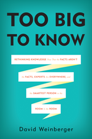
Too Big to Know
Too Big to Know
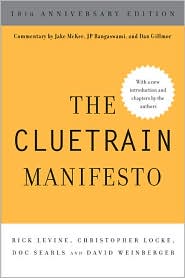
Cluetrain 10th Anniversary edition
Cluetrain 10th Anniversary
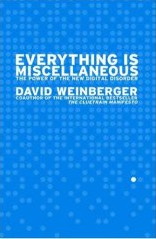
Everything Is Miscellaneous
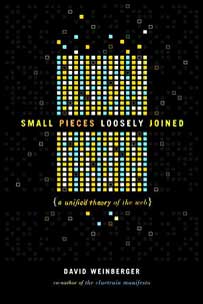
Small Pieces cover
Small Pieces Loosely Joined
Cluetrain cover
Cluetrain Manifesto
My face
Speaker info
Who am I? (Blog Disclosure Form) Copy this link as RSS address Atom Feed

August 12, 2008

Geeks, nerds, or dorks?

Today’s English lesson: Are the people in this video geeks, nerds, or dorks?

Answer: They are geeks who are not ashamed of appearing dorky, if it will further their nerdy loves.

(Asbestos: I love this video. I think it ought to be shown right next to the Sesame Street song about how a bill becomes law.) [Tags: geeks nerds physics cern ]

Tweet
Follow me

Categories: Uncategorized Tagged with: cern • digital culture • education • entertainment • geeks • humor • nerds • physics • science Date: August 12th, 2008 dw

12 Comments »

June 10, 2008

Britannica tweaks the wiki

Britannica has announced that it’s going to enable some measure of reader participation in the extending of the online version of their encyclopedia. You can see the beta of the new site here.

The detailed overview of the planned site says:

two things we believe distinguish this effort from other projects of online collaboration are (1) the active involvement of the expert contributors with whom we already have relationships; and (2) the fact that all contributions to Encyclopaedia Britannica’s core content will continue to be checked and vetted by our expert editorial staff before they’re published.

Excellent! We needs lots of variations on the theme of collaboration. Editing and expertise add value. They slow things down and reduce the ability to scale, but Wikipedia’s process makes it possible to read an article that’s been altered, if only for a minutes, by some devilish hand. It all depends on what you’re trying to do, and collectively we’re trying to do everything. So, this is good news from Britannica. It’ll be fascinating to watch.

To pick a nit, I’m not as convinced by Britannica’s insistence on objectivity as a value, however. The blog post says “we believe that the creation and documentation of knowledge is a collaborative process but not a democratic one.” It lists three positive consequences of this. The third is “objectivity, and it requires experts.” In a reference that makes you wish they’d at least once use the word “Wikipedia,” the post continues: “In contrast to our approach, democratic systems settle for something bland and less informative, what is sometimes termed a ‘neutral point of view.'” I think it would be reasonable for Britannica to tell us that an expert-based, edited system is likely to yield articles that are more comprehensive, more uniform in quality, more accurate and more reliable. But haven’t we gotten past thinking that expertise yields objectivity?

Anyway, I think it’s amazing that the Britannica, in its 240th year, is taking this step. Britannica will be better for it, and so will we. [Tags: britannica wikipedia knowledge everything_is_miscellaneous ]

Tweet
Follow me

Categories: Uncategorized Tagged with: britannica • culture • digital culture • education • everythingIsMiscellaneous • folksonomy • knowledge • media • wikipedia Date: June 10th, 2008 dw

6 Comments »

June 6, 2008

Open education and Publius

Berkman‘s Publius project keeps rolling along. There’s already lots of excellent stuff there, exploring how the Net is constituting its own governance mechanisms and norms. For example, today Peter Suber and Melissa Hagemann discuss open access, science, research, and education. But you can just browse through the topics and be pretty sure you’ll hit on something well worth reading.

[Tags: berkman publius governance ]

Tweet
Follow me

Categories: Uncategorized Tagged with: berkman • digital culture • digital rights • education • everythingIsMiscellaneous • governance • knowledge • publius • science Date: June 6th, 2008 dw

1 Comment »

June 3, 2008

[berkman] Berkman lunch: Walter Bender, Sugar Labs

Walter Bender, who was president of the One Laptop Per Child project, is now the founder of Sugar Labs. [Live blogging. Getting it wrong. Missing stuff. That’s just the way it is. Also, this will be much choppier than the talk actually is.]

The aim of OLPC, says Walter, was to transform education around the world. Laptops aren’t the solution the world’s problems, but learning is. And laptops can help with that. “It’s all in service to learning,” he says. He refers to the book Predictably Irrational. Chapter 2 is on “anchoring.” Walter says that he’s anchored to the idea that a “connected computer is the most powerful tool we have” for knowledge creation and sharing. It’s not a panacea, and you can’t just throw the laptops over the wall and wait for the magic to happen, but laptops can be a catalyst.

School reform is impossible, he says, if it’s top down. But it will be accomplished by students bottom up.

Walter’s talk to us is titled “Confessions of a Fundamentalist.” His Open Source fundamentalism was taken as “distorting OLPC in a way that distorted its mission.” He is a fundamentalist about what are the best ways of enabling learning, of planting seeds for learning. He’s willing to bend his principles about Open Source but not about learning.

He subscribes to constructionism, a theory of learning developed by Seymour Papert. Papert was a student of Paiget. “You learn through doing. If you want more learning, you want more doing. And what’s a better tool for doing than a computer?” The corollary is that “love is a better master than duty, so you want to engage people in things they’re passionate about.” Computers, as Turing machines, can do anything. Computers are a “damn good” vehicle for working on what matters to you. He gives an eample of a Thai village where the children used computers to figure out where the reservoir should be built.

Everyone is a learner and everyone is a teacher. “It’s just inherent in our being.” And we’re expressive and social. The teacher-student dichotomy is false. We should instead by learning centric, Walter says.

“Proprietary tools are often associated with the delivery of knowledge,” he says. The criticism is that we’re trying to turn every kid into a Linux kernel hacker. “Yeah. we are,” he says, to chuckles. But they don’t expect every kid to become one. They really want kids to appropriate rather than merely access knowledge. “Open Source has a culture around appropriation that’s important to the culture of learning.” (Of course, he says, you can do constructionist learning with proprietary, or service-oriented with Open Source.)

When OLPC designs its gen 2 that’s more like a book, they’ll be making the mistake of forgetting the dyna in the dynabook (Alan Kaye’s idea that a ebook is more than an analogous), he says, in response to a question. We want books that make it easy to insert comments, for example. “You want to build in affordances that encourage the type of behavior you want to see.”

In a digression, he says that when he headed the MIT Media Lab, he had a three part process: Build, critique, iterate. “Use your time at university to make really big mistakes.

“Learning wants to be free.” There’s a difference between governance and the engagement of the ommunity The Open Source community has developed a “number of very powerful tools around engaging in collaboration and engaging in critique. Those tools are for the most part lacking in the world of education. Certainly in primary education.” They started a pilot in Nigeria where there are 300-500 languages. They were in a school where the primary language was Igbo. The OLPC’s dictionary was only in English. So the kids wrote their own. The kids discovered they had the power. “To me, that’s a real game-changer.”

Walter now talks about Sugar, the user experience that has come with the OLPC by default. It’s available on Ubuntu. Sugar is based on the first principles: be a learner, be a teacher, be expressive, be a learner. Three things abbout Sugar:


1. It wraps applications in “activities,” adding sociality: everyone is right there with you. E.g., when you’re writing a doc, anyone is one click away from “putting their cursor in your document.”

2. The Journal makes sure that everything is preserved, but the importance is that it creates a diary, a portfolio of your work. You can there have a conversation with a teacher or parent about your progress. That march through time “is an important feature of learning.”

3. The framework is simplified and transparent. The transparency means there’s no upper limit. E.g., TamTam starts out as a “busy box”: choose a sound and slap the keyboard. But you can progress to TamTamJam, which is more network-centric and lets you layer instruments. From there you can go to TamTamEdit, where they can compose music. Then, in the SynthesizerLab you can create your own instrument. Then you can edit the Python code underlying the instruments, or hack C-sound (“midi on steroids”). “No upper bound on complexity.”

Sugar is now reaching out to be a general-purpose environment in the Linux “and perhaps even in the Windows” world. “I don’t know how to do it in the Windows world,” he says, but …

“Sugar is pretty raw. It’s alpha. It’s flaky. And it’s in the hands about about 600,000 kids…which is pretty good!” The kids are giving feedback and making improvements.

“Now I come to David Hilbert.” In 1900, he posed 23 problems to mathematicians. Walter has 23 problems facing people interested in technology and learning. He’s going to blog them. They include: How can we make the damn network work? Create malleable code that doesn’t turn into malware? How to get localization/internationalization tools that are two orders of magnitude better? How do we a better job of using more wisely a very scarce resource: power? Does constructivism scale? We need better tools to introduce change. How to transplant the culture of freedom and critique from computer science into education? Economic challenges. Research correlating learning and economic development?

Q: Learning should be free? Which senses?
A: Not free as in beer. But you learn to program by copying code.

Q: OLPC has inspired a bunch of commercial tiny laptops. Will this help?
A: Five were announced last week. It’ll help.

[me] Is the constructionist theory cross-cultural?
A: Constructionism is built on first principles that are not culturally dependent. It’s no more culturally tied than Piaget. What children love — what matters to them — is culturally dependent. And what’s the role of the teacher? The teacher is unleashed. They have a lot more fun.

[clippinger] Constructionism has implications for authority, which have dramatic cultural implications.
A: The finance minister is always interested because they see that that’s how they’re going to get entrepreneurs.

[roger] Have the proprietary software companies gotten there first? How does that play out?
A: That will be one of the big social-economic battles over the next 20-30 years. The ones who go with Open Source will do better.

[harry] That’s part of your fundamentalism. For me, the question is how many types of cheap laptops there will be in five years. Will there only be a couple?
A: OLPC tries to keep the pressure on. The market will be big enough. But I worry. If these things are used to replace chalkboards, it’ll be a drag on the process.

What about when you look at college students? Some of these principles are not being taught.
A: Part of one’s education should be getting dirt under your fingernails and building stuff.

Q: [ben] We changed so much after Nigeria. Do you think the trial was successful?
A: What we have today is much better, but those kids were learning and constructing.
Q: Much of what was broken were the social affordances. Maybe the lesson is that we can achieve success without the fancy features…
A: There’s a bit of a placebo effect, sort of. You say “This is yours. It’s about sharing, expression, communication.” That in itself was enough to make the change. Those early systems couldn’t support the growth, but they had enough to introduce the change in culture.

Q: The idea of glossiness. If you present an interface that looks a bit broken, people are much more willing to get their hands dirty and play with it, and think they have something to contribute.
A: You don’t want things to break, but you do want people to explore. Rather than trying to make everything hard to break, we’ll make it easier to repair. As long as it’s easy to get back to where you were, people will try things out. [Tags: berkman walter_bender olpc constructionism education open_source ]

Tweet
Follow me

Categories: Uncategorized Tagged with: berkman • constructionism • culture • digital culture • education • globalvoices • olpc Date: June 3rd, 2008 dw

5 Comments »

May 9, 2008

Charlie Nesson’s Poker U

When I blogged about Flyp on Tuesday, I didn’t know it was about to run an article about Charlie Nesson’s poker university, a place where students learn about life by playing poker online. The article is short and showy, but it’ll give you the idea… (Charlie is the founder of the Berkman Center. [Tags: poker charlie_nesson ]

Tweet
Follow me

Categories: Uncategorized Tagged with: education • poker Date: May 9th, 2008 dw

Be the first to comment »

April 30, 2008

Open access champion John Palfrey to head Harvard Law Library

It’s official. John Palfrey, executive director of the Berkman Center has been put in charge of the Harvard Law Library. This is great news, although John’s contribution to the Berkman Center cannot be overestimated.

To be precise, JP — with whom I’ve had the privilege of co-teaching a course this semester — has been appointed associate dean of library and information. (He was also given tenure.) That means he is in charge of the greatest law library in the land. Open access just got a champion installed at the head of one of the most important collections in the world. This is pretty damn exciting.

JP is going to stay affiliated with the Berkman Center, but not having him at the helm is going to hurt. He is both a strong leader and a selfless facilitator. Enthusiastic, kind, humble, brilliant, pragmatic, funny, articulate, instantly likable, learned, visionary, down to earth, committed, articulate, sweet … in a word, we love him. And always will.

Congratulations, John!

[Tags: john_palfrey harvard_law libraries ]

Tweet
Follow me

Categories: Uncategorized Tagged with: digital rights • education • everythingIsMiscellaneous • harvard_law • john_palfrey • libraries Date: April 30th, 2008 dw

1 Comment »

April 19, 2008

Objectivity in teaching and reporting

Over at the Web Difference class blog, I’ve posted my qualms about posting here (i.e., at Joho) some thoughts about the course. Very circular and self-involved, I know.

Anyway, the question over at the Web Difference blog is whether a teacher should be neutral/fair/objective or transparent… [Tags: education media objectivity transparency ]

Tweet
Follow me

Categories: Uncategorized Tagged with: digital culture • education • media • objectivity • transparency Date: April 19th, 2008 dw

5 Comments »

March 22, 2008

Palfrey on a book about digital youth

John Palfrey has blogged about Digital Youth, Innovation and the Unexpected (open access version here), reflecting on the essays and enticing us to read them ourselves. The book sounds terrific, and the post is a treat to read just to see the generosity of JP’s intellect. (Disclosure: JP is the exec. dir. of the Berkman Center, and, I’m thrilled to say, I’m co-teaching a course with him this semester.) [Tags: ]

Tweet
Follow me

Categories: Uncategorized Tagged with: digital culture • education Date: March 22nd, 2008 dw

2 Comments »

March 18, 2008

Kentucky considers banning anonymous speech

According to this excellent blog, Kentucky is considering a bill banning anonymous online speech. (The blog is the class blog for “The Web Difference” course I’m co-teaching, with John Palfrey, at Harvard Law.)

* * *

And speaking of courses, I find it heartwarming that today I’m able to open our session on whether the Web has changed marketing by using some slides on “what is marketing” from John Hauser’s Spring 2005 course on marketing at MIT, which is available as open courseware. Gotta love the open courseware.

[Tags: berkman anonymity digital_rights marketing open_courseware mit ]

Tweet
Follow me

Categories: Uncategorized Tagged with: anonymity • berkman • digital rights • digital_rights • education • marketing • mit • net neutrality • open_courseware Date: March 18th, 2008 dw

10 Comments »

March 15, 2008

Open Library developer meeting

Eric Lease Morgan has a good post (from a couple of weeks ago) about the Open Library project’s developers meeting. Such interesting questions… (Open Library wants to give every book its own home page to accrete metadata, and, of course, make all that info open, public and standard.

Tweet
Follow me

Categories: Uncategorized Tagged with: digital culture • education • everythingIsMiscellaneous • libraries • metadata Date: March 15th, 2008 dw

Be the first to comment »

« Previous Page | Next Page »


Creative Commons License
This work is licensed under a Creative Commons Attribution-NonCommercial-ShareAlike 3.0 Unported License.
TL;DR: Share this post freely, but attribute it to me (name (David Weinberger) and link to it), and don't use it commercially without my permission.

Joho the Blog uses WordPress blogging software.
Thank you, WordPress!