


logo
EverydayChaos
Everyday Chaos
Too Big to Know
Too Big to Know
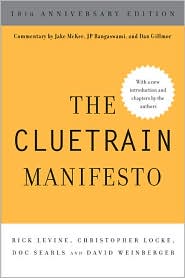
Cluetrain 10th Anniversary edition
Cluetrain 10th Anniversary
Everything Is Miscellaneous
Small Pieces cover
Small Pieces Loosely Joined
Cluetrain cover
Cluetrain Manifesto
My face
Speaker info
Who am I? (Blog Disclosure Form) Copy this link as RSS address Atom Feed

April 5, 2008

Roommates.com, fair housing, and enabling free speech on the Net

Susan Crawford views with concern the court decision that says that Roommates.com has to abide by the fair housing law that forbids asking about sexual orientation, gender, whether you have children, etc. (See her previous post as well.) It’s not that Susan would like to see some good, old-fashioned discrimination back in the housing market. Rather, she’s concerned about the continued applicability of laws that protect Web sites from bad speech that occurs on them. She cites from a recent CDT/EFF amicus brief:

Broad Section 230(c) immunity fosters freedom of speech and the development of the Internet. Without broad immunity, interactive computer services would lack the freedom to structure their websites in any way they want and to solicit and encourage user-generated content. They would run a high risk of being treated as publishers of objectionable third-party content and face liability for it. Broad immunity has allowed the flexibility for the eBays, Amazons, MySpaces, and blogs of the world to create unique sites that encourage the sharing and development of content, information, and speech by their users.

[Tags: free_speech_section_230 roommates.com policy susan_crawford ]

Tweet
Follow me

Categories: Uncategorized Tagged with: digital rights • free_speech_section_230 • policy • susan_crawford Date: April 5th, 2008 dw

1 Comment »

April 1, 2008

Thoughtcloud scrapes neurons

The Media Re:Public group at Berkmanhas announced a breakthrough technology that promises to take the “conference” out of “un-conference.”

Tweet
Follow me

Categories: blogs Tagged with: blogs • business • conference coverage • culture • digital culture • digital rights • folksonomy • humor • science • social networks • taxonomy • tech • uncat • web 2.0 • wifi Date: April 1st, 2008 dw

Be the first to comment »

March 25, 2008

Berkman: Ashish Jha on Info and health care

Ashish Jha at the Harvard School of Public Health is giving a Berkman lunch talk on “U.S. Healthcare: Can Information Drive Better Care?” [Note: I am typing quickly, getting things wrong, missing stuff…]


He says the first few minutes should leave us depressed about the state of health care in this country. A major problem underlying all this, he says, is a lack of transparency.


We spend $2.1 trillion dollars on health care in the U.S. in 2006. That’s about a sixth of the economy, about $7,000 per person (minimum wage is $11K/yr). It’ll be a fifth in the next decade. We spent a much bigger percentage of our GDP than other countries.

What do we get for this, Ashish asks. He cites a Rand study that came up with 439 “indicators of healthcare quality.” These are core, non-controversial treatments and practices. Rand found they get done about 54% of the time, suggesting “the care we get is pretty inadequate.” Even for privileged groups — e.g., white, wealthy, educated men — it doesn’t go much above 58%. “There’s a disconnect between what doctors think they do and what they actually do.” One of the listeners says that recent studies show that this is because there are typically 7 health care people involved with any one medicare patient, and they don’t get this done because they don’t know what others in the group are doing. “It’s completely about the system,” says Ashish.

He continues depressing us: About 10% of people admitted to hospitals suffer an injury there. One in four doctor visits lead to medication injury. (Ashish says he’s not confident in that study.) 44k-98k deaths come from medical errors.

His conclusion: The quality of care is unacceptable.

Why? 1. Because we pay for the quantity, not quality, of health care. 2. Care has gotten complex, but the health care systems haven’t kept up. 3. Little transparency. E.g., usually we don’t usually know how much our medical care actually costs (as opposed to what our co-pay is). We know how much health care for our pets costs, but not for our children. 4. No adequate feedback loop: Medical malpractice has been a failure and regulation sets the bar too low.

Ashish talks about one part of the response: The Ny State Cardiac Surgery reporting program. In the early 1990s, NY found huge disparities in cardiac surgery mortality across 31 hospitals: 1 in 200 dying vs. 1 in 14. So the state started publishing mortality info about every hospital and surgeon. As of about 2000, it’s all on the Internet. Over the course of 12 years, the rates dropped dramatically. Why? The market share of the hospitals didn’t change; the bad hospitals didn’t lose business. But the hospitals now had data that reinforced good practices. There’s anecdotal data that physicians began to learn from one another. Most dramatically, the rate of surgeons leaving their practices among the bottom fourth was way higher. Ashish’s project tracked them: Some quit, some moved. Even after adjusting for age, etc., people in the bottom quarter were 3x likely to quit.

People don’t check the ratings. Ashish thinks this is a place where the Internet could help.

90% of hospitals are still paper-based. Even those that are electronic can’t share info. The law says patients always have a right to get their records, but the doctor or the hospital owns the record. Patients can view it but it’s not in exportable, shareable form. (There’s a discussion about the state of electronic health records and why it’s a more complex problem than it seems.)

Ashish says that the HQA initiative has hospitals reporting on 23 quality indicators, and performance has improved steadily. HCAHPS makes patient experience data available.

Gene Koo: Health care decisions aren’t made by purely rational agents. All sorts of quirks come into it. So, how does the transparency of info help us?
A: Maybe consumer involvement in health care won’t work out. I’m looking for empirical data.

Q: What’s the role of the consumer in this? Are there data now that consumers are taking on more of the responsibility for their health care?,br>
A: People on the right say that consumers aren’t behaving like consumers because they don’t have any skin in the game. You don’t know how much things cost. So, we need transparency (they say), linked to having skin in the game (i.e., you pay for visits out of your pocket). But, few have high deductible health plans. My personal feeling (says Ashish) is that this isn’t going to be big. People are generally in them not because they want to be involved but because the plans are cheap.

Rob Faris: There’s a huge role for intermediaries. Intermediation is not working well right now. We need intermediaries who looks at outcomes and figures out what works and what doesn’t. And I’d like to see how quality considerations can be inserted into this.
A: We’re at the beginning of a very interesting journey. If someone like you can’t navigate the health care system…


Q: What do you think of the candidates’ positions?
A: They all talk about the uninsured, which is just one part of a complicated set of issues. We have 47M uninsured because health care is expensive. Most of the health experts I talk with think Clinton’s health plan is a little more realistic. But all of this falls apart if we can’t get a grip on healthcare costs. They’re rising at twice the rate of inflation, and neither Obama nor Clinton have gotten serious about healthcare costs.

Q: (me) How do you contain costs?
A: Electronic records would help. Payers should pay more for outcomes not for particular tests, etc. And there;s a whole “comparative effectiveness” movement. E.g., what do you do for someone with low back pain? You get different treatments based on locality. Payers should start taking more of an active role. But payers have not wanted to take up that responsibility.


A (person in the audience): Part of the answer is that the amt of money spent in the last 6 months of life is shockingly high. We should spend more earlier on preventative measures.

Ashish: You don’t always know when the 6 months are. And there’s a huge issue around managing expectations at the end of life. Plus, when someone else is paying…From a policy point of view, it’s very hard to fix this stuff. Even though health reform comes up every five years, it doesn’t get done because the status quo is everyone’s second choice. [Tags: berkman healthcare health ashish_jha ]

Tweet
Follow me

Categories: Uncategorized Tagged with: berkman • culture • digital rights • health • healthcare • politics Date: March 25th, 2008 dw

1 Comment »

Google’s proposal for opening the spectrum for innovation

On the heels of her splendid explanation of the outcome of the 700MHz auction, Susan Crawford explains Google’s proposal to the FCC for the “white spaces.” Here’s my take on her take. (The NYT also has a useful article.) (Note: All errors in the following are mine. I am in over my head.)

Congress has mandated the end of over-the-air broadcast of analog TV signals. This frees up some spectrum. (Spectrum = frequencies = colors) Actually, it frees up a lot of spectrum: the 700MHz auction was for just 22MHz of frequency, whereas we’re now talking about 300MHz of spectrum. So, what should we do with this newly unbound stretch of public airwaves?

We could slice it up and sell it off to private companies. That’s generally what the FCC does with spectrum. And that made sense back in the 1930s when the FCC was created. Radios were so primitive that broadcasters had to be given untrammeled access to a frequency to avoid “interference” with other broadcasts. So, the FCC sold swaths of spectrum to broadcasters, but, recognizing that spectrum belongs to the public, the FCC also placed some requirements and restrictions on broadcasters.

Radio technology has advanced since the day the Titanic’s signal wasn’t decipherable. Not only are radios better able to tune in to particular frequencies and strip out noise, they are also able to respond dynamically. They can, for example, hop around the spectrum to hold on to a particular broadcast, if the broadcaster changes lanes, so to speak, in order to find a less unoccupied frequency. Not only does this sort of “open spectrum” approach promise far more efficient use of available spectrum — more bandwidth, to put it inaccurately — but it means that the government doesn’t have to decide for us who gets to use the spectrum. (For more on this, see David Reed’s explanation.)

Google has outlined to the FCC how it would use unlicensed white space spectrum. It’s proposing conservative approach that moves cautiously toward open spectrum, providing the FCC with a vision for how the white space spectrum might bring enormous benefits.

Google envisions how wireless devices running the Android operating system — Google’s mobile operating system — might use the white space frequencies. Google points out that such devices could help deliver Net access to rural areas, a sore spot at the FCC since the policy of handing the Internet over to a duopoly has kept the rural and the poor in the dark. (Surprise!) But, as Susan writes:

Google suggests that *all* devices for unlicensed use of the white spaces should be required to receive an “all clear” signal for the particular channel where they wish to operate, by using geolocation, checking a database of licensees in that location, and getting permission in advance.

This would achieve some of the objectives of an open spectrum system, allowing for the dynamic allocation of frequencies. Google suggests that they could use dynamic auctions to assign frequencies for limited times and strengths, adding another element of extrinsic control (as opposed to a fully open spectrum approach that depends on the devices negotiating for the airwaves). Further, Google suggests that some channels be kept unavailable for all but some high-priority, specialized uses.

This is a calm and rational approach that could see an enormous blossoming of innovation. Think about how many devices exist because tiny ranges of spectrum have been left unregulated. Opening a big swath of spectrum is like opening up a big tract of land. Who knows what we’ll build once we have the space? [Tags: fcc spectrum susan_crawford google open_spectrum wifi ]

* * *

Harold Feld thinks Google conceded too much too soon.

Tweet
Follow me

Categories: Uncategorized Tagged with: digital rights • fcc • google • policy • spectrum • wifi Date: March 25th, 2008 dw

1 Comment »

March 19, 2008

CBC getting toes wet in the fresh, clear water of DRM-free programming

Michael O’Connor Clarke blogs about the Canadian Broadcasting Corporation’s trying out distributing a major show using BitTorrent and without DRM. You go, Canada!

[Tags: drm copyright canada cbc michael_oconnor_clarke ]

Tweet
Follow me

Categories: Uncategorized Tagged with: canada • cbc • copyright • digital rights • drm • michael_oconnor_clarke Date: March 19th, 2008 dw

1 Comment »

March 18, 2008

Kentucky considers banning anonymous speech

According to this excellent blog, Kentucky is considering a bill banning anonymous online speech. (The blog is the class blog for “The Web Difference” course I’m co-teaching, with John Palfrey, at Harvard Law.)

* * *

And speaking of courses, I find it heartwarming that today I’m able to open our session on whether the Web has changed marketing by using some slides on “what is marketing” from John Hauser’s Spring 2005 course on marketing at MIT, which is available as open courseware. Gotta love the open courseware.

[Tags: berkman anonymity digital_rights marketing open_courseware mit ]

Tweet
Follow me

Categories: Uncategorized Tagged with: anonymity • berkman • digital rights • digital_rights • education • marketing • mit • net neutrality • open_courseware Date: March 18th, 2008 dw

10 Comments »

March 10, 2008

Exporting censorship

Xeni Jardin has an op-ed in the NY Times pointing out that US companies are arming repressive regimes with censorship software. She suggests that such companies be required to register, just as weapon manufacturers do. I have no idea if that’s the right solution, but I’m glad she’s pointed it out as as problem. [Tags: censorship xeni_jardin]

Tweet
Follow me

Categories: Uncategorized Tagged with: digital rights Date: March 10th, 2008 dw

3 Comments »

March 7, 2008

JP and JZ on keeping the Net open in Turkey

John Palfrey and Jonathan Zittrain of the Berkman Center have an editorial in a Turkish newspaper arguing for keeping the Net open and free:

Turkey is among those places in the world that are facing a choice. Does one choose to embrace the innovation and creativity that the Internet brings with it, albeit along with some risk of people doing and saying harmful things? Or does one start down the road of banning entire zones of the Internet, whether online Web sites or new technologies like peer-to-peer services or live videoblogging?

We admit to a clear commitment: We think that a free and open Internet is, on balance, a very good thing for democratic societies.

[Tags: jonathan_zittrain john_palfrey turkey]

Tweet
Follow me

Categories: Uncategorized Tagged with: digital rights • globalvoices Date: March 7th, 2008 dw

1 Comment »

February 27, 2008

What a non-neutral Net could look like

Click here for a dystopic taste of the future. (This page will not harm your sensibilities, your computer, or your ability to procreate.)

[Tags: net_neutrality comcast ]

Tweet
Follow me

Categories: Uncategorized Tagged with: comcast • digital rights • humor • net neutrality Date: February 27th, 2008 dw

17 Comments »

February 20, 2008

Lessig for Congress!

“… can you imagine, three people walking in
singin a bar of Alice’s Restaurant and walking out. They may think it’s an
organization. And can you, can you imagine fifty people a day, I said
fifty people a day walking in singin a bar of Alice’s Restaurant and
walking out. And friends they may think it’s a movement.
— Arlo Guthrie


Now’s your chance to jump into the Draft Larry Lessig movement at the very beginning. The group is trying to persuade Prof. Lessig to run for Congress in the 12th district, for the seat left sadly empty by the late Tom Lantos. (If Lessig doesn’t run, your contribution goes to Creative Commons.)

If there were a way to draft Lessig as chair of the FCC or as Supreme Court justice, I’d join that, too. [Tags: lessig lawrence_lessig congress politics ]

Tweet
Follow me

Categories: Uncategorized Tagged with: congress • digital rights • lessig • politics Date: February 20th, 2008 dw

4 Comments »

« Previous Page | Next Page »


Creative Commons License
This work is licensed under a Creative Commons Attribution-NonCommercial-ShareAlike 3.0 Unported License.
TL;DR: Share this post freely, but attribute it to me (name (David Weinberger) and link to it), and don't use it commercially without my permission.

Joho the Blog uses WordPress blogging software.
Thank you, WordPress!