


logo
EverydayChaos
Everyday Chaos
Too Big to Know
Too Big to Know
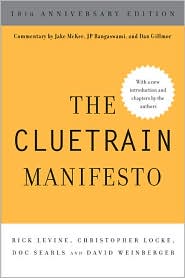
Cluetrain 10th Anniversary edition
Cluetrain 10th Anniversary
Everything Is Miscellaneous
Small Pieces cover
Small Pieces Loosely Joined
Cluetrain cover
Cluetrain Manifesto
My face
Speaker info
Who am I? (Blog Disclosure Form) Copy this link as RSS address Atom Feed

May 2, 2009

Facebook doesn’t make your stupid. Whoops.

Remember how the media leapt on the study that showed that being on Facebook lowered your grades in school? The study was, shall we say, flawed. But it was a media-seeking rocket. Now, 2.5 weeks later, Josh Pasek, eian more, and Eszter Hargittai have published “Facebook and academic performance: Reconciling a media sensation with data” at First Monday, a peer-reviewed site.

Here’s the abstract:

A recent draft manuscript suggested that Facebook use might be related to lower academic achievement in college and graduate school (Karpinski, 2009). The report quickly became a media sensation and was picked up by hundreds of news outlets in a matter of days. However, the results were based on correlational data in a draft manuscript that had not been published, or even considered for publication. This paper attempts to replicate the results reported in the press release using three data sets: one with a large sample of undergraduate students from the University of Illinois at Chicago, another with a nationally representative cross sectional sample of American 14– to 22–year–olds, as well as a longitudinal panel of American youth aged 14–23. In none of the samples do we find a robust negative relationship between Facebook use and grades. Indeed, if anything, Facebook use is more common among individuals with higher grades. We also examined how changes in academic performance in the nationally representative sample related to Facebook use and found that Facebook users were no different from non–users.v

And what are the chances that the media are going to trumpet these results that are based on actual data and careful analysis?

[Tags: facebook social_networks media ]

Tweet
Follow me

Categories: Uncategorized Tagged with: digital culture • education • facebook • media • social_networks Date: May 2nd, 2009 dw

1 Comment »

May 1, 2009

On being a fool in a foreign public

Yet another important post from Ethan Zuckerman. He’s working through what it takes to connect with others who are unlike us, and why the Internet has not done much of a job replacing airplane tickets as the way to learn to love difference. Most of the post — which proceeds by telling several stories — puts it in terms of the value of dorkiness. But at the end, Ethan expresses its fuller form: We have to be willing to be a fool in public — and a foreign public, in this case — if we are to forge the bonds that will let us love the difference in others. And all I’d add to this magnificent post is that (it seems to me) in the moment we let ourselves become the fool, we acknowledge the dignity of the place, and we become the foreigner in a homeland.

[Tags: ethan_zuckerman homophily difference everything_is_miscellaneous peace ]

Tweet
Follow me

Categories: Uncategorized Tagged with: bridgeblog • culture • difference • digital culture • ethan_zuckerman • everythingIsMiscellaneous • everything_is_miscellaneous • homophily • peace Date: May 1st, 2009 dw

1 Comment »

April 30, 2009

The syntax of retweeting

Joi Ito posts about whether we’ve agreed upon the syntax of retweeting: If I want to twitter one of your tweets and add my own comment, do I do it as “RT @you: your comment Me: My comment” or as “RT @you:your comment [Me: my comment]” or what? Of course, there was a bunch of twittering about this, which Joi captures.

It’s fun to watch syntax emerge. As Ethanz tweets: “Microformat development in 140 chars or less…”

[Tags: twitter standards ethan_zuckerman joi_ito everything_is_miscellaneous ]

Tweet
Follow me

Categories: Uncategorized Tagged with: digital culture • ethan_zuckerman • everythingIsMiscellaneous • everything_is_miscellaneous • joi_ito • metadata • standards • twitter Date: April 30th, 2009 dw

Be the first to comment »

Cass Sunstein: Fascist totalitarian or totalitarian fascist?

WorldNetDaily’s article about Cass Sunstein is laughably wrong and scarily partisan. Now that Obama has nominated Sunstein to head the White House Office of Information and Regulatory Affairs, the anonymous article in WND presents suggestions and ideas in Sunstein’s nuanced and clear-eyed works as if Sunstein were putting them forward as federal policy. The weirdest is Sunstein’s thought that it’d be useful if software could tell you that a message you’re about to send is a flame, and then keep you from pressing the send button hastily. In the hands of WND, this becomes Sunstein using the power of the federal government to mandate that it read all emails and block ones it doesn’t like.

I disagree with Sunstein on many points. In particular, Sunstein famously worries that the Internet is a causing us to harden our hearts and minds, enabling us to hear only from people with whom we agree. As an overall characterization, I think that misses too much else of what the Net is doing…even as I agree that the Net undoubtedly has that effect, too. I disagree with him, but I’m thrilled to have him in the Internet conversation. At the very least, his concern should remind us that the good things that the Net does and can do won’t happen automatically; we need to be vigilant and imaginative. At the most, he’s right and we need to heed him.

So, given that a concern about polarization has become the best-known piece of Sunstein’s powerful writings, the WorldNetDaily’s polarizing article can this morning reassure us that unintended irony remains the strongest force in the universe.

[Later that day: Julian Sanchez does a great job tracking down the quotes ‘n’ context (AKA The Truth.]

[Tags: cass_sunstein polarization conservatives free_speech fairness_doctrine ]

Tweet
Follow me

Categories: Uncategorized Tagged with: cass_sunstein • conservatives • digital culture • digital rights • everythingIsMiscellaneous • fairness_doctrine • free_speech • polarization • politics Date: April 30th, 2009 dw

1 Comment »

April 29, 2009

The census device

Ethan Zuckerman has a fun, informative post about the device being used by Census takers. It delves into the particulars, it drives toward some broader conclusions.

So, beside the pleasure of the piece itself, consider it as a piece of journalism. No, Ethan doesn’t spend the time to track down every detail. But he tracks down the details that the weight of the topic deserves. And it is a piece that it is hard to image would have made it through the editorial filters of paper-based news media.

I understand that pointing to a good post by someone who is not a trained journalist (but who has expertise in a field) does not provide reassurance that the system of journalism will survive. That system covers fields systematically that the flood-the-field approach of the Web may not reach. But, still, we can allow ourselves some hope. Some cautious, vigilant hope.

Tweet
Follow me

Categories: Uncategorized Tagged with: culture • digital culture • everythingIsMiscellaneous • media Date: April 29th, 2009 dw

Be the first to comment »

April 28, 2009

[berkman] Russ Neuman

W. Russell Neuman is giving a Berkman talked called “Theories of Media Evolution.” He wants to think about the effect of the Internet in the context of the history of other media and the difference they’ve made. (The book “Theories of Media Evolution” will be out this fall.)

NOTE: Live-blogging. Getting things wrong. Missing points. Omitting key information. Introducing artificial choppiness. Over-emphasizing small matters. Paraphrasing badly. Not running a spellpchecker. Mangling other people’s ideas and words. You are warned, people.


There are four classic dismissive argumenst about the Internet: 1. It’s just another communication tech. 2. Human psychology doesn’t change. (Russ thinks we should take that seriously.) 3. “Just you wait.” “The iron laws of political economy just aren’t going to change.” 4. If you say the Net will make a difference, you are a naive techno-determinist.


Russ says his current research was inspired by his own mentor, Ithiel de Sola Pool. The volume of communication is growing exponentially. His conclusion: The volume of info changes the media from push to pull.


He shows a famous graph of volumes and cost in communication, 1960-1977. Volume goes up and cost goes down exponentially. Russ has done a new study, 1980-2005, studying the number of words per medium per day going into the average American home. How many newspapers, how many words in each, etc. Russ looked at 12 traditional media and the Internet. And he shifted from words to minutes as the unit of measurement. He includes CDs, video games, etc. He finds that the average newspaper consumption has gone from 16 mins/day to 6.5mins/day. But most of the charts are climbing at a tremendous rate. E.g., Average American home spends 1.10 hr/day on the Net (which includes houses with no access). The total media supply to the home has gone up exponentially. The total media consumed in minutes per day is a much shallower curve, from about 600 mins per day in 1960 to about 1,000 mins per day, in part because homes now have more TV sets and portable media. The growth of media supply consumption grew very slowly 1960-1980, but has gone up from single digits (minutes per day) to over 20,000. The ratio was 98:1 — if you read every book and watched every minute of TV available, the ratio of supply to consumption was 98:1. “That was a human metric. You can deal with that.” But in 2005, it’s 20943:1, which is not a human level of metric. “And this counts the Internet as one. You should count the number of pages available to you” which is somewhere north of 8.5 billion.


So, he says, we need the help of machines with their algorithms and socially-based recommendation systems. Search is incredibly important in this world of super-abundance, he says. It will help us to think about the new media in the context of the old, he says.


Q: You think volume is the fundamental factor. You’re saying the volume changes the nature of media from push to pull. Maybe it’s volume + technical affordance. If you look at satellite TV or cable TV, those didn’t fundamentally change the nature of the medium as the volume went up.
A: “Affordance” makes the “you’re a techno-determinist” criticism go away, because it says that technology isn’t determinative but it does have capabilities that people can take up. As far as the first part of the question that said “Isn’t it more complicated than…,” the answer is always yes. About regulation: The argument for regulation was spectrum scarcity, which is why we don’t regulate the print medium. Ironically, we got one newspaper in a market but dozens of broadcasters.
The shape of media could come from a number of places, but it’s going to come from Google.

Q: How about the number of words going out from households?
A: 900,000 bloggers (US only)… One of the questions is: What are the topics?
Q: The Berkman MediaCloud project should help address that in a rigorous way.


Q: Pool left out data like the phone book and the home encyclopedia.
A: There’s a psychological analytic (cf. Todd Gittlin) of info overload: people panic and withdraw when faced with this much info. But people who entered a library weren’t intimidated by it. That seems to be the case with the Web.


Q: [yochai benkler] I’m surprised that you predict it’d take me longer to view all the movies than read all of the Net. You’re masking the actual size of the increase in media access…
A: Yes. I had to mask in order to make the other sources visible, so I counted it as one channel. But it makes my point even more strongly…
Q: When you construe the Net as a flow of info that a human has to parse, you get your way of approaching the problem: We have to rely on Google or a friend. But that masks what’s going on. We’re producing. We have to construct our own social environments. It’s not just push to pull, but also read to write. (Push to pull are read categories.) And the question of power depends on whether the machine is impervious to workarounds. The only tv broadcasters could not be worked around. But on the Net I can find others with related interests.”
A: Important questions. Let me bring out some points I didn’t make in my talk. It costs $3M/hr for TV. $16M/hr for a motion picture. We’ve developed historically a metric that people are willing to pay, say, $10 to see a movie, and that’s split 50:50 between the distributor and the motion picture company. They make $5/hr, whereas on TV the revenue is about $0.60/hr (commercials). Google News is repurposing independent professional journalism; if a competitive search engine started doing independent investigative journalism, and Google would do the same. [Sorry for the choppiness]


Q: The Internet is all about entertainment. People are reading fewer books.
A: You revealed your presumption when you said that books are hard to read and are good for you, while Internet is easy and not good for you. Where is the evidence that reading Shakespearean sonnets makes you a better person?


Q: You could argue, marxistly, that mass production changes how people interact with their environments. What’s the parallel of this and the mass production of consumer goods?
A: Alienation theory? When Marx got paid, rarely, he got paid as an independent investigative journalist. The Net makes it easier to find unalienated work (made by craftspeople who is not alienated from the product of her labor).


A: There are so many research questions that these technology afford that we should have our research budgets doubled.

[Tags: w_russell_neuman communication communication_theory internet technological_determinism media_studies ]

Tweet
Follow me

Categories: Uncategorized Tagged with: communication • culture • digital culture • everythingIsMiscellaneous • infohistory • internet Date: April 28th, 2009 dw

Be the first to comment »

April 25, 2009

The Pirate Bay and The Pirate Google

ThePirateBay has links to content hosted elsewhere that’s available for download using the BitTorrent protocol. The site also provides a search engine for finding that content, and a page for each torrent with information about the content. It doesn’t distinguish between content that’s protected by copyright and content that isn’t. The four founders of ThePirateBay were convicted by a Swedish court last week. They were fined a middling amount, and were sentenced to a year in jail. (“What’re you in for?” “Improper use of metadata.”)

Now there is ThePirateGoogle, created by someone to make a point. There you can use the Google search engine to search for content hosted elsewhere, available for download using the BitTorrent protocol. It doesn’t distinguish between content that’s protected by copyright and content that isn’t.

Here’s the text from ThePirateGoogle site:

Bit Torrent Search

Please Note: This site is not affiliated with Google, it simply makes use of Google Custom Search to restrict your searches to Torrent files. You can do this with any regular Google search by appending your query with filetype:torrent. This technique can be used for any type of file supported by Google.

The intention of this site is to demonstrate the double standard that was exemplified in the recent Pirate Bay Trial. Sites such as Google offer much the same functionality as The Pirate Bay and other Bit Torrent sites but are not targeted by media conglomerates such as the IFPI as they have the political and legal clout to defend themselves unlike these small independent sites.

This site is created in support of an open, neutral internet accessible and equitable to all regardless of political or financial standing.

Cheers!

Yes, you can do with Google what you do with ThePirateBay. For example, do the following search at Google:


filetype:torrent “the dark knight”

There’s obviously a difference in intent between ThePirateBay and Google. But there is precious little relevant difference in the service. So, why jail the founders of ThePirateBay but not the founders of Google since either can be used to find copyright-protected torrents? Having the wrong mental attitude? (“What are you in for?” “Intent to improperly use metadata.”)

What to make of this? I find myself in a jumble:

1. I don’t think it’s a double standard. Intent counts. The difference between the Heimlich maneuver and assault is intent, and that’s as it should be. ThePirateBay is intended to enable the sharing of copyrighted works: TPB has facilities designed to help you locate, evaluate, and share files, including a page for each torrent with comments, ratings, descriptions, and the number of seeders and leechers (to see how alive the torrent is). And it’s named The freaking Pirate Bay. There may or may not be a law in Sweden against what TPB does, but it’s disingenuous to say that the site is ethically the same as Google.

3. ThePirateGoogle shows that shutting down ThePirateBay is not going to stop the use of BitTorrent to share copyrighted files. But jailing TPB’s founders may slow sharing down. Torrent site after torrent site has been shut down over the past few years, making it harder to find and download files now. The verdict in TPB case, especially with its jail sentence, will slow down the torrent of torrents, although perhaps not by much.

4. Just in case someone tells you otherwise: The BitTorrent protocol is not the issue here. It’s a brilliant way of sharing large files, and it’s used all over the place for perfectly legal file-sharing.

5. I don’t know what to do about copyright. It’s obviously spun out of control and needs to be pulled back in — lasting 70 years after the death of the creator is absurd — but we need to do far more than just shorten its term. Compensating creators for every use of their works obviously contradicts the maximal open sharing and reuse of works that drives culture forward. Creating a legal and economic environment with incentives for creators does not contradict the open sharing and reuse of works. The question is: Which legal/economic environment would work best? I don’t know — I wish I did — but I suspect it’s one in which copyrighting a work takes a little bit of effort, not all categories of work have the same copyright protections, the terms are way way way shorter than they are now, fair use is greatly extended, infringement only counts if it actually hurts sales (in the way that most mashups do not), compensation does not come from accounting for each and every use of a work, and we start rewarding those who release their works into the public domain by showering them with affection, cultural uptake, and some money.

That’s about seven steps short of an actual copyright reform program. But I find the whole topic headache-making and, frankly, depressing. [Tags: thepiratebay google copyright copyleft ]


1. ThePirateBay posts all the legal letters it gets, plus its replies. Feisty doesn’t begin to describe the replies.

2. The judge in the case seems to have ties to the copyright industry. The lawyer for one of the defendants is calling for a new trial.

Tweet
Follow me

Categories: Uncategorized Tagged with: copyleft • copyright • digital culture • digital rights • everythingIsMiscellaneous • google • thepiratebay Date: April 25th, 2009 dw

5 Comments »

April 22, 2009

SpokenWord.org getting excellenter

Doug Kaye keeps on polishing SpokenWord.org, a free site that collects spoken word podcasts (well, it only collects pointers to them) and lets you find, rate, discuss, and hear them. You can also add ones links to ones you like to the collection (i.e., share them). SpokenWord is getting quite useful and usable. Give it a try. (Disclosure: I’m on its board of directors; it’s a non-profit.)

[Tags: podcasts media ]

Tweet
Follow me

Categories: Uncategorized Tagged with: digital culture • education • entertainment • everythingIsMiscellaneous • libraries • media • metadata • podcasts Date: April 22nd, 2009 dw

Be the first to comment »

April 21, 2009

[berkman] Dan Gillmor on journalism supply and demand

Dan Gillmor is giving a Berkman lunch on media literacy.

NOTE: Live-blogging. Getting things wrong. Missing points. Omitting key information. Introducing artificial choppiness. Over-emphasizing small matters. Paraphrasing badly. Not running a spellpchecker. Mangling other people’s ideas and words. You are warned, people.

He whips through a history of media, from stone age to now, in about ten seconds. He cycles through a dozen sites doing interesting work, compressing twenty minutes of his normal talk to about 20 seconds. He says he’s no longer very worried about the supply of good journalism.

He says the question of “Who is a journalist?” is the wrong one to ask. Better to ask “What is journalism?” It’s an And, not an Or, situation. NGOs and individuals have been doing good reporting. The best reporting on Guantanamo has come from the ACLU, not from professional journalists. As Clay Shirky says, there’s no barrier any more between ideas and action. Try things out, let them fail, try again. Dan quickly shows some student projects at ASU, where he teaches, ProPublica, NYTimes APIs, etc. “I’m just pretty sure we’re going to get enough journalism.” But, says Dan, that doesn’t solve the quality problem.

He says he is really worried about demand. There’s too much information. Not all of it is accurate, including info in the mainstream media. “The ecosystem is in bad need of repair.” He talks about principles for “consumers” (he puts it in quotes) and suppliers.

For news consumers, he says we need skepticism and judgment. We need to have our “bullshit meter” working all the time. “It’s a mistake to think of credibility as starting at zero.” We should be thinking of it as having a negative starting point. Anonymous comments start with negative credibility. “They’d have to work really hard to get to no credibility.” Sometimes there’s something good in there, but …

Anonymous speech is crucial, Dan says. It’d be a big mistake to try to ban it. “It’s a bad idea” to refuse to stand behind your words in most cases, but it’s crucial when we need it. People should assume that a personal anonymous attack on someone is a lie. Assume it’s false.

Another principle: Do research. Ask your own questions, especially when making big decisions. E.g., Wikipedia is often the best place to start, and usually the worst place to stop. Dan says that WP is getting better and better and becoming one of the most valuable sources of info on the planet.

Another principle: Get outside your own comfort zone. E.g., Global Voices.

Another principle: Question your own beliefs. Dan used to keep a list of things he believes, and every six months he’d relentlessly attack it. E.g., these days he’s thinking Google is getting worrisome, doing things that are “anti-trust worthy” [nice pun!] He needs to revisit and ask if that trend is true.

Finally, we need to learn the techniques by which media is created and manipulates us. Sourcewatch, NewsTrust, MediaCritic (for Phoenix AZ)

The principles for journalists include all of the above, plus: Asking the readers what they know; thoroughness; accuracy; fairness (enabling right of hyperlinked reply); independence; transparency. Dan’s example of the need for transparency: The NYT won a Pulitzer for exposing the Pentagon’s coopting of military experts showing up on TV shows in the run-up to the Iraq War, but the network news did not mention that when covering the Pulitzers. Transparency means “you’ll be believed less but trusted more.”

Dan is creating a users guide, under the name mediactivecom. It’ll be a book and a site. He’s also exploring the nature of books. Perhaps the slower moving stuff will be in the book and the faster stuff will be online. He’ll write it entirely in public.

Q: Is the media organization the right unit of trust? Maybe we trust the NYT for tech reporting but not on Iraq…
A: Yes. There are reporters who I trust and others I don’t so much. And good reporters sometimes get things wrong. We’re looking for people to help us develop systems that combine population and reputation, and reputation is an incredibly complicated word…

Q: Your principles for journalists look like an updated version of the professional code of ethics for journalists. The code hasn’t been updated since 1996. Maybe that’s a framework for you…
A: One of my beefs with the NYT and WaPo is how routinely they violate their own standard. BTW, you’ll notice the word objectivity occurred nowhere in my presentation.

Q: I’m worried that money + anonymity (or fake identity) means that people can be shills. And someone who has to work all day can’t contribute as much to citizen efforts.
A: It’s going to be messy. But we’ll have more good things. Manipulation via money is not a new problem. Relentless media criticism is the best sunlight. I don’t know if it’ll be enough. As far as the inability to participate: There will be various scales. Most people can’t do media criticism all day. They have a life. People are now aware that if the see something newsworthy and they have a cellphone camera, they should record it. They don’t all know what to do next, and that’s an area for education.

Q: At our university, all students must take media literacy. Do you have advice for students.
A: I wonder if it’s too late by college. We need to do this when kids are young. But to teach critical thinking in grade schools would get you fired as a dangerous radical in half the school districts.

Q: (eszter) Even if we agreed that literacy is something we need, it’s not clear whose jurisdiction it falls under.
A: I know of one university that has a course devoted to this required of all students: U NY Stony Brook.

Q: The best media criticism today is on Comedy Central. We need the political will to do this work.
A: The Daily Show has some of the best criticism of television news, but that’s a very narrow part of journalism in terms of its content. You want to see bad news watch local tv news.

(lisa williams) What happens when local newspapers go?
A: I challenge your assumption that there will be no daily paper in the top 50 cities in the US. There’s still a business to be had in print journalism for some period of time (but not forever). The problem is most of these guys have so much debt. If the Boston Globe goes, within weeks there will be two smaller newspapers that will be better than the Metro. They won’t be comprehensive. There will be no lack of information, though it’ll be harder to find the things that trust. Messiness is not something merely to fear.

Q: (cbracy) How do some sites/papers get past zero in credibility? E.g., Talking Points Memo
A: From the beginning, TPM told you who he was, stood behind his works, had some journalistic background. Then, over time, it’s earned our trust.
Q: Rush Limbaugh uses his own name …
A: But an important criterion is that what you say is true. I have nothing against Fox existing. I just despise the slogan “Fair and balanced” because it’s a lie. We’re never going to agree on everything, so the reputation system needs to include knowing the opinion of people who broadly think about the world as I do but also what people who don’t think the way I do, because I want to make sure that I read that to. I prefer the uncomfortable world of nuance and uncertainty than one to which we simply accept the news as given.

Q: (harry lewis) Where is the right place to teach people not to beleive anonymous stuff?
A: The best single thing we could do to have better journalism is to have journalist be covered by some other journalism. It sure as hell made me better. It a smart world, getting burned would not be the way you learn. But for some period of time, people are going to have to be burned by believing something anonymous and telling their friends. It’ll take a generation…

People will miss the current newspapers because they are a unifying force. Also, what about objectivity>
A: Objectivity is a nice ideal that is hopelessly impractical. The principles I outlined add up to something better. No one should ever believe only one media source. And, no, I’m not happy about the dissolution of forces that gave us some common ground. But I see all these self-organize things happening… Before it’s over, everyone will have heard Susan Boyle sing. We have a better chance of figuring things out now that the information accretes over time to a place where there’s more clarity. And, by the way, I do not buy the echo chamber idea; I think that’s easier to do in the era of broadcasting.

Q: (darius) I’m skeptical. Aren’t lazy users aren’t lazy. They work hard all day and then want to be entertained
A: They’re not lazy in their lives, but they’re being lazy in what they believe about the news. The era of mass media has encourage an intellectual and civic laziness that’s dangerous. We all to take more responsibility for knowing what we know.

Q: You’re worried that the demand side isn’t strong enough. Even if every university had a course in media literacy, but the 2/3’s of the country that doesn’t go to university …
A: There’s lot of work going on in media literacy at all levels of education. I avoid the phrase “media literacy” because it works better than Ambien in putting people to sleep. It has to start with parents. Journalists should have been working on this for years; it would have given them a reason for existing.

[Posted without being re-read. Sorry!] [Tags: berkman journalism media dan_gillmor citizen_media ]

Tweet
Follow me

Categories: Uncategorized Tagged with: berkman • conference coverage • digital culture • everythingIsMiscellaneous • journalism • media Date: April 21st, 2009 dw

3 Comments »

April 19, 2009

Obama’s CTO

Tim O’Reilly explains why we should be excited by Obama’s choice of Aneesh Chopra as national CTO. Tim makes a compelling case.

I’m excited.

[Tags: aneesh_chopra obama cto federal_cto e-gov egovernment egov ]

Tweet
Follow me

Categories: Uncategorized Tagged with: cto • digital culture • e-gov • egov • egovernment • obama Date: April 19th, 2009 dw

1 Comment »

« Previous Page | Next Page »


Creative Commons License
This work is licensed under a Creative Commons Attribution-NonCommercial-ShareAlike 3.0 Unported License.
TL;DR: Share this post freely, but attribute it to me (name (David Weinberger) and link to it), and don't use it commercially without my permission.

Joho the Blog uses WordPress blogging software.
Thank you, WordPress!