
logo
EverydayChaos
Everyday Chaos
Too Big to Know
Too Big to Know
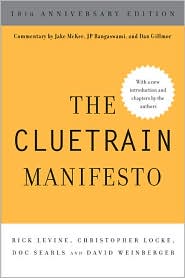
Cluetrain 10th Anniversary edition
Cluetrain 10th Anniversary
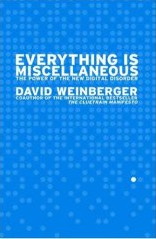
Everything Is Miscellaneous
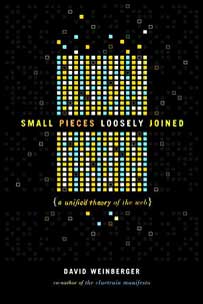
Small Pieces cover
Small Pieces Loosely Joined
Cluetrain cover
Cluetrain Manifesto
My face
Speaker info
Who am I? (Blog Disclosure Form) Copy this link as RSS address Atom Feed

August 6, 2009

Go see Twelfth Night

My family has gone to Shakespeare & Co. productions every summer for almost 30 years. We have taken the kids since they were nursing. Over the years, I’ve blogged about various plays we’ve seen, usually very positively. Shakespeare & Co. do lively stagings, with clear diction and no desire to have us sit still while watching A Classic. They are always entertaining and frequently moving.

We saw Twelfth Night this afternoon. It is the funniest production I think I’ve seen them do. If you are in or near western Massachusetts, I urge you to go. You will LYAO.

It was directed by Jonathan Croy, who we’ve enjoyed as an actor since seeing him as Bottom in A Midsummer’s Night Dream a few decades ago. He had us crying with laughter in the Pyramus and Thisbe play within a play, and we’ve seen him in just about everything he’s been in since. His direction of Twelfth Night is brilliant. Mainly it’s hilarious. But it was also at times quite moving. He finds every laugh, many bawdy, some hammy, and some perhaps not in the original — but Shakespeare would have approved, for, as always with Shakespeare & Co., this is not the broccoli Shakespeare you’re required to eat for your own good. This is delicious, hearty, deeply satisfying Shakespeare you can’t wait to get another helping of. This is Shakespeare after Shakespeare’s own heart.

Afterward, we went to a free lecture by Kevin Coleman, who heads the company’s educational program. His talk was informal, full of anecdotes. But by the end of the hour, he had made his point: Stop teaching Shakespeare in the schools. Instead, we should have students play Shakespeare. But not just put on performances after memorizing the lines.

He demonstrated one technique he uses. Students in pairs run up to a basketball hoop (he thinks Shakespeare should be taught on a playground, to convey the sense of play) dribbling an imaginary ball; one kid passes the ball and the other shoots a nothing-but-net shot, and then they high-five or otherwise exult. Next, he gives one kid in each pair a single line from a random Shakespeare play. They run up to the hoop. The one with the line speaks it loudly but flatly — “passing” it — and the other kid delivers the line to the audience. The combination of bodily movement and the fact that the line doesn’t have to be memorized gets the kids to find the heart of the line. This is way better than having kids read a play at home and then call on them to read a line from a page.

Kevin says that he then has them do entire scenes, each player being fed all the lines by a partner, without having read the play first. The players therefore can look at each other as they say the lines, rather than look at the script. They find the rhythm, the meaning, and the feeling. At Kevin’s lecture, we did the one line version, and the results were impressive. I could see it working for an entire play.

Kevin also argued against the “translation” process most teachers and Shakespeare books use, by which we ask students to re-express Shakespeare’s words in their own language. This seems like a way for students to appropriate the text, but it also strips out the beauty and resonance of the language. His example was the line when Romeo first sees Juliet: “What lady is that, which doth enrich the hand of yonder knight?” When, with good intentions, teachers ask students to re-express that line, it comes out something like “Who’s the girl?” or “What’s the name of the fox?” Sure, that’s what Romeo is asking, but the translation loses everything. Shakespeare’s language gets turned into “French fries,” Kevin says.

Anyway, go see Twelfth Night.

[Tags: shakespeare lenox berkshires twelfth_night ]

Tweet
Follow me

Categories: Uncategorized Tagged with: berkshires • culture • entertainment • lenox • shakespeare • twelfth_night Date: August 6th, 2009 dw

3 Comments »

July 23, 2009

Khat in Somaliland, but not here

The Global Post has an interesting and brief report by Tristan McConnel (sponsored by the Pulitzer Center) on the problem in Somaliland of khat abuse. The comments raise the inevitable issues of cross-cultural understanding.

Isn’t it odd that this drug hasn’t crossed the ocean and taken root (so to speak) in the West? I can’t think of another that’s used so widely on one continent that hasn’t shown up in the West. On the other hand, my knowledge of cultural psycho-pharmacology is pretty much limited to what’s in The Encyclopedia of Things You Already Know.

[Tags: khat qat kat drugs narcotics psychedelics somaliland africa ]

Tweet
Follow me

Categories: Uncategorized Tagged with: africa • bridgeblog • culture • drugs • kat • khat • narcotics • psychedelics • qat • somaliland Date: July 23rd, 2009 dw

1 Comment »

July 17, 2009

The strongest force in the universe continues to be irony

David Pogue reports that Amazon has deleted some books from people’s Kindles, even though people had paid for them. It seems that the publisher decided it didn’t want them offered after all. [NEXT DAY: More exactly, the publisher that owns the copyright objected to another publisher selling the book.] So, Amazon deleted the books and credited people for their purchase.

The books were George Orwell’s Animal Farm and 1984. OMG.

[Tags: amazon digital_rights copyleft copyright app_store ]

Tweet
Follow me

Categories: Uncategorized Tagged with: amazon • app_store • copyleft • copyright • culture • digital rights • digital_rights Date: July 17th, 2009 dw

11 Comments »

July 15, 2009

Senator, would you be ok with an all-white Court? Really?

The relevant paragraphs from Sonia Sotomayor’s “wise Latina” speech:

Whether born from experience or inherent physiological or cultural differences, a possibility I abhor less or discount less than my colleague Judge Cedarbaum, our gender and national origins may and will make a difference in our judging. Justice O’Connor has often been cited as saying that a wise old man and wise old woman will reach the same conclusion in deciding cases. I am not so sure Justice O’Connor is the author of that line since Professor Resnik attributes that line to Supreme Court Justice Coyle. I am also not so sure that I agree with the statement. First, as Professor Martha Minnow has noted, there can never be a universal definition of wise. Second, I would hope that a wise Latina woman with the richness of her experiences would more often than not reach a better conclusion than a white male who hasn’t lived that life.

Let us not forget that wise men like Oliver Wendell Holmes and Justice Cardozo voted on cases which upheld both sex and race discrimination in our society. Until 1972, no Supreme Court case ever upheld the claim of a woman in a gender discrimination case. I, like Professor Carter, believe that we should not be so myopic as to believe that others of different experiences or backgrounds are incapable of understanding the values and needs of people from a different group. Many are so capable. As Judge Cedarbaum pointed out to me, nine white men on the Supreme Court in the past have done so on many occasions and on many issues including Brown.

However, to understand takes time and effort, something that not all people are willing to give. For others, their experiences limit their ability to understand the experiences of others. Other simply do not care. Hence, one must accept the proposition that a difference there will be by the presence of women and people of color on the bench. Personal experiences affect the facts that judges choose to see. My hope is that I will take the good from my experiences and extrapolate them further into areas with which I am unfamiliar. I simply do not know exactly what that difference will be in my judging. But I accept there will be some based on my gender and my Latina heritage.

Sotomayor is saying something designed to inspire those against whom expectations have run: In American culture, the image of a wise judge generally is that of an old white man. Sotomayor is asking her audience to embrace a different image. In fact, she says, the very life experiences that traditionally have worked to disempower people make one wiser than those who haven’t had those experiences. The unfortunate implication of Sotomayor’s rhetoric (or, at least the inference taken by some white male Senators) is that race is the differentiator, not the experiences…an inference that does not survive reading the rest of the passage. Clearly, Sotomayor is saying exactly what all Americans are taught: We are a melting pot made stronger by the diversity of our culture.

So, here’s what I’d ask the Republican Senators who are questioning her about that line in her speech:

Senator, would you be ok with an all white, all male Court?

That is, if all else were equal, Senator, would you prefer to have a Supreme Court made up of nine white men from similar backgrounds, or a Court that includes men and women, people of various hues, and people from a variety of backgrounds?

If you’re ok, Senator, with a lily-white, male Court, you may sit down. Thank you.

If, however, you think we are better now for having some diversity among our Justices, then don’t you agree that “a difference there will be by the presence of women and people of color on the bench”? Don’t you agree that diversity strengths the Court — makes it wiser — because it brings different points of view to bear? So, Senator, you agree that one’s background affects one’s judgment, and that we are better off having multiple life-experiences represented on the Court.

So, Senator, don’t you think it’s a great for the Court to have, say, a wise Latina woman in the discussions? Me, too!

In creating a Supreme Court rather than one Supreme Justice, our founders recognized that wisdom is more reliably a property of a system than of an individual. Wisdom is most likely to emerge from a network that embraces diversity.

Especially a diversity of people who are empathetic. But that’s another issue… [Tags: sotomayor scotus wisdom expertise everything_is_miscellaneous wise_latina_woman ]

Tweet
Follow me

Categories: Uncategorized Tagged with: culture • everythingIsMiscellaneous • expertise • politics • scotus • sotomayor • wisdom Date: July 15th, 2009 dw

9 Comments »

July 3, 2009

Coup Coup Catch You?

Ethan is once again knowledgeable and provocative, this time about what it takes for a coup to get some attention in this country. He compares the media’s interest in Honduras’ institutional coup (as a guy called it last night on The News Hour) with the almost complete ignoring of various coups in Africa.

Ethan concludes (but read the whole thing):

So why does Honduras get the Iran treatment, while Niger is ignored like Madagascar? Proximity? Strategic importance? (though Niger’s got massive uranium reserves – you remember yellowcake, right?) It’s not population – Niger’s roughly twice the size of Honduras. Expectation? Perhaps we’re sufficiently accustomed to African coups (Madagascar, Mauritania and Guinea in the past year) that Niger’s not a surprise.

Or perhaps all the pundits are still trying to figure out which one’s Nigeria and which one’s Niger…

Ethan conspicuously leaves out racism — the soft racism (as that ol’ phrase President George W. Bush once put it) of not knowing, not caring, and not bothering to develop a narrative.

(By the way, be sure to click on the link in the quote from Ethan. It leads to one of The Onion’s funniest videos ever.)

[Tags: ethan_zuckerman africa niger honduras racism media ]

Tweet
Follow me

Categories: Uncategorized Tagged with: africa • bridgeblog • culture • ethan_zuckerman • globalvoices • honduras • media • niger • peace • racism Date: July 3rd, 2009 dw

2 Comments »

June 26, 2009

[reboot] Bruce Sterling

Bruce Sterling is doing the wrap-up speech.

NOTE: Live-blogging. Getting things wrong. Missing points. Omitting key information. Introducing artificial choppiness. Over-emphasizing small matters. Paraphrasing badly. Not running a spellpchecker. Mangling other people’s ideas and words. You are warned, people.

He says what’s great about your event is that it matches it’s name. What’s wrong with it is (he says) that it’s the eleventh reboot. “When are you going to have a stable system?” We’re rebooting the reboots.

He s says he’s not into the action vs. words thing because he’s a novelist. He also promises to tell us what the next decade looks like culturally. He begins with an anecdote about the chief designer at Fiat who talked about the Fiat since the 500, a very popular car. The designer told an audience that it succeeded because it’s a 50-yr old design. Bruce asked from the audience: Since the new Fiat 500 is a big success, what’s the future for it? Are you going to release the car that came after the F500. (There was such a car.) No, he said. They were looking at post-consumer alterations of the F500 and they were going to “professionalize” that; they were going to move the F500 into “emergent demographic groups.” “I thought this was a really clever idea” and that this is going to happen a lot, a “scary paradigm of the future.” It’s very hard to construe that as progress, he says. We’ve known since the 12th century what progress is: Master nature, more security, better health, etc. What we’re going to get: No money, scarcity, financial collapse, low-intensity global warfare, and a climate crisis. We’re deliberately moving backwards. Gen Xers in charge when people are “afraid of the sky.”

He says he heard a guy [missed the name] that “future” is an old paradigm. Bruce agrees with him. A mythos of the future, the belief in the future, just won’t be the same. We’re moving into a-temporality. Steam punk + metaphysics. Gibson is working on a book called “Zero History.” But Bruce isn’t ready to talk about this yet. Instead, he wants to talk about what it’ll feel like to live through the next ten years. It won’t be progress or conservativism. We get “transition to nowhere.” No big boom bubbles. Bad weather. Global emergent change.

Divide the future into four quadrants.

1. Crisis capitalism for aging baby boomers. They’re not major actors but they have all the votes. They’ll be more attached to crotchety fantasies.

2. BRICs. Emergent countries emerging into nowhere. They’re globalizing but not progressing . Fundamentalists are in charge but they don’t get anything done except ruin things.

Most of the world is in the first two quadrants. Quadrant 3: Reboot in power. Gen Xers running things. Cultural sentiment: “Dark euphoria.” Things are falling apart, everything is possible, but you never realized you would have to dread it so much. You leap into the unknown, you fall toward earth, and then you realize there’s no earth there. a) Top end: Gothic high-tech. You’re Steve Jobs, you build something beautiful but you’re dying of something secret and horrible. Death is waiting, and not a kindly death. Heroic story, but very Gothic. Or, from the political world: Sarkozy. Brilliant. Ethnic. You have no ideology. He’s willing to run against himself, reboot himself. Obama is a gothic high-tech figure. He’s a Chicago machine politician, an ethnic indeterminate politician with a massive fund-raising routine. Sarkozy comes on TV after the Brazilian aircraft crash because he wants to be on TV. These guys are positioning themselves in the narrative rather than building infrastructure. Their cheerleaders, not leaders.

b) The other side of Reboot in power is low-end: Favela chic. You’ve lost everything but you’re wired to the gill and still big on Facebook. Everything you believe as geeks is Favela thinking. This venue is itself a stuffed animal. The unsustainable is the only frontier you are. You’re old in old-new structure, a steam punk appropriation.

Bruce now promises us some practical advice. “I was shamed by Matt’s 100 hour speech. I know what I ought to be studying. I have to go do it now.” So, here’s some practical advice on bright green geek environmentalism. A general principle, painful for a gothic generation like yours: “Stop acting dead.” You’ve been trained that way; it’s the default for your generation. Hair shirt green just changes the polarity of the 20th century. It just inverts it. It’s not really a different way to live.

How do you know if you’re acting dead. The test: The great-grandfather principle. Would your dead great grandfather do a better job of what you’re intending to do. E.g., saving water. Water is indestructible. But your dead great grandfather is saving more water than you. You can’t save more than a dead guy. Save electricity. Move into a smaller apartment. [Amusing bullshit.] You’re going to be dead much longer than you’re alive. So you need to do stuff that you can do better than your dead great grandfather.

How can you do this, he asks. A geek-friendly approach to consumption. For people of your generation, objects are print-outs. They’re frozen social relationships. Think of objects in terms of hours of time and volumes of space. It’s a good design approach. Because if you’re picking these things up — washing it, storing it, curating it — these possessions are really embodied social relationships: made by peole, designed by people, sold by people, etc. Relationships that happen to have material form. You might argue that you ought to buy cheap things or organic. That’s not the way forward. Economizing is not social. If you economize, you’re starving someone else. You need to reasses the objects in your space and time.

The monarch among objects are everyday objects. Whatever is taking up your time most, or closest to your space. E.g., get the best bed you can get. Get a beautiful, well-designed chair. If you haven’t touched it in a year, get rid of it. Women, get real cosmetics.

It’s hard but it’s doable, he says. It’s very hackerly. Make lists. Four categories: Beautiful things, things that have some emotional meaning, your tools and devices, everything else. Bruce then tells us how to tell which is in which. First two: you’re eager to tell someone about its beauty or meaning. Tools: Don’t make do with broken stuff. You’re not experimenting with it if you’re not publishing the results in a falsifiable form.

This is hard to do. It’s the sort of thing you do when a spouse dies or a child leaves your home. It’s tough. It’s not a thing to do on impulse. But you will become much more of what you already are. [Tags: rb11 reboot11 reboot bruce_sterling pessimism cynicism doom soul-crushing_hopelessness clinical_depression ]

Tweet
Follow me

Categories: Uncategorized Tagged with: conference coverage • culture • cynicism • digital culture • doom • pessimism • rb11 • reboot • reboot11 Date: June 26th, 2009 dw

7 Comments »

June 25, 2009

[reboot] Matt Webb

Matt Webb is part of a small design company. He’s not a designer.

NOTE: Live-blogging. Getting things wrong. Missing points. Omitting key information. Introducing artificial choppiness. Over-emphasizing small matters. Paraphrasing badly. Not running a spellpchecker. Mangling other people’s ideas and words. You are warned, people.

He collects definitions of design: “Design is the conscious and intuitive effort to impost meaningful order” – Victor Papanek. One of his colleagues, Jack Schulze, says “Some people (they are wrong) are about solving problems. Obviously designers do solve problems, but then so do dentists. Design is about cultural invention.” Problem solving is hard but isn’t enough, says Matt. But what is culture? Culture is “the things that make life interesting” (Bruno Munari). “The designer of today reestablishes the long lost contact between art and the public,” said Munari. Art often began as functional objects — drapes, urns — so why shouldn’t our own objects be art?

Matt is going to be a chain of consciousness talk about what makes his life interesting. [My live blogging will magnify whatever choppiness there is.]

He shows faces drawn using an algorithm that bases feature size on baseball stats. (Chernoff faces?) These are macroscopes (John Thackara’s term) . Designers have macroscopes. Macroscopes shows where you are in the big context, human-scale. He shows a Here & There projection of NYC that shows where you are and where you culd be simultaneously. “It’s a kind of superpower.”

In 1959, Sen. Fulton supposed that a tomato in space might be 2D and a million mile square. In 1972, NASA finally released a photo of the entire earth. That’s a macroscope. “We need macroscope ideas.” Even the cleverest people in the world can’t tell us a coherent story of the economic collapse. The scale difference is too huge: If you can see the whole thing, the happenings are invisible, whereas if you can see the happenings, you can’t see the whole thing. People in this room might be able to create macroscopes that could help us understand it.

Now Matt talks about superpowers. In Kalarippayattu “the body becomes all eyes” and you are ready for anything. In a reverse power, your eyes become hands: Anything you can see, you can touch. Among the yoga super powers: To become mute, unheavy, large, levitate, telekineses, self-hypnosis, “the ability to touch the moon with one’s fingertip.” Matt then quotes JFK’s commitment to putting a person on the moon. JFK was a “yogic master with the supernatural power to touch the moon with this fingertip.” It took a million man-hours of technical study, 300,000 Americans and 20,000 corporations. What’s our generation’s equivalent of the moon landing? Might be Wikipedia. Where do we spend our next 100 million hours?

The moon landing came out of a command culture. 300,000 people worked and 12 people went to the moon. Wikipedia came out of a collaborative, participatory culture. E.g., burdastyle.com , twitter.com/andy_house (house reports status), newspaperclub.co.uk (uses excess capacity for producing papers). He reads an extended quote from Ze Frank. “When people start something new, they perceive the world around them differently.” We become aware of how the media manipulate us.

Matt’s challenge: Put aside 100 hours to work on someting. ” When you participate in culture —not solving problems but inventing culture — that’s when life gets interesting.” [Great talk. Posted without being proofread.]

[Tags: reboot reboot1 rb11 culture design ]

Tweet
Follow me

Categories: Uncategorized Tagged with: conference coverage • culture • design • digital culture • rb11 • reboot • reboot1 Date: June 25th, 2009 dw

3 Comments »

June 18, 2009

Weak copyright spurs creativity

Michael Geist — Canada’s free-culture bulldog — summarizes a Harvard Business School working paper by economists Felix Oberholzer-Gee and Koleman Strumpf “File Sharing and Copyright” that argues that the inability to strictly enforce today’s draconian and clinically insane copyright laws has in fact benefited society. It’s been slashdotted.

Tags: copyright copyleft everything_is_miscellaneous

Tweet
Follow me

Categories: Uncategorized Tagged with: copyleft • copyright • culture • digital culture • digital rights • everything_is_miscellaneous Date: June 18th, 2009 dw

1 Comment »

June 17, 2009

Jonathan Zittrain’s commencement address to the Shady Side Academy

The text is here.

[Tags: jonathan_zittrain graduation commencement_address ]

Tweet
Follow me

Categories: Uncategorized Tagged with: commencement_address • culture • digital culture • graduation • humor • jonathan_zittrain Date: June 17th, 2009 dw

Be the first to comment »

June 16, 2009

[berkman] Beth Kolko: Form, Function and Fiction

Beth Kolko is giving a Berkman lunchtime talk on what her group, Deiagn for Digital Inclusion, has been doing. It’s an interdisciplinary group.

NOTE: Live-blogging. Getting things wrong. Missing points. Omitting key information. Introducing artificial choppiness. Over-emphasizing small matters. Paraphrasing badly. Not running a spellpchecker. Mangling other people’s ideas and words. You are warned, people.

[Beth talks quickly. Hard to keep up.] The questions driving her group’s work: What ICTs are adopted in diverse communities and why. What do they do with ICTs? The aim is to design better technologies and policies.

When we name a technology, she says, we assume technologies have consistent meanings across cultural contexts. But that’s not true. There’s a whole lot of slippage. If you study diversity across disciplines, there’s a lot of research that says that diversity lends robustness. Without diversity, systems are fragile. He groups wants to make design more aware of diversity.

How do you have a conversation that brings in the hardware and software folks, and the social science folks? She says that in her talk, the division between form and function will get smudgy.

Beth says that if you say you study the developing world, they get sleepy because they don’t see how it relates to what they’re doing. So, she and others have reframed this as “resource constraint.” This removes the geographic focus. It also makes it dynamic, not static. Resources can be anything from economic and educational to screen size. The question is: How do you design to accommodate this complexity.

She goes through the methods for the Central Asia portion of her work. It’s quantitative and qualitative. Surveys every year, four countries, 1000 people in each. Interviews with different populations, usabilities tests, ethnography.

Form of tech in resource-constrained environments

1. Internet as weather-dependent technology. In Cambodia in a small village, the Net goes down after it rains because it interrupts the satellite access. The Net is neither ubiquitous nor constant. In Central Asia, access is far more sporadic and they are on for far less time in each session than is typical in, say, Cambridge, MA.

2. Internet as a public resource. Beth’s Central Asian research use the Net about equally at a home, at a friend’s home, and at school/work.

3. Mobile phone as bank. The use of phones for banking has design implications, e.g., how visible is your password?

Function of tech in resource-constrained environments

1. ICTs as strengthener of social neworks. With demographics taken off the table, people who use conventional social networks are more likely to use technology. And people who use technology are more likely to trust others. [I think I got that wrong.] Most people in Beth’s studies use their mobile phones at least once a day.

2. Mobiles as a platform for fraud. Beth got a 419 Nigerian scam SMS msg when in Kenya. “What we use mobiles for is complex.”

3. SMS as a weapon. The role of SMS in revolution. She points to Iran.

4. Games as tech training. Games provide the first touch of ICT for many people. It’s cheaper in Cental Asia to play LAN games than access the Net. About 64% of game players are urban, and 63% are men.

From understanding to building

In one project, they studied how people used mobiles, they’re use of social networks, and the pain points of everyday life. (This is “design ethnography.”) They decided to look at mobile social software (MoSoSo), and a public transporation project (Starbus). They tried to adopt the notion of “personas” based on their surveys and interviews. (Personas are models of typical users.) MoSoSo allows recommendations filtered through one’s social network. Starbus addresses the problem that intercity buses don’t depart until they’re filled. Starbus puts a GPS box on the buses so they can send SMS msgs about where the bus is. You can text it to find out when it will come to the stop near you.

MoSoSo and Starbus both arise from the research that drills down into what it means to be an Internet user.

Q: When do porn and gambling enter the equation?
A: Not gambling because of banking issues. Plenty of porn.

Q: Why do people who use the Net report higher levels of trust?
A: Don’t know.

Q: Correlation between quality of life and Internet use?
A: Hard to know what that means.

Q: Are the public access centers set up by gov’t agencies or entrepreneurial people?
A: The latter.

Q: [me] If I were a businessperson designing for a market…
A: Avoid generalizations about that people X do Y. Get real data about how people are actually using the tech. E.g., if people don’t have GPS in their phones, Starbus opens up the GPS on the bus as a community resource.

Q: [lokman] You have longitudinal studies. Does the slower adoption rate come because of a lack of local content.
A: We’ve done captures of web sites from ’03 or ’04. We’ve looked at the change over time. Until ’07 or ’08, the government site at Uzbekistan said the purpose of the site was to restrict info. I suspect the variance in adoption rate has to do with the split between communication and information tech. Abstract info doesn’t resonate in resource-constrained environments.

Q [colin]: Also, the lack of new media literacy. How does trust and social networks feed into that?
A: The issue of info literacy gets complicated in a post-Soviet context. What looks like media illiteracy may be a different type of media literacy. People sometimes mimeograph materials off the Net and distribute them, which is a different type of media literacy. [Tags: design ux central_asia ethnography beth_kolko ]

Tweet
Follow me

Categories: Uncategorized Tagged with: bridgeblog • culture • design • digital culture • ethnography • ux Date: June 16th, 2009 dw

5 Comments »

« Previous Page | Next Page »


Creative Commons License
This work is licensed under a Creative Commons Attribution-NonCommercial-ShareAlike 3.0 Unported License.
TL;DR: Share this post freely, but attribute it to me (name (David Weinberger) and link to it), and don't use it commercially without my permission.

Joho the Blog uses WordPress blogging software.
Thank you, WordPress!