logo
EverydayChaos
Everyday Chaos
Too Big to Know
Too Big to Know
Cluetrain 10th Anniversary edition
Cluetrain 10th Anniversary
Everything Is Miscellaneous
Small Pieces cover
Small Pieces Loosely Joined
Cluetrain cover
Cluetrain Manifesto
My face
Speaker info
Who am I? (Blog Disclosure Form) Copy this link as RSS address Atom Feed

May 19, 2009

Brewster Kahle on Google Books

Brewster Kahle, founder of the Internet Archive, and the instigator of an open access effort to scan books, has a good op-ed in the Washington Post about the Google Books settlement (some links).

Brewster focuses on the monopolistic concerns about the proposed settlement. He concludes:

This settlement should not be approved. The promise of a rich and democratic digital future will be hindered by monopolies. Laws and the free market can support many innovative, open approaches to lending and selling books. We need to focus on legislation to address works that are caught in copyright limbo. And we need to stop monopolies from forming so that we can create vibrant publishing environments.

Personally, I do not want to see the deal approved unamended. There are some pretty clearly anti-competitive clauses that need to come out (the “most favored nation” one in particular). And the proposed Book Rights Registry has too much power, especially since its supervised by parties whose interests are not aligned first and foremost with the public’s interests (which are, I believe, to achieve the Constitutional desire “[t]o promote the progress of science and useful arts” and to achieve the Internet’s desire to provide maximal access to the works of culture).

(Here’s a much longer interview with Brewster).
[Tags: google google_books google_books_settlement copyright copyleft everything_is_miscellaneous libraries books ]

Tweet
Follow me

Categories: Uncategorized Tagged with: books • copyleft • copyright • digital culture • digital rights • everything_is_miscellaneous • google • google_books • google_books_settlement • libraries Date: May 19th, 2009 dw

1 Comment »

May 12, 2009

[berkman] David Bollier on the commons

David Bollier is giving a Berkman talk on governing the commons. David is the author of Viral Spiral: How the Commoners Built a Digital Republic of Their Own. His talk: “How shall we govern the commons?”

NOTE: Live-blogging. Getting things wrong. Missing points. Omitting key information. Introducing artificial choppiness. Over-emphasizing small matters. Paraphrasing badly. Not running a spellpchecker. Mangling other people’s ideas and words. You are warned, people.

His book looks at the arc of the development of open access and commonses. [What the heck is the plural of “commons”?] The commons is a new sector, and how we govern it is an urgent issue. Benkler, Zittrain, Lessig, and Bauers have addressed this, David says.

The commons is an ancient, new, and misunderstood paradigm, David says. It dates back to the medieval grazing of cattle. It’s a social system for managing shared resources. It was also a source of collective purposes, and custom and tradition. He recommends “The Magna Carta Manifesto” that looks at the struggle for the commons, with the Magna Carta being an armistice. The public domain was the closest we had to a commons until around 2000. The public domain was viewed by copyright traditionalists as a junkyward because the only people in it were things that had no commercial value. The first law review article on the commons didn’t occur until 1981. He cites Jack Valenti, a rich quote about a public domain work as “soiled and haggard, barren of its previous virtues.” Richard Stallman showed the efficacy and virtues of free software. He showed that incompatible code leads to a tower of Babel. The problem with Stallman’s Emacs Commune was that everything had to feed back to a central source (Stallman) and there was no governance. The General Public License gave legal protections to the Commons. Then the Net took off. We got new infrastructures for building commons, technologic, legal, and social.

Garrett Hardin who wrote about the “tragedy of the commons” later acknowledged that it didn’t apply to commons that have governance. The commons is generative (to use Jonathan Zittrain‘s term). “The commons is a macro-economic and cultural force in its own right.” So, how shall we govern it? “This area is terribly under-theorized.” Elinor Ostrom set forth 8 design principles to allow a commons to be governed as a commons, e.g., clear boundaries, appropriateness to the local area, monitoring, transparency, graduated sanctions against free riders and vandals…

Ostrom once showed David a photo of a chair occupying a shoveled out space during a snow storm with a chair occupying it until the person who shoveled it comes back. Ostrom says that that’s a commons because, “It’s a shared understanding by the neighborhood about how to allocate a scarce resource.” David says a commons arises when a neighborhood decides to manage a resource in an equitable way. One thing this shows is a conflict between commons governance and government, since the mayor tried to ban this practice.

He says we need a new taxonomy of digital commons. How do you protect the integrity of the shared resource and the community itself. He points to some distinctions:

Open vs. Free raises questions of business appropriation vs. community control, digital sharecropping vs. commons governance, monetization or maintenance as an inalienable resource.

Individual choice vs. Community. Creative Commons may undermine commons building because it allows opt in or opt out. The GPL is a purer type of commons: There’s a binary choice: you’re in the commons or you’re not.

Building within the house of copyright or challenge property discourse? Niva Elkin-Koren, for example, thinks CC encourages self-interest and doesn’t build out a coherent commons vision. [Paraphrase of a paraphrase! Reader beware!] The Global South views CC as depending on Western law and as a type of derivative of private property. Fair Use activists, on the other hand, want us to grapple wit hte prevailing practices in copyright law.

Commons vs. Markets. Or at they friends? It depends. There’s a spectrum. Open platforms. Innocentive (drug queries where answerers get a bounty). Democratizing innovation, a la Eric Von Hippel. Magnatune (a “respectful interface between the commons and the market”) or the Grateful Dead allowing home-made recordings. Market-oriented non-profits.

The commons is, David says, a “new social metabolism for governance and law, with economic and cultural impact.”

Q: How about more examples? How about Huffington Post?
A: Open platform with some participation. But how about: WikiTravel is an interesting mix. DailyKos: A user-generated community of commentary. Internet Archive. Flickr. Jamendo library of CC music. Blip.tv.

Q: (doc searls) You offer an organic metaphor, whereas we think of the Commons as a space. Will it take?
A: Who knows. But it presents it as a relationship.
Doc: I wonder if there’s a relato-sphere that isn’t metabolic. A metabolism burns energy. It creates gas.
A: A legal system is a conversation about shared power [he quotes someone I missed, and I’m paraphrasing] Q: But metabolism also implies homeostasis. A: Its organic property is why commons sometimes outperform markets. Charlie Nesson: Don’t confuse law in principle (we all live under the law, a set of shared values) and as a social environment (a mediated discourse in which people are assisted in relating by its structure).

Q: What about the international aspect of commons.
A: Cf. “Global Legal Pluralism.” There’s a case to dealing with this locally rather than doing it top-down through nation states. There are certainly tensions as you expand this trans-nationally.

Q: (wendy seltzer) The question of governance is partially a horiztonal dividing of what’s been shared and a vertical set of relationships to maintain the platform. Does this get towards how we can push for open platforms on which we can build commons?
A: Lessig once said he saw the amassing of a constituency for a commons as an important political strategy for assuring an open Internet. The commons is a verb, a commoning.

Q: The vast majority of free software projects are very hierarchical. The freedoms it lists are individualistic. Our rules on collective governance are based on highly individualistic control. How do we move forward.
A: The preponderance of SourceForge communities are small. How do you scale up governance? It is a key issue and I don’t know the answer.
Charlie: David Hoffman writes about this. It’s about creating a border that keeps out the griefers. That’s essential.
A: They have to be organically grow…

Q: [ethan zuckerman] The old idea of the commons was that we were independent homesteaders who can make our own butter. But the openness of the code doesn’t help most people. And it gets worse. A lot of the interesting communities are on closed, commercial platforms. The attempts to have a constitutional moment on Facebook are pathetic. How can you bring your thinking about governance into commercial spaces? Can that be done?
A: That’s the right direction. We have to find respectful relationships among private businesses and commons. Maybe we need new revenue models.

Q: [darius] The tragedy of the commons has devastated my country, Poland. Not because there was no governance. The structures were didn’t align public interest and private incentives. Intellectuals assumed people would contribute for free. You haven’t mentioned motivations…
A: Self-interest is far broader than traditional economists have regarded it. We need to devise structures that can be hearty and sustainable that serve the public interest.

Q: To what degree is power concentrated in different commons? Usually a small group holds veto power. E.g., most open source projects have lead developers. To what degree do you need a de facto leader?
A: You need de facto structures. And you do sometimes get concentrated monopolies where forking isn’t really an option.
Ben: Some large open source projects are governed democratically. E.g., Debian.

Q: [me]
A: I think you have a fragmented view. Trying to amass a unitary view of the commons is doomed to failure beause all of them have rootedness in the local
< me: Do we need a meta rule that says here's how we maximize local control of commons?
A: That’s the direction we need to go in. But that’s a political frontier we haven’t gotten to.

[wendy seltzer] Is there a natural limit to the size of commons?
A: Maybe, but there are all sorts of technological prostheses…
wendy: When you tie this to communities…
A: There may be a type of speciation.

Q: Something like BitTorrent — a true commons where people are sharing resources — suggests that there’s an outside of the fence direction…
A: Commons has some way of integrity of its asset.

Q: Commons can fail. What are the most common failure modes?
A: Not having adequate enforcement of boundaries, etc. Part of what’s so fascinating is watching commons proliferate, and dealing with the theory later.

Q: [charlie nesson] I think of the commons as everything you can reach for free. There are forces that want to capture the potential of the commons. What we’re looking for is the engine that makes the commons itself robust enough to resist that. I think of the law as the instrument of enclosure. The root to building that robustness is not litigation. We have to build up a force. The question comes down not to how we govern the commons, but how do given enterprises build self-sustaining business models on a gift economy?
A: Yes. We’re trying to build our space, our own republic.

[I missed a bunch. Sorry. Check the Berkman webcast site to find the webcast.] [Tags: commons creative_commons copyright copyleft everything_is_miscellaneous ]

Tweet
Follow me

Categories: Uncategorized Tagged with: commons • copyleft • copyright • digital rights • everythingIsMiscellaneous Date: May 12th, 2009 dw

Be the first to comment »

May 11, 2009

[berkman] Kenneth Crews on academic copyright

Harvard’s Office for Scholarly Communication has brought Kenneth Crews of Columbia Law School to talk about “Protecting Your Scholarship: Copyrights, Publication Agreements, and Open Access.”

NOTE: Live-blogging. Getting things wrong. Missing points. Omitting key information. Introducing artificial choppiness. Over-emphasizing small matters. Paraphrasing badly. Not running a spellpchecker. Mangling other people’s ideas and words. You are warned, people.

How do all the things mentioned in his subtitle fit together, he asks, assuring us that they do.

Our goals as academics, he says, are to: advance scholarship, promote access to pubs, preserve academic freedom, expand the class roomk support research worldwide, build the next generation of research, and reduce the costs and barriers. Does it shift costs or reduce them, he asks?

Peter Suber defines open access as online, free of charage, and free of most copyright and licensing restrictions. Is that the right definition, he asks. He says that as he’s traveled around the world, he’s seen access to the Internet is expanding rapidly. “People are connected.” It’s there as a potential and is in place in many places. But, in many of these places, there’s no cash to buy access to content. They can get to content if it’s made available on line. So, in addition to those other goals he’s listed, there’s altruism.

Why right now? The Harvard resolution (2008) requiring open access. The NIH public access policy (2008) puts works PubMedCentral. There are, of course, pitfalls: Misuse of work, etc. [missed some. sorry.]

There are challenges to these policies now. Congress has a bill to undo the NIH open access policy. There’s the DMCA’s anticircumvention provisions; the Copyright Office is holding hearings right now about exemptions to those processions. There’s the Google Books settlement that would provide tight controls to the accessibility and usability of that content. “Are we putting together a database of 20M volumes that is guaranteed to frustrate the heck out of the users?” There’s our distaste of other people making money with other people’s copyrights.

He gives a quick review of copyright: Just about everything is protected, if it’s “fixed in some tangible medium.” Copyright is as set of rights wrt reproduction, distribution, derivatives, performane and display, and DMCA rights. These rights can be unbundled and parceled out by the rights holder. Who owns the copyright isn’t very important. The real question is who has the particular rights within that bundle

Those rights are transferable. But they may be transfered or licensed, exclusive or not. In scholarly publishing, I might transfer rights to a publisher who then licenses back to me certain rights, such as the right to use it in further research, or to post portions on my Web site. Or, I might not transfer any rights, and instead license some rights to my publisher. Maybe I’ll license it to the publisher, stipulating that it be Creative Commons licensed. There are many, many possibilities. “So the process of engaging with a publisher is …. a process of negotiation.”

The context is changing. It’s becoming digital. Digital tech both can make scholarship more easily available, and it holds the potential for controlling access. Open access is key to the growth of scholarship. “The growth of scholarship comes from access to existing works,” as does its impact.

So, being a good steward of copyright requires understanding our interests, those of our institution, the revenue possibilities, and the interests of people I do not know and who may not be in my field. We should worry about maintaining the integrity of our work. Money matters. We need to worry about the business models.

“Not all copyrights are created equal…Not all works need to be treated in the same way.”

Who gets to decide all this: The author.

“Managing this work in a way that moves us toward open access publishing … is a good thing.” How to do that: Self publish. Use OA publishers (e.g., www.doaj.org). Put it in an institutional repository. And negotiate. “The happier the agreement, the longer the agreement.” “We have to look for language that does happy things for us.” He shows an example of happy language that gives the author right to post an article for free. Another: Language that lets the author use the article for her own work. A license leaves the unstated rights with the author. He notes that the law’s default does not require the publisher to include the author’s name and affiliation.

Tough questions about open access: Will colleagues respect publications in OA journals? (More so every day, he says.) OA compatible with peer review? (Yes, Kenneth says.) How do I manage my copyrights? How do I negotiate agreements? Who pays the pub costs. What about the economic surival of journals? (I don’t know the answers, he says, but the problem is more real than we often like to acknowledge.)

Key points of the talk, he says: . You have choices. Be a good steward. Negotiate…and keep a copy of the agreement. In fact, keep the agreement for the entire term of the copyright, i.e., 70 years after you’re dead.

Q: Google Books settlement?
A: Read the agreement. “It will really wow you.” The key point: It permits Google to continue scanning, and to create this “fantastically large, very useful archive of materials.” But access to it will be restricted. If a book’s in copyright, you can only get bibliographic info. If you want more, you sign up for a subscription. Tightly controlled, limited access. “And it’s a book selling situation.” Google and the association become major booksellers. You buy access, not copies. “The challenge for all of us is there is no question, this proposal should it become the legal standard, is the biggest, most important step toward digital access of materials not previous available.” We need to decide if we want to move into the future on these terms. “I only give this agreement several years before it falls apart” and they’re back in court looking for new terms.

Q: Robert Darnton: What kind of legislation should we have for orphan works [= works under copyright whose license holders cannot be found]
A: The Copyright Office’s legislative proposal from a few years ago was actually pretty good. But as it went through the process, “every change was a step backward.” “I thought it was a good thing the legislation died last year.” We’re in pretty good shape now with the Fair Use laws. The Google settlement allows the Registry to collect revenues from the use of works and distribute money out to the rights holders. But with an orphaned works, who gets it? The basic idea is that that money is used to pay organizational overhead. If there’s leftover money, 70% gets distributed to the class of known copyright holders. The other 30% goes into a pool for non-profits. “The serious problem is that it gives Google a monumental head start over anyone else in working with orphan works.” Competitors don’t have a court settlement that protects them from law suits over rights abuses. “This is a formidable problem with the agreement.”

Q: I edit an undergraduate Harvard journal. Authors sign over all rights to the journal. I worry about students being chagrined by their very first publication. Can an author ever get them back under wraps?
A: If I make something open access, can I reel it in if I change my mind? Legally, yes. Realistically, no. It’s probably been downloaded, mirrored, put into the Internet Archive.

Q: What about students’ lecture notes, etc.?
A: If everything created in a fixed medium is copyrighted, we have a responsibility to manage it. If you’re a student who created notes or papers, they’re yours. But, when it comes to wikis, etc., the copyright situation is nightmarish. It’s jointly copyrighted and owned. Any one student can exert rights.

Q: Every change in the copyright law has gotten awa from the original intent, which was to preserve creativity. The change to make everything copyrighted is nightmarish. Why not have a registry of copyright and require some action on the part of creators to get and renew a copyright?
A: So many ways I could respond! The US Constitution lists powers the Congress has. Most of those statements are very clear and simple. Then comes copyright: To promote progress in the sciences and useful arts, Congress has the power to granted limited-time rights to publish. It’s clear this has a purpose, a goal. There are many reasons we’ve gotten away from this. In addition to everthing else, the Berne Convention, which we joined in 1989, sets basic rules, including broad copyright with no formalities to get one. We couldn’t require registration to get a copyright without dropping out of Berne, but we’re locked into international provisions in multiple other agreements. You want change, go to Berne. [Tags: copyright copyleft google_books ]

Tweet
Follow me

Categories: Uncategorized Tagged with: copyleft • copyright • digital rights • education • knowledge • libraries Date: May 11th, 2009 dw

3 Comments »

May 10, 2009

Copyright debate at The Economist

Economist.com is featuring a debate on whether current copyright laws do more harm than good. The “Yes, they do” side is represented by Terry Fisher, a faculty director of the Berkman Center. The “No, they don’t” position is argued by Justin Hughes. Excellent discussion.

[Tags: copyright copyleft creative_commons ]

Tweet
Follow me

Categories: Uncategorized Tagged with: copyleft • copyright • creative_commons • digital rights Date: May 10th, 2009 dw

1 Comment »

April 30, 2009

New Zealand starts copyright from scratch

New Zealand has decided that trying to amend copyright for the digital age is like trying to adjust a horse’s carburetor. So, it’s going to start all over again.

That’s what we ought to do. Fresh piece of paper, a very big table, and an open bar. I don’t see any other way forward, really.

[Tags: copyleft copyright new_zealand ]

Tweet
Follow me

Categories: Uncategorized Tagged with: copyleft • copyright • digital rights • everythingIsMiscellaneous • media • new_zealand Date: April 30th, 2009 dw

5 Comments »

April 28, 2009

Plagiarism and Fair Use

Afroditi Theodoridou at IP Osgoode does an excellent job explaining the application of Fair Use in the Turnitin Plagiarism Detection Service suit. This post not only makes the decision clearer, it also lays out the legal nature of Fair Use.

TurnItIn lets a teacher submit a paper to see if it’s original or plagiarized. The service keeps a database of the papers submitted for checking. Some students sued, claiming that was an infringement of their copyright. The court decided that TurnItIn was covered by Fair Use. Afroditi concludes with the interesting claim that fighting plagiarism advances the Framers’ original motivation for creating copyright.

[Tags: copyright copyleft fair_use plagiarism ]

Tweet
Follow me

Categories: Uncategorized Tagged with: copyleft • copyright • digital rights • fair_use • plagiarism Date: April 28th, 2009 dw

1 Comment »

April 25, 2009

The Pirate Bay and The Pirate Google

ThePirateBay has links to content hosted elsewhere that’s available for download using the BitTorrent protocol. The site also provides a search engine for finding that content, and a page for each torrent with information about the content. It doesn’t distinguish between content that’s protected by copyright and content that isn’t. The four founders of ThePirateBay were convicted by a Swedish court last week. They were fined a middling amount, and were sentenced to a year in jail. (“What’re you in for?” “Improper use of metadata.”)

Now there is ThePirateGoogle, created by someone to make a point. There you can use the Google search engine to search for content hosted elsewhere, available for download using the BitTorrent protocol. It doesn’t distinguish between content that’s protected by copyright and content that isn’t.

Here’s the text from ThePirateGoogle site:

Bit Torrent Search

Please Note: This site is not affiliated with Google, it simply makes use of Google Custom Search to restrict your searches to Torrent files. You can do this with any regular Google search by appending your query with filetype:torrent. This technique can be used for any type of file supported by Google.

The intention of this site is to demonstrate the double standard that was exemplified in the recent Pirate Bay Trial. Sites such as Google offer much the same functionality as The Pirate Bay and other Bit Torrent sites but are not targeted by media conglomerates such as the IFPI as they have the political and legal clout to defend themselves unlike these small independent sites.

This site is created in support of an open, neutral internet accessible and equitable to all regardless of political or financial standing.

Cheers!

Yes, you can do with Google what you do with ThePirateBay. For example, do the following search at Google:


filetype:torrent “the dark knight”

There’s obviously a difference in intent between ThePirateBay and Google. But there is precious little relevant difference in the service. So, why jail the founders of ThePirateBay but not the founders of Google since either can be used to find copyright-protected torrents? Having the wrong mental attitude? (“What are you in for?” “Intent to improperly use metadata.”)

What to make of this? I find myself in a jumble:

1. I don’t think it’s a double standard. Intent counts. The difference between the Heimlich maneuver and assault is intent, and that’s as it should be. ThePirateBay is intended to enable the sharing of copyrighted works: TPB has facilities designed to help you locate, evaluate, and share files, including a page for each torrent with comments, ratings, descriptions, and the number of seeders and leechers (to see how alive the torrent is). And it’s named The freaking Pirate Bay. There may or may not be a law in Sweden against what TPB does, but it’s disingenuous to say that the site is ethically the same as Google.

3. ThePirateGoogle shows that shutting down ThePirateBay is not going to stop the use of BitTorrent to share copyrighted files. But jailing TPB’s founders may slow sharing down. Torrent site after torrent site has been shut down over the past few years, making it harder to find and download files now. The verdict in TPB case, especially with its jail sentence, will slow down the torrent of torrents, although perhaps not by much.

4. Just in case someone tells you otherwise: The BitTorrent protocol is not the issue here. It’s a brilliant way of sharing large files, and it’s used all over the place for perfectly legal file-sharing.

5. I don’t know what to do about copyright. It’s obviously spun out of control and needs to be pulled back in — lasting 70 years after the death of the creator is absurd — but we need to do far more than just shorten its term. Compensating creators for every use of their works obviously contradicts the maximal open sharing and reuse of works that drives culture forward. Creating a legal and economic environment with incentives for creators does not contradict the open sharing and reuse of works. The question is: Which legal/economic environment would work best? I don’t know — I wish I did — but I suspect it’s one in which copyrighting a work takes a little bit of effort, not all categories of work have the same copyright protections, the terms are way way way shorter than they are now, fair use is greatly extended, infringement only counts if it actually hurts sales (in the way that most mashups do not), compensation does not come from accounting for each and every use of a work, and we start rewarding those who release their works into the public domain by showering them with affection, cultural uptake, and some money.

That’s about seven steps short of an actual copyright reform program. But I find the whole topic headache-making and, frankly, depressing. [Tags: thepiratebay google copyright copyleft ]


1. ThePirateBay posts all the legal letters it gets, plus its replies. Feisty doesn’t begin to describe the replies.

2. The judge in the case seems to have ties to the copyright industry. The lawyer for one of the defendants is calling for a new trial.

Tweet
Follow me

Categories: Uncategorized Tagged with: copyleft • copyright • digital culture • digital rights • everythingIsMiscellaneous • google • thepiratebay Date: April 25th, 2009 dw

5 Comments »

April 23, 2009

From our Archives

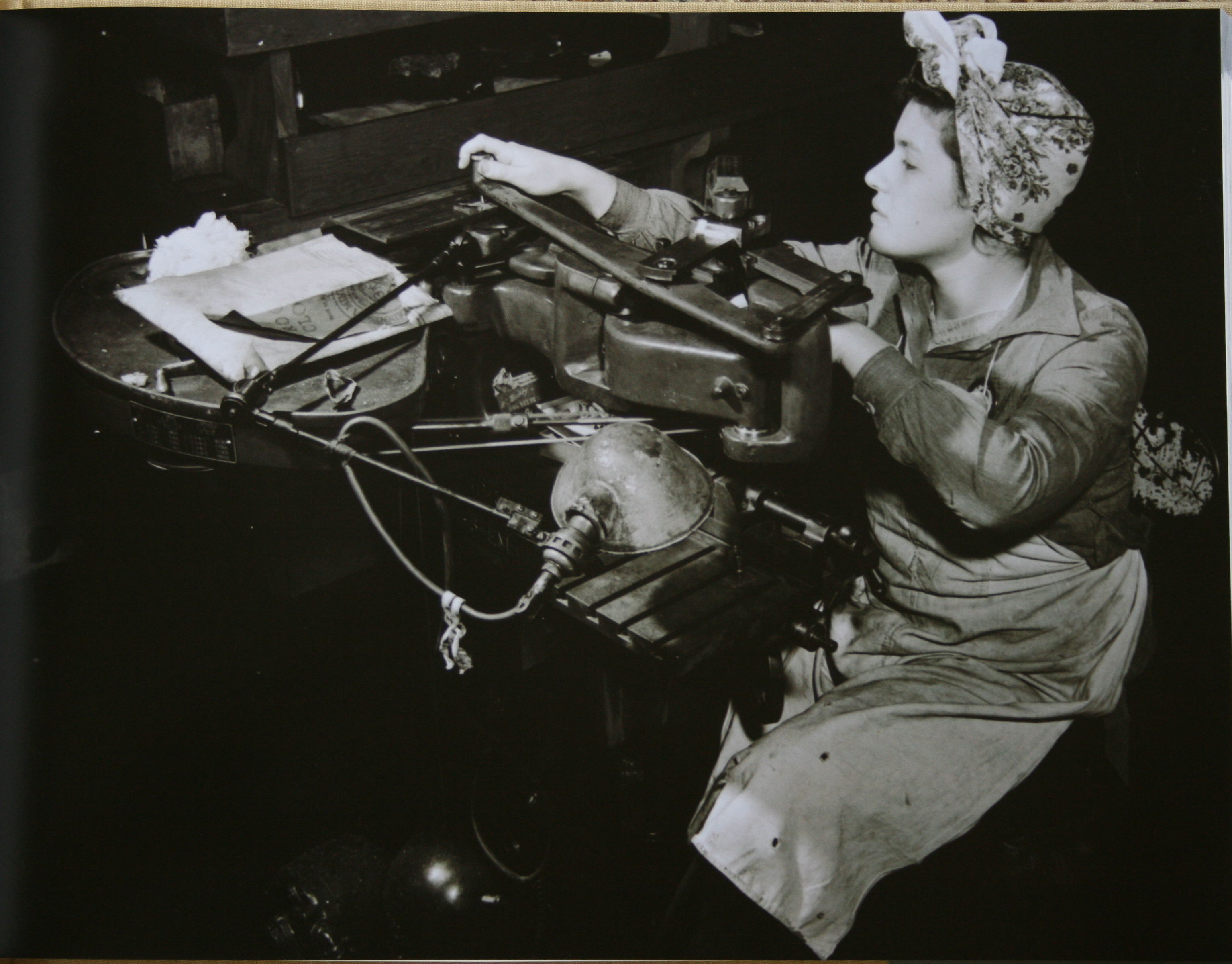
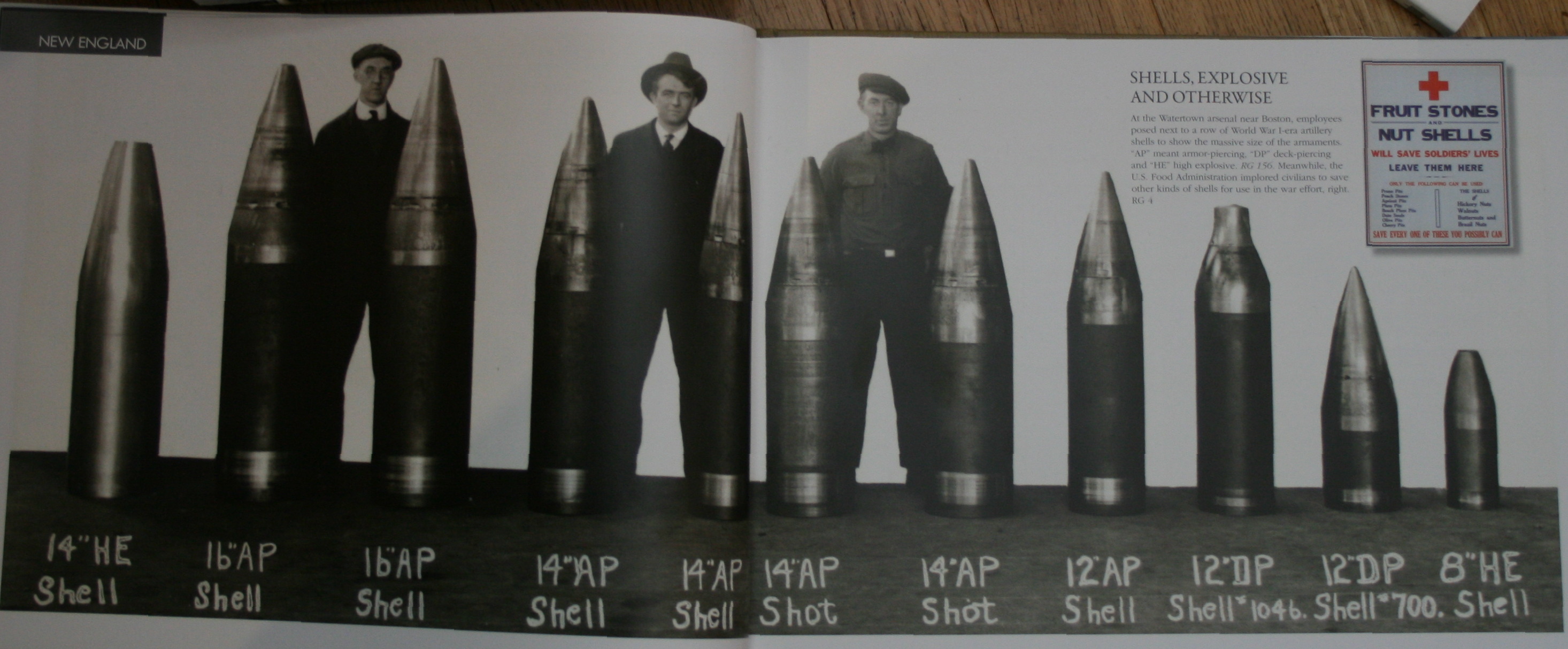
After giving a talk to folks from the National Archives, they gave me a book — Your Land, Our Land, edited by Monroe Dodd and Brian Burnes, on the staff of the National Archives — of photos from the regional archives. Beautiful stuff in it. Here are some samples. (I photographed them since the book doesn’t fit into my scanner very well.) Click on the samples to download large versions:

artillery shells
From the Watertown arsenal (Boston), WWI artillery shells

artillery shells
Woody Guthrie’s signed loyalty oath

artillery shells
vMinerva Markowitz working an engraving machine: Brooklyn Navy Yard, WWII

This book, published by Kansas City Star Books and the Foundation for the National Archives comes with the usual stern copyright warning:

“All rights reserved. No part of this book may be reproduced, stored in a retrieval system or transmitted in any form or by any means, electronic, mechanical, photocopying, recording or otherwise, without the prior consent of the publisher.”

But I checked with counsel: The copyright only extends to the selection and arrangement of the photos, plus any text they added. The photos themselves are public domain (I presume), and “in the US (unlike Europe), there is no copyright protection for the digitization or accurate reproduction of public domain works.”

[Tags: national_archives photos woody_guthrie artillery munitions rosie_the_riveter copyright ]

Tweet
Follow me

Categories: Uncategorized Tagged with: artillery • copyright • culture • digital rights • egov • munitions • photos Date: April 23rd, 2009 dw

5 Comments »

April 20, 2009

Pam Samuelson on the Google Books settlement

Pam Samuelson has written a brilliant piece about the Google Book settlement. It goes in the must-read (and highly readable) pile along with Robert Darnton’s eloquent NY Review of Books piece and James Grimmelmann’s more wonky explanation.

[Tags: google google_books publishing copyright copyleft everything_is_miscellaneous ]

Tweet
Follow me

Categories: Uncategorized Tagged with: copyleft • copyright • culture • digital rights • everythingIsMiscellaneous • google • libraries • publishing Date: April 20th, 2009 dw

1 Comment »

April 17, 2009

[ugc3] Final panel

I went first. I talked about exceptionalism, responding to Eli Noam’s challenge at the beginning of the conference that if we’re going to think the Net is going to bring about substantial changes, we have to be able to point to characteristics of it that are different from other technologies that also looked revolutionary but that turned out to be rather prosaic.

NOTE: Live-blogging. Getting things wrong. Missing points. Omitting key information. Introducing artificial choppiness. Over-emphasizing small matters. Paraphrasing badly. Not running a spellpchecker. Mangling other people’s ideas and words. You are warned, people.

Len Downie was executive editor of Washington Post. He’s not going to propose any new form of delivery of the news. He’s not sure the old will die out completely. WaPo is reorganizing itself as a news operation and as a company. They have Facebook and iPhone apps, etc. When it comes to UGC, “this is not a zero sum game.” On WashingtonPost.com you find lots of user comments, participation in blogs, user photos and videos, crowd-sourcing. E.g., Amanda Michel’s “Off the Bus” crowd sourcing, which went through professional editors. (Amanda is now at ProPublica.) They hope the Net will help end the traditional alienation from their readers. And the Net has made their audience bigger than ever before.

The big problem is the loss of classified advertising. Hundreds of millions of dollars lost, hitting local newspapers especially hard. Also, display ads have been driven down. Local news stations are covering fewer stories. There’s less reporting. That’s the problem Len is going to examine in his new academic role at Arizon State.

There are some things the government could do, but not a “bail out,” Len says. Maybe newspapers will become 501C3’s. Maybe they’ll become LC3’s, so they could still be profitable and yet receive tax-exempt contributions. Maybe convert them into endowments, although Len says there isn’t enough money for that: You’d need a ginormous endowment to generate the requisite funds. There are more and more non-profit investigative reporting organizations. There’s a lot going on. It’s impossible to tell what’s going to happen.

Q: How much does investigative reporting cost?
A: At ProPublica, they do it in the best way, and it’s tens of thousands of dollars, mainly for the reporter’s time.

Q: In Germany they’re aggregating news and selling access [I got this wrong] …
A: I’d have to look at it.
Q: Isn’t that what AP does?
A: Don’t get me started. AP is supposed to be a collaborative. If we don’t all charge at the same time, we won’t be able to raise enough money. Alan Mutters [sp] suggests that we all decide on July 4 to start charging. The Obama admin is concerned about the future of news. They’re going to look at loosening anti-trust regs so newspapers can band together, but you don’t want to create another cartel like AP.

Q: If the NYT shut down its presses and went totally online, how would that affect their costs and prices?
A: The Times might save 40-50% of their costs, but it would take away 90% of their revenue. Kindle is great for books but not very good for newspapers. Looking forward to the big multimedia tablets.

Q: The NYT is doing well on the Web. But last year their Web revenue increased just 1%. What’s the future business model?
A: That’s what I’m trying to figure out.


Greg Lastowka (law prof, Rutgers) is going to talk about legal aspects of UGC. First question: What is UGC? It’s a fuzzy concept. “User” is an important term because of copyright. Copyright is not about monetizing the works of authors. Copyright is there to promote the progress of science and the useful arts. Our Constitutional mention is based on the earlier British Statute of Ann that took control away from publishers and gave it to authors, in order to promote education.

Greg predicts that copyright won’t change very much in the next ten years. Copyright law will probably ignore UGC and be large unaffected by it. UGC will be treated as a problem, it will change the rules somewhat (through litigation), but the fundamental shape of copyright law won’t change in response to UGC (says Greg). Ten years ago, he was more optimistic about it. He thought UGC was a huge social boon that was a very bad fit for copyright law, so copyright law would change to reflect that value. The Web was meeting the goals copyright law was established to meet.

Four changes to get copyright law to fit the Web: 1. Simplify the law. 2. People want credit for their work even when they’re happy to have it spread. People get copyright law mixed up with plagiarism. We should work the attribution right into it. 3. Reform terms of service and their enforcement. 4. Subsidize free access content. Copyright is a subsidy for authors.

Greg was arguing this ten years ago. Not much has changed, although there’s progress in open access to academic work. Why haven’t there been more changes? Maybe because our legislators don’t understand what’s happening. The better, sadder, answer is that Greg’s politics were naive. Copyright law today is realistically about protecting big money incumbents. Dan likes copyright and blockbuster movies, but thinks there should be an ecology that enables them and UGC. We’re unlikely to strike a new social contract that reflects the rights of amateur creators.

Q: To what extent is international trade motivating maintaining strict copyright?
A: Legislators certainly care about it.


Stefaan Verhuist (Markle Foundation) presents his model of UGC: Mediation 3.0. It has three new mediating functions that converge to create a new type of mediation. Those functions can be accelerated and made more valuable by making sure they are cheap, deep, and speed. The success depends on four challenges: the 4 Ps.

Setfaan draws a triangle: 1. Establish relations. 2. Provide a new kind of resource that has value for users and that may be created by the users. 3. Remix. Ensure a relation that creates a resource that may be remixed. Their convergence creates UGC. If you can provide resources that are cheap, deep (the value for its users, related perhaps to a geographical location), and speediness. But it can be hard to be cheap, deep and speedy; that’s the challenge.

The 4 Ps: Privacy (relationship), Property (remix), Public sphere obligations and responsibilities (resource), Push and pull (in the center of the triangle) of information. The push-pull presents the policy challenges.

[Posted without re-reading. Gotta run.]

[Tags: journalism media newspapers copyright copyleft creative_commons marketing ]

Tweet
Follow me

Categories: Uncategorized Tagged with: business • conference coverage • copyleft • copyright • culture • digital culture • digital rights • entertainment • everythingIsMiscellaneous • journalism • marketing • media • newspapers Date: April 17th, 2009 dw

Be the first to comment »

« Previous Page | Next Page »


Creative Commons License
This work is licensed under a Creative Commons Attribution-NonCommercial-ShareAlike 3.0 Unported License.
TL;DR: Share this post freely, but attribute it to me (name (David Weinberger) and link to it), and don't use it commercially without my permission.

Joho the Blog uses WordPress blogging software.
Thank you, WordPress!