logo
EverydayChaos
Everyday Chaos
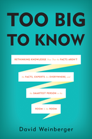
Too Big to Know
Too Big to Know
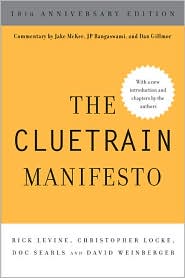
Cluetrain 10th Anniversary edition
Cluetrain 10th Anniversary
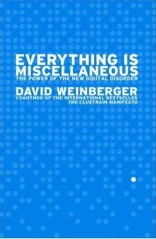
Everything Is Miscellaneous
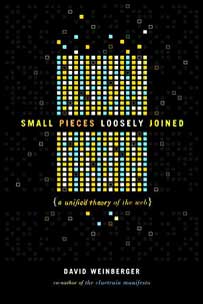
Small Pieces cover
Small Pieces Loosely Joined
Cluetrain cover
Cluetrain Manifesto
My face
Speaker info
Who am I? (Blog Disclosure Form) Copy this link as RSS address Atom Feed

December 3, 2008

DMCA exemption season

Once every three years, the copyright office considers proposed exemptions to the DMCA’s forbidding of attempts to circumvent Digital Rights Management (DRM) protections. Yesterday at 5pm was the deadline for this cycle’s bids.

And there have been some really interesting ones.

Some Berkman folks have asked for the right to Hack the Dead, although they don’t put it like that. If you have software that checks on line to make sure you are authorized to use it, and if the company has now gone out of business, you can no longer use stuff you paid for. So, the Berkman team has proposed that in those circumstances, hackers should be allowed to hack your content free of the dead grip of the defunct business. Chris Soghoian, one of the petitioners, explains it well.

Chris also explains some of the other 18 requests for exemption, including an EFF (did you remember to join?) request to allow users to jailbreak their iPhones so they can run software that Apple has not approved, and a request to allow academics to hack DRM’ed DVD’s to make compilations that are legit under the Fair Use exemption.

Unfortunately, it’s likely that the copyright office will emerge from its three year slumbers, see its own shadow, and put its head straight back up its own rectum. [Tags: berkman crm dmca copyright copyleft eff chris_soghoian ]

Tweet
Follow me

Categories: Uncategorized Tagged with: berkman • copyleft • copyright • crm • digital rights • dmca • eff • policy Date: December 3rd, 2008 dw

1 Comment »

December 2, 2008

Charlie Nesson takes on the RIAA: The podcast

In the latest Radio Berkman podcast, Prof. Charles Nesson and Joel Tennenbaum explain their countersuit against the RIAA, claiming that the RIAA should be forbidden on Constitutional grounds from suing people for sharing music files. Charlie’s analogy is to Congress passing a law that charges $750-$150,000 for each mile we go over the speed limit, and then allows a private company to fund itself by enforcing the law, and allows them to take bribes (“settlements”). He says the RIAA is using the federal courts as a collection agency. If the law is a criminal statute, which Charlie argues it in effect is, then private parties should not be able to pursue civil suits to enforce it.

If Charlie and Joel win, it would shut down the RIAA’s hyper-aggressive tactics. And, although Charlie does not say this, it seems to me that it might open up some interesting class action suits from those who have had to pay up.[Tags: podcasts radio_berkman charlie_nesson charles_nesson joel_tennenbaum riaa copyright copyleft ]

Tweet
Follow me

Categories: Uncategorized Tagged with: copyleft • copyright • digital rights • podcasts • policy • riaa Date: December 2nd, 2008 dw

1 Comment »

November 29, 2008

James Boyle on the public domain

James Boyle’s new book, The Public Domain, is an entertaining, insightful, seminal work. It’s available now for sale, reading on line for free, or downloading for free. You thus have zero excuses not to read it. And you’ll be glad you did. A book this important shouldn’t be so delightful.

[Tags: public_domain jamie_boyle james_boyle copyright copyleft creative_commons patents ]

Tweet
Follow me

Categories: Uncategorized Tagged with: copyleft • copyright • digital culture • digital rights • patents Date: November 29th, 2008 dw

2 Comments »

November 11, 2008

The Broadcasting Treaty that won’t stay dead

The Electronic Frontier Foundation (did you remember to join?) has blogged about the WIPO Broadcasting Treaty that won’t seem to stay dead. (Great backgrounder and eval by Nate Anderson at Ars Technica.)

The new treaty would mean that to record or reuse a broadcast of a TV show, you would have to get rights not only from the company that created the show, but also from the broadcaster whose signal you recorded. The Europeans have supported this since they backed the Rome Convention in 1961; the proposed treaty would globally standardize this new layer of rights/restrictions.

The EFF has argued that if passed, it would mean that it would be illegal to record even a Creative Commons licensed broadcast; the creator of the work may be fine with it, but the broadcaster might not be. There are no “fair use” exceptions in the proposed Treaty, although it allows signatories to carve out exceptions based on their own copyright laws; the EFF claims that this would create confusion that would chill innovation and speech, as different countries implement different exceptions.

The US delegation has taken up again its call for “broadcast” to include transmissions over the Net.

The new push for the treaty, according to an update by Nate at Ars Technica, is likely to fail because there seems to be an irreconcilable split among countries that want to add this new layer of rights and those that would solve the problem of people stealing and reselling broadcasts simply by using existing laws to prosecute the people who do it.

Yay.

[Tags: wipo broadcasting copyright copyleft media eff ]

Tweet
Follow me

Categories: Uncategorized Tagged with: broadcasting • copyleft • copyright • digital rights • eff • media • policy • wipo Date: November 11th, 2008 dw

Be the first to comment »

November 1, 2008

Harvard opts out of Google Books deal

Harvard is rescinding Google’s permission to scan its libraries’ books because Harvard thinks the settlement deal between Google and the publishers (which I blogged about enthusiastically here) is too restrictive. According to the Chronicle of Higher Ed, Harvard’s library guy, Robert Darnton, said:

“the settlement provides no assurance that the prices charged for access will be reasonable, especially since the subscription services will have no real competitors [and] the scope of access to the digitized books is in various ways both limited and uncertain.” He also expressed concern about the quality of the scanned books, which “in many cases will be missing photographs, illustrations, and other pictorial works, which will reduce their utility for research.”

[Tags: google libraries harvard copyright copyleft ]

Tweet
Follow me

Categories: Uncategorized Tagged with: copyleft • copyright • culture • digital rights • education • google • harvard • libraries Date: November 1st, 2008 dw

2 Comments »

October 30, 2008

Charlie Nesson goes after the RIAA

Cofounder of the Berkman Center and legendary law school teacher Charlie Nesson is taking on the RIAA…

[Tags: berkman RIAA copyright copyleft RIAA charlie_nesson ]

Tweet
Follow me

Categories: misc Tagged with: berkman • copyleft • copyright • misc • riaa Date: October 30th, 2008 dw

1 Comment »

October 28, 2008

Big book news from Google

Google has reached a settlement agreement in the lawsuit brought by publishers who were afraid that awareness of the existence of the publishers’ books might leak out onto the Internet. (Non-biased translation: Google has settled with the publishers suing over its books.google.com book search service.)

As far as I can tell from Google’s plain-English explanation (which, overall, is exceptionally clear), the default for out-of-print books that are still under copyright will be that they are available through Google Book Search. You’ll be able to not only see snippets (as now) but will be able to purchase them, with the money being distributed through a new, independent, book rights registry. In addition, libraries and universities will be able to purchase site licenses for all the books Google’s scanned.

For books currently in print and under copyright, it sounds like not much has changed. Google says publishers can “turn on” the purchase and preview options. Couldn’t they before?

Once this settlement is agreed on, we will have what sounds like a reasonable program for working within the bounds of copyright. Much will depend, of course, on what the pricing is.

Now we have to work on fixing copyright so that it serves its original purpose — providing an incentive sufficient to bring authors to write — rather than being used to create an artificial scarcity to serve the economic interests of an industry entrenched in a ditch carved into paper.

[Tags: books google copyright copyleft kindle ]


Wendy Seltzer worries that Google will now become iTunes for books …

Tweet
Follow me

Categories: Uncategorized Tagged with: books • copyleft • copyright • culture • digital culture • digital rights • everythingIsMiscellaneous • google • kindle • libraries Date: October 28th, 2008 dw

3 Comments »

October 15, 2008

Support Creative Commons

I just joined the Creative Commons Network. CC makes it easy to unfreeze your stuff from the icy grip of copyright that seizes across every work of hand or thought from the moment of its creation. And now that the US has a copyright czar, because clearly copyright abuse is as serious a threat to our nation’s youth as drug abuse is, we all the more need the flexibility that CC gives us.

[Tags: creative_commons copyright copyleft ]


Chris Soghoian pastes it to McCain for wanting special treatment for politicians when their stuff is taken off of YouTube because it allegedly infringes on someone’s copyright, as per the DMCA…despite Larry Lessig‘s enthusiasm for the McCain position.

Tweet
Follow me

Categories: Uncategorized Tagged with: copyleft • copyright • digital rights Date: October 15th, 2008 dw

1 Comment »

October 8, 2008

Innovation and the Open Internet: Joi Ito

Joi Ito is giving a talk at a Copenhagen media conference. He says that he wants to show us the world the way it looks to an “Internet geek.” [Note: I’m live-blogging, and poorly. Full of mistakes and omissions.]

Way back when, it was difficult to connect computers. Then we got Ethernet, then TCP/IP, and then HTTP (the Web). These new layers allow participation without permission. The cost of sending information and the cost of innovation have gone down (because the cost of failure has gone down). Now we’re getting another layer: Creative Commons. “By standardizing and simplifying the legal layer … I think we will lower the costs and create another explosion of innovation.”

Most innovation on the Net comes about through small projects with lots of connections. E.g., Google could start up for a few thousands dollars without having to get bilateral agreements with countries, etc. Europe is getting more innovative because it’s easier to pull together the pieces and easier to participate in the worldwide conversation. Now we have to figure out how to let amateur innovation into the system.

Distribution used to be the biggest problem. Experts went into distribution. Now we’re in danger of losing that expertise. Bloggers can’t fly into distant places to do a story, and can’t protect themselves from libel suits. We need to stop fighting with one another and find a way for these professionals to survive.

Joi gives a subset of Larry Lessig’s copyright talk. We’ve gone from a mostly unregulated zone for books to a mostly regulated one, for every digital use requires making copies. The digital realm also enables more control. Creative Commons aims at the middle between all rights reserved and no rights reserved. CC wants to make it easier to negotiate rights. It’s a “user interface for copyright” so people can be clear about how they are willing to have their stuff used. Four major properties: Attribution, modification, commercial use, share-alike. 130M works use CC. “Star Wreck” is 100% collaborative, 8M downloads. Instead of distribution, it’s about discovery, and links help with this. And giving stuff away helps gets links. He points to Nine Inch Nails giving away an album, as well as selling collectors’ version of physical media.

CC is becoming part of the media infrastructure, he says.

In response to a question, he says that amateurs who reuse his photos generally give him credit, but professional media folks tend not to, because the latter assume money is the currency. We need to teach them that respect is, he says.

Q: Could CC be used in the real world?
A: Yes, it already is. There is a “materials transfer agreement” that lowers the friction for using, say, a mouse from another lab in an experiment. [Tags: joi_ito copyright copyleft creative_commons ]

Tweet
Follow me

Categories: Uncategorized Tagged with: copyleft • copyright • digital rights • everythingIsMiscellaneous Date: October 8th, 2008 dw

2 Comments »

September 10, 2008

Rowling wins copyright suit, but a little good news for Fair Use

JK Rowling has won her suit against the publisher of a Harry Potter lexicon. David Ardia, of the Berkman Center’s Citizen Media Law Project finds some good news for Fair Use in the decision.

I liked Tim Wu’s explanation last January of why Rowling should lose the case, and was disappointed in the decision.

[Tags: berkman harry_potter jk_rowling david_ardia fair_use copyright ]

Tweet
Follow me

Categories: Uncategorized Tagged with: berkman • copyright • digital rights Date: September 10th, 2008 dw

1 Comment »

« Previous Page | Next Page »


Creative Commons License
This work is licensed under a Creative Commons Attribution-NonCommercial-ShareAlike 3.0 Unported License.
TL;DR: Share this post freely, but attribute it to me (name (David Weinberger) and link to it), and don't use it commercially without my permission.

Joho the Blog uses WordPress blogging software.
Thank you, WordPress!