logo
EverydayChaos
Everyday Chaos
Too Big to Know
Too Big to Know
Cluetrain 10th Anniversary edition
Cluetrain 10th Anniversary
Everything Is Miscellaneous
Small Pieces cover
Small Pieces Loosely Joined
Cluetrain cover
Cluetrain Manifesto
My face
Speaker info
Who am I? (Blog Disclosure Form) Copy this link as RSS address Atom Feed

July 31, 2012

[berkman] Brad Abruzzi on being an indie author

TITLE: [berkman] Brad Abruzzi on authorship and publishing
BODY:

Brad Abruzzi, author of the NJ Famous Turnpike Witch, a novel I really liked, is talking about the trajectory of authorship, at a Berkman lunch.

NOTE: Live-blogging. Getting things wrong. Missing points. Omitting key information. Introducing artificial choppiness. Over-emphasizing small matters. Paraphrasing badly. Not running a spellpchecker. Mangling other people’s ideas and words. You are warned, people.

Brad says that he’s not a success story. If you want to know how to make millions, thousands, or even hundreds, you should write a book about how to write succcessful books. Or vampires, he says. Instead, he’s going to give us thoughts about authorship and publishing.

He says he was in his first year at law school, interested in the history of literature. He wrote a note titled “Exploitative publishers, untrustworthy systems, and the dream of a digital revolution for artists. ” It was based on Marxist historical theory and sketched three phases:


1. Feudal: pre-modern, from antiquity to production publishing. It relied upon patrons who offered a living wage, and could bring interest and favor to the works. In return, the author might offer a celebration of the patron in the work. Or, Virgil who established the lineage of Emperor Augustus all the way back to the gods. Or dedicate the work. Brad points to Sterne’s dedication in Tristram Shandy. But this arrangement produces resentment: the authors feel they are the creators, but the patrons take some of the glory. (He reads a scathing letter to Chesterfield from Samuel Johnson in response to a request for a dedication, who lived on the cusp of Phase 2.)


2. The industrialization of publishing. It put the means of reproduction (Marxist pun intended by Brad) into the hands of the publishers. Thus, authors were once again dependent. This is because there’s always a super-abundance of manuscripts trying to get into the market. This selection process has of course become highly professional. “The problem is that we didn’t choose these people to be the gatekeepers…Ultimately their responsibility is to their shareholders.” This works better than the Feudal system, but the criterion is what an editor thinks will sell. (Brad points out that his work was rejected by publishers.) “The superabundance problem persists.” There are now two barriers of entry to works of fiction: Works have to come from literary agent before publishers will consider them. “If you want to be a writer, you’ll probably be better off writing for yourself and buying scratch tickets, because you won’t be as frustrated when the scratch ticket tells you that you’ve lost.”


So, he asks, is there any hope for someone like him, who thinks his works are good but who cannot get a publisher to publish them? Yes, he says, digital publishing is the hope. “We can make our works directly available to readers. We don’t need publishers any more.”


But, readers rely on publishers to winnow away at the super-abundance of manuscripts. Without publishers, “we move the slush pile to around the ankles of readers.” “We can create a ground-based, critical reader culture” in which people can publish their own reviews, accrue authority, etc. “Amazon does this a bit of course…but we can be more substantive than that.” “Everyone has the means of reproduction. So, hooray.”


So, why did it take him 11 years to publish his own work? “I’ve got all sorts of excuses…but the truth is that traditional publishing offered a better prospect for me.” First, digital reading hasn’t been as appealing. That’s obviously beginning to change. Second, publishers put their chosen works on the fast track. If you can get two people to like your work — agent and publisher — you can cut to the front of the line. So, he tried for ten years to sell his books. His agent was very good at getting flattering rejection letters from publishers. His first novel, In Defense of Cactus Kelly in the late ’90s, didn’t get a publisher. He blogged the second book — NJFTPW — and added popup multimedia. But no one came.


Time passed. Self-publishing became a more promising prospects because of the emergence of digital marketplaces where people can find what they want to read. At certain point, he decided to just publish NJTPW. He uploaded it, pressed the buttons about royalty schemes, and it’s up on Amazon. “But then there’s the super-abundance problem.”


The book is currently at #164,296 at Amazon. A couple of days ago, it was over #300,000. “It doesn’t take much to bump up your book.” “If you can use social media to overthrow an Egyptian dictator, you can probably get people to buy my book,” Brad says, adding “These are probably at comparable levels of difficulty.” He has a handful of followers at Twitter. He’s posted some ads at Facebook, and has 421 Likes. “But Likes on FB don’t translate to sales and reading of your book. Maybe they translate at a 1% rate.” Brad isn’t willing to conclude anything about the effectiveness of social media, since he is “ham-handed” in its use.


He shows his sales from the last month on Kindle, which was his worst week: 4. But in the three days he had a promo offering it for free, he had 350 downloads. The promotions get you channeled into Kindle’s promotions. During the promo, he was in the top 20 for literary fiction, along with public domain classics. He thinks he did that well in part because he has all 5-star reviews [one of which is mine].


This gets him thinking about the reader-based review culture. People do write blog posts about books, some on book sites. “Even the reviewing culture suffers from the super-abundance problem. If you want a good book blogger to review you book, you have to pitch them.” The Kirkus Indie program wants $425 to review your book. “I stand here fairly clueless…but hopeful in a general sense that we’re on the cusp of creating a situation in which publishers are not the final answer….Readers need to believe that books that are not traditionally published can still be a good book. Readers need to look outside the walled garden.” “Writers need to trust that readers will do these things.” If so, those who own printing presses won’t get decide what we get to read.

Q&A


Q: How did you pick Kindle, and not Nook, etc.?


A: It was my choice for an initial platform. You can participate in Amazon’s free promos if you commit to exclusivity to Kindle Select for 90 days. It also lets your books be lent for free to Kindle Prime program. You get paid pro rata for those loans. I am thinking about printing on demand.


Q: In the spiritual self-help area, a lot of people promote their books via their blogs. They refer to one another mutually.


A: I experimented with posting at FB under the name of the Turnpike Witch, trying to get this character communicating with people.


Q: I appreciate your intersection of analysis and emotional experience. What you say about publishing is the same as in music. And Louis C.K. And Patton Oswald a couple of days ago gave a keynote called “A Letter to Gatekeepers,” saying that if they continue to think narrowly, they’ll kill their industry. Also, on FB you can pay to promote your post. Finally, people want to participate in things that other people are participating in. That can work for us or against us in the attention economy. Finally finally, a combination of all three of your phases: fan-funding, kickstarter.com, etc. This gets people in as patrons, and then they evangelize for you.


A: Publishers encourage you in their rejections not as a tactic to maintain hegemony, but because they’re being polite. BTW, my agent left the biz, and went back to school in anthropology.


Q: What about copyright? People can disseminate it without your knowledge. We’re looking at self-publishing because the royalties are better, but are you protected?


A: I’d take the trade in a minute. It’s not a coincidence that the first copyrights were given first to the publishers (“stationers privileges”). They wanted to avoid undercutting each other, and the Crown wanted to keep an eye on what was being published. The copyright concerns come first and foremost from publishers…


Q: Creative people are concerned also.


A: I won’t say categorically they’re not. But many of us would put it out for free, since I’m not depending on my books to make a living.


Q: [doc searls] Cluetrain is free online but still sells well. But, Brad, why not just make it freely available in an open format, and put out a tip jar? How comfortable to do you feel inside the silo that is Amazon?


A: I’m trying to understand how useful it is to have Amazon. It might be a deal with the devil.


Q: [me] How many of you here in the audience are going to buy the book? [About 5 hands go up.] Why not?


Answers: It’s not on Nook. …I’ve got too much to read…I don’t know enough about it…


Q: Publishers play an important curatorial function. I’d love to circumvent it because they look for a formula. But putting it on line isn’t enough. Where is the inter-connect?


Q: I edit an online literary magazine. Finding folks who are already reading at open mics, making a connection is great. We have gatekeepers of a sort, but they’re made up of writers and readers already in the community. Also, there are independent publishers who are not motivated by profit. Getting the novel excerpted in a journal like ours helps. Also: BestIndieLitNewEngland.org There’s something inbetween self-publishing as an individual and commercial success. There are communities.


A: Yes, my social media work was aimed at reating a community.
ti


Q: Have you tried open mic readings? Or do you need to be a published author?


A: One of the reason I write is because I do it better than I speak. A judge once told me to find a job where I write things to people, rather than talking to them, I elected to take it as a compliment. I still see myself as someone who’ll put something out and broadcast it, stand behind it. T’hat’s not getting me to where I need to be. I thought maybe I’d get NJFTPW out of the way so I could write the next thing to submit to a conventional publisher. Now I’m not sure. I’m trying throwing our more content.


Q: Your expectations of traditional publishers are overstated. Publishers often do nothing but print. Also, digital publishing has taken us to a place as bad as traditional publishing. Charlie Stross (sf writer, former sw guy) has an excellent analysis of what Amazon is doing to the market. Single publisher, single format, own their own hardware.


A: Traditional publishing has worked wonderfully for us. People can make a living as a writer. The Amazon issue is a trade-off, which I re-examine all the time. People complain that there’s too much junk at Amazon., e.g. people re-selling Wikipedia content. Rather than putting in a spam button, let people write reviews.


Q: I’m writing a book for a publisher. Even with a publisher, it’s up to the author to build a market. I’m writing a memoir of my father, a queer poet, self-published before the digital age. It was all shoe leather: printing stuff up, going to bookstores, doing readings. It was about finding community, promoting writers like himself, and putting out ideas.


A: Copyright is an incentive for people to do something creative, but I don’t think it’s anything close to the whole ball of wax. E.g., I enjoy communicating to myself — re-reading something I wrote when younger. But, more important, I want to communicate something.


Q: My new startup is trying to enable readers as reviewers. Our tech helps lend credibility to reviews. Self-publishing has grown 400% since 2010, approaching a $4B market. Your 2001 article described the problem perfectly.


Q: I’m intrigued by the two sides of your personality: button-down and creative. This book is very readable. Could you get a celebrity do the reading?


A: I think a lot of this has to do with authority. People with broader authority can move copies.

TAGS: -berkman
Tweet
Follow me

Categories: copyright, culture Tagged with: berkman • books • copyright • culture • publishing Date: July 31st, 2012 dw

1 Comment »

July 17, 2012

[2b2k] A New Culture of Learning

If you want to read a brilliant application of some of the ideas in Too Big to Know to our educational system, read A New Culture of Learning by Douglas Thomas and John Seely Brown. And by “application of” I mean “It was written a year before my book came out and I feel like a dolt for not having known about it.”

DT and JSB are thinking about knowledge pretty much exactly the way 2b2k does. What they call a “collective,” I call a “knowledge network.” With more than a hat tip to Michael Polanyi, they talk insightfully about “collective indwelling,” which is the depth of insight and topical competency that comes from a group iterating on ideas over time.

Among other things, they write provocatively about the use of games and play in education, not as a way to trick kids into eating their broccoli, but as coherent social worlds in which students learn how to imagine together, set goals, gather and synthesize information, collectively try solutions, and deepen their tacit knowledge. DT and JSB do not, however, so fetishize games that they lose site of the elements of education a game like World of Warcraft (their lead example) does not provide, especially the curiosity about the world outside of the game. On the contrary, they look to games for what they call the “questing disposition,” which will lead students beyond problem-solving to innovation. Adding to Johan Huizinga‘s idea that play precedes culture, they say that games can help fuse the information network (open and expansive) with the key element of a “bounded environment of experimentation” (116). This, they say, leads to a new “culture of learning” (117). Games are for them an important example of that more important point.

It’s a terrific, insightful, provocative book that begins with a founding assumption that it’s not just education that’s changing, but what it means to know a world that is ever-changing and now deeply connected.

Tweet
Follow me

Categories: education, too big to know Tagged with: 2b2k • books • douglas thomas • education • john seely brown • reviews Date: July 17th, 2012 dw

2 Comments »

June 18, 2012

The Famous NJ Turnpike Witch

Most fiction is crap. Often the plot is arbitrary or unsurprising. More often, the you can see the author’s plans behind the writing: The author needs a brainy nerd, a wisecracking minor character, a mysterious presence, someone with the key to the jalopy. Whatever. The characters, the plot, the entire mess feels constructed. Which is usually the opposite of art. (This is certainly true of my pathetic stabs at fiction.)

Then, of course, there are the magicians. John Updike could make you feel you were inhabiting a real person within a single paragraph. I’m reading Philip Roth’s Nemesis now, and while I often find Roth’s world unpleasant to live in, I find myself in that world without any sense of Roth standing between it and me.

So, meet Brad Abruzzi. Brad was a Berkman Fellow last year, and we hit it off. Brad was also a lawyer in Harvard’s Office of the General Counsel, and I got to know him in that capacity since he was a silent hero in the effort to negotiate the freedom of 12M+ bibliographic records from Harvard Library. He has since moved to MIT, which is too bad for Harvard. I like Brad a lot.

But I had no idea, none at all, that he is a fiction writer whose work is the opposite of crap. You wouldn’t know it to look at him, but the guy can write. Of course, I don’t know what I would expect a good fiction writer to look like, short of a beret and a thick coat of pretension.

I downloaded Brad’s novel New Jersey’s Famous Turnpike Witch with trepidation, figuring I’d have to say something nice to him about it while technically salvaging my integrity through some clever, noncommital choice of words. But NJFTPW is just wonderful. I’m only 70% through, and I’ll let you know how the whole thing goes, but I’m loving it so far. Brad has created a skewed world in which the NJ Turnpike is its own realm, with its own culture, sociology, and politics. The fulcrum of the story is Alice, a performance artist who — implausibly, until you realize that this is not the NJ Turnpike you’re used to driving — is beloved by the long lines of cars she ties up with her antics. The story is brimming with characters, none stock, most somewhat over-the-top, each richly imagined and each with her or his own unexpected history — funny short stories on their own. Brad, it turns out, is endlessly inventive. You would never ever read back from this book and figure it was probably written by a Harvard-MIT lawyer.

This is a really good book. Once you give into its absurd premises, it follows a logic that makes sense as it unfolds. It’s funny, satiric, frequently hilarious, and full of sentences you’ll re-read because they’re that enjoyable.

Holy cow, Brad! Holy holy cow.

Tweet
Follow me

Categories: culture, reviews Tagged with: books • fiction • reviews Date: June 18th, 2012 dw

2 Comments »

June 15, 2012

Interop: The podcast

My Radio Berkman interview of John Palfrey and Urs Gasser about their suprisingly wide-ranging book Interop is now up, as is the video of their Berkman book talk…

Tweet
Follow me

Categories: berkman, podcast Tagged with: berkman • books • interop • interoperability • john palfrey • podcast • urs gasser Date: June 15th, 2012 dw

Be the first to comment »

April 1, 2012

Books by Friends: Write Hard, Die Free

Howard Weaver’s Write Hard, Die Free is a two-fisted memoir of how The Anchorage Daily News — a newspaper he helped found and then edited — went on to win two Pulitzer prizes and defeat the established major daily, which was, according to Howard, an oil industry mouthpiece. It’s an entertaining story of scoops, legwork, drinking, and camaraderie.

It’s also a reminder of an age that now seems as distant as the cowboys, although it was only a couple of decades ago. In part that’s because Alaska remains a frontier state, but it’s also because, while the future of newspapers is unknown, the days of brawlin’ reporters are over.

Write Hard, Die Free (I love the title) is, as they say, a good read, and a reminder of a time not as distant as it already seems.

Tweet
Follow me

Categories: journalism, reviews Tagged with: books • journalism Date: April 1st, 2012 dw

3 Comments »

February 29, 2012

Apple blocking books that link to Amazon

Seth Godin reports that the Apple store is refusing to carry his new book:

I just found out that Apple (NSDQ: AAPL) is rejecting my new manifesto Stop Stealing Dreams and won’t carry it in their store because inside the manifesto are links to buy the books I mention in the bibliography.

Quoting here from their note to me, rejecting the book: “Multiple links to Amazon (NSDQ: AMZN) store…

We’re heading to a world where there are just a handful of influential bookstores (Amazon, Apple, Nook…) and one by one, the principles of open access are disappearing. Apple, apparently, won’t carry an ebook that contains a link to buy a hardcover book from Amazon.

Seth is properly nervous about imposing demands on private companies about what they will or will not carry. But he finds what I think is the right argument in this case. first, the online marketplace for books simply as a matter of fact is dominated by three players: Apple, Amazon, and Barnes & Noble. This dominance imposes particular responsibilities for keeping such a crucial enabler of our culture open. Second, the vertical integration of this market — the dominate sellers of ebook hardware are also the dominant sellers of ebooks — imposes a similar cultural obligation.

Seth concludes:

I think that Amazon and Apple and B&N need to take a deep breath and make a decision on principle: what’s inside the book shouldn’t be of concern to a bookstore with a substantial choke on the marketplace. If it’s legal, they ought to let people read it if they choose to.

(PS: It is genuinely irrelevant that the example of a book Seth was linking to is Too Big to Know. Although it pleases me to be linked to by Seth :)

Tweet
Follow me

Categories: culture, net neutrality Tagged with: books • ebooks Date: February 29th, 2012 dw

51 Comments »

January 17, 2012

Elmore Leonard and Morgan Freeman

Meredith Sue Willis, novelist and teacher (and my sister-in-law), has a hunch about a “newish” Elmore Leonard novel:

I have a theory that Elmore Leonard came up with the idea for DJIBOUTI from a combination of headlines (piracy off the coast of east Africa) and a interview in which movie actor Morgan Freeman complained that he gets lots of work, but never gets to have sex in his movies. He has played Nelson Mandela, the corner man in MILLION DOLLAR BABY, not to mention God a couple of times- -all pretty much asexual. So my little scenario is that Leonard, who always has his eye on the movies, wrote the character of seventy-ish Xavier in DJIBOUTI for Freeman. Just a thought.

Nice!

Tweet
Follow me

Categories: culture, entertainment Tagged with: books • elmore leonard • movies Date: January 17th, 2012 dw

2 Comments »

December 17, 2011

D is for Digital

D is for Digital

I’m enjoying a book by Brian Kernighan — yes, that Brian Kernighan — based on a course he’s been teaching at Princeton called “Computers in Our World.” D is for Digital is a clear, straightfoward, grownup introduction to computers: hardware and software, programming, and the Internet. [Disclosure: Brian wrote some of during his year as a fellow at the Berkman Center.]

D is for Digital is brief, but it drives its topics down to the nuts and bolts, which is a helpful reminder that all the magic on your screen is grounded in some very real wires and voltages. Likewise, Brian has a chapter on how to program, taking Javascript as his example. He does not back away from talking about libraries and APIs. He even explains public key encryption clearly enough that even I understand it. (Of course, I have frequently understood it for up to fifteen minutes at a time.) There are a few spots where the explanations are not quite complete enough — his comparison of programming languages doesn’t tell us enough about the differences — but they are rare indeed. Even so, I like that this book doesn’t pander to the reader.

D is for Digital would be a nice stocking stuffer with Blown to Bits by Harold Abelson, Ken Ledeen, Harry R. Lewis, which is an introduction to computers within the context of policy debates. Both are excellent. Together they are excellent squared.

Tweet
Follow me

Categories: education Tagged with: books • computers • kernighan • reviews Date: December 17th, 2011 dw

1 Comment »

October 17, 2011

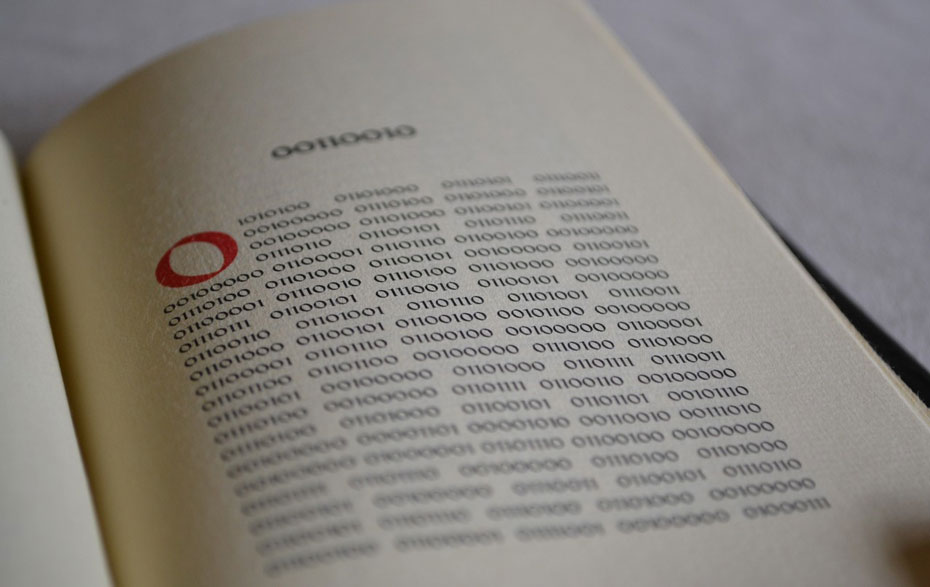
[2b2k] Bookbinding and the Digital Bible

Avi Solomon at BoingBoing has a terrific interview with Michael Greer about the appeal of bookbinding, and about Michael’s “Digital Bible.”

I love the photo:

Digital Bible: Book with ones and zeroes as text

Tweet
Follow me

Categories: libraries, too big to know Tagged with: 2b2k • books • libraries Date: October 17th, 2011 dw

Be the first to comment »

September 23, 2011

Tim Spalding on what libraries can learn from LibraryThing

I’m a huge admirer of LibraryThing for its innovative spirit, ability to scale social interactions, and its adding value to books. So, I was very happy to have a chance to interview Tim Spalding, its founder, for a Library Lab podcast, which is now posted.

Tweet
Follow me

Categories: libraries, too big to know Tagged with: books • library • librarything • podcast Date: September 23rd, 2011 dw

1 Comment »

« Previous Page | Next Page »


Creative Commons License
This work is licensed under a Creative Commons Attribution-NonCommercial-ShareAlike 3.0 Unported License.
TL;DR: Share this post freely, but attribute it to me (name (David Weinberger) and link to it), and don't use it commercially without my permission.

Joho the Blog uses WordPress blogging software.
Thank you, WordPress!