





March 27, 2022
Sunflowers are early risers

Planted four days ago.


 Atom Feed
March 27, 2022
Planted four days ago.
February 17, 2022
There’s Wordle for Jews: Jewdle. There’s Wordle for Star Wars enthusiasts: SWordle. And lord knows how many variants are now online or are being developed by anyone who knows how to edit a word list.
So let’s just get it over with. Here are upcoming versions, some of which probably already exist but I am too lazy to check.
Aordle: Wordle for cardiologists
Boardle: Wordle for millennials taking a break from playing Settlers of Catan
Boredle: Wordle for people playing Wordle
Cawdle: Wordle for crows
Chordle: Wordle rhythm guitarists
Clawdle: Wordle for manicurists
Cordle: Wordle for electricians
Coredle: Wordle for people taking Antarctic ice samples
Corridordle: Wordle for people hanging out in hallways
Crawdle: Wordle for eyes, ear, and throat doctors
Dawdle: Wordle for dillydallyers
Depordle: Wordle for ICE
Doordle: Wordle for doormen/doorpeople
Drawdle: Wordle for gunslingers
Eeyordle: Wordle for depressed people
Floordle: Wordle for linoleum salespeople
Flourdle: Wordle for bakers
Fordle: Wordle for F-150 owners
Fodordle: Wordle for travel advisors
Frodordle: Wordle for hairy-footed denizens of Middle Earth
Glowdle: Wordle for nuclear power plant employees
Growdle: Wordle for people who are cultivating marijuana for personal use
Hoardle: Wordle for hoarders
IOrdle: Wordle for computer engineers
Ignordle: Wordle for people who don’t do Wordle puzzles
Jordle: Wordle for kingdoms bordering Israel
KOrdle: Wordle for boxers
Lordle: Wordle for evangelical Christians
Majordle: Wordle for Army officers
Maordle: Wordle for Chinese Communists
Mayordle: Wordle for leaders of cities
Mayordle: Wordle for lovers of fatty white sandwich condiments
Minordle: Wordle for underrepresented populations
Mordordle: Wordle for the inhabitants of the Dark Kingdom of Middle Earth
Motordle: Wordle for car mechanics
Murdordle: Wordle for serial killers
Nordle: Wordle for Scandinavians
Nordle: Wordle for naysayers
Oordle: Wordle for the over-enthusiastic
Phylordle: Wordle for biological taxonomists
Poordle: Wordle for those who cannot afford a NY Times subscription to do a stupid word game
Pourdle: Wordle for sommeliers
Psuedordle: Wordle for people with imposter syndrome
Repordle: Wordle for journalists
Rappordle: Wordle for empathists
Rupordle: Wordle for the Murdochs
Rumordle: Wordle for gossips
Sawdle: Wordle for carpenters
Slaudle: Wordle for merciless mass killers
Sordle: Wordle for first-time horseback riders
Sprawdle: Wordle for suburban real estate developers
Strawdle: Wordle for scarecrows
Tordle: Wordle for turtle and turtle relatives
Thordle: Wordle for Asgardians
Vaulde: Wordle for gymnasts
Worldle: Wordle for geographers
XORdle: Wordle for machine language programmers
Yordle: Wordle for turtle monarchs
Zoordle: Wordle for imprisoned animals
Zorrordle: Wordle for fencers
The comments are open for your additions. (Note: Keep ’em unhurtful.)
January 31, 2022
Notes for a post:
Plato said (Phaedrus, 265e) that we should “carve nature at its joints,” which assumes of course that nature has joints, i.e., that it comes divided in natural and (for the Greeks) rational ways. (“Rational” here means something like in ways that we can discover, and that divide up the things neatly, without overlap.)
For Aristotle, at least in the natural world those joints consist of the categories that make a thing what it is, and that make things knowable as those things.
To know a thing was to see how it’s different from other things, particularly (as per Aristotle) from other things that they share important similarities with: humans are the rational animals because we share essential properties with other animals, but are different from them in our rationality.
The overall order of the universe was knowable and formed a hierarchy (e.g. beings -> animals -> vertebrates -> upright -> rational) that makes the differences essential. It’s also quite efficient since anything clustered under a concept, no matter how many levels down, inherits the properties of the higher level concepts.
We no longer believe that there is a perfect, economical order of things. “We no longer believe that there is a single, perfect, economical order of things. ”We want to be able to categorize under many categories, to draw as many similarities and differences as we need for our current project. We see this in our general preference for search over browsing through hierarchies, the continued use of tags as a way of cutting across categories, and in the rise of knowledge graphs and high-dimensional language models that connect everything every way they can even if the connections are very weak.
Why do we care about weak connections? 1. Because they are still connections. 2. The Internet’s economy of abundance has disinclined us to throw out any information. 3. Our new technologies (esp. machine learning) can make hay (and sometimes errors) out of rich combinations of connections including those that are weak.
If Plato believed that to understand the world we need to divide it properly — carve it at its joints — knowledge graphs and machine learning assume that knowledge consists of joining things as many different ways as we can.
January 12, 2022
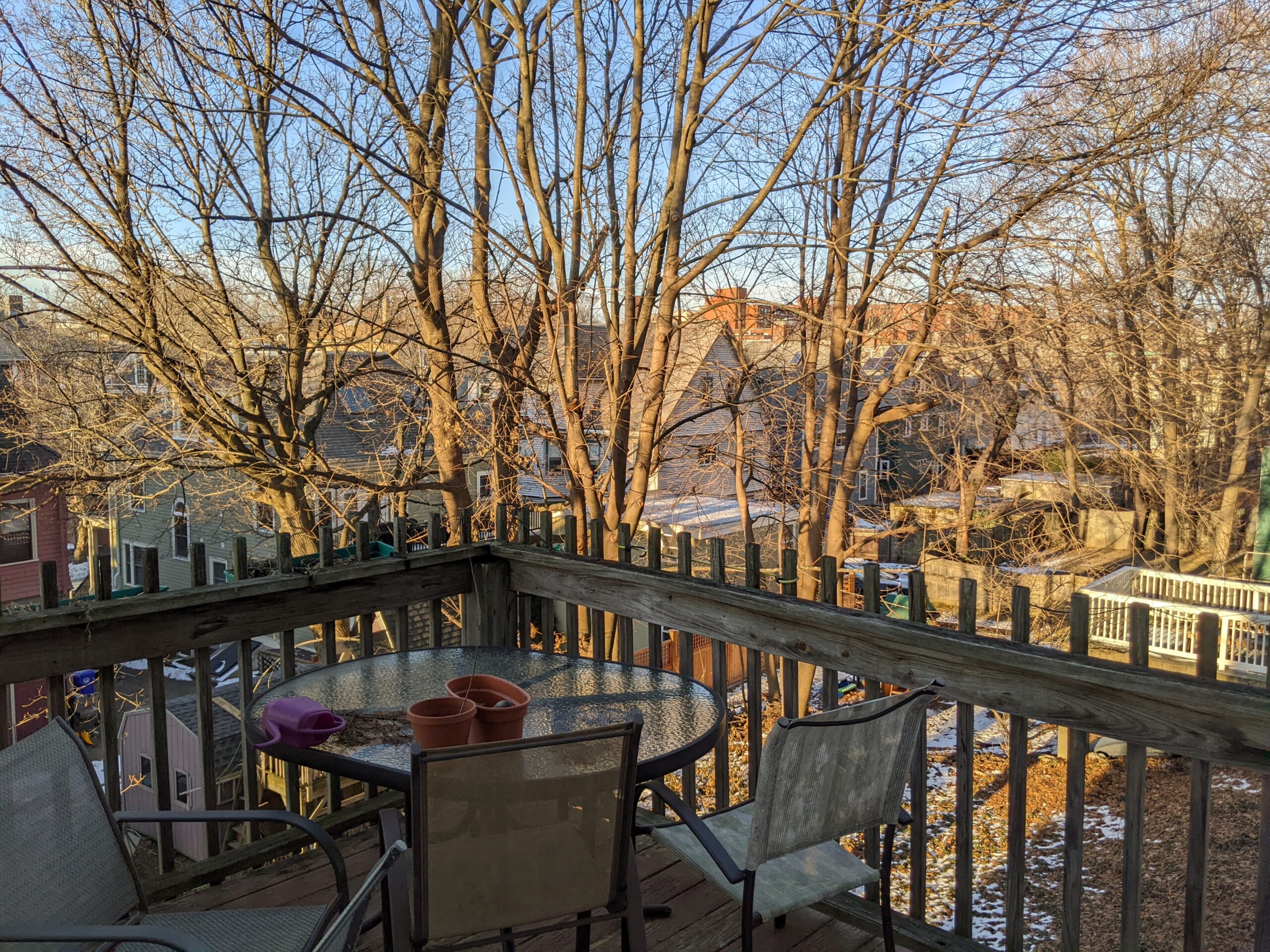
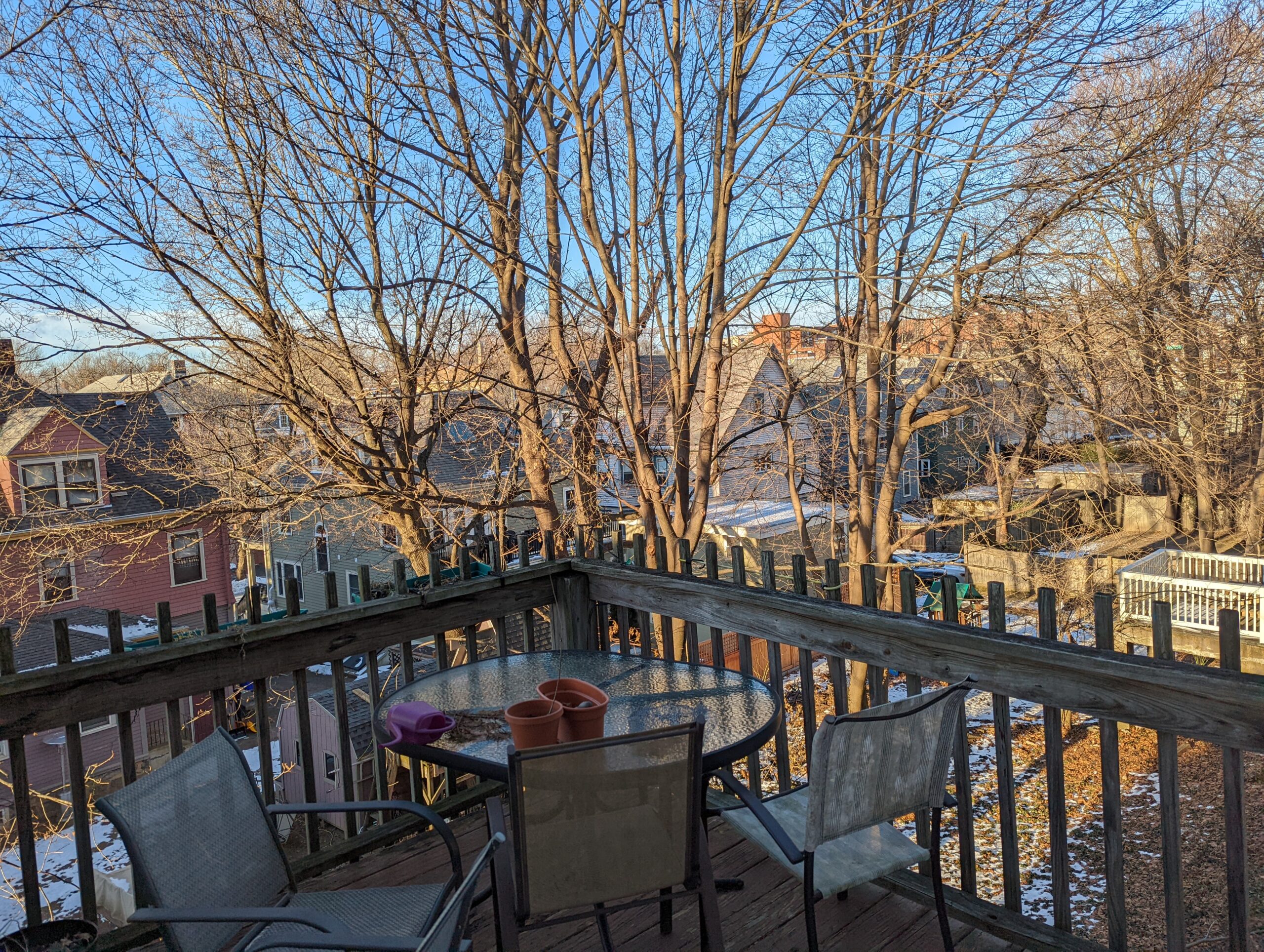
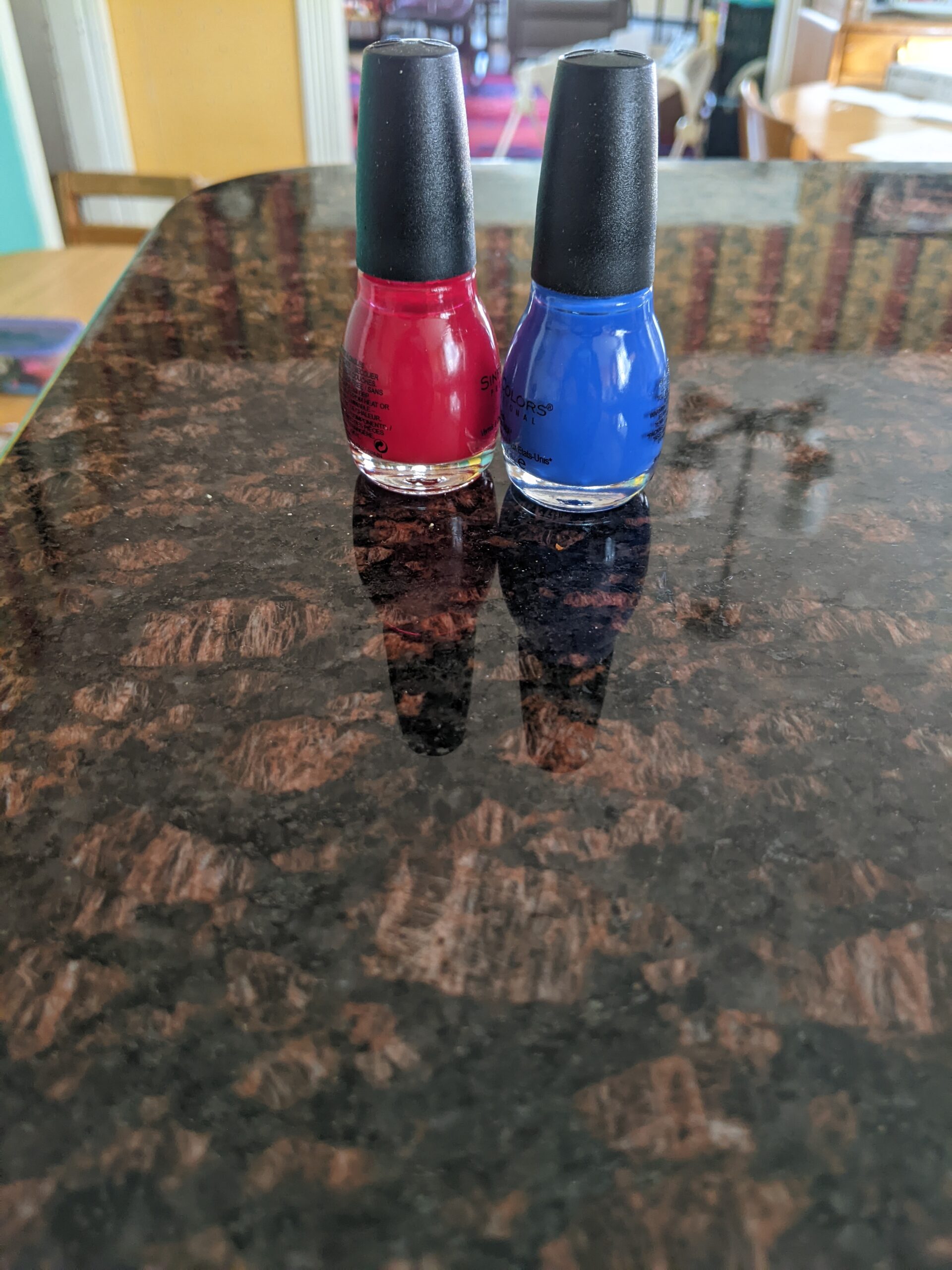
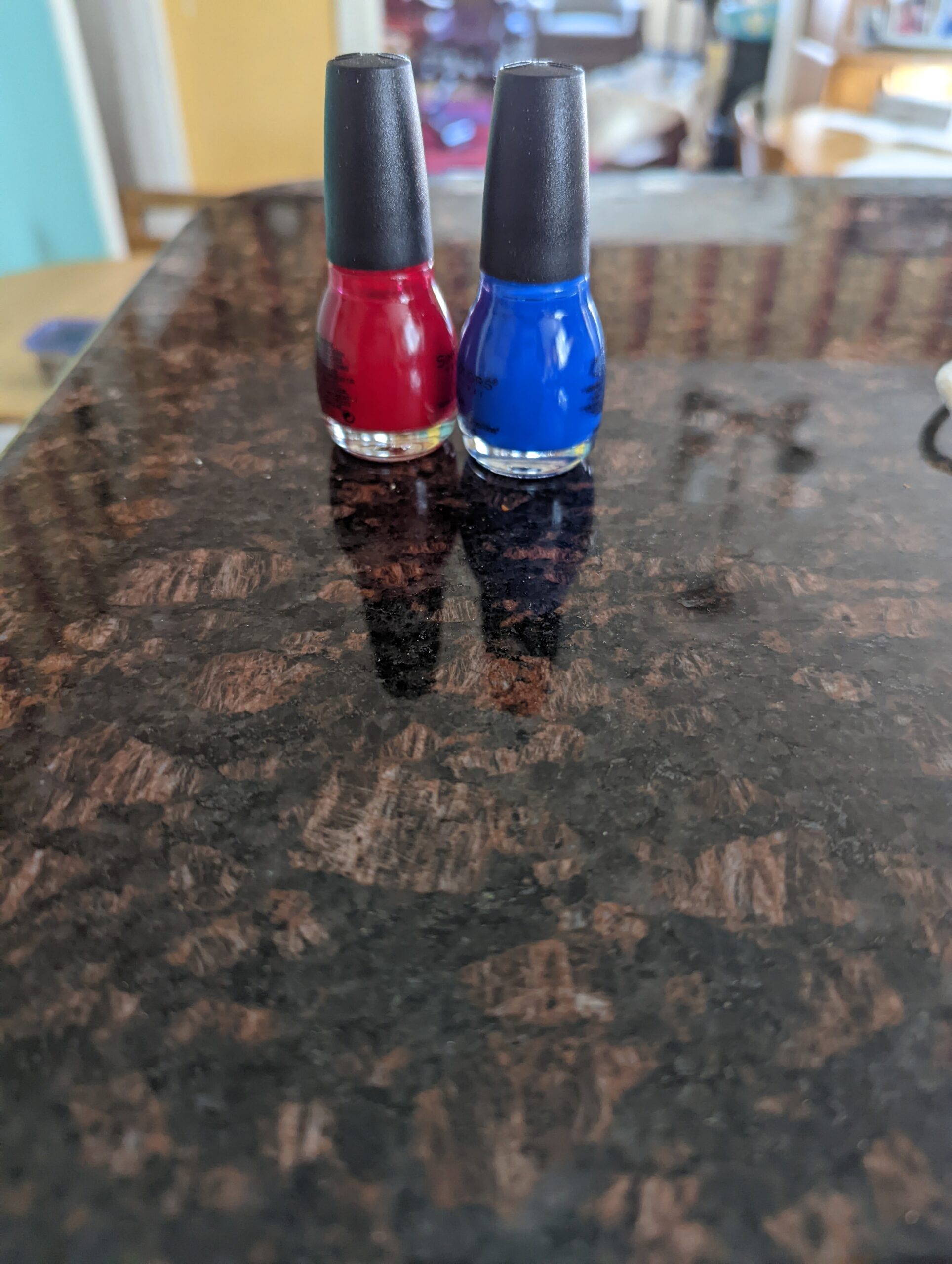
I upgraded to a Pixel 6 because my Pixel 3’s charging plug no longer worked, the glass on the back was shattered, and battery life was down to 2-3 hours. I decided to splurge on the Pro version primarily because of its superior cameras.
But while I loved the photos the 3 takes, I’m wasn’t as happy with the 6 Pro. I don’t know enough about photography to be able to articulate why I liked the 3’s photo better, other than to say the colors and shadows were richer and deeper. The 6’s photos were clearer and more detailed, but I generally just liked the 3’s better.
Then I uploaded three sets of samples into this blog post and discovered that most of the differences were due to the displays on the two phones. Viewing them on my MacBook Pro, I think I probably like the Pixel 6 at least as much as the Pixel 3….except for the photo of the hand below.
Here are unedited photos from each so you can decide for yourself.


December 22, 2021
I do not like writing about the death of friends because it feels foolish to the point of arrogance to pretend to capture what we’ve lost. But I want to talk about Chris, so I will, without pretense of capturing anything at all…
I met Chris Locke, aka Rageboy (RB) aka Kat Herding, in the late 1990s. I was writing a newsletter (“Journal of the Hyperlinked Organization”). He was writing a newsletter (“Entropy Gradient Reversals”). Doc Searls was writing a newsletter (“Reality 2.0”); I can’t find the newsletter, so here’s his blog. Chris thought Doc and I would get along, so he introduced us. The three of us, along with Rick Levine, ended up co-writing The Cluetrain Manifesto, which did well enough to let me give myself permission to call myself a writer. The book changed my life, and much of its success was due to its voice which came straight from Chris.
Chris was a prodigiously talented writer. Here’s a sample of Chris flapping his wings; it may not be the best way of introducing his writing style, but I honestly don’t know what would be. Doc and I figure that he wrote the sample a few months after he was diagnosed with emphysema.
He loved the Internet deeply because it seemed to be an epochal opportunity to break the oppressiveness of industrial capitalism. This in turn mattered to him because he yearned for the release of the creativity and goodness and connection that he was sure every pair of manacled hands was reaching for. (Yes, he and the rest of the Internet hippies like me were wrong about that in important ways. Long discussion for another day.)
Chris was a complicated person. An autodidact. Publicly abrasive and fearless, and sometimes reckless. Privately and personally kind and modest. Undisciplined in some of his writing — a strength as well as a weakness — but highly disciplined in important aspects of his private life. As a self-termed gonzo writer, he likely would have liked to have been Hunter S. Thompson if Thompson hadn’t already taken the job.
Chris was wonderful to hang out with in person, but the Internet friends that gathered around him were a truly intimate social group, supporting him through his long illness, especially it seems to me the women. He and I fell out of touch, to my shame and regret. Nevertheless, his insights about the positive social nature of the Internet were not entirely wrong, at least for him. And his fierce, unrelenting yawp against the dark industrial forces that grind up so many good souls is piercing, needed, and true.
Chris was a character, fully formed yet becoming, his flaws an integral part of his being. I love him, owe him, and miss him.
Twitter: @KatHerding Facebook: @KatHerding
I just read Doc Searls’ superb post about Chris.
Please read Liz Locke’s comment below.

December 17, 2021
As a non-observant Jew embedded in a Modern Orthodox family, here are my rules for when I say “Merry Christmas.”
To someone who wishes me a merry Christmas before or during Hanukkah, I reply, “And a happy Hanukkah to you.” If this counts as waging war on Christmas, I offer no apology.
For the week after Hanukkah, I tell known Jews “I hope you had a happy Hanukkah.”
After that, I say to another Jew, “Have a good holiday season” because there’s no getting around the fact that the Christian slow down of business for a few weeks is very pleasant, even for non-Christians. Perhaps especially for non-Christians.
To someone who has wished me happy holidays, I reciprocate with “And happy holidays to you.”
To someone who wishes me a merry Christmas after Hanukkah, I reply, “Have a happy holiday season,” hoping they take the “season” as rebuke even though no one ever seems to notice.
I have had these rules embossed on a small plastic tablet I carry with me. I plan on offering them for sale sometime around Passover/Easter.
November 30, 2021
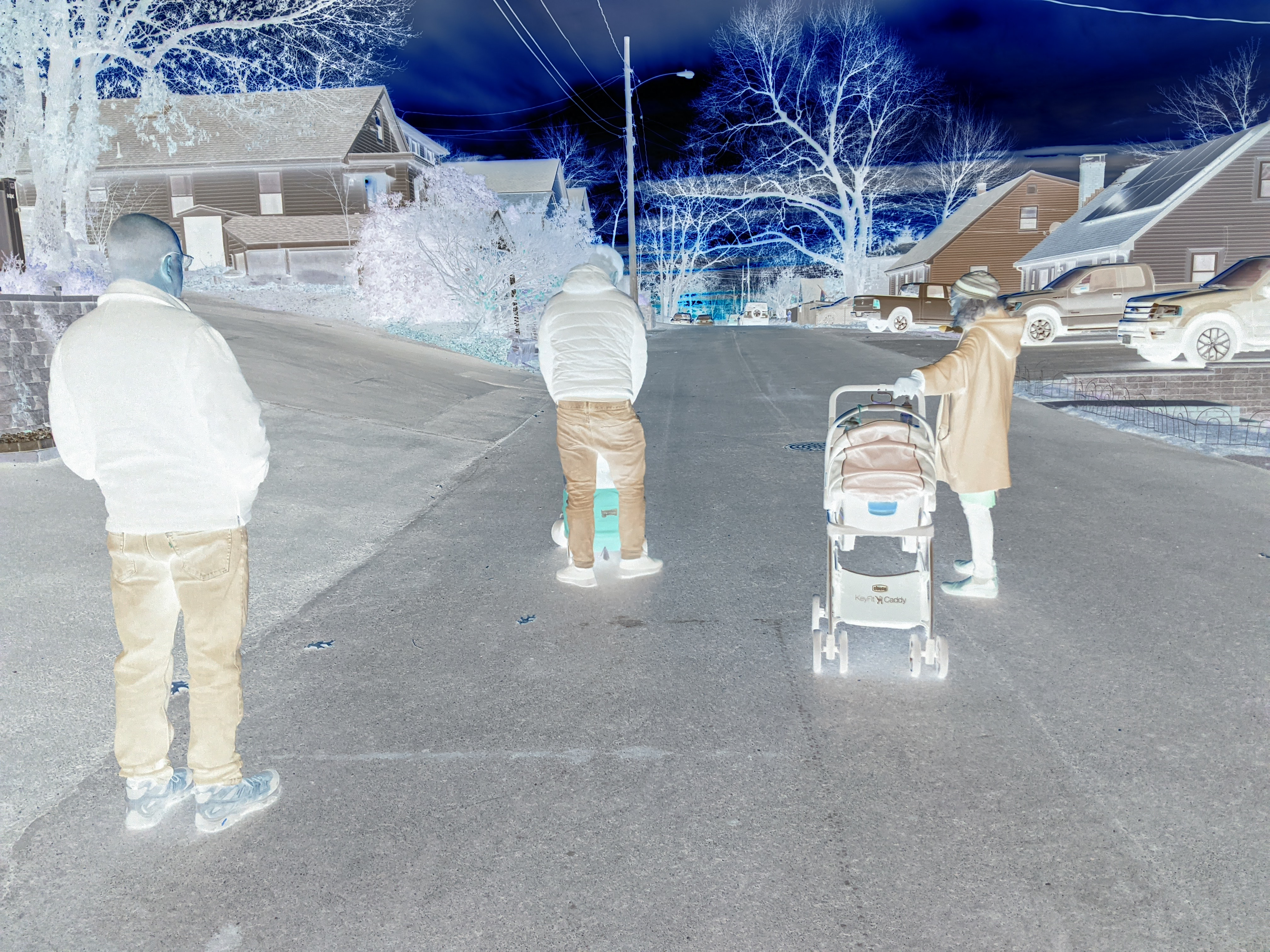
Our 3 year old grandchild was randomly typing on my wife’s Chromebook and somehow made all of the images go wonky. This includes all images displayed in the browser, the system’s wallpaper, and even the icons.
I could not find any mention of this problem anywhere on the Internet, apparently because I insisted on using the word “posterize” to describe the images’ condition. The rest of the world apparently calls this “inverted.” I have been calling inverted images posterized probably since the late 1980s. It has never before steered me wrong. But according to dictionaries and what Google Search has learned from the Internet, I’ve definitely been misusing it.
But first, the solution to the Chromebook problem. I learned this from Iain Tait (@iaintait) who responded to my tweet asking for help. He pointed to this article in Chrome Unboxed. Our granddaughter unwittingly put the Chromebook into “high contrast mode.” Clicking Ctrl+Search+H will undo the little devil’s mischief.
Now, back to how I went wrong.
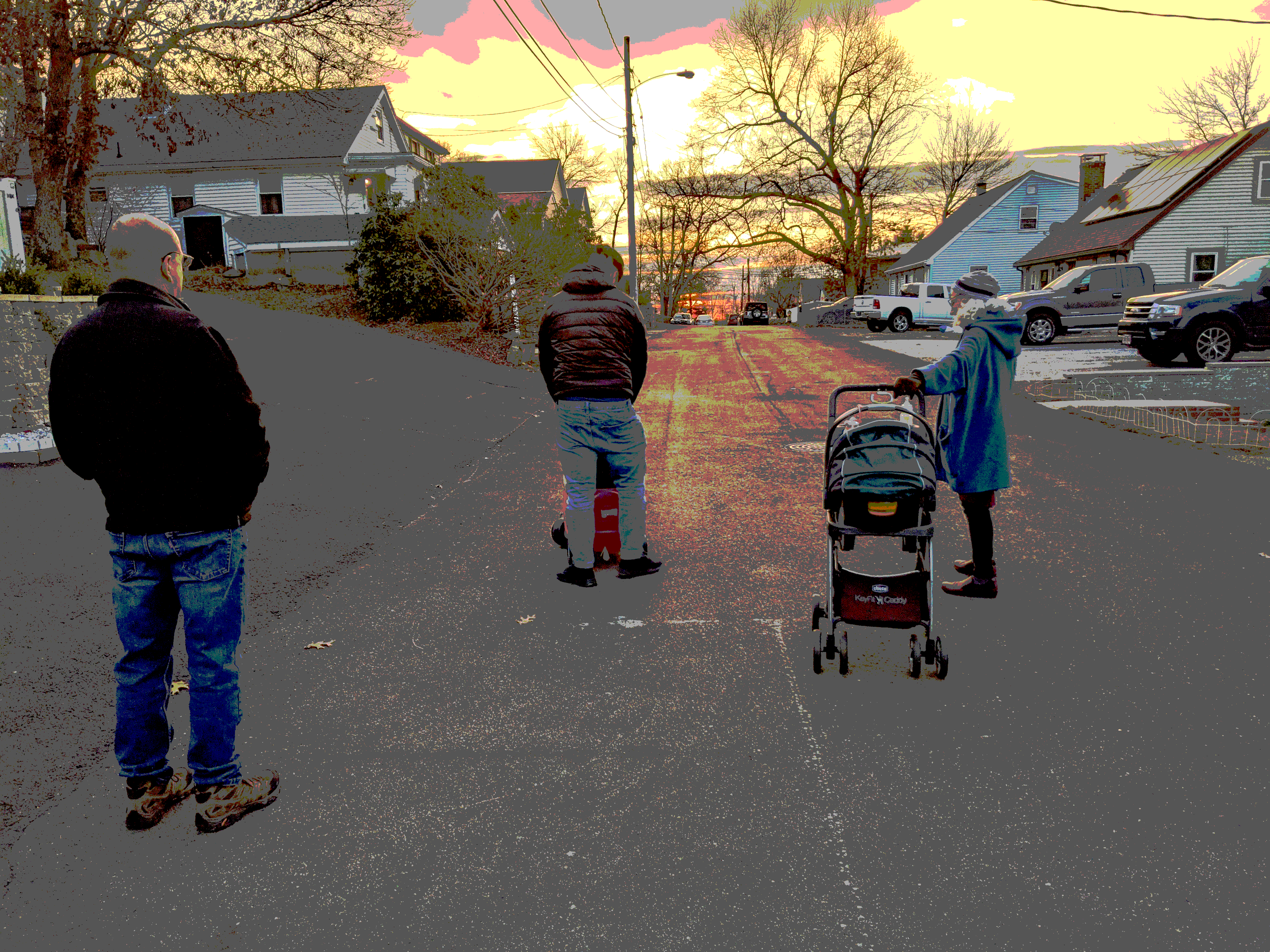
Posterization apparently was coined in the 1950s to refer to the process of turning a color image into the sort of stylized image often used in posters. Gradations in color are flattened, colors are brightened, and so forth, until the image would have been acceptable to The Beatles in their late psychedelic phase. Inversion is a 1:1 clipping of colors so that the original looks like what I think a color negative of it would look like, but I’m probably wrong about that too.
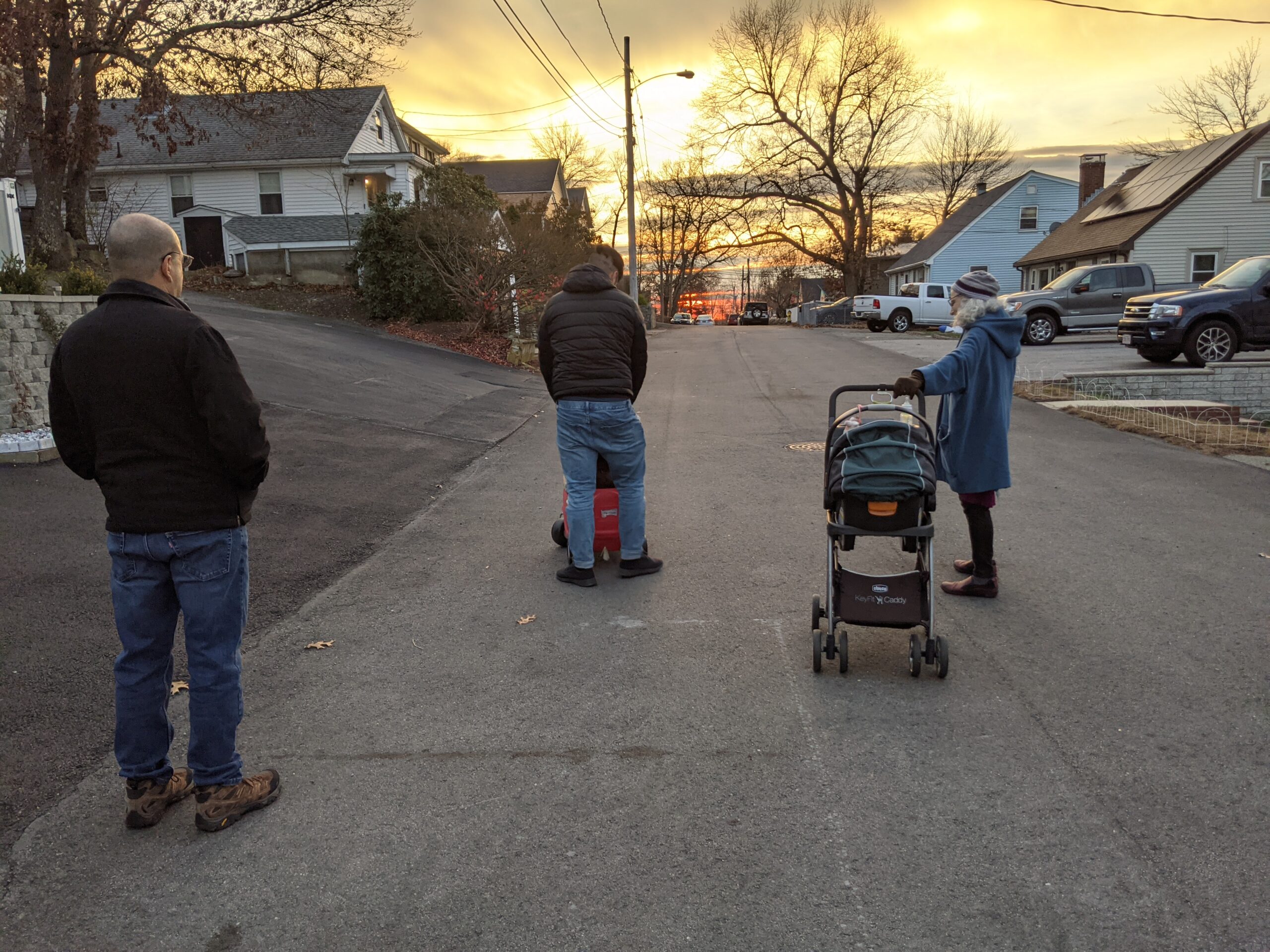
Here’s an example using a photo of our post-Thanksgiving walk (CC-BY-SA-NC by me).
Original:
Posterized:
Inverted:
But the real point of this post is to let Google Search see a few more instances of posterize, posterized, and posterizing in the same sentence as image inversion and Google Chromebooks so that the next fool who confuses posterization and image inversion when faced with an image inverted by Chromebook will find at least one damn entry that clarifies a mistake that apparently no one else has ever made.
Posterize inverted images Chromebook. Posterize inverted images Chromebook. Posterize inverted images Chromebook. Posterize inverted images Chromebook.
(The transformations are by Pixelmator Pro.)
* * *
Isian has written a lovely post about how our paths crossed after many years.
November 15, 2021
Aeon.co has posted an article I worked on for a couple of years. It’s only 2,200 words, but they were hard words to find because the ideas were, and are, hard for me. I have little sense of whether I got either the words or the ideas right.
The article argues, roughly, that the sorts of generalizations that machine learning models embody are very different from the sort of generalizations the West has taken as the truths that matter. ML’s generalizations often are tied to far more specific configurations of data and thus are often not understandable by us, and often cannot be applied to particular cases except by running the ML model.
This may be leading us to locate the really real not in the eternal (as the West has traditional done) but at least as much in the fleeting patterns of dust that result from everything affecting everything else all the time and everywhere.
Three notes:
2. Aeon for some reason deleted a crucial footnote that said that my views do not necessarily represent the views of Google, while keeping the fact that I am a part time, temporary writer-in-residence there. To be clear: My reviews do not necessarily represent Google’s.
3. My original first title for it was “Dust Rising”, but then it became “Trains, Car Wrecks, and Machine Learning’s Ontology” which i still like although I admit it that “ontology” may not be as big a draw as I think it is.
July 11, 2021
Although I am an agnostic, I used to think of myself as a functional atheist: I saw no compelling reason to believe in God (and thus am an agnostic), but I lived my life as if there is certainly no God.
Now I see that I got that backwards. I firmly remain an agnostic, but it turns out there are ways in which I have always experienced the world as if it were a divine creation. I don’t believe my experience is actually evidence either way, but I find it interesting that my agnostic belief has long masked my belief-like experience…
— Continued at Psychology Today
June 12, 2021
A long-time friend and, I’ve learned, a former grocery worker, today on a mailing list posted a brief rant calling people who do not return their grocery carts to the cart corral “moral cretins.” He made exceptions for people parked in handicapped parking spots, but not those who say they cannot leave their children unattended in a car for ten seconds. “Model good behavior,” he enjoins the latter folks.
While I always return my cart —honestly, I do–I felt weirdly compelled to defend those who willfully disobey the cart injunction, even though I understand where my friend is coming from on this issue: non-cart-returning is evidence of a belief that one can just waltz through life without thinking about the consequences of one’s actions, just expecting other “lesser” humans to clean up after you.
Here’s what I wrote:
I want to rise in a weak defense of those who do not return their carts.
While some certainly are moral cretins and self-centered ass-hats, others may believe that the presence of cart wranglers in the parking lot is evidence that the store is providing a cart-return service. “That’s their job, ” these people may be thinking.
Why then does the store give over some parking spaces to cart collection areas? They are there for the convenience of shoppers who are taking carts. It’s up to the cart wranglers to make sure that area is always stocked.
But why then does the store have signs that say, “Please return your carts”? Obviously the “please” means that the store is asking you to volunteer to do their job for them.
Who would interpret a sign that way? Ok, probably moral cretins and self-centered ass-hats
I’m just being a wiseguy in that last sentence. Not only do I know you non-returners are fine people who have good reasons for your behavior, I even understand that there are probably more important things to talk about.

Joho the Blog uses WordPress blogging software.
Thank you, WordPress!