
logo
EverydayChaos
Everyday Chaos
Too Big to Know
Too Big to Know
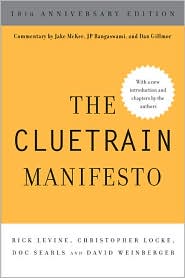
Cluetrain 10th Anniversary edition
Cluetrain 10th Anniversary
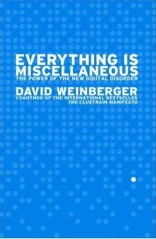
Everything Is Miscellaneous
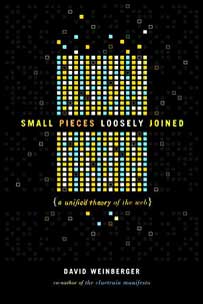
Small Pieces cover
Small Pieces Loosely Joined
Cluetrain cover
Cluetrain Manifesto
My face
Speaker info
Who am I? (Blog Disclosure Form) Copy this link as RSS address Atom Feed

March 28, 2013

[annotation][2b2k] Mediathread

Jonah Bossewich and Mark Philipsonfrom Columbia University talk about Mediathread, an open source project that makes it easy to annotate various digital sources. It’s used in many courses at Columbi, as well as around the world.

NOTE: Live-blogging. Getting things wrong. Missing points. Omitting key information. Introducing artificial choppiness. Over-emphasizing small matters. Paraphrasing badly. Not running a spellpchecker. Mangling other people’s ideas and words. You are warned, people.

It comes from Columbia’s Center for New Media Teaching and Learning. It began with Vital, a video library tool. It let students clip and save portions of videos, and comment on them. Mediathread connects annotations to sources by bookmarking, via a bookmarklet that interoperates with a variety of collections. The bookmarklet scrapes the metadata because “We couldn’t wait for the standards to be developed.” Once an item is in Mediathread, it embeds the metadata as well.

It has always been conceived of a “small-group sharing and collaboration space.” It’s designed for classes. You can only see the annotations by people in your class. It does item-level annotation, as well as regions.

Mediathread connects assignments and responses, as well as other workflows. [He’s talking quickly :)]

Mediathread’s bookmarklet approach requires it to have to accommodate the particularities of sites. They are aiming at making the annotations interoperable in standard forms.

Tweet
Follow me

Categories: interop, liveblog, too big to know Tagged with: 2b2k • annotation • interop • liveblog Date: March 28th, 2013 dw

Be the first to comment »

[annotation][2b2k] Paolo Ciccarese on the Domeo annotation platform

Paolo Ciccarese begins by reminding us just how vast the scientific literature is. We can’t possibly read everything we should. But “science is social” so we rely on each other, and build on each other’s work. “Everything we do now is connected.”

NOTE: Live-blogging. Getting things wrong. Missing points. Omitting key information. Introducing artificial choppiness. Over-emphasizing small matters. Paraphrasing badly. Not running a spellpchecker. Mangling other people’s ideas and words. You are warned, people.

Today’s media do provide links, but not enough. Things are so deeply linked. “How do we keep track of it?” How do we communicate with others so that when they read the same paper they get a little bit of our mental model, and see why we found the article interesting?

Paolo’s project — Domeo [twitter:DomeoTool] — is a web app for “producing, browsing, and sharing manual and semi-automatic (structure and unstructured) annotations, using open standards. Domeo shows you an article and lets you annotate fragments. You can attach a tag or an unstructured comment. The tag can be defined by the user or by a defined ontology. Domeo doesn’t care which ontologies you use, which means you could use it for annotating recipes as well as science articles.

Domeo also enables discussions; it has a threaded msg facility. You can also run text mining and entity recognition systems (Calais, etc.) that automatically annotates the work with those words, which helps with search, understanding, and curation. This too can be a social process. Domeo lets you keep the annotation private or share it with colleagues, groups, communities, or the Web. Also, Domeo can be extended. In one example, it produces information about experiments that can be put into a database where it can be searched and linked up with other experiments and articles. Another example: “hypothesis management” lets readers add metadata to pick out the assertions and the evidence. (It uses RDF) You can visualize the network of knowledge.

It supports open APIs for integrating with other systems., including into the Neuroscience Information Framework and Drupal. “Domeo is a platform.” It aims at supporting rich source, and will add the ability to follow authors and topics, etc., and enabling mashups.

Tweet
Follow me

Categories: interop, liveblog, too big to know Tagged with: 2b2k • annotation • interop • platforms Date: March 28th, 2013 dw

Be the first to comment »

[annotation][2b2k] Neel Smith: Scholarly annotation + Homer

Neel Smith of Holy Cross is talking about the Homer Multitext project, a “long term project to represent the transmission of the Iliad in digital form.”

NOTE: Live-blogging. Getting things wrong. Missing points. Omitting key information. Introducing artificial choppiness. Over-emphasizing small matters. Paraphrasing badly. Not running a spellpchecker. Mangling other people’s ideas and words. You are warned, people.

He shows the oldest extant ms of the Iliad, which includes 10th century notes. “The medieval scribes create a wonderful hypermedia” work.

“Scholarly annotation starts with citation.” He says we have a good standard: URNs, which can point to, for example, and ISBN number. His project uses URNs to refer to texts in a FRBR-like hierarchy [works at various levels of abstraction]. These are semantically rich and machine-actionable. You can google URN and get the object. You can put a URN into a URL for direct Web access. You can embed an image into a Web page via its URN [using a service, I believe].

An annotation is an association. In a scholarly notation, it’s associated with a citable entity. [He shows some great examples of the possibilities of cross linking and associating.]

The metadata is expressed as RDF triples. Within the Homer project, they’re inductively building up a schema of the complete graph [network of connections]. For end users, this means you can see everything associated with a particular URN. Building a facsimile browser, for example, becomes straightforward, mainly requiring the application of XSL and CSS to style it.

Another example: Mise en page: automated layout analysis. This in-progress project analyzes the layout of annotation info on the Homeric pages.

Tweet
Follow me

Categories: interop, libraries, liveblog, too big to know Tagged with: 2b2k • annotation • homer • interop Date: March 28th, 2013 dw

1 Comment »

[annotations][2b2k] Rob Sanderson on annotating digitized medieval manuscripts

Rob Sanderson [twitter:@azaroth42] of Los Alamos is talking about annotating Medieval manuscripts.

NOTE: Live-blogging. Getting things wrong. Missing points. Omitting key information. Introducing artificial choppiness. Over-emphasizing small matters. Paraphrasing badly. Not running a spellpchecker. Mangling other people’s ideas and words. You are warned, people.

He says many Medieval manuscripts are being digitized. The Mellon Foundation is funding many such projects. But these have tended to reinvent the same tech, and have not been designed for interoperability with other projects. So the Digital Medieval Initiative was founded, with a long list of prestigious partners. They thought about what they’d like: distributed, linked data, interoperable, etc. For this they need a shared description format.

The traditional approach is annotate an image of a page. But it can be very difficult to know which images to annotate; he gives as an example a page that has fold-outs. “The naive assuption is that an image equals a page.” But there may be fragments, or only portions of the page have been digitized (e.g., the illuminations), etc. There may be multiple images on a page, revealed by multi-spectral imaging. There may be multiple orientations of the page, etc.

The solution? The canvas paradigm. A canvas is an empty space corresponding to the rectangle (or whatever) of the page. You allow rich resources to be associated with it, and allow users to comment. For this, they use Open Annotation. You can specify a choice of images. You can associate text with an area of the canvas. There are lots of different ways to visualize those comments: overlays, side-by-side, etc.

You can build hybrid pages. For example, and old scan might have a new color scan of its illustrations pointing at it. Or you could have a recorded performance of a piece of music pointing at the musical notation.

In summary, the SharedCanvas model uses open standards (HTML 5, Open Annotation, TEI, etc.) and can be implement distributed across reporsitories, encouraging engagement by domain experts.

Tweet
Follow me

Categories: interop, liveblog, open access, too big to know Tagged with: 2b2k • annotations • interop • open access • standards Date: March 28th, 2013 dw

Be the first to comment »

[annotation][2b2k] Philip Desenne

I’m at a workshop on annotation at Harvard. Philip Desenne is giving one of the keynotes.

NOTE: Live-blogging. Getting things wrong. Missing points. Omitting key information. Introducing artificial choppiness. Over-emphasizing small matters. Paraphrasing badly. Not running a spellpchecker. Mangling other people’s ideas and words. You are warned, people.

We’re here to talk about the Web 3.0, Phil says — making the Web more fully semantic.

Phil says that we need to re-write the definition of annotation. We should be talking about hyper-nota: digital media-rich annotations. Annotations are important, he says. Try to imagine social networks with the ratings, stars, comments, etc. Annotations also spawn new scholarship.

The new dew digital annotation paradigm is the gateway to Web 3.0: connecting knowledge through a common semantic language. There are many annotation tools out there. “All are very good in their own media…But none of them share a common model to interoperate.” That’s what we’re going to work on today. “The Open Annotation Framework” is the new digital paradigm. But it’s not a simple model because it’s a complex framework. Phil shows a pyramid: Create / Search / Seek patterns / Analyze / Publish / Share. [Each of these has multiple terms and ideas that I didn’t have time to type out.]

Of course we need to abide by open standards. He points to W3C, Open Source and Creative Commons. And annotations need to include multimedia notes. We need to be able to see annotations relating to one another, building networks across the globe. [Knowledge networks FTW!] Hierarchies of meaning allow for richer connections. We can analyze text and other media and connect that metadata. We can look across regional and cultural patterns. We can publish, share and collaborate. All if we have a standard framework.

For this to happeb we beed a standardized referencing system for segments or fragments of a work. We also need to be able to export them into standard formats such as XML TEI.

Lots of work has been done on this: RDF Models and Ontologies, the Open Annotiation Community Group, the Open Annotation Model. “The Open Annotation Model is the common language.”

If we don’t adopt standards for annotation we’ll have disassociated, stagnant info. We’ll dereased innovation research, teaching, and learning knowledge. This is especially an issue when one thinks about MOOCs — a course with 150,000 students creating annotations.

Connective Collective Knowledge has existed for millennia he says. As far back as Aristarchus, marginalia had ymbols to allow pointing to different scrolls in the Library of Alexandria. Where are the connected collective knowledge systems today? Who is networking the commentaries on digital works? “Shouldn’t this be the mission of the 21st century library?”

Harvard has a portal for info about annotations: annotations.harvard.edu

Tweet
Follow me

Categories: liveblog Tagged with: 2b2k • annotations • library • platforms Date: March 28th, 2013 dw

3 Comments »

February 5, 2013

[berkman] Diana Kimball: Coding as a Liberal Art

Diana Kimball [twitter:dianakimball] is giving a Berkman lunchtime talk on coding as a liberal art. She’s a Berkman Fellow and at the Harvard Business School. (Here are some of her posts on this topic.)

NOTE: Live-blogging. Getting things wrong. Missing points. Omitting key information. Introducing artificial choppiness. Over-emphasizing small matters. Paraphrasing badly. Not running a spellpchecker. Mangling other people’s ideas and words. You are warned, people.

She says that she’s loved computers since she was a kid. But when she went to Harvard as an undergrad she decided to study history, in part because there’s a natural specialization that happens in college: the students who come in as coders are fantastic at coding, whereas Diana had greater strengths as a writer of prose. She found HTML and programming intimidating. But in her third year, she got interested in coding and Internet culture. She was one of the founders of ROFLcon [yay!]. She got hired by Microsoft after college, as a technical product manager with the Powerpoint team in Silicon Valley. “This was culture shock in the best possible way.”

When she graduated in 2009, she and some friends started found the SnarkMarket blog that considers what the new liberal arts might be (inspired by Kottke). She wrote an essay that’s a proposal for coding and decoding. She reads it. (It’s short.) An excerpt:

Coding and Decoding is about all modes of communication, and all are in its view. But it is built with particular attention to the future, and what that future will be like. Technological experts can seem like magicians, conjuring effects wordlessly. By approaching that magic as a collection of component parts instead of an indivisible miracle, we can learn to see through these sleights of typing hands. In seeing through, we will learn to perform them ourselves; and think, as magicians, about the worlds we will build.

Language, now, is about more than communication. It is the architecture behind much of what we experience. Understanding that architecture will allow us to experience more.

Her boyfriend taught her how to code. They spent a lot of time on it. “He picked up on something I’d said and took it seriously.” After two years at Microsoft, she was enthusiastic, but still a beginner. It wasn’t until she started at Harvard Business School that coding really took off for her. The entrepreneurial atmosphere encouraged her to just do it. Plus, she was more of a geek than most of the other students. “This was great for my identity, and for my confidence.” She also found it a social refuge. “It takes a lot of time to get over the hump.” She refers to Ellen Ullman’s “Close to the Machine” that talks about the utility of being arrogant enough to obsess over a project, cycling back to humility.

She decided to code up her own site for a project for school, even though the team had been given the money to hire devs for the task. Last fall she took the famous CS50 course [Harry Lewis, who created the course in about 1981, is sitting next to me.] CS50 teaches C, targeted at people who are either taking only that one class, or are going to take many more. For her final project, she did a project that used multiple APIs that she was very proud of. She’s also proud of her Ruby projects folder. Each project is something she was trying to teach herself. She’s more proud of the list than the finished products.

“Learning to code means reclaiming patience and persistence and making them your stubborn own.” [nice]

Ideally, everyone should be exposed to programming, starting at 5 yrs old, or even earlier, Diana says. Seymore Papert’s “Mind-Storms” has greatly influenced her thinking about how coding fits into education and citizenship. At a university, it ought to be taken as a liberal art. She quotes Wikipedia’s definition. And if “grammar, rhetoric, and logic were the core of the liberal arts,” then that’s sound like coding. [Hmm.] What the law was to the liberal arts, programming ought to be, i.e., that which you try if you don’t know what else to do with your liberal arts degree.

Why isn’t it seen that way? When computer scientists teach you, they teach they way they learned: at school. But many of the best programmers are self-taught. CS50 does give a variety of assignments, but it’d be better if students solved their own problems much earlier.

But the number one problem is the academic attitude, she says. Students get fixated on the grade, even when it doesn’t matter. Coding is critical for children because debugging is part of it, as Papert says. But grades are based on the endpoints. Coding is much more like life: You’re never done, you can always make it better.

Diana has a proposal. Suppose coding classes were taught like creative writing workshops. Take it whenever you’re ready. Taught by hackers, esepcially autodidacts. It’d vary in substance — algorithms, apis, etc. — and you’d get to choose. You’d get to see something on screen that you’d never seen before And you’d be evaluated on ingenuity and persistence, rather than only on how well your code runs.

She says what her syllabus would look like:

  • Robin Sloan’s novel “Mr. Penumbra’s 24-Hour Bookstore.”

  • Critical study of selected Github pull requests — how open source projects work, how to rise in the community

  • Bring in an API evangelist from an interesting company, maybe bring in two and let

  • Neal Stephenson’s “In the Beginning Was the Command Line“

“Coding should be taught in the same breath as expository writing… Everyone deserves to be exposed to it.” She’s not sure if it should be required.

She quotes Papert: “…the most powerful idea of all is the idea of powerful ideas.” There’s no better example of this, she says, than open source software. And David Foster Wallace’s commencement address: “Learning how to think really means learning to exercise some control over how and what you think…If you cannot exercise this sort of choice in adult life, you will be totally hosed.” Diana says that’s her. She was wrapped up in writing from an early age. She has a running internal commentary. [Join the club!] Coding swaps in a different monologue, one in which she’s inventing thing. That’s the greatest gift: her internal monologue is much more useful and interesting. “If you wanted to be a novelist in 1900, you’d want to be a programmer today.” The experience of creating something that people use is so motivating.

Q&A

Q: Would you be willing to webcast yourself programming and let people join in? I do this all the time when at hackathons. I think, OMG, there must be 10,000 kids in India who want to be here. And so here they are. “Hackers at Berkeley” does this really well.

A: That’s awesome. I want more people to have more access to that experience of sharing.

Q: Are you familiar with RailsBridge — non-computer scientists who are teaching themselves how to code via weekend workshops.

A: RailsBridge is extraordinary. It’s great to see this happening outside of the university context.

A: [me] Great talk, and I’m a humanities major who spends most of his hobby time programming. But aren’t you recommending the thing that you happen to love? And programming as opposed to traditional logic is an arbitrary set of rules…

Q: Yes, but it would be really useful if more people loved it. We could frame it in a way that is exciting for humanities majors. I’m proposing an idea rather than making an airtight argument. “You’re basically right but I don’t really care” (she says laughing :).

Q: I like your idea of teaching it like a writers workshop so that it doesn’t turn into just another course. But I’m not sure that colleges are the best at doing that.

A: not everyone loves programming.

Q: [harry lewis] I take responsibility for eliminating the Harvard requirement for a programming course. Also, take a look at code.org. Third, the academic world treats computer science the way it does because of our disciplinary specialization. That label — computer science — came about in the context of fields like political science, and arose when computers were used not for posting web sites but for putting people on the Moon where a bug could kill someone. The fact that CompSci exists in academic departments will make it very difficult for your vision of computing to exist, just as creative writing is often an uneasy fit into English curricula.

A: That’s very fair. I know it’d be hard. RIT has separate depts for CompSci and coding.

Q: There’s an emergent exploration of coding in Arts schools, with a much more nimble, plug and play approach, very similar to the one you describe. My question: What do the liberal arts have to offer coding? Much of coding is quite new, e.g., open source. These could be understood within a historical context. Maybe these need to be nurtured, explored, broken. Does seeing coding as a liberal art have something to offer sw development?

A: ITP is maybe the best example of artists working with coders. Liberal Arts can teach programmers so much!

Q: Can we celebrate failure? That’d be a crucial part of any coding workshop.

A: Yes! Maybe “find the most interesting bug” and reward introspection about where you’ve gone wrong. But it’s hard in a class like CS50 where you’re evaluating results.

Q: This is known as egoless programming. It’s 40 years old, from Weinberger [no relation].

Q: You’re making a deeper point, which is not just about coding. The important thing is not the knowledge you get, but the way you get there. Being self-reflective about you came about how you learn. You can do this with code but with anything.

A: You’re so right. Introspection about the meta-level of learning is not naturally part of a course. But Ruby is an introspective language: you can ask any object what it is, and it will tell you. This is a great mirror for trying to know yourself better.

Q: What would you pick to teach?

A: I love Ruby. It would be a good choice because there’s a supportive community so students can learn on their own afterwards, and it’s an introspective language. And the lack of ornament in Ruby (no curly braces and little punctuation) makes it much more like English. The logic is much more visible. (My preference is Sinatra, not Rails.)

Q: What sort of time commitment the average person would have to put in to have a basic grasp of a programming language? Adults vs. children learning it?

A: I’d love to see research on this. [Audience: Rottmeyers, CMU (?)] A friend of mine reported he spent 20 hours. The learning curve is very halting at first. It’s hard to teach yourself. It helps to have a supportive in-person environment. CS50 is a 10-20 hour commitment/week and who has that sort of time except for fulltime students? To teach yourself, start out a few hours a time.

Q: How about where the MOOCs are going? Can you do a massively online course in compSci that would capture some of what you’re talking about?

A: The field is so focused on efficiency that MOOCs seem like an obvious idea. I think that a small workshop is the right way to start. CS50 requires so much fear of failure and resilience that it wouldn’t have been a good way for me to start. At CS50, you can’t let others read your code.

Q: We shouldn’t put together Computer Science and programming. Programming is just a layer of expression on top of computer science. You don’t need compSci to become a programmer. And the Net is the new computer; we’re gluing together services from across the Net. That will change how people think about programming because eveyrone will be able to do it. The first language everyone should learn is ifttt.com

Q: I’m a NY Times journalist. I love languages. And I love the analogy you draw. I’m 30. Do you think coding is really essential? Would it open my eyes as a journalist?

A: It’s never too late. If you keep asking the question, you should probably do it. You don’t have to be good at it to get a lot out of it. It’s so cool that your children are learning multiple languages including coding. Learn alongside them.

Tweet
Follow me

Categories: education, liveblog, tech Tagged with: berkman • liveblog • programming • ruby Date: February 5th, 2013 dw

9 Comments »

January 17, 2013

Clay Shirky: Why do comments suck?

At SCS13, Clay Shirky says that “Why do comments suck so bad?” is one of the questions that is perpetually asked in public discussions. So, what’s the answer?

NOTE: Live-blogging. Getting things wrong. Missing points. Omitting key information. Introducing artificial choppiness. Over-emphasizing small matters. Paraphrasing badly. Not running a spellpchecker. Mangling other people’s ideas and words. You are warned, people.

Clay points to YouTube as the “basement” of conversation, even in comments on innocuous videos, but there are sites discussing contentious issues that are quite civil and useful. And Google owns YouTube, and they have lots of money and an Internet sensibility, but still YouTube comments suck.

Explanation #1: The world is filled with trolls. But in fact, some sites with good commenting sections moderate comments, thinking about the commenters as a community, not as individuals asserting “First Amendment” rights.

Explanation #2: “Good. Big. Cheap. Pick two.” YouTube’s scale is “an attractive nuiscance.” If you have a publishing frame, then you want to let as many people in. If you have a community view, you are ok with limiting page views. E.g., Gawker uses an algorithm that features comments based on the richness of the thread. (The lower-ranked comments are still there.)

Explanation #3: “What do you want the users to do?” Publishing sites actually want people to forward the article to a million friends and then read another article. They often relegate the comments to the bottom of the page. E.g., the NYT says “Share your thoughts,” which is incredibly generic. No guidance is given. The result are responses that read like letters to the editor, without interaction or conversation. The NYT gives you actionable info for shows, but not for candidates: no links to their sites, no way to donate, etc. “The NYT is much better at helping consumers plug into markets than citizens to plug into politics.”

Explanation #4. “Institutions dodnot have the full range of either social technical solutions available to them culturally.” They can’t think of their commenters as a community instead of as a way of generating low-cost page views.

Q&A

Clay would like newspapers to have a dashboard of options they can use when constructing commenting sections, each customized to the article.

Q: [Anil Dash] Why ascribe this to ignorance instead of malice. Many of this institutions are served by making their readers look stupid.

Clay: That’s one of my a priori assumptions. I don’t think the individuals making choices are purposefully trying to keep the comments shallow and to prevent collective action. Rather, “letters to the editor” is a comfortable place for them.

Tweet
Follow me

Categories: liveblog, media Tagged with: liveblog • social media Date: January 17th, 2013 dw

1 Comment »

October 22, 2012

[internet librarian] Search tools

Gary Price from Infodocket is moderating a panel on what’s new in search. It’s a panel of vendors

NOTE: Live-blogging. Getting things wrong. Missing points. Omitting key information. Introducing artificial choppiness. Over-emphasizing small matters. Paraphrasing badly. Not running a spellpchecker. Mangling other people’s ideas and words. You are warned, people.


The first speaker is from Blekko.com, which he says “is thought of as the third search engine” in the US market. It features info from authoritative sources. “You don’t want your health information to come from some blog.” When you search for “kate spade” you get authenticated Kate Spade fashion stuff. Slashtags let you facet within a topic, based on expert curation. Users can create their own slashtags. At /webgrep you can ask questions about the corpus that if upvoted the techies at Blekko will answer.


Weblib.com describes itself on its site as “Natural Language Processing Tools and Customizable Knowledge Bases for Semantic Search and Discovery Applications.” Thomas talks about OntoFind and semantic search, which is a search that produces “meaningful results even when the retrieved pages” contain none of the search terms [latent semantic search!]. He points to Google’s Freebase, which has info about 500M entities and their relationships. In a week you’ll be able to try OntoFind at ezu.com, I believe. Searching for big brother and privacy first asks you to disambiguate and then pulls together results.


ScienceScape.com is designed to help scientists follow science. It diagrams publications on a topic, and applies article-level metrics. It’s focused on the undergrad and graduate research markets. It integrates genomic knowledge plus much more. It lets you see the history of science top down, and browse e.g. by date. You can share what you’ve found.

[I couldn’t hear the Q&A well enough to blog it.]

Tweet
Follow me

Categories: liveblog Tagged with: internetlibrarian • liveblog • search Date: October 22nd, 2012 dw

1 Comment »

October 16, 2012

[eim][semtechbiz] Enterprise Linked Data

David Wood of 3RoundStones.com is talking about Callimachus, an open source project that is also available through his company. [NOTE: Liveblogging. All bets on accuracy are off.]

We’re moving from PCs to mobile, he says. This is rapidly changing the Internet. 51% of Internet traffic is non-human, he says (as of Feb 2012). 35hrs of video are uploaded to YouTube every minute. Traditionally we dealt with this type of demand via data warehousing: put it all in one place for easy access. But that’s not true: we never really got it all in one place accessible through one interface. Jeffrey Pollock says we should be talking not about data integration but interoperability because the latter implies a looser coupling.

He gives some use cases:

  • BBC wanted to have a Web presence for all of its 1500 broadcasts per day. They couldn’t do it manually. So, they decided to grab data from the linked open data data cloud and assemble the pages automatically. They hired fulltime editors to curate Wikipedia. RDF enabled them to assuemble the pages.

  • O’Reilly Media switched to RDF reluctantly but for purely pragmatic reasons.

  • BestBuy, too. They used RDFa to embed metadata into their pages to improve their SEO.

  • Elsevier uses Linked Data to manage their assets, from acquisition to delivery.

This is not science fiction, he says. It’s happening now.

Then two negative examples:

  • David says that Microsoft adopted RDF in the late 90s. But Netscape came out a portal tech based on RDF that scared Microsoft out of the standards effort. But they needed the tech, so they’ve reinvented it three times in proprietary ways.

  • Borders was too late in changing its tech.

Then he does a product pitch for Callimachus Enterperise: a content management system for enterprises.

Tweet
Follow me

Categories: everythingIsMiscellaneous, liveblog Tagged with: eim • linked data • semantic web Date: October 16th, 2012 dw

Be the first to comment »

October 11, 2012

[dpla] DPLA afternoon session

It’s the end of the workstream day of the DPLA Midwest meeting. Each of the three workstream meetings is reporting back to the general group.

NOTE: Live-blogging. Getting things wrong. Missing points. Omitting key information. Introducing artificial choppiness. Over-emphasizing small matters. Paraphrasing badly. Not running a spellpchecker. Mangling other people’s ideas and words. You are warned, people.


Emily Gore from the Content stream: What kind of guidance should we develop for interested content providers? The group wants to have a strategic collection development plan draft by the end of December. “What is our role with regard to advocacy” for content currently under copyright? Also, the group talked about the hub pilot project. Various participants in that pilot were in the room.


SJ Klein from the Technical workstream: There was a lively discussion this afternoon, primarily about the design of the front end. How to make the frontend experience help people become contributors? They also talked about the Chatanooga hackathon Nov. 8-9. Tools for making working with metadata easier. Packaging tools that match potential contributors with a hub. Metadata purgatory for metadata that has been contributed but doesn’t meet the standards.


Maureen Sullivan and John Palfrey report on the Governance group: The next steps are to take the barebone by-laws and flesh them out. There were many discussions about whether DPLA the 501(c)(3) should be a membership organization, but the general consensus is no. (Paul Courant made the point that many institutions shy away from becoming members because that makes them liable.) Rather, it would be good to have participation from groups and people with specific areas of expertise. There was a lot of energy about expanding on the statement of principles, including adding an explicit commitment to accessibility. There was strong support for continuing to see the DPLA as a public/private enterprise. John Bracken made the point that DPLA should view itself as a network, not as a heavyweight organization.


Maureen points out that the workstreams have converged. She says that “contributor” seems to be a better word than “member.” We need to be flexible about how people will come together to do the work that’s required. And we should be thinking of ourselves as advocates, a force for change to improve the lives of people in this country and around the world.

Tweet
Follow me

Categories: dpla, liveblog Tagged with: dpla • liveblog Date: October 11th, 2012 dw

3 Comments »

« Previous Page | Next Page »


Creative Commons License
This work is licensed under a Creative Commons Attribution-NonCommercial-ShareAlike 3.0 Unported License.
TL;DR: Share this post freely, but attribute it to me (name (David Weinberger) and link to it), and don't use it commercially without my permission.

Joho the Blog uses WordPress blogging software.
Thank you, WordPress!