logo
EverydayChaos
Everyday Chaos
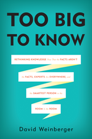
Too Big to Know
Too Big to Know
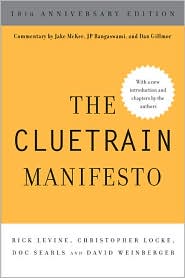
Cluetrain 10th Anniversary edition
Cluetrain 10th Anniversary
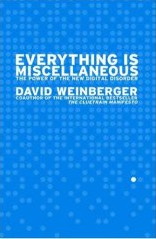
Everything Is Miscellaneous
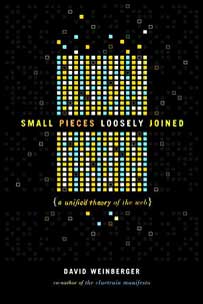
Small Pieces cover
Small Pieces Loosely Joined
Cluetrain cover
Cluetrain Manifesto
My face
Speaker info
Who am I? (Blog Disclosure Form) Copy this link as RSS address Atom Feed

June 22, 2012

12% have borrowed an ebook from their library, but most don’t know they can

A new report from Pew Internet says that most Americans don’t know that they can borrow e-books from their local public libraries, while 12% of e-book readers (16 years and older) have borrowed an e-book from their local public library. (More than 75% of local public libraries in the US do lend out e-books.)

Those who do borrow e-books think the selection is quite good: 16% excellent, 18% very good, and 32% good.

“58% of Americans have a library card, and 69% say that their local library is important to them and their family.”

Lots more of interesting and important data in this report. As always, Pew Internet puts it out for free. Thank you, Pew!

And as a small gesture of thanks, here’s a plug for the new book by Lee Rainie and Barry Wellman Networked: The New Social Operating System. Lee is the head of Pew Internet. I haven’t read it yet, but given its authors, I have a lot of confidence that it’s well worth reading.

Tweet
Follow me

Categories: libraries Tagged with: ebooks • libraries • pew Date: June 22nd, 2012 dw

Be the first to comment »

June 14, 2012

[eim] Ranganathan’s grandson

At the Future Forum conference in Dresden, I had the opportunity to hang out with Ranga Yogeshwar, a well-known television science journalist in Germany. We were deep into conversation at the speakers dinner when I mentioned that I work in a library, and he mentioned that his grandfather had been an earlly library scientist. It turns out that his grandfather was none other than S.R. Ranganathan, the father of library science. Among other things, Ranganathan invented the “Colon Classification System” (worst name ever) that uses facets to enable multiple simultaneous classifications, an idea that really needed computers to be fulfilled. Way ahead of his time.

So, the next day I took the opportunity to stick my phone in Ranga’s face and ask him some intrusive, personal questions about his grandfather:

Tweet
Follow me

Categories: everythingIsMiscellaneous, libraries, podcast Tagged with: everything is miscellaneous • libraries • ranganathan Date: June 14th, 2012 dw

1 Comment »

June 11, 2012

DPLA West meeting online

The sessions from the DPLA Plenary meeting on April 27 in SF are now online. Here’s the official announcement:

…all media and work outputs from the two day-long events that made up DPLA West–the DPLA workstream meetings held on April 26, 2012 at the San Francisco Public Library, and the public plenary held on April 27, 2012 at the Internet Archive in San Francisco, CA–are now available online on the “DPLA West: Media and Outputs” page:http://dp.la/get-involved/events/dplawest/dpla-west-media-and-outputs/.

There you will find:

  • Key takeaways from the April 26, 2012 workstream meetings;

  • Notes from the April 27, 2012 Steering Committee meeting;

  • Complete video of the April 27, 2012 public plenary;

  • Photographs and graphic notes from the public plenary;

  • Video interviews with DPLA West participants;

  • And audio interviews with DPLA West scholarship recipients.

More information about DPLA West can be found online at http://dp.la/get-involved/events/dplawest/.

Folks from the Harvard Library Innovation Lab and the Berkman Center worked long and hard to create a prototype software platform for the DPLA in time for this event. The platform is up and gives live access to about 20M books and thousands of images and other items from various online collections. The session at which we introduced, explained, and demo’ed it is now available for your viewing pleasure. (I was interim head of the project.)

Tweet
Follow me

Categories: dpla, libraries Tagged with: apis • dpla • libraries • platform Date: June 11th, 2012 dw

Be the first to comment »

June 9, 2012

Bake sale for NASA

More than a dozen universities are holding bake sales for NASA. The aim is to raise awareness, not money.

To me, NASA is a bit like a public library: No matter what, you want your town and your country to visibly declare their commitment to the value of human curiosity.


In other science news, attempts to replicate the faster-than-light neutrino results have confirmed that the spunky little buggers obey the universal traffic limit.

The system works! Even if you don’t screw in the optical cables tightly.

Tweet
Follow me

Categories: libraries, science Tagged with: libraries • nasa • science Date: June 9th, 2012 dw

Be the first to comment »

June 6, 2012

1,000 downloads

I learned yesterday from Robin Wendler (who worked mightily on the project) that Harvard’s library catalog dataset of 12.3M records has been bulk downloaded a thousand times, excluding the Web spiderings. That seems like an awful lot to me, and makes me happy.

The library catalog dataset comprises bibliographic records of almost all of Harvard Library’s gigantic collection. It’s available under a CC 0 public domain license for bulk download, and can be accessed through an API via the DPLA’s prototype platform. More info here.

Tweet
Follow me

Categories: dpla, libraries, open access Tagged with: dpla • library • metadata • open access Date: June 6th, 2012 dw

1 Comment »

April 27, 2012

[2b2k] Libraries are platforms?

I’m at the DPLA Plenary meeting, heading toward the first public presentation — a status report — on the prototype DPLA platform we’ve been building at Berkman and the Library Innovation Lab. So, tons of intellectual stimulation, as well as a fair bit of stress.

The platform we’ve been building is a software platform, i.e., a set of data and services offered through an API so that developers can use it to build end-user applications, and so other sites can integrate DPLA data into their sites. But I’ve been thinking for the past few weeks about ways in which libraries can (and perhaps should) view themselves as platforms in a broader sense. I want to write about this more, but here’s an initial set of draft-y thoughts about platforms as a way of framing the library issue.

Libraries are attached to communities, whether local towns, universities, or other institutions. Traditionally, much of their value has been in providing access to knowledge and cultural objects of particular sorts (you know, like books and stuff). Libraries thus have been platforms for knowledge and culture: they provide a reliable, open resource that enable knowledge and culture to be developed and pursued.

As the content of knowledge and culture change from physical to digital (over time and never completely), perhaps it’s helpful to think about libraries in their abstract sense as platforms. What might a library platform look like in the age of digital networks?(An hour later: Note that this type of platform would be very different from what we’re working on for the DPLA.)

It would give its community open access to the objects of knowledge and culture. It would include physical spaces as a particularly valuable sort of node. But the platform would do much more. If the mission is to help the community develop and pursue knowledge and culture, it would certainly provide tools and services that enable communities to form around these objects. The platform would make public the work of local creators, and would provide contexts within which these works can be found, discussed, elaborated, and appropriated. It would provide an ecosystem in which ideas and conversations flow out and in, weaving objects into local meanings and lives. Of course it would allow the local culture to flourish while simultaneously connecting it with the rest of the world — ideally by beginning with linking it into other local library platforms.

This is obviously not a well-worked out idea. It also contains nothing that hasn’t been discussed for decades now. What I like about it (at least for now) is that a platform provides a positive metaphor for thinking about the value of libraries that both helps explain their traditional value, and their opportunity facing the future.

DPLA session beginning. Will post without rereading… (Hat tip to Tim O’Reilly who has been talking about government as a platform for a few years now.) (Later: Also, my friend and DPLA colleague Nate Hill blogged a couple of months ago about libraries as local publishing platforms.)

Tweet
Follow me

Categories: libraries, too big to know Tagged with: 2b2k • libraries Date: April 27th, 2012 dw

3 Comments »

April 24, 2012

[2b2k][everythingismisc]”Big data for books”: Harvard puts metadata for 12M library items into the public domain

(Here’s a version of the text of a submission I just made to BoingBong through their “Submitterator”)

Harvard University has today put into the public domain (CC0) full bibliographic information about virtually all the 12M works in its 73 libraries. This is (I believe) the largest and most comprehensive such contribution. The metadata, in the standard MARC21 format, is available for bulk download from Harvard. The University also provided the data to the Digital Public Library of America’s prototype platform for programmatic access via an API. The aim is to make rich data about this cultural heritage openly available to the Web ecosystem so that developers can innovate, and so that other sites can draw upon it.

This is part of Harvard’s new Open Metadata policy which is VERY COOL.

Speaking for myself (see disclosure), I think this is a big deal. Library metadata has been jammed up by licenses and fear. Not only does this make accessible a very high percentage of the most consulted library items, I hope it will help break the floodgates.

(Disclosures: 1. I work in the Harvard Library and have been a very minor player in this process. The credit goes to the Harvard Library’s leaders and the Office of Scholarly Communication, who made this happen. Also: Robin Wendler. (next day:) Also, John Palfrey who initiated this entire thing. 2. I am the interim head of the DPLA prototype platform development team. So, yeah, I’m conflicted out the wazoo on this. But my wazoo and all the rest of me is very very happy today.)

Finally, note that Harvard asks that you respect community norms, including attributing the source of the metadata as appropriate. This holds as well for the data that comes from the OCLC, which is a valuable part of this collection.

  • Press release

  • Harvard’s Open Metadata policy

  • NY Times coverage

  • API info

  • OCLC’s blog post – Thank you, OCLC

Tweet
Follow me

Categories: everythingIsMiscellaneous, libraries, open access, too big to know Tagged with: 2b2k • everythingIsMiscellaneous • library • marc21 • metadata Date: April 24th, 2012 dw

17 Comments »

April 15, 2012

Timbuktu librarians, scholars, and citizens preserving ancient documents and Islamic heritage

On April 1, rebels overran Timbuktu, so, according to a Reuters article, librarians, scholars, and citizens in this important site of Islamic learning are hiding away thousands of irreplaceable manuscripts. “Estimates for the total number of historic documents in the city, some of them from the 13th century, range from 150,000 to five times that number,” says Pascal Fletcher, the article’s author.

In fact, citizens lined up to deny armed rebels access to the archives where 20,000 ancient manuscripts are stored.

From the article:

ome texts were stashed for generations under mud homes and in desert caves by proud Malian families who feared they would be stolen by Moroccan invaders, European explorers and then French colonialists. Now many fear the rampaging rebels, who carry AK-47s instead of muskets, lances and swords.

Brittle, written in ornate calligraphy, and ranging from scholarly treatises to old commercial invoices, the documents represent a compendium of learning on everything from law, sciences and medicine to history and politics. Some experts compare them in importance to the Dead Sea Scrolls.

(I came across this article in the really useful aggregation site Library News, which (disclosure) comes out of our Harvard Library Innovatino Lab.)

Tweet
Follow me

Categories: culture, libraries Tagged with: archives • islam • libraries Date: April 15th, 2012 dw

Be the first to comment »

March 18, 2012

Local libraries are the 99%

Yeah yeah, not everyone uses them. But they could. Libraries are a statement of a community’s commitment to the 99%.

Tweet
Follow me

Categories: libraries Tagged with: libraries Date: March 18th, 2012 dw

2 Comments »

February 13, 2012

[2b2k] BibSoup is in beta

Congratulations to the Open Knowledge Foundation on the launch of BibSoup, a site where anyone can upload and share a bibliography. It’s a great idea, and an awesome addition to the developing knowledge ecosystem.

Tweet
Follow me

Categories: libraries, too big to know Tagged with: 2b2k • dpla • library • metadata Date: February 13th, 2012 dw

Be the first to comment »

« Previous Page | Next Page »


Creative Commons License
This work is licensed under a Creative Commons Attribution-NonCommercial-ShareAlike 3.0 Unported License.
TL;DR: Share this post freely, but attribute it to me (name (David Weinberger) and link to it), and don't use it commercially without my permission.

Joho the Blog uses WordPress blogging software.
Thank you, WordPress!