logo
EverydayChaos
Everyday Chaos
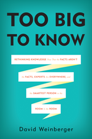
Too Big to Know
Too Big to Know
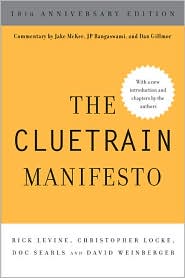
Cluetrain 10th Anniversary edition
Cluetrain 10th Anniversary
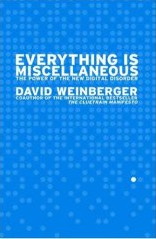
Everything Is Miscellaneous
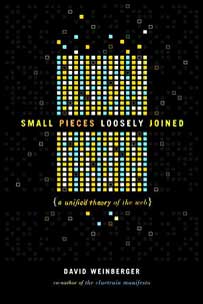
Small Pieces cover
Small Pieces Loosely Joined
Cluetrain cover
Cluetrain Manifesto
My face
Speaker info
Who am I? (Blog Disclosure Form) Copy this link as RSS address Atom Feed

February 13, 2011

The size of an update

I enjoyed this explanation of how Google updates Chrome faster than ever by cleverly only updating the elements that have changed. The problem is that software in executable form usually uses spots in memory that are hard-coded into it: Instead of saying “Take the number_of_miles_traveled and divide it by number_of_gallons_used…”, it says “Take the number stored at memory address #1876023…” (I’m obviously simplifying it.) If you insert or delete code from the program, the memory addresses will probably change, so that the program is now looking in the wrong spot for the numbers of miles traveled, and for instructions about what to do next. You can only hope that the crash will be fast and while in the presence of those who love you.

So, I enjoyed the Chrome article for a few reasons.

First, it was written clearly enough that even I could follow it, pretty much.

Second, the technique they use is not only clever, it bounces between levels of abstraction. The compiled code that runs on your computer generally is at a low level of abstraction: What the programmer thinks of as a symbol (a variable) such as number_of_miles_traveled gets turned into a memory address. The Chrome update system reintroduces a useful level of abstraction.

Third, I like what this says about the nature of information. I don’t think Courgette (the update system) counts as a compression algorithm, because it does not enable fewer bits to encode more information, but it does enable fewer bits to have more effect. Or maybe it does count as compression if we consider Chrome to be not a piece of software that runs on client computers but to be a system of clients connected to a central server that is spread out across both space and time. In either case, information is weird.
Tweet
Follow me

Categories: infohistory, tech Tagged with: chrome • compression • courgette • google • updates Date: February 13th, 2011 dw

1 Comment »

January 31, 2011

We are the medium

I know many others have made this point, but I think it’s worth saying again: We are the medium.

I don’t mean this in the sense that we are the new news media, as when Dan Gillmor talks about “We the Media.” I cherish Dan’s work (read his latest: Mediactive), but I mean “We are the medium” more in McLuhan’s “The medium is the message” sense.

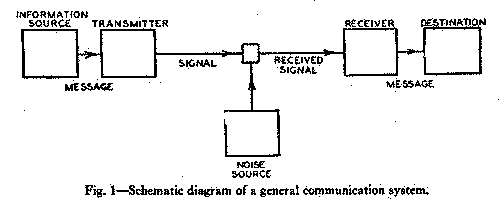
McLuhan was reacting against information science’s view of a medium as that through which a signal (or message) passes.

shannon's communication diagram

Information science purposefully abstracted itself from every and any particular medium, aiming at theories that held whether you were talking about tin can telephones or an inter-planetary Web. McLuhan’s pushback was: But the particularities of a medium do count. They affect the message. In fact, the medium is the message!

I mean by “We are the medium” something I think we all understand, although the old way of thinking keeps intruding. “We are the medium” means that, quite literally, we are the ones through whom information, messages, news, ideas, videos, and links of every sort move — and they move through this “channel” because we decide to move them. Someone sends me a link to a funny video. I tweet about it. You see it. You send a Facebook message to your friends. One of them (presumably an ancient) emails it to more friends. The video moves through us. Without us, the transport medium —” the Internet — is a hyperlinked collection of inert bits. We are the medium.

Which makes McLuhan’s aphorism more true than ever. In tweeting about the video, I am also tweeting about myself: “This is the sort of thing I find funny. Don’t I have a great sense of humor? And I was clever enough to find it. And I care enough about you— and about my reputation — to send it out to you.” That’s 51 characters over the the Twitter limit, but it’s clearly embedded in my tweet.

Although there are a thousand ways “We are the medium” is wrong, I think what’s right about it matters:

  • Because we are the medium, one-way announcements, such as a tweet to thousands of followers, still has a conversational element. We may not be able to tweet back and expect an answer, but we we can pass it around, which is a conversational act.

  • Because we are the medium, news is no longer mere information. In forwarding the item about the Egyptian protestor or about the Navy dealing well with a gay widower, I am also saying something about myself. That’s why we are those that formerly were known as the audience: not just because we can engage in acts of journalism without a newspaper behind us, but because in becoming the medium through which news travels, some of us travels with every retweet.

  • Because we are the medium, fame on the Net is not simply being known by many because your image was transmitted many times. Rather, if you’re famous on the Internet, it’s because we put ourselves on the line by forwarding your image, your video, your idea, your remix. We are the medium that made you famous.

It is easy to slip back into the old paradigm in which there is a human sender, a message, a medium through which it travels, and a human recipient. It’s easy because that’s an accurate abstraction that is sometimes useful. It’s easy because the Internet is also used for traditional communication. But what is distinctive and revolutionary about the Internet is the failure of the old diagram to capture what so often is essential: We are not users of the medium, and we are not outside of the medium listening to its messages. Rather, we are the medium.

Tweet
Follow me

Categories: infohistory, journalism, media, too big to know Tagged with: communications • information • journalism • mcluhan • media • medium Date: January 31st, 2011 dw

42 Comments »

January 13, 2011

If we had called it the Age of Patterns instead of the Age of Information

Claude Shannon, a father of Information Science, had to call the differences that move through telephone wires something. He picked “information,” a term that had meant, roughly, something that you hadnt known, or the content of written tables. Had he called it “data,” or “patterns,” or “differences,” or “Arthur,” we would have skipped right past one of the false continuities: from information to knowledge. We would have had the Age of Patterns, characterized by an abundance of patterns of difference, and we wouldn’t have thought that that has anything much at all to do with knowledge. But, because traditional information had something to do with expanding what we know, we tricked ourselves into thinking that our modern technology is about making us smarter. With an abundance of information, it seems we must be gaining more knowledge. With an abundance of patterns, or differences, or of arthurs, it would not have seemed so.

The new age is one of connection. This is less misleading, for it has us looking for its effect on how we connect with one another, how we connect our ideas, and how we connect our connections. And these are, I believe, the right places to be looking.

Tweet
Follow me

Categories: infohistory, too big to know Tagged with: 2b2k • info Date: January 13th, 2011 dw

22 Comments »

November 18, 2010

[defrag] JP Rangaswami

JP Rangaswami begins by talking about watching Short Circuit in 1986. Robots only have information and energy as inputs. What if we thought about humans as having the same inputs, JP wonders.

NOTE: Live-blogging. Getting things wrong. Missing points. Omitting key information. Introducing artificial choppiness. Over-emphasizing small matters. Paraphrasing badly. Not running a spellpchecker. Mangling other people’s ideas and words. You are warned, people.

Think about cooking as the predigesting of food — making it easier for food to be digested. Cooks prepare food in external stomachs. Our brains evolved because we discovered how to cook. Can we look at information that way?

We talk about info overload, but not food overload. Having too much food isn’t a problem so long as we make sure that people have access to the excess. As JP thought trhough the further analogies between info and food, he realized there were three schools of how to prepare food. 1. The extraction school divides and extracts food, and serves them separately. 2. Another ferments food. You put foods together, and something new occurs. 3. Raw food is like the Maker generation of information: I want to fiddle with it myself, and I need to know that it came without additives.

We can think about what we do with information using these three distinctions. Some of us will work with the raw data. Some of us will prefer that others do that for us. Information should learn from food that it needs a sell-by date. E.g., look at how the media use Twitter. Twitter is a different type of food — more like raw — than you get through the institutional delivery methods.

Should we have an information diet? Would watching a single news outlet be the intellectual equivalent of the Morgan Spurlock “Supersize Me” movie? Maybe information overload is a consumption problem. We need to learn what is good for us, what is poison, what will make us unhealthy…

Tweet
Follow me

Categories: culture, infohistory, liveblog Tagged with: defrag • food • information • jp rangaswami Date: November 18th, 2010 dw

1 Comment »

« Previous Page


Creative Commons License
This work is licensed under a Creative Commons Attribution-NonCommercial-ShareAlike 3.0 Unported License.
TL;DR: Share this post freely, but attribute it to me (name (David Weinberger) and link to it), and don't use it commercially without my permission.

Joho the Blog uses WordPress blogging software.
Thank you, WordPress!