


logo
EverydayChaos
Everyday Chaos
Too Big to Know
Too Big to Know
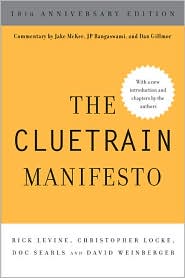
Cluetrain 10th Anniversary edition
Cluetrain 10th Anniversary
Everything Is Miscellaneous
Small Pieces cover
Small Pieces Loosely Joined
Cluetrain cover
Cluetrain Manifesto
My face
Speaker info
Who am I? (Blog Disclosure Form) Copy this link as RSS address Atom Feed

March 22, 2011

[berkman] Larisa Mann on copyright colonialism

Larisa Mann (AKA DJ Ripley), a doctoral candidate at Berkeley Law, is giving a Berkman talk titled “Decolonizing copyright: Jamaican street dances and globally networked technology.” [I had to talk a phone call during the first ten minutes :( ]

NOTE: Live-blogging. Getting things wrong. Missing points. Omitting key information. Introducing artificial choppiness. Over-emphasizing small matters. Paraphrasing badly. Not running a spellpchecker. Mangling other people’s ideas and words. You are warned, people.

Her question: Does globally networked technology and/or copyright law reinforce the coloniality of power? She explicitly takes coloniality as undesirable because it unequally distributes power. She is looking particularly at Jamaica. Copyright law is colonial in Jamaica, she says, since it was written by the British for their colony.

There are culturally specific assumptions at work in copyright law: that there are discrete, identifiable, individual authors who are separate from consumers, it’s about originality, and works are “fixed” (discrete and identifiable).

An example. A riddim is the instrumental part of a song, Larissa says. Riddims circulate independently from vocals in Jamaica. They’ve been recorded since the 1950s, if not before. Many songs use the same riddim. One site has cataloged 279 songs that use the Stalag 17 riddim, for example.

DJs will play series of songs using the same riddim, which many dancers like since they know what’s coming. Riddims become “shared cultural knowledge,” she says. People know them by name. They recognize the samples in songs. Riddims create shared knowledge and enable engagement with the current musical environment.

But riddims contradict copyright: shared, repeated, unoriginal. “Technology can bring copyright law considerations into people’s daily practices.” Law gets embedded into tech. But this can disrupt valuable cultural practices, like riddims.

Dancers have become among the most highly discussed and famous in Jamaica, at least in part due to the availability of video. E.g., videos of the Boasy Tuesday party are online, and you can learn the dances from it. People become famous from these videos.

The good side of network tech is that it eases circulation, you can achieve international fame, and it can increase your local reputation. And in Jamaica, financial and social relationships overlap.

The bad side is that there’s more surveillance, both of daily life and of the circulation of audio/video materials. This can lead to lawsuits that could discourage practices such as sampling or using riddims.

“Exilic spaces” are spaces at the margins of law. That’s where a lot of culture lives, and where there’s a lot of potential for equality.

Q: Has there been any move to change Jamaican copyright law?
A: In 1993, when Jamaica joined the WTO, they rewrote their copyright law to be aligned with the WTO approach. There’s some pushback at WIPO where some Southern countries are trying to get a developing world agenda. Jamaica is not a part of that. And it would be a tremendous problem for Jamaica to withdraw from the WTO.

Q: The sound systems and crews also contribute to the music…

A: Producing CDs to sell the music isn’t an important part of the Jamaican music scene. The sounds and crews were often associated with liquor stores, and made their money that way. It’s still the case that they generally don’t generate money by selling recordings but through events.

Q: If you’re a music producer in Jamaica and would like to have your artist go for the big money, are you pro or con copyright?
A: I’ve spoken with many, and they’re divided. If people want to buy recordings, they tend to buy unlicensed mix CDs. Producers both want a cut and want their artists’ names to be known. (Artists frequently put their producers’ names into their music so others can find the producers.) There’s payola, too; people are desperate to get their music on the radio.

Q: What type of actual enforcement attempts are there against individual Jamaicans,? Also, do artists’ positions about copyright change as they become successful?
A: Sometimes artists’ positions change. They’re sophisticated about knowing when to use the formal systems. Enforcement depends on how much power you have. I can’t find a single Jamaican who’s sued another.

Q: Jamaica has strong class distinctions…
A: The coloniality of power filters all the way through the system. People at the top are more comfortable using the legal system to enforce their will. The upper classes are often uncomfortable with what goes on in exilic spaces and they are often unwilling to invest in the culture of the urban poor.

Q: How does gender play into this, which is a different power dynamic. The previous prime minister was a woman. Are women producers?

A: Women are important force on the dance floor. There are not a lot of women producers. I met two female engineers. There are not as many female vocalists as men. But women are much more employable in Jamaica in other jobs; they have more access to economic stability. So it’s not that the men have the opportunity to achieve global fame and fortune and thus are better off; the men have much more difficulty getting stable jobs.

Q: How do the riddim creators get compensated?

A: Riddims tend to be made once and then re-used, although sometimes they get re-done. People don’t get royalties. If your riddim is hot, you’re a hot producer, which means people hire you.

Q: Are people trying to come up with a more legalistic, more open license for riddims, etc.?
A: Not really. In part that’s because the law is presented as if it were the rational way to do things. It’s presented as the professional way. If you want to make it, you’re told that’s how you ought to transform yourself. If it’s going to change, it should map the way artists actually work.

Q: How do you think Jamaica will change its means of cultural production? Has there been a chilling effect?

A: People’s ability to participate in these networks can be chilled. As channels get successful, they often clamp down. We should be looking to Jamaica for inspiration as we globally think about copyright. The amount of artistic and cultural production in Jamaica is astounding.

Q: Copyright is crazy.
A: Yes. If you post your tribute to a rock guitar solo, as you get better at the solo, the more likely it’ll be taken down. It’s like an accolade.

Q: You said that if a policy is divorced from reality, why have it? Maybe the answer is that they constructed their copyright law in order to get into WPO, without any effort to enforcement.
A: The problem is that the WTO requires compliance and can enforce trade sanctions against you.

Q: Do you think Jamaicans’ attitude toward copyright is different than that of Americans?
A: It’s hard to generalize about Americans about this. Many Jamaicans are very positive about copyright law because it manages what you’ve already made and gets you what is yours, but they often don’t think about the effect it has on culture and creativity. Also, Jamaicans have not had an historical experience of being treated well by global systems, so it’s important to them to own stuff. The question is: What does ownership mean in this context? They have a different idea of what is ownable.

Q: You fundamentally misstate the situation. You say that we don’t have colonialism now. But now we have neo-colonialism.
A: That’s what I intended. I didn’t mean to leave the opposite impression. [She didn’t leave that wrong impression with me – dw]

Q: As a Jamaican, I agree that it’s very much bottom up. And why don’t producers take more ownership? Because the shelflife of these riddims is measure in weeks. By the time you get your paperwork approved, it’ll be over.
A: Since there isn’t ownership of that sort, there’s a tremendous impetus to keep creating.

Tweet
Follow me

Categories: copyright, culture Tagged with: copyleft • copyright • jamaica • music Date: March 22nd, 2011 dw

2 Comments »

March 7, 2011

Imperial College in showdown with closed-access journals

Felix Online, the online news of Imperial College in the UK, reports (in an article by Kadhim Shubber) that Deborah Shorley, Director of the Imperial College London Library, is threatening to end the library’s subscriptions to journals published by Elsevier and Wiley Blackwell, two of the major publishers in the UK. Rather than giving into the bundling of journals with 6% annual subscription prices (well above inflation, and in the face of a growth in profits at Elsevier from £1B to £1.6B from 2005 to 2009), she is demanding a 15% reduction in fees, as well as other concessions.

Says the article: “…if an agreement or an alternative delivery plan is not in place by January 2nd next year, researchers at Imperial and elsewhere will lose access to thousands of journals. But Deborah Shorley is determined to take it to the edge if necessary: ‘I will not blink.'”

As the article mentions, in 2010, after a 400% fee increase, the University of California threatened to boycott the Nature Publishing Group, including not engaging in peer review for NPG’s journals. (NPG claims that the rise in fees was due to the reduction of a discount from 88% to 50%. UC disputes this.) In August of 2010, NPG and UC made nice and announced “an agreement to work together to address the current licensing challenges as well as the larger issues of sustainability in the scholarly communication process.” [more and more]

Wow, we’re in a painful transition period. Open access will win.

Tweet
Follow me

Categories: copyright, libraries, open access Tagged with: 2b2k • copyright • libraries • open access Date: March 7th, 2011 dw

2 Comments »

February 26, 2011

Has HarperCollins lost its mind or its soul?

HarperCollins has changed its agreement with the main distributor of e-books to libraries: e-books will now become inaccessible after 26 checkouts.

I understand publishers’ desire to limit ebook access so that selling one copy doesn’t serve the needs of the entire world. But think about what this particular DRM bomb does to libraries, one of the longest continuous institutions of civilization. Libraries exist not just to lend books but to guarantee their continuous availability throughout changes in culture and fashion. This new licensing scheme prevents libraries from accomplishing this essential mission.

It’s beyond ironic. Until now, libraries have in fact had to scale back on that mission because there isn’t enough space for all the physical books they’ve acquired over the years. So, they get rid of books that have fallen out of fashion or no longer seem important enough. Now that the digital revolution has so lowered the cost of storage that libraries can at last do far better at this culture-building mission, a major publisher has instituted the nightmare culture-killing license.

So, why do I say that HarperCollins has lost its soul instead of just criticizing it for this action? Because I don’t see how this scheme could make sense to a publisher unless the publisher had given up on books as a primary way we build a culture together. If you cared about books as vehicles of ideas and not just vehicles of commerce, you would have dismissed with contempt an idea that treats them as evanescent as chatter on a call-in show.

Tweet
Follow me

Categories: copyright, culture, libraries, too big to know Tagged with: copyright • drm • libraries Date: February 26th, 2011 dw

7 Comments »

January 29, 2011

Another open access journal, and when closed access journals go rogue

On the one hand, a new peer-reviewed open access journal is starting up: The Journal of Media and Communication Studies. It’s promising to work toward a four-week decision process for submitted articles, with publication in the next issue. Good luck to JMCS.

On the other hand, Jonathan Zittrain blogs about a European journal currently being sued because it refused to give in to an author’s demand that a short, critical book review be removed. The editor’s courteous, respectful, generous response is here. (I posted about this when Harry Lewis blogged about it earlier.)

Just to give you a sense of how “libelous” the book is, here’s its final paragraph:

Karin Calvo-Goller has undoubtedly invested much time and effort into this book, which – but for regrettably sloppy editing – might well serve as a first systematic introduction to the procedural issues confronting the ICC. What is still missing is a book that might help to resolve these issues.

Oh why can’t we all just get along?

Tweet
Follow me

Categories: copyright, open access Tagged with: open access Date: January 29th, 2011 dw

3 Comments »

January 28, 2011

Google’s whacking of GoogleWhack is whack

Googlewhacking is the harmless pastime of trying to find two word combinations that get a single return when searched for at Google (without quotes around them). Gary Stock invented it in 2002, and it took off rather rapidly. [Disclosure: I was an early promoter of it (also here and here and here, etc.).

Now, nine years and millions of views later, Google has decided that Googlewhack threatens its brand. Gary reproduces the irksome, frustrating, poorly-written, and poorly-thought objection from Google’s AdSense Purity Squad. It’s the sort of inanity caused one hopes by a bot. On the other hand, why would we entrust our culture to bots?

Jeez, Google! How about working towards the day when Google + Jerk is a Googlewhack!


[Jan. 29, 2011:] Gary reports that he got a personal note apologizing for the initial demanding message, and that all is well. Well done, Google.

Tweet
Follow me

Categories: cluetrain, copyright Tagged with: cluetrain • google • googlewhack Date: January 28th, 2011 dw

2 Comments »

December 30, 2010

No category of digital content has attracted payments from more than 33% of American Net users

Pew Internet reports that 65% of American Net users (75% of the people they contacted) have paid for online, digital content. Ever. And there’s no category of goods in which more than one third of the respondents have ever paid for content.

The content could include articles, music, software, or anything else in digital form. Here are the results for the fifteen different types of content Pew asked about:

  • 33% of internet users have paid for digital music online

  • 33% have paid for software

  • 21% have paid for apps for their cell phones or tablet computers

  • 19% have paid for digital games

  • 18% have paid for digital newspaper, magazine, or journal articles or reports

  • 16% have paid for videos, movies, or TV shows

  • 15% have paid for ringtones

  • 12% have paid for digital photos

  • 11% have paid for members-only premium content from a website that has other free material on it

  • 10% have paid for e-books

  • 7% have paid for podcasts

  • 5% have paid for tools or materials to use in video or computer games

  • 5% have paid for “cheats or codes” to help them in video games

  • 5% have paid to access particular websites such as online dating sites or services

  • 2% have paid for adult content

The first three are way lower than I would have expected. That 15% have paid for ringtones I find bewildering and just a little depressing. That 2% report having paid for “adult content” I take as meaning 2% actually responded, “Yeah, I pay for porn. You gotta problem with that?”

Overall, there are a number of different conclusions we could draw:

1. The survey was flawed. (The survey questions are here [pdf]). But Pew is a reputable group, and not in service of some other group with an agenda.

2. There is such a wealth of goodness on the Net that in no single category do a majority of people have to use money to get what they want.

3. This a sign of disease: So few people are paying for anything that entire categories of goods-provisioning are going to die, taking the abundances with them.

4. This is a sign of health: New business models based on minority participation are and will emerge that will keep the categories alive, and, indeed, flourishing.

5. Most of what’s available on the Net sucks so much that we won’t pay for it.

6. We are just so over paying for things, dude.

FWIW, I find I’m willing to pay for more content these days, in part out of a sense of responsibility, in part because the payment mechanisms have gotten easier, and always if I can sense the human behind the transaction. (This is a self-report, not a principled stand.)

Tweet
Follow me

Categories: business, copyright, culture, journalism Tagged with: business • commerce • ecommerce • pew Date: December 30th, 2010 dw

17 Comments »

December 21, 2010

[berkman] Jim Lucchese on open music platforms

Jim Lucchese, CEO of Echo Nest, is giving a talk on the future of music, which he says is in the hands of app developers.

NOTE: Live-blogging. Getting things wrong. Missing points. Omitting key information. Introducing artificial choppiness. Over-emphasizing small matters. Paraphrasing badly. Not running a spellpchecker. Mangling other people’s ideas and words. You are warned, people.

Echo Nest analyzes music tracks (16M so far), looking at many, many parameters. It makes that information available to developers of apps.

MTV uses Echo Nest to figure out who is listening to what, how the audio sounds, and what they’re saying about it on the Web, in order to build a personalized station. More interactive, more web-connected, more personalized, and more engaging, he says. Shifts in how we interact with and experience music are occurring every day. “Music apps are thriving” he says, referring to IOS (iPhone, iPad). The bad news is that most of the thousands of developers reshaping music are locked out of the business. They have to navigate all of the rights issues, and get access to the players. Echo Nest has a community of 6,000 developers, but many of the apps are sitting on the shelf because they can’t get access.

The aim of Echo Nest is to build a machine learning system that understands music, but does it at Web scale. It analyzes music and finds the pitch, tempo, etc. Pandora does this by hand, and has analyzed about 800,000 tracks; it doesn’t scale to 10M tracks. Echo Nest combines this with cultural understanding, which it gathers by crawling the Web. Out of this comes “a ton of data”: similar artists, how popular, tag clouds, hotness, bios, song structure, “fanalytics” (demographics of who is listening, psychographics, etc.) They make this info available to developers, who have made 120 apps, including visualizers, targeted marketing apps, etc.

Many were built during music hack days (weekend coding fests). E.g., more granular control over a Pandora-like app. Or, provide detailed info about artists and tracks. Or, Six Degrees of Black Sabbath: find connections between any two artists. Or, a social trivia app (name the tune, identify the fake band, etc.). Or, turn any tune into a swing tune using Echo Nest’s audio manipulation tools. Or, Audio Kicker: location-aware social music discovery act (uses tastes of a group in the same room).

But, there’s an industry chokepoint. The transactions costs are too high for dealing with a lot of developers. So, Echo Nest is working on open content API’s. If the artist is comfortable with more open models, Echo Nest makes the content available to developers. E.g., the DMCA allows streaming within some limits, e.g., no more than two tracks per album per hour. IF you comply, you can pay a compulsory license and not have to first negotiate the rights. Nest Echo lets developers access DMCA streaming of 10M tracks (because Echo Nest has done a deal — Seven Digital in the UK — with a license to those 10M for DMCA streaming). This approach means we don’t have to wait for copyright reform, it lowers the tansaction costs, and provides a filtering mechanism for content owners.

Q: The CEO of Pandora says that Pandora’s survived because humans do the music analysis.
A: It comes down to the quality of the results. We’re powering personalized radio for MTV, Mog, Thumbplay, Spottify, and for an enormous catalog of tracks. There are humans in our system as well: we’re aggregating what people say on the Web. Pandora has problems. E.g., if they want a Klezmer channel, they need about 5,000 tracks, and they can’t afford to put an army of Klezmer musicians to work finding and analyzing tracks. There are also problems with purely machine analysis: it can be hard to tell low-fi punk vs. country, Christian rock vs. heavy metal.

Q: Is your adio analysis violating copyright?
A: We don’t sell directly. As for copyright, there are a couple of cases. Gracenote (nee CDDB) uses a fingerprint to identify tracks. There’s been no litigation around whether what they or we are doing are derivative works. Our agreement with the holders is that we’re deriving facts that are not copyrightable.

Q: Among your developers, which countries are represented?
A: We just did a survey, but we made the mistake of letting the enter a free text answer to “Where do you live?” So, I’ll get back to you in a year. But there have been music hack days in Europe, Sao Paolo, maybe one coming in India…

Q: What’s the backend?
A: For audio analysis, we send out a lightweight binary that will analyze an audio track in about 2 seconds. We also offer that as a web service. We make the analysis data available for about 16M tracks. On the cultural analysis side, it’s highly customized, uses some open source (SOLR, Lucene), web crawlers.

Q: Business model?
A: We’re a data analysis company. Open API is for noncomercial use. If you’re a ommercial developer, we’ll charge a monthly fee and take a piece of your app’s revenues. If you’re MTV, you’re willing to pay a great license fee and don’t want to share as much with us. But if you’re developing, say, a jogging music stationthat matches the beat to your jogging tempo, we charge much less.

Q: Scholarly interest in analyzing your data?
A: Yochai Benkler was interested in the activity data, especially around artists who are giving away their music: we have data on playcount and how people are trending.

Q: Apps do well on the IOS, but is it just a few apps?
A: There was more churn than we expected. We looked at the top 100 music apps per month for a year, categorized them, and look at the number of new names. Streaming apps had 34 different apps in the top 100 in a year. No consolidation yet. (We don’t have access to the long tail of apps.)

Q: What will happen to copyrighted music?
A: Cloud based access is the answer to peer-to-peer sharing. If Spottify etc. offer a better experience than going through a file sharing network, that’s what people will do. But that will change the model: A user’s interaction with a track on Pandora is worth much less to an artist than the user buying a CD.

Q: Cost?
A: The apps are often free, but it costs maybe $10/month to get access to the music. The digital music market was about $4.5B last year. RPU in England is about $55/yr. If that goes to $120/yr, that’ll be a much bigger music. But maybe it won’t be $10/month, especially if you do a deal for a subset of tracks. Or an ISP opt-out plan for $5/month; the opt-out wold make the penetration rates much higher. Too early to tell. Most of the services are just beginning. Spotify, though, has grown to a million subscribes in Europe in over a year.

Q: Access from car?
A: We’re working with some companies. But, if you have a mobile phone and a car with audio in, you’re there. OTOH, the biggest music subscription company in the US is probably XM Radio.

Q: Selling your service to advertisers?
A: Record labels buy data from us to help them understand their market. One company is using our music data as a way to figure out how to target consumers for non-music products.

A: We are matchmakers between developers and large brands. The brands want apps built.

Q: How big is a catalog of 10M tracks?
A: 10M x 3.5mb ? Warner Music has to update hundreds of repositories and catalogs every week. There ought to be one centralized catalog. It’ll happen someday. Every time so far it’s been muli-year industry efforts among players who don’t want to standardize on a competitor’s standard. We’re very interested in opening up music metadata. We think there’s a commons approach. Problem: 50 ways to spell Guns ‘n’ Roses [sp]. We’re a text analysis company, so we do that. Every collection has its own ID sets. We released an open service called Rosetta Stone that maps among them. A free service. We’ve released an open source audio fingerprinter and do lookups against our database of tracks for free; if you’re compiling additional fingerprints you have to share them (and we share them, too). (We don’t download the tracks when we analyze them.)

Tweet
Follow me

Categories: copyright, culture Tagged with: copyleft • copyright • music Date: December 21st, 2010 dw

1 Comment »

December 20, 2010

Support Creative Commons

Creative Commons is good for the ecology. It makes it easier for creators to let people use their work without having to worry about a copyright goon squad showing up with truncheons…all within the copyright framework. CC needs some money. Now would be an extraordinarily good time to donate, what with the tax clock clicking both in the CC offices and in yours.

Tweet
Follow me

Categories: copyright Tagged with: copyleft • copyright • creative commons Date: December 20th, 2010 dw

2 Comments »

December 14, 2010

[berkman] Wayne Marshall on brave new world music

[Two days later: Ethan Zuckerman liveblogged this better than I. Get thee hence. Also, check Jillian York‘s comments.]

Wayner Marshall, an ethno-musicologist at MIT (and of wayneandwax) is giving a lunchtime talk at the Berkman Center. He’s talking about the “unstable platforms and uneasy peers of brave new world music.” Music can tell us a great deal about politics and culture, he says. We can see the fault lines in public culture as it appears on the Web. The aesthetic qualities of works bear traces of the technology by which they’re made.

NOTE: Live-blogging. Getting things wrong. Missing points. Omitting key information. Introducing artificial choppiness. Over-emphasizing small matters. Paraphrasing badly. Not running a spellpchecker. Mangling other people’s ideas and words. You are warned, people.

The ability to publish to a near limitless audience with production-grade tools has created a brave new world. The watermarking (“remove this stamp by paying”) of some of these works, and the maintaining of these watermarks rather than removing them, ( bears witness to a change in attitudes and culture. He points to a YouTube video titled “Marvel Inc Jerkin in Hollywood,” which uses a brand name, and includes more in the tags. It’s aimed at their peers but is posted in a public site. It’s got a visible watermark in the middle. Wayne then points to the audible watermarks in a jerking track (Fly Kidd – Buckle My Shoe) — every 15 seconds a voice interrupts it. But first we have to listen to an ad to see the video. These are the compromises we’ve made to create public music.

He talks about the New Boyz who created a video using FrootyLoops, posted it, and found other videos of people dancing to their song. Their song became so popular that the New Boyz got signed and produced an official version of their video, far slicker. (Jerkin kids foreground their embrace of technology. Plus they project skateboard culture, skinny jeans, etc. There are arguments about whether they’re violating black masculinity, Wayne says.) Once the professional version came out, YouTube started finding the videos using the soundtrack, so the video creators began began swapping out the audio for other tracks. (In a discussion we learn that Amazon lets music owners register their tracks, triggering a takedown notice or an offer to post a link to a buy link if someone uploads a video that uses the registered track.)

Wayne points to the Jamglue site where users could mix tracks. It’s now shuttered.

Now he switches to “uneasy peers.” Videos and music obviously travel much more easily than before; he shows a Panamanian video that reproduces the original New Boyz vid quite closely, with a new rap over the beat. “They’ve inserted themselves into jerk culture.” This is the music of a brave new world, he says. But it also becomes a new world music. E.g., blogs follow the global spread of music and dance: ghettobassquake. We’re seeing a reimagining of what world music is about: Not so much about West vs. the Rest, but a local dance style (jerkin) circulates throughout the world, peer to peer.

We’re seeing many problems on the platforms that we consider to be part of public culture, e.g., YouTube. Are there other ways to go about it. It’s important to teach new media literacies, but they only go so far. Maybe there are more design and architectural issues to think about.

Q: Are the dispays of cellphones in the vids a sign of new media literacy or just a sign of status or of sociality?
A: I wouldn’t disagree. I don’t want to be too optimistic about the technical savvy. They have certain literacies, but there are other issues.

Q: Maybe people use the audible watermark as a part of the music or culture. Maybe it’s part of the style.
A: Interesting thesis. I haven’t heard people bragging about their watermarks.
Q: They used to blur commercial logos…
A: That was because MTV didn’t want to give away free ads.

Q: As recently as 5 yrs ago, it was pretty much impossible to have access to these productions without access to an underground trading network. Is there no more underground or margin?
A: Those boundaries between underground and mainstream have of course been increasingly blurred. It’s not so much new as easier to do.
Q: Are there some people who are avoiding the public platforms because they want to keep it outside the public?
A: Undoubtedly, although I have not encountered much of it. More often it is being done for friends and just happens to be public.

Q: What sort of architectures ought we be to looking at?
A: The public platforms make the works vulnerable. After the Great Blogocide of ’10, many of the music blogs switched to WordPress. We could use ways to host your own music, for example.

Q: What terminology are you comfortable with?
A: “World music” too often implies non-Western vs. the West, with the West being the real music. [I missed some of this]

Q: Do you think there’s a new kind of underground forming — mainstream platforms vs. underground platforms? Non-US platforms?
A: Yes. Dailymotion in the francophone world, or SkyRock. In Latin America, fotolog is a popular way. 4Share. And more dark net places.

Q: Should the record labels be using you as a consultant?
A: I don’t know what will save the labels.

Q: What are the ethnographers responsibility to the artist if the music makes no copyright statement?
A: As a researcher, I have fair use rights. My masters thesis was about sample-based production and the litigation around it, I refused to identify which music I was talking about. Now, when I blog about a video I know I may be bringing an unwelcome audience to it. It’s an interesting question.

Q: Is the New Boyz story a success story for them and their label? If so, what’s the harm?
A: They’ve had two big hits. But some of the videos that helped elevate them are disappearing because of copyright claims. But I don’t see any chilling effect here: The vid disappears but that was last week anyway. And, of the three groups mentioned in the NYT as signed by Warner Brothers (proof of it going semi-mainstream), Wayne says he’s heard nothing from them since.

Q: You said we may be at the end of the W vs. the Rest or North vs. South paradigm. But, as ___ said, there are four outcomes when cultures map: One dominates. War. Fusion. Thanks but carry on. You’re talking about fusion, but in all the videos we’ve seen, the kids are wearing NY caps, t-shirts, etc. It’s as if they’re saying they’re as NY or LA as the rest of you. Have we hit the point where the remix impacts outside the ethnic community or specific music community? Are we seeing that cross-over?
A: Yes. And we have to look at how the local audience views the performance. Often there’s contentious conversation about the local group aping US culture. OTOH, I look at it and do not see homogenization. It’s locally accented. And the best example of this bleeding out of local communities is MIA, who’s won a Grammy and is frequently sampled; she’s one of these uneasy peers, who’ll issue a CD that nods to local genres but has the attention of the national media.

Q: Has the circle turned? At PlayingForChange, people around the world can play music today. Do the New Boyz look at what the Dominican boys do and want to work with them? Are we getting actual collaboration?
A: Yes, to some extent. That’s burgeoning. More of these videos are echoes. Wayne points to Lil B.

Q: What propagates this music style? The music? The dancing?
A: Hmm. Hard to know. The fact that it’s dance music helps.

Tweet
Follow me

Categories: copyright, culture Tagged with: berkman • copyleft • copyright • music • world music Date: December 14th, 2010 dw

5 Comments »

November 29, 2010

If laws are outlawed, then only the outlaws will have the law

I cribbed that headline, approximately, from a comment at Slashdot about an article at The Escapist. It seems that the United States Copyright Group, a law firm that extorts (note: seemingly legally) settlements from people it thinks have violated copyright licenses, is suing a lawyer who posted $19.95 instructions on how to represent yourself if the USCG comes after you. (The USCG itself has been allegedly caught ripping off its Web page design.)

The lawyer with the temerity to make it easier for people to respond to the USCG’s shakedowns, Graham Syfert, includes the forms you need in his twenty buck bundle. The thought that someone might not just roll over and cough up the $2,500 settlement so infuriated the USCG that they are suing Syfert for the $5,000 in lost time they’ve had to spend actually litigating the suits. The nerve of that Syfert guy!

If only there were a word for someone who sails on up to you, demands $2,500, and opens fire on anyone who dares to help you defend yourself. Oh yeah, there is: Pirate.

Tweet
Follow me

Categories: copyright Tagged with: copyleft • copyright Date: November 29th, 2010 dw

2 Comments »

« Previous Page | Next Page »


Creative Commons License
This work is licensed under a Creative Commons Attribution-NonCommercial-ShareAlike 3.0 Unported License.
TL;DR: Share this post freely, but attribute it to me (name (David Weinberger) and link to it), and don't use it commercially without my permission.

Joho the Blog uses WordPress blogging software.
Thank you, WordPress!