


logo
EverydayChaos
Everyday Chaos
Too Big to Know
Too Big to Know
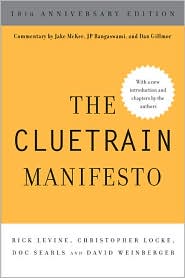
Cluetrain 10th Anniversary edition
Cluetrain 10th Anniversary
Everything Is Miscellaneous
Small Pieces cover
Small Pieces Loosely Joined
Cluetrain cover
Cluetrain Manifesto
My face
Speaker info
Who am I? (Blog Disclosure Form) Copy this link as RSS address Atom Feed

April 22, 2011

Berkman Buzz

This week’s Berkman Buzz:

  • Ethan Zuckerman [twitter:ethanz] documents Internet filtering at the National Science Foundation: link

  • Radio Berkman talks to Steven Levy about the Googleplex: link

  • The OpenNet Initiative covers the Ugandan government’s new Internet filtering attempts: link

  • The Citizen Media Law Project [twitter:citmedialaw] reviews recent Righthaven copyright cases: link

  • Weekly Global Voices [twitter:globalvoices] : “Chile: Nurse Expedites Organ Transport Using Twitter”: link

  • Tweet
    Follow me

    Categories: berkman Tagged with: berkman Date: April 22nd, 2011 dw

    Be the first to comment »

April 19, 2011

[berkman] Protocol.by

Greg Elliott and Hugo van Vuuren are giving a Berkman talk on “The Communication Crises and the Evolution of Personal and Cultural Protocols.” They are launching a new tool this week: Protocol.by. (Ethan Zuckerman has posted his live blogging of this talk.)

NOTE: Live-blogging. Getting things wrong. Missing points. Omitting key information. Introducing artificial choppiness. Over-emphasizing small matters. Paraphrasing badly. Not running a spellpchecker. Mangling other people’s ideas and words. You are warned, people.


They begin with a video that talks about the number of channels and messages in which we’re drowning. This is the communication crisis Greg and Hugo are addressing. They are interested in how we deal with the guilt of (Tina Roth Eisenberg) of not being able to keep up. We have various tools, such as email bankruptcy. They point to an XKCD Map of Online Communities that, among other things, reminds us that the Net is dwarfed by other forms of communication. A NY Times article (March 18, 2011) is about our culture’s movement away from telephone calls, even though you get more metadata; in many instances, a quick text is more appropriate.


The Internet is a Rorschach test, they say. We all play a puzzling game with our email, trying to filter it without missing anything and without hurting anyone’s feelings. E.g., danah boyd famously takes email sabbaticals, during which her auto-responder tells you that she will never read your msg. Other people (including Tim Berners-Lee) have detailed instructions about the netiquette for contacting him.


The site five.sentenc.es was influential on Greg and Hugo. It provides a link for your sig that announces that all your email responses will be five sentences or less. We used to have posters that instruct children in good manners. They’re not proposing that, of course. But, announcing norms shapes behavior.


They show their site: Protocol.by. (Sign up here: http://protocol.by/newUser, and give them time to hand-approve you.) Once you sign up, you create a profile that tells people your preferences in being contacted: Which channels, in which priority, and expectations. E.g., Use email; it may take me a while to get back to you and you don’t need to wrap it in social niceties; if necessary, call my phone, but don’t leave a message. (Here’s my profile.) This is even more useful, they say, if plugged into a community as a group protocol.


They are gathering data for research into how people rank their channels. (Anonymous, of course.) (Greg points to the data at the okCupid dating site.)


Q: What’s your business model?
A: This is a side project. We’re in it for the research.


Q: There’s a risk in making these rules too explicit. E.g., it says you respond in 24 hours, but you never want to respond to some particular person and they then get offended.
A: We encourage users to leave in as much ambiguity as they can. It’s up to you the user to define it.


Q: So much of the preferred channel is based on who the person is: If you’re my babysitter I want you to call, but if you’re my grad student, use email. How are those directions indicated?
A: We can imagine the site presenting different protocols depending on who you are: Are you a stranger, are you a friend? For now, Protocol is aimed at strangers since your friends probably already know how to reach you.


Q: How many users do you need for research purposes, and how are you going to get them?
A: We have 500-600 already. A big sample would be thousands. The next step is the location setting, and embedding into other services. We also want to reach people who are already using these sorts of rules.


Q: I love that you’re providing a tech solution, but are talking about the human problems. We are now past the era of flaming. Has your data shown if these protocols help prevent people from getting offended?
A: We don’t have the data yet.


Q: I’m a huge fan because it brings peace of mind. Each new channel fragments our identity. I love that Protocol centralizes our communicational identity no matter how our technology changes. Your suggesting that our communicational identity is our social identity. How is our identity crafted by our communication tools?
A: Yes, our identities are shaped by our tools. But I don’t know that Protocol is going to shape our identities or represent it. Some users do have very specific rules, which they use as a signal that they are very busy.


Q: You have a distinct individualistic bias. You think we’re going to pick our own tools and ways of communicating. You’re young and tech savvy. But I deal with the press, and they’re going to call my phone no matter what I say, because they have more power than I do. I wonder if asserting these protocols is a transitional moment. Maybe we’ll centralize on a new socially acceptable set of protocols, or are we going to fragment?
A: Communication media don’t generally replace predecessors. We’re not going to a singularity of communication preferences, but it will boil down to a smaller set. E.g., Rapportive (gmail extension) fetches info about the sender of any email msgs — their twitter account, etc.


Q: You said your motivation is relieve guilt. This seems like a geeky way to deal with the social anxieties that geeks tend to have.
A: In the future, we need systems to offer the protocols without you having to seek them out.


Q: There has to a brand of new psychologists dealing with these issues: When something is ambiguous, does it mean someone hates me, etc.?
A: Yes. Interesting.


Q: When you don’t know someone, I’d probably google them and find their primary-facing piece of info. How do you get Protocol to become that piece of info, especially when you’re talking about different ages, communities?
A: Embedding, for one thing.

Q: We have collapsed boundaries between channels. I want some people to self-declare what subjects they’re interested in. I’d rather tell people what I’m interested in rather than have them mine it and guess.
A: The word “reputation” hasn’t gone up yet. It used to matter more when we lived in small communities. Now we can invent ourselves many times. As the Net goes into its next phase, reputation and data will matter a great deal.

Q: Embedding is a nice idea. Get some sites to embed a cute logo. Second, you’re increasing the velocity, but velocity is the problem. There’s no barrier on the sender’s side to communication. Is anyone talking about putting actual costs on email. It should cost people to email me. That would slow the velocity.
A: We see Protocol as being the barrier eventually. The problem with money is that it discriminates invidiously. Also, it’d be nice if I could ping Protocol to see if my friend is available to talk, and it knows enough about our relationship and his circumstances. There’s no cost, but your msg may not get through.

Q: It used to be easy. Now you may not want to let people know why the time zone you’re in. You might want to have an abstraction layer that knows the zone you’re in and what the preferred order is in various zones.
A: There are many variables. The issue is that you get into complex, power-user

Q: [me] There will be an increasing need for metadata because the community of possible communicators has increased, with greatly differing local norms. So, how about creating a little marker that lists your preferred channels order, the way Creative Commons lets you easily represent your license preferences. Then let institutions encourage their users to put the marker on their web pages, etc.
A: We’re thinking that we’ll have three markers with varying degress of info.
Q: Well, one marker is easier to market than 3.

How about having two profiles, so you can give your friends the key?
A: You get into DRM issues. We’d rather encourage people to use Protocol for non-friends.


Q: How will you keep it up to date with new channels/services?
A: We hope that Protocol will be a part of the channel tools you use.


Q: Privacy used to be the right to be left alone. Now it’s about how much info is out there and how you can control it. You seem to adopt somewhat of a technological determinist standard; tech determines our social norms. Is that what you’re driving at?
A: We don’t think tech is the defining determinant of our lives, but it is there. We either let it run wild or set some rules.

Tweet
Follow me

Categories: berkman Tagged with: berkman Date: April 19th, 2011 dw

1 Comment »

April 9, 2011

Berkman Buzz

The weekly Berkman Buzz:

  • Doc Searls [twitter:dsearls] struggles with how to write about the Net and tune it out at the same time: link

  • Ethan Zuckerman [twitter:ethanz] muses on the Monobloc (those ubiquitous white plastic chairs): link

  • The OpenNet Initiative [twitter:opennet] reviews new Internet controls in Russia: link

  • danah boyd [twitter:zephoria] shares the challenges of doing fieldwork with teenagers: link

  • The Citizen Media Law Project [twitter:citmedialaw] cheers on British Libel Reform: link

  • Weekly Global Voices [twitter:globalvoices] : “Iran: Protests for a Drying Lake”: link

Tweet
Follow me

Categories: berkman Tagged with: berkman Date: April 9th, 2011 dw

1 Comment »

April 2, 2011

Berkman Buzz

The weekly Berkman Buzz:

  • Christian Sandvig [twitter:niftyc] ‘s epic saga through the finer points of Comcast’s customer service comes to an end: link

  • Ethan Zuckerberg [twitter:ethanz] uses Media Cloud to measure the change in media cycles: link

  • Herdict [twitter:herdict] explains how crowdsourcing is being used to monitor Japan’s nuclear crisis: link

  • The Citizen Media Law Project [twitter:citmedialaw] reviews a new memo on smartphone policies in the courtroom: link

  • Weekly Global Voices [twitter:globalvoices] : “Nigeria: What Are Nigerian Bloggers Saying About the 2011 Elections?”: link

Tweet
Follow me

Categories: berkman Tagged with: berkman Date: April 2nd, 2011 dw

Be the first to comment »

April 1, 2011

Persephone Miel Fellowships announced

The Pulitzer Center on Crisis Reporting has announced the first three recipients of Persephone Miel Fellowships that support an international journalist reporting on a “systemic global issue in their home country.” The Pulitzer Center funded the additional two fellows in order to jump-start the program, hoping to encourage more donations to the fellowship fund. (Here is the announcement from Internews, where Persephone worked.)

2007_12_167_berkman_bowling_23.JPG

Persephone was a dear and cherished Berkman Fellow, and an activist committed to international understanding, and a friend. She died this June, about a hundred years too soon.

(Photo (cc) Doc Searls)

Tweet
Follow me

Categories: berkman, journalism Tagged with: journalism • persephone miel Date: April 1st, 2011 dw

Be the first to comment »

March 12, 2011

Berkman Buzz

Weekly Berkman Buzz:

  • Christian Sandvig adds context to “Internet freedom” debates: link

  • Ethan Zuckerman blogs an “informal conversation” with U.S. State Department’s P.J. Crowley: link

  • CMLP asks for help with “Software Best Practices and Open Source Derivative Works”: link

  • Weekly Global Voices: “Cameroon: Netizens React to SMS-to-Tweet Ban”: link

    Tweet
    Follow me

    Categories: berkman Tagged with: berkman Date: March 12th, 2011 dw

    1 Comment »

  • March 5, 2011

    Berkman Buzz

    This weeks Berkman Buzz, as compiled by Rebekah Heacock [twitter:rebekahredux] :

    • Jonathan Zittrain [twitter:zittrain] and Molly Sauter [twitter:oddletters] wonder whether the US will get an Internet kill switch: link

    • Wendy Seltzer [twitter:wseltzer] reviews takedown complaints in the Android marketplace: link

    • Mike Ananny and Taylor Owen argue that despite Twitter, reporters still matter: link

    • Stuart Shieber [twitter:pmphlt] reviews institutional memberships for open-access publishers: link

    • Herdict [twitter:herdict] explains Internet filtering during the Jasmine Revolution: link

    • Weekly Global Voices [twitter:globalvoices] : “Palestine: Demands for a Unified Nation set for March 15”: link

    Tweet
    Follow me

    Categories: berkman Tagged with: berkman Date: March 5th, 2011 dw

    2 Comments »

    March 2, 2011

    Questions from and for the Digital Public Library of America workshop

    I got to attend the Digital Public Library of America‘s first workshop yesterday. It was an amazing experience that left me with the best kind of headache: Too much to think about! Too many possibilities for goodness!

    Mainly because the Chatham House Rule was in effect, I tweeted instead of live-blogged; it’s hard to do a transcript-style live-blog when you’re not allowed to attribute words to people. (The tweet stream was quite lively.) Fortunately, John Palfrey, the head of the steering committee, did some high-value live-blogging, which you can find here: 1 2 3 4.

    The DPLA is more of an intention than a plan. The DPLA is important because the intention is for something fundamentally liberating, the people involved have been thinking about and working on related projects for years, and the institutions carry a great deal of weight. So, if something is going to happen that requires widespread institutional support, this is the group with the best chance. The year of workshops that began yesterday aims at helping to figure out how the intention could become something real.

    So, what is the intention? Something like: To bring the benefits of public libraries to every American. And there is, of course, no consensus even about a statement that broad. For example, the session opened with a discussion of public versus research libraries (with the “versus” thrown into immediate question). And, Terry Fisher at the very end of the day suggested that the DPLA ought to stand for a principle: Knowledge should be free and universally accessible. Throughout the course of the day, many other visions and pragmatic possibilities were raised by the sixty attendees. [Note: I’ve just violated the Chatham Rule by naming Terry, but I’m trusting he won’t mind. Also, I very likely got his principle wrong. It’s what I do.]

    I came out of it invigorated and depressed at the same time. Invigorated: An amazing set of people, very significant national institutions ready to pitch in, an alignment on the value of access to the works of knowledge and culture. Depressed: The !@#$%-ing copyright laws are so draconian and, well, stupid, that it is hard to see how to take advantage of the new ways of connecting to ideas and to one another. As one well-known Internet archivist said, we know how to make works of the 19th and 21st centuries accessible, but the 20th century is pretty much lost: Anything created after 1923 will be in copyright about as long as there’s a Sun to read by, and the gigantic mass of works that are out of print, but the authors are dead or otherwise unreachable, is locked away as firmly as an employee restroom at a Disney theme park.

    So, here are some of the issues we discussed yesterday that I found came home with me. Fortunately, most are not intractable, but all are difficult to resolve and, some, to implement:

    Should the DPLA aggregate content or be a directory? Much of the discussion yesterday focused on the DPLA as an aggregation of e-works. Maybe. But maybe it should be more of a directory. That’s the approach taken by the European online library, Europeana. But being a directory is not as glamorous or useful. And it doesn’t use the combined heft of the participating institutions to drive more favorable licensing terms or legislative changes since it itself is not doing any licensing.

    Who is the user? How generic? Does the DPLA have to provide excellent tools for scholars and researchers, too? (See the next question.)

    Site or ecology? At one extreme, the DPLA could be nothing but a site where you find e-content. At the other extreme, it wouldn’t even have a site but would be an API-based development platform so that others can build sites that are tuned to specific uses and users. I think the room agrees that it has to do both, although people care differently about the functions. It will have to provide a convenient way for users to find ebooks, but I hope that it will have an incredibly robust and detailed API so that someone who wants to build a community-based browse-and-talk environment for scholars of the Late 19th Century French Crueller can. And if I personally had to decide between the DPLA being a site or metadata + protocols + APIs, I’d go with the righthand disjunct in a flash.

    Should the DPLA aim at legislative changes? My sense of the room is that while everyone would like to see copyright heavily amended, DPLA needs to have a strategy for launching while working within existing law.

    Should the DPLA only provide access to materials users can access for free? That meets much of what we expect from public libraries (although many local libraries do charge a little for DVDs), but it fails Terry Fisher’s principle. (I don’t mean to imply that everyone there agreed with Terry, btw.)

    What should the DPLA do to launch quickly and well? The sense of the room was that it’s important that DPLA not get stuck in committee for years, but should launch something quickly. Unfortunately, the easiest stuff to launch with are public domain works, many of which are already widely available. There were some suggestions for other sources of public domain works, such as government documents. But, then the DPLA would look like a specialty library, instead of the first place people turn to when they want an e-book or other such content.

    How to pay for it? There was little talk of business models yesterday, but it was a short day for a big topic. There were occasional suggestions, such as just outright buying e-books (rather than licensing them), in part to meet the library’s traditional role of preserving works as well as providing access to them.

    How important is expert curation? There seemed to be a genuine divide — pretty much undiscussed, possibly because it’s a divisive topic — about the value of curation. A few people suggested quite firmly that expert curation is a core value provided by libraries: you go to the library because you know you can trust what is in it. I personally don’t see that scaling, think there are other ways of meeting the same need, and worry that the promise is itself illusory. This could turn out to be a killer issue. Who determines what gets into the DPLA (if the concept of there being an inside to the DPLA even turns out to make sense)?

    Is the environment stable enough to build a DPLA? Much of the conversation during the workshop assumed that book and journal publishers are going to continue as the mediating centers of the knowledge industry. But, as with music publishers, much of the value of publishers has left the building and now lives on the Net. So, the DPLA may be structuring itself around a model that is just waiting to be disrupted. Which brings me to the final question I left wondering about:

    How disruptive should the DPLA be? No one’s suggesting that the DPLA be a rootin’ tootin’ bay of pirates, ripping works out of the hands of copyright holders and setting them free, all while singing ribald sea shanties. But how disruptive can it be? On the one hand, the DPLA could be a portal to e-works that are safely out of copyright or licensed. That would be useful. But, if the DPLA were to take Terry’s principle as its mission — knowledge ought to be free and universally accessible — the DPLA would worry less about whether it’s doing online what libraries do offline, and would instead start from scratch asking: Given the astounding set of people and institutions assembled around this opportunity, what can we do together to make knowledge as free and universally accessible as possible? Maybe a library is not the best transformative model.

    Of course, given the greed-based, anti-knowledge, culture-killing copyright laws, the fact may be that the DPLA simply cannot be very disruptive. Which brings me right back to my depression. And yet, exhilaration.

    Go figure.

    The DPLA wiki is here.

    Tweet
    Follow me

    Categories: berkman, everythingIsMiscellaneous, experts, libraries, too big to know Tagged with: 2b2k • berkman • copyright • dpla • libraries • metadata Date: March 2nd, 2011 dw

    4 Comments »

    February 26, 2011

    Berkman Buzz

    The weekly Berkman Buzz, as compiled by Rebekah Heacock:

    • DMLcentral explains the rise of Orkut in Brazil

    • Herdict questions Internet filtering at the Wisconsin State Capitol

    • The Citizen Media Law Project explores the “spicy twist” in a recent copyright case

    • Dan Gillmor wonders whether publishers will stand up to Apple’s new subscription model

    • Weekly Global Voices: “Kenya: #KenyaFeb28: Online Call to Nationalism”

    Tweet
    Follow me

    Categories: berkman Tagged with: berkman Date: February 26th, 2011 dw

    2 Comments »

    February 22, 2011

    Eszter Hargittai and Aaron Shaw are giving a Berkman lunchtime talk titled “The Internet Young Adults, and Political Engagement around the 2008 Elections.” It’s a collaborative work between Northwestern U (where Eszter is) and Berkman (where Aaron is). What did the Obama campaign mean for the Internet’s effect on engagement of young people?

    NOTE: Live-blogging. Getting things wrong. Missing points. Omitting key information. Introducing artificial choppiness. Over-emphasizing small matters. Paraphrasing badly. Not running a spellpchecker. Mangling other people’s ideas and words. You are warned, people.

    Research generally summarizes the story of youth’s engagement as a sad one: A downward trend over the past 50 years. Most of the previous research has suggested that the Net is a “weapon of the strong”: those from higher income levels and more social capital tend to make more and better use of the Net. But does the Net impact political engagement directly? Uniformly? What factors and processes matter more than others. There is little agreement on these questions in the literature so far.

    They looked at four outcomes or models: 1. Online political cognitive engagement: How much info-seeking on the Net do you do about politics? 2. Civic engagement: Do you volunteer in the community. 3. Voting. 4. Political action more broadly defined.

    Eszter gathered data from the U of Illinois in Chicago. It’s one of the more racially diverse campuses. She went to the only course required everyone on campus. (There are 86 different sections, so it was a lot of work to gather the data.) It was a paper-pencil survey, not online, because she did not want to worry about who has access to the Net and who is comfortable donig things on line. Of the 1,115 students, the research focused on the 1,000 who were eligible to vote in the 2008 election. About half are first generation college students, 11% African-American, 25% Hispanic. About 60% voted, compared to 62% nationally. Eszter and Aaron are not claiming this is representative of the nation. the controlled for partisanship, political interest, and political knowledge, using “pretty standard” ways of measuring this. She presents the data on the extent of their Net usage; everyone had already been online. [You’ll have to check the study for the actual data. I can’t possibly type that fast!]

    1. Online political cognitive engagement. They looked at whether the kids are reading blogs, commenting on them, involved in online discussions, forwarding info, etc. About 40% visited blogs (etc.) on political topics, and 16% commented on them. Women were less likely to participate. Race and ethnicity and parental education didn’t seem to matter. Political capital (= interest in politics) and your Net skills are positively correlated.

    2. Civic engagement. 81% had engaged in some form, 54% talked to friends or family about current events a few times a week or more, 33% have organized the event of a club or organization. [Again, I can’t keep up with all the data. I’m cherry-picking.] Gender doesn’t matter, but Asian Americans are more engaged, as are those who score higher on parental education, political capital, and online political engagement.

    3. Voting. Race and ethnicity had a positive correlation with voting. Not parental education. Political capital and civic engagement both did. But online political cognitive measures did not. Neither did Net expertise/experience.

    4. Political action, which includes everything from signing a petition to being a paid campaign worker. 65% had signed a petition. 22% had contacted a political official. 14% donated money. If you count any of those, 70% have engaged in political action. No correlation to gender, race/ethnicity, parental education But, there was a positive correlation with political capital, civic engagement, and Internet experiences (particularly the use of social networking sites, and skill).

    Internet mattered for all of the outcomes, except for voting. Net skills seem to have enabled the social networking that is correlated with political action.

    Conclusion: Simply being a Net user is not a direct factor; the relationships seems to be indirect and differential. And were there Obama effects? Only in the political action area, and there it was pretty minor and needs more investigation.

    Q: Suppose you did a longitudinal study…?
    A: That would be interesting. We actually have data on half of them about whether they voted in the gubernatorial election. I’d like to get funding to go back to the students.

    Q: How can you get at what shifts in access have happened that might have spiked with the Obama effect providing an opportunity to engage? E.g., social media make it easier to send around petititions.
    A: It’d be interesting to follow up on what’s going on at social network sites. We only asked if people checked other people’s status and updated their own.

    Q: Net use doesn’t correlate to voting but not to political action?
    A: Voting is a different type of political action. The people who vote tend to look slightly different than the people who engage in other forms of political action.

    Q: How about people from out of state?
    A: Almost all are from within Illinois.

    Q: How active is the Deomcract Club at the U?
    A: Good question.

    Q: Did you look at local elections?
    A: No.

    Q: A study recently showed something like 85% of contributors to Wikipedia were male. Did you see anything similar with online political participation?
    A: I (eszter) have been gathering nuanced data on Wikipedia participation, and it’s unbelievably gendered. Women are participating in political activity less, but the gap is much smaller than at Wikipedia. My research as shown that women contribute less content online [my phraseology — don’t blame Eszter!], even with fan fiction.

    A: [me] Did you break this down by ideology, as well as by partisanship?
    Q: We haven’t broken it out yet.

    A: I would have thought that political engagement and voting would be on the same trajectory, with the same determinants. Do you have a theory about they they’re not?
    A: I do think they’re qualitatively different in American society.

    Q: What data do you wish you had?
    A: We’re proud of this data. We have a ton of it. It’d be good to have more data about Internet engagement/behavior. We also don’t have media consumption data.

    Q: What is more important for a vibrant democracy for these young people, voting or activism?
    A: It’s not an either/or. The literature suggests both are important. Cf. Talking Together. Their data suggests there are lots of people who are talking together.

    [I missed some questions. Sorry. Don’t forget these Tuesday lunch presentations are available online as webcasts.]

    Tweet
    Follow me

    Categories: berkman, egov Tagged with: berkman • edemocracy • egov • online politics • politics Date: February 22nd, 2011 dw

    Be the first to comment »

    « Previous Page | Next Page »


    Creative Commons License
    This work is licensed under a Creative Commons Attribution-NonCommercial-ShareAlike 3.0 Unported License.
    TL;DR: Share this post freely, but attribute it to me (name (David Weinberger) and link to it), and don't use it commercially without my permission.

    Joho the Blog uses WordPress blogging software.
    Thank you, WordPress!