logo
EverydayChaos
Everyday Chaos
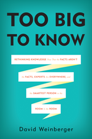
Too Big to Know
Too Big to Know
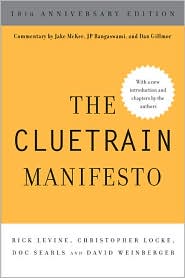
Cluetrain 10th Anniversary edition
Cluetrain 10th Anniversary
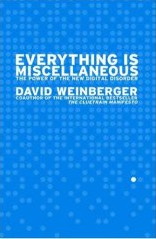
Everything Is Miscellaneous
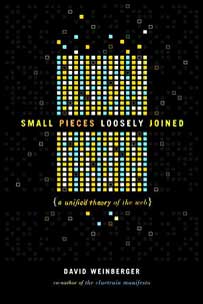
Small Pieces cover
Small Pieces Loosely Joined
Cluetrain cover
Cluetrain Manifesto
My face
Speaker info
Who am I? (Blog Disclosure Form) Copy this link as RSS address Atom Feed

August 9, 2024

A Quick Guide for Academics Writing for a Broad Readership

A serious scholar in a dark study is writing on a modern computer
via Midjourney, with some tweaks by the author. CC-0. (The prompt is at end of the article.)

So, you’re an academic, a researcher, a scientist … a serious person. But you’ve decided to write a trade book — a book for the general populous — to amplify the effect of your work. Excellent!

I edit the Strong Ideas book series for the MIT Press — books about the ways in which today’s digital technology is or may be changing how we think and behave. The readers are assumed to have no, or little, technical background, but the authors are generally academics and scholars.

This is the advice I give them at the beginning if they have not written for laypeople before.

The differences between academic and trade books

  1. A trade book is for people who know much less than you do about your topic.
  2. A trade book is for people who are much less interested in your topic than you are.

These two points are inseparable when it comes to structuring and writing your book. When writing for academics, you’re dealing with people who come to your book already interested in your topic and who think your book has something worthwhile to say to them…or perhaps people who feel they need to be able to list your book in their bibliography. Either way, they are already motivated to read it.

That’s not the case for trade book readers. For trade book readers, you need to promise them something…

The promise your book makes

The promise is what you tell prospective readers they will get out of the book. It’s why they’ll recommend it to their friends. The promise is not a statement of what the book is about but why the book will matter to the reader.

That promise should be manifest in the title and subtitle, the text on the inside flap of the book, the organization of your chapters, and even your writing style.

Hiding what you know

An academic book typically starts with an introduction that tells you how the book is going to unfold. That provides helpful scaffolding for people who are already committed to the book. But it’s usually a mistake for a trade book. To draw readers through the book, you should keep information from them so you can disclose it progressively.

The chapters should be a series of surprises. In that sense, a trade book often takes the form of a non-fiction narrative: it unfolds not in time, the way a murder mystery typically does, but in logic. (Which is also how mysteries unfold, now that I think of it.)

For that reason, it helps to provide plenty of signposts to remind readers where they are in the intellectual narrative and why you are talking about whatever you’re talking about

By the way, the combination of you knowing more than your readers and you being more interested in your topic than readers are initially means that, despite years of academic training, your second chapter absolutely should not be a review of the literature or the history of your field. [Exceptions may apply. But probably not.]

Your voice

Readers want to spend time with authors they trust and like. Because you know what you’re talking about, gaining their trust should happen easily. But knowing stuff isn’t enough. Whether they like you as an author largely depends on your authorial voice. Unfortunately, there are no formulas for being likeable, or else we all would be.

But there are some common sense ways to do this, or at least to avoid being disliked. For example:

  • You’ll earn more of their trust by writing clearly and competently than by listing your credentials and accomplishments.
  • Be generous about the insights of other authors.
  • Don’t be mean about other scholars even if you think are dead wrong or total jerks. (There’s a high-risk, bravura/gonzo style of writing that contradicts this rule, but does it really make the world better?)
  • Examples help not only for obvious reasons but because they can be an opportunity for you to provide the reader with a small “Aha!” jolt when you reveal what we can learn from them.
  • If you’re going to be digressive — a charming way of expressing your personality and keeping people interested — put in lots of signposts so readers know where they are in the narrative or argument.
  • Be prepared to over-simplify. Readers usually only need to know how a technical concept applies to the point you’re trying to make. If you feel bad about simplifying a concept too much, you can briefly note that “it’s actually much more technical than that” or put in a footnote to ward off colleagues looking for flaws because they’re envious of how clearly you write and how far you are spreading the important things that they and you know about the world.

Drafts

People’s writing processes are all very different, but they all involve more drafts than you’d like. In fact, having to write many, many drafts is a good sign.

The end

If you have reactions, responses, suggestions, criticisms, or expert opinions, please let me know: david [insert an “at” sign] hyperorg.com

The prompt for the illustration: We are looking over the shoulder of a very serious scholar in a darkened study with many books. It is the 19th century. But we see that the scholar is writing using an ultra modern computer. The computer and the screen are brightly lit unlike the rest of the room which is in candlelight. The screen shows a modern , colorful, crisp, and clear word processor with a document open. The gender of the scholar should be ambiguous and impossible to determine.

Tweet
Follow me

Categories: writing Tagged with: books • scholarship • writing Date: August 9th, 2024 dw

2 Comments »

April 1, 2020

Free novels by Meredith Sue Willis to read while alone

Meredith Sue Willis, the noted novelist and my sister-in-law, has made six of her novels available for free, as e-books, until April 20th.

Sue, as her family members call her, brings characters to life in just a few words. Her novels tend to be centered on places that she brings to life as well – small-town West Virginia, rural Massachusetts, even a cruise ship before that phrase conjured a plague ward.

Give ’em a try. And you well might like her free literary newsletter as well.

Tweet
Follow me

Categories: culture, free culture Tagged with: books • covid29 • culture • free culture • literature Date: April 1st, 2020 dw

1 Comment »

June 28, 2017

Re-reading Hornblower

I read all of C.S. Forester’s Horatio Hornblower series when I was in high school.

I’m on a week of vacation — i.e., a nicer place to work — and have been re-reading them.

Why isn’t everyone re-reading them? They’re wonderful. Most of the seafaring descriptions are opaque to me, but it doesn’t matter. The stories are character-based and Forester is great at expressing personality succinctly, as well as taking us deep into Hornblower’s character over the course of the books. Besides, all the talk of binneys ’round the blaggard binge don’t get in the way of understanding the action

Some prefer Patrick O’Brian’s Aubrey-Maturin “Master and Commander” series. They are wrong. I believe the Internet when it says O’Brian’s battles are more realistic because they’re based on actual events. I don’t care. I do care, however, about O’Brian’s clumsy construction of his main characters. I can sense the author trying to inflate them into three dimensions. Then they’re given implausible roles and actions.

Of course you may disagree with me entirely about that. But here’s the killer for me: O’Brian relies on long pages of back-and-forth dialogue…while not telling you who’s talking. I don’t like having to count back by twos to find the original speaker. All I need is an occasional, “‘Me, neither,’ said Jack.” Is that asking too much?

Anyway, take a look at Hornblower and the Atropos to see if you’re going to like the series. That begins with a few chapters of Hornblower arranging the logistics for the flotilla portion of Lord Nelson’s funeral. If you find yourself as engrossed in chapters about logistics as I did, you’re probably hooked forever.

Tweet
Follow me

Categories: culture Tagged with: books • literature • novels Date: June 28th, 2017 dw

1 Comment »

October 25, 2016

[liveblog] Tim Wu

Tim Wu [Twitter: superwuster] is giving a talk jointly sponsored by the Shorenstein Center and the Berkman Klein Center. His new book is The Attention Merchants.  He is introduced by Erie Meyer, a Shorenstein fellow this year.

NOTE: Live-blogging. Getting things wrong. Missing points. Omitting key information. Introducing artificial choppiness. Over-emphasizing small matters. Paraphrasing badly. Not running a spellpchecker. Mangling other people’s ideas and words. You are warned, people.

Tim begins by noting that he was at the Berkman Center at its beginning, when it was pretty much just Charlie Nesson and Jonathan Zittrain.

He says that his new book is the “history of a business model”: the re-sale of human attention. This model has “long anchored the media,” but now has “exploded into all parts of our lives.” It’s part of many business models these days. Even the national parks are selling naming rights to trails.

“Maybe a thousand times a day, something tries to get us to spend maybe a micro-second” to notice something. “The deepest ambition of the book is to say that this is having an effect on the human condition.” He points to the casino effect where you get distracted by links and an hour later you say, “What just happened?” He’s concerned about a model that has us taking our attention away from people and our surroundings and into a commercial space.

The book is a history, he says. “”Newspapers once upon a time were not a mass media.” In 1830 NY’s biggest paper’s circulation was 2,000.”“Newspapers once upon a time were not a mass media.” In 1830 NY’s biggest paper’s circulation was 2,000. Papers were expensive. So, Benjamin Day — “the first attention merchant” — lowered the price of his paper to a penny, and covered a broader range of topics, “human interest stories for a mass audience.”. E.g., the first story in his paper, The NY Sun, was about tragic lovers. He was selling his audience to the advertisers.

“We’re in a time when we’re almost addicted to free stuff — free content, free services.” But people have begun to realize that we are then the product. “What’s being resold is something very scarce: human attention.” And as food, shelter, clothing, etc., are abundant, so the scarce things become even more valuable. We have 168 hours in a week, and that is one of the last scarce resources. “The models of free are scrambling to get at that resource.”

ERIE: You say in the book that trash-talking grabs our attention.

TIM: Many of the current techniques are quite old. E.g., Trolls. The NY Sun attracted competitors, including the NY Tribune. The Trib got attention by picking fights with other newspaper editors. He was the first troll. It worked. “We’ve seen recently that you can run an entire campaign just by insulting people.” The Sun fought back with even more salacious stories. E.g., “it reported that a scientist had discovered life on the moon, including trees, horse-like animals, and man-bats. They never retracted it.”it reported that a scientist had discovered life on the moon, including trees, horse-like animals, and man-bats. They never retracted it.

ERIE: As you point out, one of them grabbed attention by being pro-Abolition, which caused the others to become rabidly anti-Abolition.

TIM: The book doesn’t totally condemn that attention-seeking model, but it warns about its tendency to run to the most lurid content. This makes for constant ethical problems.

ERIE: You talk about the Oprah model…

TIM: “Orpah Winfrey is one of the great innovators in this area.” She was a fully integrated celebrity, production company, advertising company, and a tv network, all in one. She created product endorsements that drove a lot of advertising. She also married the appeal of ministry (salvation, forgiveness, transcendence) and commercialism. By 1995, she was making more money in entertainment than anyone else and gave rise to celebrities who are themselves attention merchants. E.g., Martha Stewart, Donald Trump: the celebrity builds her/his own media empire. Tim expects this to be the future.

One of the subtexts of the book, Tim says, is that the value of human attention was not widely recognized until the 20th century, except for organized religion. The entities interested in what you spent your time doing, before the 20th century, were organized religions that wanted you praying, and going to church, and in various ways to keep God on your mind.” In some ways, Tim says, the story of the book is the story of government and business figuring out that this is valuable resource. The govt realizes it when they see they can raise an army through govt propaganda. Industry, after govt, realizes they can sell products if they have public attention.

ERIE: Can you talk about micro-celebrities?

TIM: There’s a fascinating change in celebrity. (Tim name-checks me for the line “In the future, everyone will be famous to 15 people.”) And reality tv offers the lottery of fame to anyone. This has some consistency with the American dream: Everyone can have their own land and be sort of wealthy. “We have this idea that everyone can be famous.” The negative side of this is that in fact the disparities remain: it’s extremely hard to become famous, and the pursuit of it leads to empty lives. “It’s not like you write something and people read it.” The main reason is biological: ““The default setting of our brain is to ignore everything.”The default setting of our brain is to ignore everything.”

You can control attention to some degree, but it’s always darting around, and you can really only attend to one thing at once.

ERIE: You say the first ad blocker was a remote control…

TIM: In the 1920s, Zenith was a maverick company. The head of it (“The Commodore”) thought commercials had ruined radio. He had his engineers work on ad-blocking software for TV. They came up with the remote control. Originally it was a gun so you could shoot out the commercials. There have been other revolts. In Paris, there was a revolt against posters. In Paris, advertising is still restricted to certain areas. We may be in another such period now. (He mentions the Brave browserthat blocks ads from the gitgo.) “I believe in the power and legitimacy of results.”

ERIE: “You’ve said that if you have a mission in life, it’s to fight bullies.” What should aspiring entrepreneurs do?

TIM: I struggle with this. “A lot of people who have gone into tech have been very idealistic people.” The pay-for-content models haven’t worked so well. One chapter tells the story of decision-making at Google. At one point, it was bleeding money and didn’t know what to do, so they thought about advertising. But in 1996 Larry Page had written a manifesto that declared that advertising-funded search engines will always be biased and will never serve the interests of people. But Google thought it could square the circle with Adwords: a form of advertising that made the product better and didn’t bother people. That was true at the beginning. If an ad showed up, which usually didn’t happen, it’d be useful to you.

But the demands of the ad-based model have increased. The longer it gets, the worse it gets. They’ve increasingly blurred the lines between the organic results and the ads. Google Maps shows us things and it sometimes unclear why. Most of the major platforms haven’t gotten much better for consumers over the past few years, but have gotten better for advertisers. A developer said, ““The best minds of our generation have gone to getting people to click on ads.”The best minds of our generation have gone to getting people to click on ads.”

Tech is a key driver these days, he says. “Which has changed your life more? Government or tech?” I wish Google had considered a different kind of corporate form or model. “I give Wikipedia a lot of credit for going non-commercial. I give even more to the original creators of the Internet who just built it and put it out there.” E.g., the creator of email didn’t look for a business model. Likewise for the creators of the Internet Protocol or the Web.

ERIE: Have you ever clicked on an ad on purpose?

TIM: I think yes. I think I wanted to buy those razors.

Q & A

Q: Two positive examples: FB put out the call to register to vote. Services raise money for worthy causes.

A: Yes. Gathering up attention for some purpose isn’t inherently good or evil. The book argues for carving out quiet spaces, but I believe in the Habermasian public sphere.

Q: Platforms can abandon ads but show us content based on who pays them. How can we rebel against what we can’t see?

A: Ad-blockers are not the most sustainable form of rebellion. I’ve decided that my attitude that I should never pay for anything on the Web came from my adolescent years. You have to support the content you like. “”There’s a difference between buying and supporting.””“There’s a difference between buying and supporting.”

Q: How about “Society as Spectacle“? And Kevin Kelly’s True Fan theory?

A: Paid models support a much broader variety of content. Ad models require the underlying content to more generally be mass content. That’s one of the reason that TV has gotten better over the past fifteen years. Ad supported TV drove to the middle. TV now gets 50% of its revenue from non-advertising.

Q: What’s been your hardest struggle to regain control of your attention?

A: All books probably come from a personal place. Control of attention is a struggle for me. One of the places I decided I needed to write this book was during a 10-day solo trip in the Utah desert. Time seemed to pass in very different ways. An hour could feel like a week. I felt like the modern regime was having me lose control. I like the Web, but I found I didn’t like the way I’d spent my time. I wish I’d spent time on activities I’d consciously chosen. I like JS Mills’ Chapter 3: Life is a matter of autonomy and self-development, and you need to make decisions that are yours.

Q: Is your a book is a manifesto for policy change, or a self-help book?

A: Can I have a third option?

Q: Are there policy implications?

A: I struggled with how much to make this legally prescriptive. Should I end the book with policy proposals? I decided not to, for a number of reasons. One had to do with craft: those last chapters of policy prescriptions, after a book covering 200 years, are usually pathetic. It’s very hard to regulate well. A lot of it has to do with how people conduct their lives. Policies aren’t sensitive to individual situations. I have complex feelings about it and didn’t want to cram into the book. And then people focus on those prescriptions at the expense of the rest of the book.

“If you get down to it, there is room for a new era of consumer protection” that tries to protect attention. Especially when it’s not consensual. E.g., the back of a taxi cab where you’re forced to be exposed to ads. “Non-consensual things reaching you…in law we call that ‘battery’.”

Q: Is commerce in attention span part of a democracy? People have to learn things they would not willingly learn.

A: If we perfect our filters, we may live in worlds where we learn only what we want to learn. I have complicated ideas about this. The penny press did a good job of creating the sense of a public and public opinion. But I resist the idea that to be a democracy we have to all attend to the same sources of information. “In the 19th century, America was a flourishing democracy and there was no national media”In the 19th century, America was a flourishing democracy and there was no national media, and lived in geographically defined filter bubbles. I don’t pine for the 1950s when everyone watched the same news broadcasts. Building one’s character means making your own information environment.

Tweet
Follow me

Categories: liveblog, marketing, policy Tagged with: attention • books Date: October 25th, 2016 dw

Be the first to comment »

September 18, 2016

Lewis Carroll on where knowledge lives

On books and knowledge, from Sylvie and Bruno by Lewis Carroll, 1889:

“Which contain the greatest amount of Science, do you think, the books, or the minds?”

“Rather a profound question for a lady!” I said to myself, holding, with the conceit so natural to Man, that Woman’s intellect is essentially shallow. And I considered a minute before replying. “If you mean living minds, I don’t think it’s possible to decide. There is so much written Science that no living person has ever read: and there is so much thought-out Science that hasn’t yet been written. But, if you mean the whole human race, then I think the minds have it: everything, recorded in books, must have once been in some mind, you know.”

“Isn’t that rather like one of the Rules in Algebra?” my Lady enquired. (“Algebra too!” I thought with increasing wonder.) “I mean, if we consider thoughts as factors, may we not say that the Least Common Multiple of all the minds contains that of all the books; but not the other way?”

“Certainly we may!” I replied, delighted with the illustration. “And what a grand thing it would be,” I went on dreamily, thinking aloud rather than talking, “if we could only apply that Rule to books! You know, in finding the Least Common Multiple, we strike out a quantity wherever it occurs, except in the term where it is raised to its highest power. So we should have to erase every recorded thought, except in the sentence where it is expressed with the greatest intensity.”

My Lady laughed merrily. “Some books would be reduced to blank paper, I’m afraid!” she said.

“They would. Most libraries would be terribly diminished in bulk. But just think what they would gain in quality!”

“When will it be done?” she eagerly asked. “If there’s any chance of it in my time, I think I’ll leave off reading, and wait for it!”

“Well, perhaps in another thousand years or so—”

“Then there’s no use waiting!”, said my Lady. “Let’s sit down. Uggug, my pet, come and sit by me!”

Tweet
Follow me

Categories: libraries Tagged with: 2b2k • books • knowledge • libraries • literature Date: September 18th, 2016 dw

Be the first to comment »

July 26, 2014

Why I have not been blogging much: it’s my book’s fault and more

My blogging has gone way down in frequency and probably in quality. I think there are two reasons.

First, I’ve been wrapped up in trying to plot a new book. I’ve known for about three years the set of things I want to write about, but I’ve had my usual difficult time figuring out what the book is actually about. For example, when I was planning Everything is Miscellaneous, I knew that I wanted to write about the importance of metadata, but it took a couple of years to figure out that it wasn’t a book about metadata, or a book about the virtue of messiness, or two dozen other attempts at a top line.

I’m going through the same process now. The process itself consists of me writing a summary of each chapter. Except they’re not summaries. They’re like the article version of each chapter and usually work about to about 2,000 words. That’s because a chapter is more like a path than a list, and I can’t tell what’s on the path until I walk it. Given that I work for a living, each complete iteration can take me 2-3 months. And then I realize that I have it all wrong.

I don’t feel comfortable going through this process in public. My investment of time into these book summaries is evidence of how seriously I take them, but my experience shows that nineteen times out of twenty, what I thought was a good idea is a very bad idea. It’s embarrassing. So, I don’t show these drafts even to the brilliant, warm and forgiving Berkman Book Club — a group of Berkfolk writing books — not only because it’s embarrassing but because I don’t want to inflict 10,000 words on them when I know the odds are that I’m going to do a thorough re-write starting tomorrow. The only people who see these drafts are my literary agents and friends David Miller and Lisa Adams, who are crucial critics in helping me to see what’s wrong and right in what I’ve done, and working out the next approach.

Anyway, I’ve been very focused for the past couple of months on figuring out this next book. I think I’m getting closer. But I always think that.

The second reason I haven’t been blogging much: I’ve been mildly depressed. No cause for alarm. It’s situational and it’s getting better. I’ve been looking for a new job because the Harvard Library Innovation Lab that I’ve co-directed, with the fabulous Kim Dulin, for almost five years has been given a new mission. I’m very proud of what we — mainly the amazing developers who are actually more like innovation fellows — have done, and I’m very sorry to leave. Facing unemployment hasn’t helped my mood. There have been some other stresses as well. So: somewhat depressed. And that makes it harder for me to post to my blog for some reason.

I thought you might want to know, not that anyone cares [Sniffles, idly kicks at a stone in the ground, waits for a hug].

Tweet
Follow me

Categories: berkman Tagged with: books • lil • personal • writing Date: July 26th, 2014 dw

8 Comments »

June 25, 2013

The kids are reading more than we thought

A fascinating new report from Pew Internet includes the following:

As with other age groups, younger Americans were significantly more likely to have read an e-book during 2012 than a year earlier. Among all those ages 16-29, 19% read an e-book during 2011, while 25% did so in 2012. At the same time, however, print reading among younger Americans has remained steady: When asked if they had read at least one print book in the past year, the same proportion (75%) of Americans under age 30 said they had both in 2011 and in 2012.

In fact, younger Americans under age 30 are now significantly more likely than older adults to have read a book in print in the past year (75% of all Americans ages 16-29 say this, compared with 64% of those ages 30 and older). And more than eight in ten (85%) older teens ages 16-17 read a print book in the past year, making them significantly more likely to have done so than any other age group.

Also:

…younger Americans have a broad understanding of what a library is and can be—??a place for accessing printed books as well as digital resources, that remains at its core a physical space.

Overall, most Americans under age 30 say it is “very important” for libraries to have librarians and books for borrowing;

Tweet
Follow me

Categories: libraries Tagged with: books • libraries Date: June 25th, 2013 dw

1 Comment »

May 20, 2013

[misc] The loneliness of the long distance ISBN

NOTE on May 23: OCLC has posted corrected numbers. I’ve corrected them in the post below; the changes are mainly fractional. So you can ignore the note immediately below.

NOTE a couple of hours later: OCLC has discovered a problem with the analysis. So please ignore the following post until further notice. Apologies from the management.

Ever since the 1960s, publishers have used ISBN numbers as identifiers of editions of books. Since the world needs unique ways to refer to unique books, you would think that ISBN would be a splendid solution. Sometimes and in some instances it is. But there are problems, highlighted in the latest analysis run by OCLC on its database of almost 300 million records.

Number of ISBNs

Percentage of the records

0

77.71%

2

18.77%

1

1.25%

4

1.44%

3

0.21%

6

0.14%

8

0.04%

5

0.02%

10

0.02%

12

0.01%

So, 78% of the OCLC’s humungous collection of books records have no ISBN, and only 1.6% have the single ISBN that God intended.

As Roy Tennant [twitter: royTennant] of OCLC points out (and thanks to Roy for providing these numbers), many works in this collection of records pre-date the 1960s. Even so, the books with multiple ISBNs reflect the weakness of ISBNs as unique identifiers. ISBNs are essentially SKUs to identify a product. The assigning of ISBNs is left up to publishers, and they assign a new one whenever they need to track a book as an inventory item. This does not always match how the public thinks about books. When you want to refer to, say, Moby-Dick, you probably aren’t distinguishing between one with illustrations, a large-print edition, and one with an introduction by the Deadliest Catch guys. But publishers need to make those distinctions, and that’s who ISBN is intended to serve.

This reflects the more general problem that books are complex objects, and we don’t have settled ways of sorting out all the varieties allowed within the concept of the “same book.” Same book? I doubt it!

Still, these numbers from OCLC exhibit more confusion within the ISBN number space than I’d expected.

MINUTES LATER: Folks on a mailing list are wondering if the very high percentage of records with two ISBNs is due to the introduction of 13-digit ISBNs to supplement the initial 10-digit ones.

Tweet
Follow me

Categories: everythingIsMiscellaneous, libraries Tagged with: books • eim • everything is miscellaneous • isbn • libraries Date: May 20th, 2013 dw

Be the first to comment »

January 24, 2013

Attending to appearances

I picked up a copy of Bernard Knox’s 1994 Backing into the Future because somewhere I saw it referenced about the weird fact that the ancient Greeks thought that the future was behind them. Knox presents evidence from The Odyssey and Oedipus the King to back this up, so to speak. But that’s literally on the first page of the book. The rest of it consists of brilliant and brilliantly written essays about ancient life and scholarship. Totally enjoyable.

True, he undoes one of my favorite factoids: that Greeks in Homer’s time did not have a concept of the body as an overall unity, but rather only had words for particular parts of the body. This notion comes most forcefully from Bruno Snell in The Discovery of Mind, although I first read about it — and was convinced — by a Paul Feyerabend essay. In his essay “What Did Achilles Look Like?,” Knox convincingly argues that the Greeks had both and a word and concept for the body as a unity. In fact, they may have had three. Knox then points to Homeric uses that seem to indicate, yeah, Homer was talking about a unitary body. E.g., “from the bath he [Oydsseus] stepped, in body [demas] like the immortals,” and Poseidon “takes on the likeness of Calchas, in bodily form,” etc. [p. 52] I don’t read Greek, so I’ll believe whatever the last expert tells me, and Knox is the last expert I’ve read on this topic.

In a later chapter, Knox comes back to Bernard William’s criticism, in Shame and Necessity, of the “Homeric Greeks had no concept of a unitary body” idea, and also discusses another wrong thing that I had been taught. It turns out that the Greeks did have a concept of intention, decision-making, and will. Williams argues that they may not have had distinct words for these things, but Homer “and his characters make distinctions that can only be understood in terms of” those concepts. Further, Williams writes that Homer has

no word that means, simply, “decide.” But he has the notion…All that Homer seems to have left out is the idea of another mental action that is supposed necessarily to lie between coming to a conclusion and acting on it: and he did well in leaving it out, since there is no such action, and the idea of it is the invention of bad philosophy.” [p. 228]

Wow. Seems pretty right to me. What does the act of “making a decision” add to the description of how we move from conclusion to action?

Knox also has a long appreciation of Martha Nussbaum’s The Fragility of Goodness (1986) which makes me want to go out and get that book immediately, although I suspect that Knox is making it considerably more accessible than the original. But it sounds breath-takingly brilliant.

Knox’s essay on Nussbaum, “How Should We Live,” is itself rich with ideas, but one piece particularly struck me. In Book 6 of the Nichomachean Ethics, Aristotle dismisses one of Socrates’ claims (that no one knowingly does evil) by saying that such a belief is “manifestly in contradiction with the phainomena.” I’ve always heard the word “phainomena” translated in (as Knox says) Baconian terms, as if Aristotle were anticipating modern science’s focus on the facts and careful observation. We generally translate phainomena as “appearances” and contrast it with reality. The task of the scientist and the philosopher is to let us see past our assumptions to reveal the thing as it shows itself (appears) free of our anticipations and interpretations, so we can then use those unprejudiced appearances as a guide to truths about reality.

But Nussbaum takes the word differently, and Knox is convinced. Phainomena, are “the ordinary beliefs and sayings” and the sayings of the wise about things. Aristotle’s method consisted of straightening out whatever confusions and contradictions are in this body of beliefs and sayings, but then to show that at least the majority of those beliefs are true. This is a complete inversion of what I’d always thought. Rather than “attending to appearances” meaning dropping one’s assumptions to reveal the thing in its untouched state, it actually means taking those assumptions — of the many and of the wise — as containing truth. It is a confirming activity, not a penetrating and an overturning. Nussbaum says for Aristotle (and in contrast to Plato), “Theory must remain committed to the ways human beings live, act, see.” (Note that it’s entirely possible I’m getting Aristotle, Nussbaum, and Knox wrong. A trifecta of misunderstanding!)

Nussbaum’s book sounds amazing, and I know I should have read it, oh, 20 years ago, but it came out the year I left the philosophy biz. And Knox’s book is just wonderful. If you ever doubted why we need scholars and experts — why would you think such a thing? — this book is a completely enjoyable reminder.

Tweet
Follow me

Categories: culture, experts, philosophy, too big to know Tagged with: 2b2k • books • classics • greek • philosophy Date: January 24th, 2013 dw

1 Comment »

August 26, 2012

Singing the news

I’m reading Robert Darnton’s Poetry and the Police, a fascinating history that uses the Affair of the Fourteen — which resulted in the downfall of an important government minister — as a way to explore the social networking of news in pre-Republic France.

In 1749, the police cracked down on citizens reciting particular popular poems that were considered seditious. Prof. Darnton has done prodigious research exploring how the poems moved through the culture, being altered along the way. It’s the basic folk movement that we see on the Web now, albeit the Web speeds things up a wee bit.

Here’s a paragraph about how these poems/songs spread news:

By the time “Qu’une bâtarde de catin” reached the Fourteen, it included a little bit of everything that was in the news. It had become a sung newspaper, full of commentary on current events, and catchy enough to appeal to a broad public. Moreover, the listeners and singers could adjust it to their own taste. The topical song was a fluid medium, which could absorb the preferences of different groups and could expand to include everything that interested the public as a whole.” (p. 78)

This is a reminder of two things: the most basic elements of human sociality change less than we think, and deep experts who write beautifully are a treasure.

Tweet
Follow me

Categories: culture, journalism Tagged with: books • folksongs • social networks Date: August 26th, 2012 dw

Be the first to comment »

Next Page »


Creative Commons License
This work is licensed under a Creative Commons Attribution-NonCommercial-ShareAlike 3.0 Unported License.
TL;DR: Share this post freely, but attribute it to me (name (David Weinberger) and link to it), and don't use it commercially without my permission.

Joho the Blog uses WordPress blogging software.
Thank you, WordPress!