


logo
EverydayChaos
Everyday Chaos
Too Big to Know
Too Big to Know
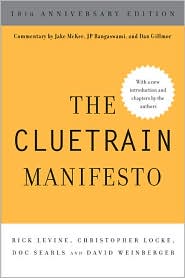
Cluetrain 10th Anniversary edition
Cluetrain 10th Anniversary
Everything Is Miscellaneous
Small Pieces cover
Small Pieces Loosely Joined
Cluetrain cover
Cluetrain Manifesto
My face
Speaker info
Who am I? (Blog Disclosure Form) Copy this link as RSS address Atom Feed

March 28, 2020

Computer Ethics 1985

I was going through a shelf of books I haven’t visited in a couple of decades and found a book I used in 1986 when I taught Introduction to Computer Science in my last year as a philosophy professor. (It’s a long story.) Ethical Issues in the Use of Computers was a handy anthology, edited by Deborah G. Johnson and John W. Snapper (Wadsworth, 1985).

So what were the ethical issues posed by digital tech back then?

The first obvious point is that back then ethics were ethics: codes of conduct promulgated by professional societies. So, Part I consists of eight essays on “Codes of Conduct for the Computer Professions.” All but two of the articles present the codes for various computing associations. The two stray sheep are “The Quest for a Code of Professional Ethics: An Intellectual and Moral Confusion” (John Ladd) and “What Should Professional Societies do About Ethics?” (Fay H. Sawyier).

Part 2 covers “Issues of Responsibility”, with most of the articles concerning themselves with liability issues. The last article, by James Moor, ventures wider, asking “Are There Decisions Computers Should Not Make?” About midway through, he writes:

“Therefore, the issue is not whether there are some limitations to computer decision-making but how well computer decision making compares with human decision making.” (p. 123)

While saluting artificial intelligence researchers for their enthusiasm, Moor says “…at this time the results of their labors do not establish that computers will one day match or exceed human levels of ability for most kinds of intellectual activities.” Was Moor right? It depends. First define basically everything.

Moor concedes that Hubert Dreyfus’ argument (What Computers Still Can’t Do) that understanding requires a contextual whole has some power, but points to effective expert systems. Overall, he leaves open the question whether computers will ever match or exceed human cognitive abilities.

After talking about how to judge computer decisions, and forcefully raising Joseph Weizenbaum’s objection that computers are alien to human life and thus should not be allowed to make decisions about that life, Moor lays out some guidelines, concluding that we need to be pragmatic about when and how we will let computers make decisions:

“First, what is the nature of the computer’s competency and how has it been demonstrated? Secondly given our basic goals and values why is it better to use a computer decision maker in a particular situation than a human decision maker?”

We are still asking these questions.

Part 3 is on “Privacy and Security.” Four of the seven articles can be considered to be general introductions fo the concept of privacy. Apparently privacy was not as commonly discusssed back then.

Part 4, “Computers and Power,” suddenly becomes more socially aware. It includes an excerpt from Weizenbaum’s Computer Power and Human Reason, as well as articles on “Computers and Social Power” and “Peering into the Poverty Gap.”

Part 5 is about the burning issue of the day: “Software as Property.” One entry is the Third Circuit Court of Appeals finding in Apple vs. Franklin Computer. Franklin’s Ace computer contained operating system code that had been copied from Apple. The Court knew this because in addition to the programs being line-by-line copies, Franklin failed to remove the name of one of the Apple engineers that the engineer had embedded in the program. Franklin acknowledged the copying but argued that operating system code could not be copyrighted.

That seems so long ago, doesn’t it?


Because this post mentions Joseph Weizenbaum, here’s the beginning of a blog post from 2010:

I just came across a 1985 printout of notes I took when I interviewed Prof. Joseph Weizenbaum in his MIT office for an article that I think never got published. (At least Google and I have no memory of it.) I’ve scanned it in; it’s a horrible dot-matrix printout of an unproofed semi-transcript, with some chicken scratches of my own added. I probably tape recorded the thing and then typed it up, for my own use, on my KayPro.

In it, he talks about AI and ethics in terms much more like those we hear today. He was concerned about its use by the military especially for autonomous weapons, and raised issues about the possible misuse of visual recognition systems. Weizenbaum was both of his time and way ahead of it.


Tweet
Follow me

Categories: ai, copyright, infohistory, philosophy Tagged with: ai • copyright • ethics • history • philosophy Date: March 28th, 2020 dw

Be the first to comment »

March 24, 2020

Hydroxychloroquine use for rheumatoid arthritis — but little research says it helps with COVID

NOTE: I edited the title of this post on March 29, 2020 to reflect the increasing evidence that HCQ is not useful in the prevention or treatment of COVID19. I also removed a few paragraphs from the Wall Street Journal reporting on a French  study, since the body of research since then runs contrary to its hopeful findings. As this post states, the rheumatologist I asked about this was not stating an opinion about whether HCQ works against COVID19, and is worried that the supply needed by their patients and by people with lupus might be diminished by a pointless run on the market. The information in this post about HCQ as a commonly used drug remains.

A highly reputable rheumatologist responded to my request for comment about a column by  Jeff Colyer and Daniel Hinthorn in the WSJ that holds out hope for using hydroxychloroquine to fight the Coronavirus.

The rheumatologist, who is highly respected, asked me not to use their name because they don’t want to be perceived as giving out medical advice — which this is not — and doesn’t have the time to go through their email message carefully enough to present it as a polished response. But they gave me permission to run it anonymously with those caveats. Here it is:

I give hydroxychloroquine to almost everybody who has rheumatoid arthritis and some of my patients have been on it for 20 years or more.  Of course, if patients have side effects from it I stop it and if they have improved to the point of appearing to be in full remission, I taper it down and may stop it.  There are people for whom it is not helpful by itself and is often used by me and others in conjunction with our other medicines for rheumatoid arthritis.  It is used similarly in psoriatic arthritis. I have a number of patients who have no swelling and no symptoms after treatment with hydroxychloroquine as the only “disease modifying drug.”

It is recommended to be given to virtually every patient with systemic lupus erythematosus as it is been found to improve their course, even when other medications are needed to get better control.  We also use it in other rheumatic diseases, sometimes with less evidence than for RA and SLE.

I have not used chloroquine, which is a closely related compound but one with somewhat more side effects and it is more powerful.

The side effects of hydroxychloroquine in the short term, which is what would be contemplated in treating COVID-19, are minimal to nonexistent, other than nausea and related problems, which I have almost never had patients report.  Ulcers are not caused by this.  There is a fear that people who are deficient in G6PD, an enzyme, will get hemolysis from this medication shortly after starting it;   people deficient in the enzyme G6PD could have a bad reaction to chloroquine but that is not reported now with hydroxychloroquine.  Hemolysis is destruction of red blood cells in the bloodstream and organs which could be a source of illness, however rumors that hydroxychloroquine causes this appear to be unfounded.  Several (5-10 years ago) years ago, I emailed a rheumatologist who is a world’s expert on hydroxychloroquine and asked him this question and he said that he has never seen this happen; most of us do not test for the presence of this enzyme anymore before starting hydroxychloroquine, as we feel it is not an issue.  This may not be true of chloroquine, but I have a feeling it is also not a problem.  Having to test everyone before getting this drug for COVID-19 would be a logistical difficulty given the time constraints and cost of the testing.

The rare side effects of hydroxychloroquine that might occur in the short term in my experience had been so rare as to be negligible. I have had one patient that I recall in recent years who had more vivid dreams while on this and she found that disturbing.

The vision problems that people refer to occur only after long-term use and the dangerous one is exceedingly rare.  The latter is some permanent loss of visual acuity due to retinal damage.  There was a recent study by ophthalmologists that reported that the upper dose level that we used was too high and they found evidence on new and specific testing of retinal damage at doses lower than we recommended, but these only occurred in people taking it for a long period of time, not a few weeks. Most of us in the rheumatology field have never seen damage at the frequency they report and are very disturbed by those findings.  We have been forced to lower our recommended dosages which undoubtedly has worsened some people.  In my recollection, which could be very faulty, I have had two or three people in over forty years who have had permanent visual changes after many years on the medication.  My associates have had similar experiences.

There are two other ocular problems both of which are reversible and rarely occur. One is a change in the eyeglass prescription (or requiring glasses) and the other is sparkling of lights at night. I have rarely seen either one and they are theoretically reversible by stopping the medication.  They also occur only after long term use, not a few weeks.

There is the possibility of skin pigment changing with long-term use but I do not believe I have ever had this happen to a patient.

I am sure when you review the possible side effects you will find many other side effects, however these are not common and are usually typical of any medication given to anybody for any reason.

The question of whether it is useful in COVID-19 is a separate issue about which I claim little or no expertise.  The initial trial was very small in number, but encouraging.  A real trial will be helpful but by the time it is completed, analyzed and available, we may be well past the pandemic phase, but still useful for the future.

An important study that I have thought of probably will not be done for logistical reasons.  That would be to study our patients with rheumatoid arthritis and systemic lupus who are on hydroxychloroquine to see their incidence of COVID-19 compared to a similar group of patients who are not on hydroxychloroquine.  The logistics are timing, finding a large enough sample size of patients on the drug and off the drug who are comparable, being sure the doses used are appropriate and knowing the exposures of the patient populations.

There is some concern that overuse of hydroxychloroquine by people who do not need it will deplete the supply of this important drug for our patients who are already on it and depending on it.  In fact, today I had a call from a patient who has been taking it for years and could not get it as her pharmacy was out of it.

Another medicine that rheumatologists use to treat rheumatoid arthritis and other conditions has been found in a small study to be successful in treating COVID-19.  That medicine is tocilizumab with the brand name of Actemra.  It interferes with IL-6.

The study the rheumatologist is proposing sounds ultra-interesting and possibly consequential.

Tweet
Follow me

Categories: science Tagged with: corona • coronavirus • covid29 • medicine Date: March 24th, 2020 dw

1 Comment »

March 21, 2020

A meme that’s ready for its closeup

Given this:

Do I at long last get to post this?

Tweet
Follow me

Categories: humor Tagged with: boomers • coronavirus • covid-19 • humor • memes Date: March 21st, 2020 dw

Be the first to comment »

March 15, 2020

Movies minus a letter

Someone on Twitter asked for movie titles with one letter removed that changes the movie altogether. Fun! And I’d link to the tweet but I’ve only been on Twitter since near its beginning so of course I don’t know how to go back from liked comments to the original. (If you know who came up with this movie challenge, please put in a comment to this post. Thanks.)

Anyway, here are mine:

  • Gentlemen Refer Blondes
  • Oceans Elven
  • Inglorious Basters
  • Lose Encounters of the Third Kind
  • West Side Tory
  • The Ride of Frankenstein
  • The Plane of the Apes
  • One with the Wind
  • Ear Window
  • The Evil Dad. Sequel: The Walking Dad.
  • And, for the age of social distancing: The Apartmen
Tweet
Follow me

Categories: entertainment, games, humor Tagged with: humor • movies Date: March 15th, 2020 dw

1 Comment »

March 12, 2020

For Biden to win

Because I have never even once been wrong about politics, I know you and the Biden campaign you’ve been waiting for my guidance about how the former VP can beat Trump. So here is the exact and precise plan from which I will permit not a single deviation.

Biden needs to hang on to his current base, expand it to include as much of Bernie’s as possible, and energize especially the young to campaign and vote.

Simple!

  1. Position Biden’s presidency as a four year return to normalcy that will position us for truly progressive change. Slogan: Make America America Again.
  2. Announce he will be a one-term president.
  3. Pick a truly exciting progressive VP, preferably a black woman. Stacy Abrams?
  4. Say that she will work even more closely with Biden than Biden with Obama. She will be fully prepared to become president.
  5. (Three years in, Biden should resign. Shhhh.)

I will leave for another post exactly the progressive positions he should aggressively adopt, how he should position them, and the colors of the binders he should use when presenting them.

Tweet
Follow me

Categories: politics Tagged with: biden • fantasy • politics Date: March 12th, 2020 dw

Be the first to comment »


Creative Commons License
This work is licensed under a Creative Commons Attribution-NonCommercial-ShareAlike 3.0 Unported License.
TL;DR: Share this post freely, but attribute it to me (name (David Weinberger) and link to it), and don't use it commercially without my permission.

Joho the Blog uses WordPress blogging software.
Thank you, WordPress!