


logo
EverydayChaos
Everyday Chaos
Too Big to Know
Too Big to Know
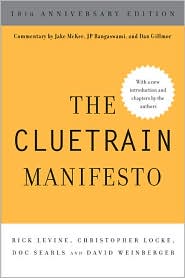
Cluetrain 10th Anniversary edition
Cluetrain 10th Anniversary
Everything Is Miscellaneous
Small Pieces cover
Small Pieces Loosely Joined
Cluetrain cover
Cluetrain Manifesto
My face
Speaker info
Who am I? (Blog Disclosure Form) Copy this link as RSS address Atom Feed

April 28, 2009

Australia: Broadband as electricity

Stephen Conroy, Australia’s Minister for Broadband, Communications and the Digital Economy, today gives a talk ([Tags: broadband telecommunications australia ftth fttp net_neutrality ]‘>transcript here) to the National Press Club in which he outlines the case for treating broadband access as a service as fundamental as electricity. Australia is implementing a national rollout, providing wholesale access to competitive access retailers. They want 90% of the country connected. “Our rollout will start at 100Mbps, but once fibre is distributed, future hardware upgrades can boost speeds even further to 1000Mbps and beyond.” (No mention of Net neutrality or the openness of access; a truly competitive market would help ameliorate some of the need for that.)

Conroy ends his talk with a summary:

Broadband, like electricity in the century past, has the potential to drive innovation, productivity, efficiency and employment across the economy.

It will, over time, influence every activity and process throughout our daily lives.

Broadband will transform health care.

Broadband will revolutionise education.

Broadband will underpin our future carbon constrained economy.

vBroadband will secure our infrastructure investments.

The National Broadband Network will support applications and services in these and other sectors that today we cannot begin to imagine.

And for the first time they will be delivered over a genuinely competitive platform.

It is our responsibility and obligation to ensure that these opportunities are available to future generations of Australians.

[Tags: broadband telecommunications australia ftth fttp net_neutrality ]

Tweet
Follow me

Categories: Uncategorized Tagged with: australia • broadband • egov • ftth • fttp • net neutrality • policy • telecommunications Date: April 28th, 2009 dw

2 Comments »

April 27, 2009

Free online courses directory

Here’s a list of free college courses available online, much of it open courseware. It’s a loooong list, I’m happy to say. Here’s a related post.

[Tags: online_courses open_courseware eudcation ]

Tweet
Follow me

Categories: Uncategorized Tagged with: education • eudcation Date: April 27th, 2009 dw

1 Comment »

Encarta nostalgia: SGML and the Semantic Web

I’m not going to much mourn Encarta’s demise. Wikipedia is too big, too fast, too useful, too much fun. But Encarta was an ambitious project that broke some ground. So, pardon me if I sigh wistfully for a moment, and have a little moment of Encarta appreciation. Ahhhh.

When Encarta began, it was taken as validating this whole crazy CD-ROM approach to knowledge. It was searchable. It had multimedia. It let you do some slicing and dicing. It was breezy, at least compared to its hundred-pound competitors. But for my circle, the big news was below the surface: Encarta used SGML. It was, in fact, one of the first commercial SGML projects delivered into the hands of average customers.

SGML — Standard Generalized Markup Language — was the Semantic Web of its time: roughly the same arguments in its favor, roughly the same approach. This isn’t entirely accidental, for two reasons: 1. HTML is a form of SGML. 2. SGML got a lot of things right.

SGML was a way of specifying the structural elements of a document. In the case of an encyclopedia, elements might include volumes, articles, article titles, subheadings, body text, illustrations, captions, references, and see-also’s. You could also specify the metadata for each element: this illustration is of a dress, its topic is “clothing,” its era is 1920-1930. SGML also let you specify rules about what constitutes a valid instance of a document. For example, the rules might say that a valid encyclopedia article has to have one and only one title, it can any number of illustrations, and every illustration has to have a caption. Once you have created a valid set of documents, you can then use your fancy-dancy computers to assemble views at will: Show me all the illustrations whose “topic” is “clothing” from the era 1920-1930. Etc. Incredibly useful.

You haven’t heard about SGML (at least not much) for a few reasons.

First, industries that wanted to be able to share data wrapped themselves in knots trying to tie down the specific specifications for their documents. Endless and endlessly geeky arguments ensued about how exactly to encode a table of parts.

Second, outside of technical documentation designers, most people don’t think about documents in terms of their structural elements. Rather, they think of documents as a series of formatting decisions. SGML was not designed to capture format. From SGML’s point of view, the title of an article is simply an element called “title” and it’s up to someone else to decide whether titles are bolded, underlined, or printed in red. Now, let me hasten to add that people actually do think of documents in terms of their structure: We decide to make this piece of text bold because it’s the title. But we seem to be reluctant to note those decisions in terms of structure; we’d rather just drag-select the text and hit the bold-it key. That’s why Microsoft Word over the years has made “procedural markup” (drag-select-bold) more prominent in its UI than “declarative markup” (declare this paragraph to be a Title element, and then tell it how to format Titles).

Third, HTML swept the world. HTML is a set of SGML elements and rules specified by a certain Sir Tim. Because HTML is designed not for encyclopedia articles or for shopping lists but for anything that might be put on the Web, it has highly generic elements that do not reflect the content of particular types of pages: It has six levels of headings, two types of lists, one type of image, etc. The SGML folks initially sneered at this. It looked “brain dead” to them. The documents were too generic. There wasn’t enough semantics: That something is a second-level heading expresses its place in the document’s structure, but not the fact that it’s the name of a repair procedure or a list of ingredients. And, HTML seemed too interested in capturing formatting. That’s why newer versions of HTML want you to use <em> (em=emphasis) instead of the original <i>: the old way had you making a formatting decision (“Italicize it”) rather then a structural one (“The role this point plays is that of being emphatic, which the browser should visually express in the way it feels is proper”).

The other side of the coin is that HTML is way way way easier to use than having to design and then follow a set of SGML design rules, with specific elements, for every different sort of document you want to create. Its simplicity meant that people actually succeeded at it. Furthermore, it was in the interest of the browsers to forgive all errors: If browser X rejects a page because it didn’t follow HTML’s rules, you would be driven to see if browser Y could display the page. If Y could, you’d consider X — not the page — to be broken. The browser economics favored sloppiness and forgiveness, neither of which were hallmarks of the SGML’s discipline-based culture.

Now, as the great dialectical pendulum swings, the Semantic Web has arisen to remind us of the value of metadata. If it can avoid the perfectionism and discipline that left SGML as a tool for the few, it will add back in some of the smarts the loose ‘n’ low-hangin’ HTML usefully took out. As the name implies, the Semantic Web is more about expressing the structure of meaning and concepts in a field than about expressing the structure of documents. For an encyclopedia, you wouldn’t want to wait for the Semantic Web to create the entire web of meaning, because that web would have to be as wide as the topical coverage of the encyclopedia itself. You might instead want to come up with a set of standard document elements, perhaps applied somewhat loosely, with the ability to slather on rich layers of metadata, and then watch webs of semantics get spun. Which is pretty much exactly what we’re seeing at Wikipedia.

Meanwhile, Encarta remains an example — along with the Oxford English Dictionary and others — of the value of rigorously structured and metadated documents.

[Tags: encarta sgml semantic_web ]

Tweet
Follow me

Categories: misc Tagged with: encarta • misc • sgml Date: April 27th, 2009 dw

1 Comment »

April 26, 2009

How?


David Blaine Card Magic

It worked on me. My question/speculation is in the first comment…
[Tags: magic david_blaine card_trick ]

Tweet
Follow me

Categories: Uncategorized Tagged with: entertainment • magic Date: April 26th, 2009 dw

7 Comments »

Did the telegraph bring peace?

In his book The Victorian Internet, Tom Standage presents two quotations (pp. 103-104) prompted by the creation of transatlantic telegraph cables. The first is from Henry Fields:

“It brings the world together. It joins the sundered hemispheres. It unites distant nations, making them feel that they are members of one great family…An ocean cable is not an iron chain, lying cold and dead in the icy depths of the Atlantic. It is a living, fleshy bond between severed portions of the human family, along which pulses of love and tenderness will run backward and forward forever. By such strong ties does it tend to bind the human race in unity, peace and concord…it seems as if this sea-nymph, rising out of the waves, was born to be the herald of peace.”

The second is unattributed:

“The different nations and races of men will stand, as it were, in the presence of one another. They will know one another better. They will act and react upon each other. They may be moved by common sympathies and swayed by common interests. Thus the electric spark is the true Promethean fire which is to kindle human hearts. Men then will learn that they are brethren, and that it is not less their interest than their duty to cultivate goodwill and peace throughout the world.”

The obvious lessons are, first, that our enthusiasms are sometimes wildly wrong, and, second, that technology by itself doesn’t determine its effect.

And yet I wonder if the tele-utopians were entirely wrong. It is undeniable that the 150 years between the deploying of the telegraph and the rise of the Internet have been unimaginably bloody. So, in that sense, the telegraph heralded the opposite of peace.

That correlation — more communication, more war — certainly means that communication technology doesn’t bring peace. But communication technology may still be an instrument of peace. Peace — IMHO — ultimately comes from understanding that we share a world about which we care differently. The only feasible peace is a noisy peace. We only get there via communication. And I believe that overall communication technology has made us more aware of the unresolvable noisiness of the world. Simple-minded colonialism is no longer in vogue. There is an increasing understanding that no one religion or form of government is going to sweep the table (although those who think it’s their way or the highway to hell are still working their horrors). Our hearts and minds are closer to the conditions of peace than they were before the telegraph, although our governments, religions, and economic systems still have a long way to go.

No, the world is still a mess, and the warriors still tend to rise in power. Yes, communication technology enables armies to deploy on new and vast scales. But also: Peace comes from the recognition of difference that communication makes possible. The tele-utopians were comically wrong, just as are cyber-utopians who think the Net will automatically create peace. But both are also right to rejoice. The threading of the world through communication is the most fundamental condition for a noisy peace, which is the only type of peace possible in a world characterized by difference.

[Tags: cyber-utopian utopian telegraph communication peace noise ]

Tweet
Follow me

Categories: Uncategorized Tagged with: communication • cyber-utopian • everythingIsMiscellaneous • globalvoices • infohistory • noise • peace • telegraph • utopian Date: April 26th, 2009 dw

5 Comments »

April 25, 2009

The Pirate Bay and The Pirate Google

ThePirateBay has links to content hosted elsewhere that’s available for download using the BitTorrent protocol. The site also provides a search engine for finding that content, and a page for each torrent with information about the content. It doesn’t distinguish between content that’s protected by copyright and content that isn’t. The four founders of ThePirateBay were convicted by a Swedish court last week. They were fined a middling amount, and were sentenced to a year in jail. (“What’re you in for?” “Improper use of metadata.”)

Now there is ThePirateGoogle, created by someone to make a point. There you can use the Google search engine to search for content hosted elsewhere, available for download using the BitTorrent protocol. It doesn’t distinguish between content that’s protected by copyright and content that isn’t.

Here’s the text from ThePirateGoogle site:

Bit Torrent Search

Please Note: This site is not affiliated with Google, it simply makes use of Google Custom Search to restrict your searches to Torrent files. You can do this with any regular Google search by appending your query with filetype:torrent. This technique can be used for any type of file supported by Google.

The intention of this site is to demonstrate the double standard that was exemplified in the recent Pirate Bay Trial. Sites such as Google offer much the same functionality as The Pirate Bay and other Bit Torrent sites but are not targeted by media conglomerates such as the IFPI as they have the political and legal clout to defend themselves unlike these small independent sites.

This site is created in support of an open, neutral internet accessible and equitable to all regardless of political or financial standing.

Cheers!

Yes, you can do with Google what you do with ThePirateBay. For example, do the following search at Google:


filetype:torrent “the dark knight”

There’s obviously a difference in intent between ThePirateBay and Google. But there is precious little relevant difference in the service. So, why jail the founders of ThePirateBay but not the founders of Google since either can be used to find copyright-protected torrents? Having the wrong mental attitude? (“What are you in for?” “Intent to improperly use metadata.”)

What to make of this? I find myself in a jumble:

1. I don’t think it’s a double standard. Intent counts. The difference between the Heimlich maneuver and assault is intent, and that’s as it should be. ThePirateBay is intended to enable the sharing of copyrighted works: TPB has facilities designed to help you locate, evaluate, and share files, including a page for each torrent with comments, ratings, descriptions, and the number of seeders and leechers (to see how alive the torrent is). And it’s named The freaking Pirate Bay. There may or may not be a law in Sweden against what TPB does, but it’s disingenuous to say that the site is ethically the same as Google.

3. ThePirateGoogle shows that shutting down ThePirateBay is not going to stop the use of BitTorrent to share copyrighted files. But jailing TPB’s founders may slow sharing down. Torrent site after torrent site has been shut down over the past few years, making it harder to find and download files now. The verdict in TPB case, especially with its jail sentence, will slow down the torrent of torrents, although perhaps not by much.

4. Just in case someone tells you otherwise: The BitTorrent protocol is not the issue here. It’s a brilliant way of sharing large files, and it’s used all over the place for perfectly legal file-sharing.

5. I don’t know what to do about copyright. It’s obviously spun out of control and needs to be pulled back in — lasting 70 years after the death of the creator is absurd — but we need to do far more than just shorten its term. Compensating creators for every use of their works obviously contradicts the maximal open sharing and reuse of works that drives culture forward. Creating a legal and economic environment with incentives for creators does not contradict the open sharing and reuse of works. The question is: Which legal/economic environment would work best? I don’t know — I wish I did — but I suspect it’s one in which copyrighting a work takes a little bit of effort, not all categories of work have the same copyright protections, the terms are way way way shorter than they are now, fair use is greatly extended, infringement only counts if it actually hurts sales (in the way that most mashups do not), compensation does not come from accounting for each and every use of a work, and we start rewarding those who release their works into the public domain by showering them with affection, cultural uptake, and some money.

That’s about seven steps short of an actual copyright reform program. But I find the whole topic headache-making and, frankly, depressing. [Tags: thepiratebay google copyright copyleft ]


1. ThePirateBay posts all the legal letters it gets, plus its replies. Feisty doesn’t begin to describe the replies.

2. The judge in the case seems to have ties to the copyright industry. The lawyer for one of the defendants is calling for a new trial.

Tweet
Follow me

Categories: Uncategorized Tagged with: copyleft • copyright • digital culture • digital rights • everythingIsMiscellaneous • google • thepiratebay Date: April 25th, 2009 dw

5 Comments »

April 24, 2009

Hodgman is Benchley

I’ve been reading John Hodgman‘s More Knowledge than You Require and The Areas of My Expertise. They are laugh-out-loud funny. I know this because I’ve been laughing out loud.

They make me wonder if Hodgman knows he is Robert Benchley born into the Internet Age. And I mean that as high praise.

[Tags: john_hodgman robert_benchley humor ]

Tweet
Follow me

Categories: Uncategorized Tagged with: culture • entertainment • humor Date: April 24th, 2009 dw

1 Comment »

Craigslist Killer – PR in the news

Doc blogs about the unfairness of Craigslist becoming an adjective attached to “killer.” Yes, it’s unfair. It’s what the tabloid press does. And increasingly, that just means “the press.”

That’s the sort of catchy name that sells papers. But, as Craig points out in his blog, Craigslist does not promise anonymity. In fact, it promises that it will rat out rats. Wikipedia makes the same promise. Good. Of course, this assumes the police are not persecuting innocents as part of a totalitarian state, but I’m happy Craigslist helped the police arrest the sick fuck who otherwise probably wasn’t done murdering women allegedly.

The PR job doesn’t stop with the media, of course. Craigslist’s PR company fumbled the ball here in Boston. This Businessweek story is excellent, but the Boston Globe coverage has been miserable (here, here and here). The PR agency seems intent on keeping Craig from commenting, shunting inquiries to CEO Jim Buckmaster. Nothing against Jim, but Craig’s name is on the site. Craig has earned his reputation for honesty, bluntness, and service. Craig is known, respected, and even beloved. So, master the buck, Craig. It stops with you.

PS: The Globe ought to take a look at the “Erosphere” classified ad section of the Boston Phoenix before coming down on Craigslist.

[Tags: craigslist anonymity pr marketing ]

Tweet
Follow me

Categories: misc Tagged with: anonymity • craigslist • culture • digital rights • marketing • media • policy • pr Date: April 24th, 2009 dw

11 Comments »

April 23, 2009

From our Archives

After giving a talk to folks from the National Archives, they gave me a book — Your Land, Our Land, edited by Monroe Dodd and Brian Burnes, on the staff of the National Archives — of photos from the regional archives. Beautiful stuff in it. Here are some samples. (I photographed them since the book doesn’t fit into my scanner very well.) Click on the samples to download large versions:

artillery shells
From the Watertown arsenal (Boston), WWI artillery shells

artillery shells
Woody Guthrie’s signed loyalty oath

artillery shells
vMinerva Markowitz working an engraving machine: Brooklyn Navy Yard, WWII

This book, published by Kansas City Star Books and the Foundation for the National Archives comes with the usual stern copyright warning:

“All rights reserved. No part of this book may be reproduced, stored in a retrieval system or transmitted in any form or by any means, electronic, mechanical, photocopying, recording or otherwise, without the prior consent of the publisher.”

But I checked with counsel: The copyright only extends to the selection and arrangement of the photos, plus any text they added. The photos themselves are public domain (I presume), and “in the US (unlike Europe), there is no copyright protection for the digitization or accurate reproduction of public domain works.”

[Tags: national_archives photos woody_guthrie artillery munitions rosie_the_riveter copyright ]

Tweet
Follow me

Categories: Uncategorized Tagged with: artillery • copyright • culture • digital rights • egov • munitions • photos Date: April 23rd, 2009 dw

5 Comments »

April 22, 2009

Transparency of zombies

I really like the fact that when Left 4 Dead (the great cooperative zombie killing game) introduced a new type of gameplay, one of the developers explained the math behind the balancing of the waves of incoming undead.

[Tags: games left_4_dead zombies transparency blogging expertise ]

Tweet
Follow me

Categories: blogs Tagged with: blogging • blogs • entertainment • expertise • games • transparency • zombies Date: April 22nd, 2009 dw

3 Comments »

« Previous Page | Next Page »


Creative Commons License
This work is licensed under a Creative Commons Attribution-NonCommercial-ShareAlike 3.0 Unported License.
TL;DR: Share this post freely, but attribute it to me (name (David Weinberger) and link to it), and don't use it commercially without my permission.

Joho the Blog uses WordPress blogging software.
Thank you, WordPress!