
logo
EverydayChaos
Everyday Chaos
Too Big to Know
Too Big to Know
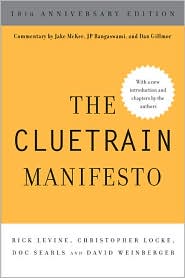
Cluetrain 10th Anniversary edition
Cluetrain 10th Anniversary
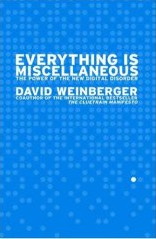
Everything Is Miscellaneous
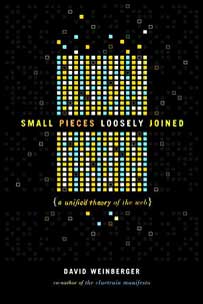
Small Pieces cover
Small Pieces Loosely Joined
Cluetrain cover
Cluetrain Manifesto
My face
Speaker info
Who am I? (Blog Disclosure Form) Copy this link as RSS address Atom Feed

October 8, 2007

Isenberg on the history of Net neutrality

David Isenberg lays out a history of common carriage as part of an argument for Net Neutrality.

You should also note his quoting of Jim Hoffa on AT&T’s decision to censor messages it considers critical of AT&T. [Tags: david_isenberg net_neutrality at&t jim_hoffa free_speech ]

Tweet
Follow me

Categories: Uncategorized Tagged with: business • digital rights • net neutrality • politics Date: October 8th, 2007 dw

11 Comments »

October 7, 2007

Mercenaries by any other name

I mean this seriously, not snarkily or rhetorically: Is there any reason why Blackwater “contractors” are not more properly termed “mercenaries”? [Tags: mercenaries blackwater]

Tweet
Follow me

Categories: Uncategorized Tagged with: media • politics Date: October 7th, 2007 dw

19 Comments »

October 6, 2007

Quilt

I started poking around at Madame Levy’s quilt gingerly. As luck would have it, the first link I followed was to Arcade Fire – Neon Bible live in an elevator. As I kept poking, I found more and more. As Frank Paynter, who pointed this site out to me puts it, this is curation. It is indeed curation as art. [Tags: madame_levy curation art everything_is_miscellaneous]

Tweet
Follow me

Categories: Uncategorized Tagged with: culture • digital culture Date: October 6th, 2007 dw

2 Comments »

October 5, 2007

Revolution in JesusLand

The always-interesting Zack Exley is on the road scouting “the fourth Great Awakening,” in which grassroots Christians are discovering that Jesus was pretty damn progressive. His blog as he travels through the heartland is provocative and eye-opening (at least for this Northeastern Jew). As he writes in the about page:

This blog is a plea to the progressive movement, to take another look and get to know the diverse and complex world of evangelical Christianity in its own terms. Here you’ll find interviews, commentary, analysis and other dispatches from all over “Jesusland.” This tour will explore everything from the workings of the local church, to the evangelicals’ vibrant, decentralized national leadership training infrastructure to theological questions such as, “How in the world DO they read the Bible literally?” and “Do they really think I’m going to hell?”

[Tags: christianity progressives liberals politics zack_exley ]

Tweet
Follow me

Categories: Uncategorized Tagged with: culture • politics Date: October 5th, 2007 dw

2 Comments »

October 4, 2007

Copyrighting book prices: The video

Berkman.TV has posted a video in which Wendy Seltzer and Angela Kang explain why the Harvard Coop was deliriously wrong when it used copyright to justify its kicking out a student for copying down book prices. [Tags: copyright berkman wendy_seltzer angela_kang publishing harvard harvard_coop ]

Tweet
Follow me

Categories: Uncategorized Tagged with: business • digital rights • education • marketing Date: October 4th, 2007 dw

1 Comment »

Skipping Ideas

I was supposed to be doing the closing keynote at the Ideas conference in NYC tomorrow — which looks like an excellent conference — but I’m in Day Two of a miserable sore throat, ear ache, head ache beat down. I had been hoping it was going to be a one day illness, but I woke up way worse than I felt yesterday.
So I’ve regretfully told the conference I’m not going to make it. I just can’t visualize dragging myself down to the train station and making the trip. I feel like, well, crap.

I hate doing this. And it’s probably not a genuine health issue…it’s not like if I travel, I’ll die. It’s just discomfort, and maybe a slightly longer recuperation although I’m not convinced that that’s the case. So maybe I should just suck it up and go to the train station. But, the thought of 3.5 hours of head rattling, even in the relative comfort of a train, fills me with anxiety.

So, I guess I’m not going. I’m sure the conference will be splendid without my closing comments. Think of it as my gift of more hallway time.

:(

Tweet
Follow me

Categories: Uncategorized Tagged with: conference coverage Date: October 4th, 2007 dw

2 Comments »

October 3, 2007

Harvard moves towards Open Harvard moves towards Open Access scholarship

According to the Harvard Crimson, the Harvard Faculty of Arts & Sciences’ governing body has proposed an open access policy according to which faculty members would make their research available for free either on a university site or on their own site. This would be in addition to publishing in academic journals, some of which charge $20,000 a year for a subscription. It’d be an opt-out program. The Harvard Crimson has a good editorial supporting it.

Yay! Locking research up in for-pay journals slows the pace of knowledge. The peer review system — one important way ideas are vetted — does not require the existing print publication system. Harvard’s move will not only make more information more widely available, it may help nudge the system itself into a form that better serves our species’ interests: As more schools adopt open access programs, researchers will have an increasing disincentive not to lock their work up.

I’m actually not sure how this will work, especially with regard to its being opt-out. If I’ve just had an article accepted by The Journal of Hydroponic Pediatrics. do I then also submit it to the Harvard open access server? If so, in what sense is that opt out?

Obviously, I’m also interested in what sort of metadata and aggregation facilities Harvard will supply to make these articles easily findable.

But what pleasant questions to contemplate! [Tags: open_access harvard publishing copyright a2k everything_is_miscellaneous ]

Tweet
Follow me

Categories: Uncategorized Tagged with: digital rights • education • everythingIsMiscellaneous • media Date: October 3rd, 2007 dw

1 Comment »

October 2, 2007

Meta-radio

James Vasile, who just gave a Berkman lunch-time talk, distributed a copy of a brief paper, “Unlock the Rock,” which is not yet up on the Web. In it, James suggests that we separate radio into its two functions: DJs who figure out what to play, and the delivery mechanism. Someone should create a plug-in (or sump’in) that lets everyone create playlists using simple HTML, and lets everyone listen to those playlists by scouring multiple sources for the music. So, if you have a copy on your disk, it’ll play that. If there’s an online distributor that has it available, great. If you have to buy it from iTunes, then it’ll let you. Or maybe you have a small p2p network of friends who are sharing music.

Interesting. It’d at least make it difficult to find someone to sue. And the publishers might make some money out of it. And, from my provincial point of view, it’d be a nice case of separating the metadata from the data…. [Tags: james_vasile internet_radio everything_is_miscellaneous ]

Tweet
Follow me

Categories: Uncategorized Tagged with: culture • digital culture • digital rights • everythingIsMiscellaneous • media Date: October 2nd, 2007 dw

3 Comments »

Berkman lunch: James Vasile on the limitations of the GPL

James Vasile of the Software Freedom Law Center is giving a Berkman lunch. He’s going to talk about aspects of the Gnu Public License that people don’t generally talk about. He says he’s going to skip the part where he explains how great the GPL is, which he fully believes it is and focus instead on some problems with it. [As always, I’m blogging sloppily, missing stuff, mischaracterizing, etc.]

The Software Freedom Law Center is a pro bono, non-profit law firm for people who produce free software. It spent a year crafting a “really good license.” It’s a copyright license that gives others conditional permissions to use the software. The GPL is also a patent license, as of version 3.

What isn’t the GP? It’s not a social contract. It’s not the embodiment of an ethos. “It is not the constitution on which the software world is built.” It’s sometimes treated that way, but it’s really just a set of permissions. “There are people running around with images about what the GPL says that don’t match what’s in the license.” E.g., people think the GPL forbids the commercial use of free software, although it’s never said that. People insist on believing that. it does It will never be everything that people want it to be. That’s the price of having “one dominant license,” which, however, is good for interoperability.

Although the license isn’t perfect, it’s really good. “In fact, we’ve won.” The free software wave is not going to end. There are more projects every day, and they’re getting better and better. Businesses use free software not because they believe in the ideals of free software but simply because it’s efficient. But that means “we’ve invited into our community” stakeholders who don’t share our “starry-eyed ideals.” What do we do about starting a conversation about what we owe each other? What does the partnership actually mean on a day to day and long-term basis?

The GPL is also not a trademark license. Some large free software projects have their own brand managers. E.g., Gnome would like to let people use their foot symbol with some degree of freedom, so they’re writing their own trademark license. That’s not covered by the GPL.

Q: (wendy seltzer) Does the community need its own, special trademark law?
A: I often tell them they don’t need a trademark law; they need a trademark policy delineating what is ok and what is not. The GPL has habituated to thinking that licenses should tell them what’s right and wrong, as if a license were a good way to communicate with developers.

Q: (me) Didn’t that happen because the license precipitated the conversation and was the place where the details had to be worked out, as opposed to thinking that people wanted to read legal language?
A: Yes, but we shouldn’t move forward by working on the license. E.g., we need a discussion about trademark, but it shouldn’t happen within the framework of the discussion of the GPL.

The GPL is also not a document that reads itself. Version 3 has more pieces than 2, and the pieces interact in more complex ways. It’s tough for a layperson to read. The GPL four freedoms are useful but not enough.

The big benefit of the GPL was that it made it easier to make it compatible with, e.g., the Apache license and the Affero license. (Wikipedia on Affero: “…derived from the GNU General Public License with an additional section to cover use over a computer network.”)

Finally, there are the hard cases. ” E.g., DRM is complicated. “There will never be a system that allows you to authenticate a Britney Spears song that doesn’t also authenticate a client.” Some people wanted the GPL to prevent free software from having any DRM, but there were too many unintended consequences of doing so. It’s an interesting area we should watch.

Many of the above limitations are inherent in using legal documents to create documents.

Q: (wendy) The technology is the same to authenticate a game client and an authorized copy of a song, the game player can make a choice to be part of a network where no one can cheat, while the music purchaser hasn’t made that choice.
A: You could let people explicitly opt in rather than relying on the implicit acceptance of the terms of service. But trying to write that into a generally-applicable GPL would be extremely difficult. We thought about it.
Q: I just hate it when people say that there’s no difference between bank security and DRM because they really want DRM.
A: Oh, I agree. I am as bothered by DRM as Richard Stallman is. E.g., E-911 legislation forbids the owner of cellphone from disabling the auto-locater functionality. So, “can you deliver a GPL phone in the US without running afoul of E-911 legislation?
A: (wendy) The legislation says that device must be “robust” against user modification, which free software isn’t.

Q: (me) How do we have the conversation but not around the GPL? And where do we get a plain English version of the GPL so we can understand it?
A: Try here. And it’s not clear where the conversation could be held, and bringing all the voices to the table would be difficult. [Tags: james_vasile gpl gnu free_software fsf berkman ]

Tweet
Follow me

Categories: Uncategorized Tagged with: digital culture • digital rights Date: October 2nd, 2007 dw

2 Comments »

Karen Schneider moves on from ALA blog

Karen Schneider (the Free Range Librarian) is one of those strong-voiced writers who makes a real difference in her domain. Now she is leaving the American Library Association’s TechSource blog — which she was instrumental in beginning — in order to follow her writerly instincts. Her last post is a message to librarians that usefully points them toward their fears. [Tags: karen_schneider libraries ala everything_is_miscellaneous]

Tweet
Follow me

Categories: Uncategorized Tagged with: culture • digital culture • education • everythingIsMiscellaneous • taxonomy Date: October 2nd, 2007 dw

1 Comment »

« Previous Page | Next Page »


Creative Commons License
This work is licensed under a Creative Commons Attribution-NonCommercial-ShareAlike 3.0 Unported License.
TL;DR: Share this post freely, but attribute it to me (name (David Weinberger) and link to it), and don't use it commercially without my permission.

Joho the Blog uses WordPress blogging software.
Thank you, WordPress!