


logo
EverydayChaos
Everyday Chaos
Too Big to Know
Too Big to Know
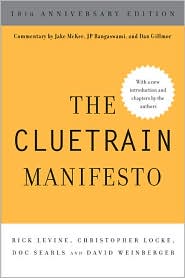
Cluetrain 10th Anniversary edition
Cluetrain 10th Anniversary
Everything Is Miscellaneous
Small Pieces cover
Small Pieces Loosely Joined
Cluetrain cover
Cluetrain Manifesto
My face
Speaker info
Who am I? (Blog Disclosure Form) Copy this link as RSS address Atom Feed

December 19, 2006

FCC to auction dimensions

Washington DC — FCC Chair Kevin Martin has announced that in addition to auctioning off rights to spectrum—ranges of radio wave frequencies, also known as “colors”—the FCC will in January begin auctioning off the eleven dimensions discovered by string theorists. Winners will have exclusive rights to all property and activity in those dimensions.

The dimensions include:

1

Points

2

Lines (includes Nicole Ritchie)

3

Objects

4

Time

5

Gaant charts

interstitial

Leeway for when D5 runs over

6

ESP-based wifi

7

Rumors

interstitial

Hope

8-12

Regrets

Bidding begins January 2. [Tags: fcc spectrum telecommunications humor ]

Tweet
Follow me

Categories: Uncategorized Tagged with: humor Date: December 19th, 2006 dw

2 Comments »

Citi Cards’ sloppy security or was it phishing?

I got a call from a robot today, asking me to call an 800 number about something to do with my Citi credit card. The robot didn’t identify me by name, but it did say that it wasn’t a sales call. So, I called the 800 number (800 200 8054 in case you care). The person who answered asked me for my name and credit card number, which I refused to give them. Why should I hand that out to a stranger, even if the stranger claims to be with Citi and has a lovely speaking voice? So I spoke with a manager who assured me that it was ok to give him the information. “It’s a common business practice,” he told me.

He also said me that the call was legit because there’s a telephone number on the back of my card.

“Is it this number?” I asked.

“No, but you can call it, if you want.”

So I did. They had no notices on any of my accounts, except for a tickler to sell me identity theft insurance.

So, was it all a crafty attempt to either sell me ID insurance or to motivate me to buy ID insurance??? [Tags: citi scams identity_theft]

Tweet
Follow me

Categories: Uncategorized Tagged with: marketing Date: December 19th, 2006 dw

10 Comments »

Jerome Armstrong on what works in Net organizing

Jerome Armstrong was a senior staffer at Mark Warner’s almost-campaign for president. (And a shout-out to Nancy Scola, Nate Wilcox, and the rest of the group.) Warner was doing interesting things with the Net and was on the verge of possibly taking some strong positions extending broadband and protecting the Net architecture. But, alas, Warner decided not to run.

There’s an excellent interview with Jerome over at Personal Democracy Forum… [Tags: politics netroots jerome_armstrong mark_warner democracy ]

Tweet
Follow me

Categories: Uncategorized Tagged with: politics Date: December 19th, 2006 dw

2 Comments »

December 18, 2006

Blog Tag. I’m it.

Oy. Glenn Fleishman has tagged me in a game of blog tag. The rules say that I now have to post five things most people don’t know about me. I then get to tag five other bloggers.

Five things:

1. I hate fish so much that even before I was a vegetarian, I’d sometimes lie that I have an allergy to them. (I like feeding fish, however.) I will leave the table (without making a fuss) if seated across from someone reverse engineering a lobster or crab.

2. I am afflicted with a malady that requires me to tap along to any beat, including directional signals.

3. I’ve played almost every first person shooter there is. My player name is “Target,” which gives you an idea how good I am.

4. I am a closet hobbyist programmer. But because I have difficulty with indirect relationships such as pointers, I couldn’t get from C to C++. To my great embarrassment, I currently program mainly in Visual Basic.

5. I was on the student-faculty committee at Bucknell U. that came up with the idea of letting students design their own major, and I was in the first graduating class that could take advantage of this opportunity. And that, ladies and gentlemen, explains why I graduated Bucknell as a Meaning major.

I tag Euan Semple, Denise Howell, Chris “RageBoy” Locke, Jeneane Sessum and Susan Crawford… [Tags: blogtag]

Tweet
Follow me

Categories: misc Tagged with: misc Date: December 18th, 2006 dw

3 Comments »

Person of the Year acceptance speech

Gosh! I’m so excited. I know everyone says this, but I really wasn’t expecting to win. There are so many great, great other nominees. It’s really just a privilege to be nominated with them.

But, gosh, I won. I won!!!! I wish I’d listened to mom and prepared something better. Hi, Mom. I love you!

An award like this really shouldn’t go to one person. Everyone involved in the project deserves the credit. Without them, I wouldn’t be here. Really. Every one of you. I’m so worried I’ll leave someone out, but, well, I’d like to thank Baija Aa, Banta Aa, Baroni Aa, Basilia Aa… [Tags: time person_of_the_year humor]

Tweet
Follow me

Categories: Uncategorized Tagged with: humor • media Date: December 18th, 2006 dw

Be the first to comment »

Slayage, please come home!

Slayage.tv, the Buffy scholarship site, is closed. Ack! There were tons of articles there. Perhaps the owners of it would like to move it to Wikia‘s OpenServing program where, if accepted, it’ll be hosted for free? If you happen to know the Slayage folks, could you let them know about OpenServing? [Tags: buffy slayage openserving wikia ]

Tweet
Follow me

Categories: Uncategorized Tagged with: digital culture Date: December 18th, 2006 dw

6 Comments »

December 17, 2006

The case for taste

Paul Graham, the massively talented essayist, has published a piece that further explains the ideas in his “Taste for Makers” article. The new piece is called “How Art Can Be Good” and it is, of course, excellent.

I’m proud to say that he was stimulated to do this in small part by my interview of him (video) at the Berkman Center. I’d like to think I annoyed him just enough to push him over the edge to write the new essay :)

A couple of days after our conversation, I wrote up a response to “Taste for Makers.” But it slipped between my cracks–I have become all cracks, no flooring–so I never posted it. I’m posting it here, even though it’s now obviated by Paul’s new essay, “How Art Can Be Good.” But I did the work, and I want to get it “on the record” so to speak. I’ll come back to “How Art Can Be Good” soon…


Paul Graham was motivated to write his essay, Taste for Makers by his father saying that something was just a matter of taste, as if there were nothing more to be said on the topic. Taste is not subjective, Paul argues. In his essay, he gives a dozen principles for designing beautiful things, principles that he urges are eternal and even—in my interview with him last week (video here)—trans-planetary: The proverbial space alien would respond to at least some of these principles. (Question I should have asked him: A space alien might, but do dogs? Dolphins?)

I agree that taste is not merely subjective, and Paul’s principles taken together and apart seem like helpful advice. (I am not a “maker” in Paul’s sense so I don’t have standing on such questions.) The case for taste needs to be made now more than ever, and Paul makes it with his usual casual elegance (which, we learned in the session I had with him last week, was the effort of non-casual labor). But I disagree with how he makes the case and the picture of art that flows from it.

The case for taste needs to be made because the alternative is ignorance, arrogance, and despair. “I don’t like Bach,” uttered by someone who has only heard one piece, forced on her by her seventh grade music teacher, betrays a type of aesthetic fundamentalism that thinks works can be experienced directly. You just sit down and listen. If you don’t like it, that’s the end of the story. In fact, the seventh grader doesn’t know how to listen to Bach. Further, as Paul points out, if left unchallenged, she’s implicitly told that she is a competent judge and that therefore beauty goes no further than the surfaces she experiences. Ignorance, arrogance, despair.

But, the way past this does not require affirming principles that, because they are eternal (or at least long-lasting) and trans-species, have the properties we expect of the objective.

Paul defines taste as the ability to recognize beauty. It is not “merely a matter of personal preference.” To be clear, I think we ought to differentiate taste from mere taste. Of those two, mere taste is far less problematic: Something is merely a matter of taste if it is simply a personal preference. I like chocolate ice cream and hate mint. You hate chocolate and like mint. If there’s nothing else to be said, it’s merely a matter of taste.

Taste is harder to understand, in part because in recent years it’s taken on an elitist cast, so there are cultural politics involved in its use. Think about when and on what occasions you might say, “She’s a woman of taste,” or “She’s got good taste.” Frequently, that’s a way of saying that a person likes expensive things. If talking about curators of major museums, the term “taste” may actually mean “mere taste”: If I say I like the taste of the curator of the MOMA, I’m probably not acusing the curator of the Met of being unable to recognize beauty; I’m probably saying that I happen, subjectively, to prefer the choices hanging at the MOMA.

So, “taste” is a tough word. Paul’s definition—the ability to recognize beauty—has the advantage of acknowledging that beauty is not a matter of mere subjective preference. But Paul’s definition may imply too simple a relationship between beauty and experience. Beauty and our recognition of it is conditioned by elements that Paul ascribes to mere fashion. (Fashion is, in Paul’s understanding, a trend in what I’m calling mere taste. Mullets are a matter of fashion.)

The problem with tying the non-subjectivity of taste to beauty is that beauty does not consist of a set of properties that can be specified, agreed upon and applied. Paul’s design principles say that beauty is simple, eternal, symmetrical, resembles nature, is hard but looks easy, is often slightly funny, is often strange, is often daring, etc. Of course Paul isn’t saying that these are either necessary or sufficient. But, any design principles cannot do more than capture the current taste in beauty. For example, I think Paul’s “Good design is simple” resolves into the tautology that “Bits that are extraneous are extraneous.” But which ones are extraneous? Even as an exhortation to prefer fewer bits to more bits (or, as Paul brilliantly explained it in our discussion, to prefer designs that compress better), it fails to capture periods in which, say, paintings tried to express the excessiveness of G-d’s gift or plays that revelled in language that no real character would ever have uttered.

Design principles can only capture current taste because beauty is not (despite Paul’s second principle) eternal. Sure, we can go back and point to paintings from hundreds of years ago that are still beautiful, and find the design principles that differentiate them from the ones that “fail the test of time.” But taste is built into this proof: Paul points to a Bronzino as a painting that still works and a van Eyck as one that does not (among examples I chose), explaining that the van Eyck is needlessly complex while the Bronzino has a simplicity beneath its surface. But, this can’t be evidence that simplicity is an eternal property of beauty because the selection of which old paintings are still beautiful is itself at issue. It’d be like me proving that sourness is an eternal property of beauty in the culinary arts by including pickles and lemon meringue pie and excluding leek soup and quiche from the list of beautiful cooked works.

It’d be different if there were agreement across ages and cultures about what goes on the list of The Beautiful. But taste—genuine taste—has fashions. The length of the fashion wave seems to lengthen at about the hundred year mark, lending credence to Paul’s view, but there are waves of taste nevertheless. Shakespeare’s histories and tragedies have come into and out of fashion, and not just among the play-going public. Vermeer seems more prominent than fifty years ago. We find more beauty in Bronzino than van Eyck because that’s how our tastes run these days. We like the simple over the florid.

But I most definitely am not saying that it’s a matter of mere taste. Paul can tell us why he prefers Bronzino. He can bring us to see what’s there. Some of it is a fundamentalist reading of the painting: Notice that the background is extremely simple. Notice that the pattern on the dress would compress well. But some of what he says explains what isn’t on the surface of the painting: It was a court portrait, for which there were certain rules. By understanding the historic context, we see the beauty that’s there.

This is exactly what the best critics do. Simon Schama’s Rembrandt’s Eyes, for example, tells us about the historical and political climate in which Rembrandt painted The Night Watch. Someone who sees that painting free of that context and who pronounces it “boring,” is not seeing what’s there—or, more exactly, isn’t seeing what isn’t there.

But, that such criticism works is empirical evidence that eternality is not a design principle. Beauty is situated in one’s time and place because it is a way of seeing, and seeing is never fundamentalist. This has a few consequences.

First, it means that we can’t engage in the project of gathering up the beautiful and seeing what it has in common to find its eternal properties because recognizing beauty is itself a situated act. We don’t see The Night Watch the way the Dutch at the time did, just as we can’t see western Medieval art the way the people of the time did. Through education and imagination we can get closer or further from that experience, but if you’re a 21st century atheist brought up in a surfeit of images, you are miles away from the experience of a 15th century person seeing a picture of Heaven opening up or of St. Sebastian being pierced with arrows. Include those works in the canon, and simplicity will not show up as a virtue, but sanctity will.

Second, Paul thinks that fashion is the residue after the eternal, trans-species properties of beauty are subtracted. But in dropping out what’s context-dependent, much of the experience of beauty is lost. In fact, we can’t even understand what we’re looking at. The more we understand about the particulars of the time, place and person, the closer we get to seeing what’s there. Now, I think that Paul would say that a 15th century person viewing Piero del Pollaiulo’s painting of St. Sebastian might be distracted by the context-specific elements of the painting, whereas its beauty (if this is a beautiful painting, and I’m really not sure about that, but I do know that a photo of it is available on the Web, which is why I chose it) is what survived its context and is visible to moderns and to space aliens. I don’t know how to respond to that except by saying no. For me, a painting is not only an arrangement of color and form. Often, a picture depicts something. Its content is part of its beauty. But its content is dependent on time, culture, belief, language, history…It helps to know that that particular Bronzino painting was a court portrait, that the garden behind Mary in the van Eyck is planted with “lilies and roses symbolizing Mary’s virtues,” and that the guy pierced with arrows was a saint thought to be capable of interceding during plagues.

And this is why taste is not merely subjective. It’s not because beauty is objective, to be seen or missed. Nor does beauty devolve into a set of properties, since the properties themselves require us to make aesthetic judgments: Which bits are extraneous? When does symmetry become formula? Rather, taste is a defensible recognition of beauty. If all you can say is “I don’t like Bach because he sucks,” your taste is mere taste. As you learn more about what to listen for—what’s in the work and what isn’t in the work—the better your taste is and the more beauty you’ll find.

This leaves some huge questions. Suppose tasteful people disagree? I like Mozart’s string quartets more than I like his symphonies, and I like his symphonies more than I like Schumann’s Lieder. I may understand all three equally. (I don’t, but I get to make up my examples.) I may even be able to point out to others what’s beautiful about the Lieder while changing the station when they come on the radio. The difference is a subjective element in taste. To say that taste is subjective in this way, however, doesn’t mean that it’s nothing but subjective. Taste is a response to an object. Paul is right, imo, to point to that object and to remind us that taste is not merely subjective.

The object, however, is complex because it is a human creation, and thus has meaning within a particular context and situation. The same painting isn’t the same throughout time. It’s not just that during the 1960s, we rediscovered Hieronymus Bosch’s paintings of Hell because they looked so “trippy.” Rather, the 15th century painting of St. Sebastian simply cannot look the same in an age of devotion as it does in an age when religion seems at best quaint. It may be beautiful now and then. It may even be beautiful continuously throughout history. But it is not the same painting and it isn’t the same beauty. Things don’t have beauty the way some nuggets have gold flecks in them and others don’t.

But, that doesn’t mean that taste merely subjectively picks out what’s beautiful, and that motel wall art is as beautiful as a Rembrandt. Rather, taste enables us to see the beauty that’s there, ideally in ways we can articulate and discuss. It may not be convincing the way a test for gold flecks is, but it is defensible. What we need to learn to see frequently is precisely the particulars that time has obscured. Taste, as the discussion of the beauty that’s there, thus is always unearthing more beauty.

Taste doesn’t just respond to beauty. It makes beauty.

[Tags: art aesthetics beauty paul_graham philosophy]

Tweet
Follow me

Categories: Uncategorized Tagged with: philosophy Date: December 17th, 2006 dw

3 Comments »

December 16, 2006

Solving the planetary crisis

Discover magazine runs two letters this month that bring up two more problems with the International Astronomical Union’s criteria for planets. Jerry Svoboda points out that because Neptune’s orbit is crossed by Pluto, Neptune fails to “clear its zone,” thus failing one criterion for planethood. Brett Bochner argues (in a reductio ad absurdum sort of way) that Jupiter is 300 times larger than the Earth and is made almost entirely of gas, and thus shouldn’t be lumped with the Earth.

Fortunately, I have the solution.

Everyone knows the IAU’s tortured criteria were designed to give us back as many of the nine planets as possible. Even so, the IAU failed. At best we got eight planets and one dwarf. So, let’s skip all the weird distinctions and just declare the Solar System a constellation. After all, no one says that some other star really “deserves” to be part of Ursa Major even if it means the bear now becomes a unicorn. Nope, a constellation is what we say it is, and the same is now true for the nine planets of the Solar System.

Welcome back, Pluto!

[Tags: taxonomy everything_is_miscellaneous IAU planets pluto solar_system astronomy taxonomy]

Tweet
Follow me

Categories: Uncategorized Tagged with: everythingIsMiscellaneous • humor • taxonomy Date: December 16th, 2006 dw

4 Comments »

Zack’s transitional revolution

Zack Exley has posted Part 2 of his call for revolution. It’s a transition piece, leading us to a post in which he may suggest some of the changes he’s asking us to start thinking about. But it tells a terrific story that involves a white teenager in dreadlocks, an Ethiopian cab driver, and Larry Summers being a swaggering dickhead.

Zack is right. We’re not thinking big enough. We should be thinking as big as the possibilities we’ve created for ourselves. Reality is for wimps. Possibilities come first. And we’re not living up to the possibilities we’ve created for ourselves. [Tags: zack_exley politics]

Tweet
Follow me

Categories: Uncategorized Tagged with: politics Date: December 16th, 2006 dw

15 Comments »

Global Voices get-together

The Global Voices folks are meeting in Delhi, and there’s a whole lot of blogging going on. There’s live blogging at the conference blog. Rebecca’s put a slideshow up at GV. Theres IRFC at irc.freenode.net #globalvoices. There’s a live audio stream. You can search for the tag gvdelhi2006 to find all the other blogs, photos, streams, and biometric monitoring… [Tags: gvdelhi2006 globalVoices berkman]

Tweet
Follow me

Categories: Uncategorized Tagged with: bridgeblog Date: December 16th, 2006 dw

Be the first to comment »

« Previous Page | Next Page »


Creative Commons License
This work is licensed under a Creative Commons Attribution-NonCommercial-ShareAlike 3.0 Unported License.
TL;DR: Share this post freely, but attribute it to me (name (David Weinberger) and link to it), and don't use it commercially without my permission.

Joho the Blog uses WordPress blogging software.
Thank you, WordPress!