
logo
EverydayChaos
Everyday Chaos
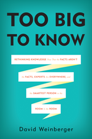
Too Big to Know
Too Big to Know
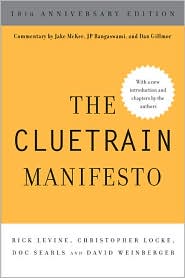
Cluetrain 10th Anniversary edition
Cluetrain 10th Anniversary
Everything Is Miscellaneous
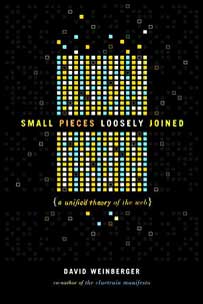
Small Pieces cover
Small Pieces Loosely Joined
Cluetrain cover
Cluetrain Manifesto
My face
Speaker info
Who am I? (Blog Disclosure Form) Copy this link as RSS address Atom Feed

May 10, 2006

Colonoscopy – More than you want to know…or see

I had my first colonoscopy today. They didn’t find anything, except a piece of fruitcake I ate in 1978. But I figured if Katie Couric can show her colon on national TV to encourage people to get checked, then I can talk about mine.

In colonoscopy, they stick a garden hose up your ass and take a peek. Your are narcotized into an odd and enjoyable state of semi-awareness. The after-effects of the procedure are gassiness — one of the benefits is that for a couple of hours you can claim your farts are therapeutic — and wooziness from the anesthesia. Your butt is surprisingly unsore.

If they find polyps, they’ll biopsy them on the spot and make you wait at home for 7-10 days to find out if you have colon cancer. You probably don’t. The biopsies can cause a little bleeding, apparently. (I was polyp free.)

The difficult part of the procedure is the prep. They gave me an early morning appointment because I’m diabetic. So, I stopped eating on Monday night. Through Tuesday, I could only have clear liquids, jello, etc. (Because of the diabetes, I didn’t eat anything with sugar. Non-diabetics can have sugary liquids.) Tuesday afternoon, I started drinking a gallon of electrolytes flavored with CountryTime Lemonade. It tastes like lemony sweat. You drink a glass every ten minutes for about four hours. Not a lot of fun. But it does flush you clean. By the end, you’re pooping lemonade.

By midnight of the night before, you stop drinking even water. So, by the time you show up for the procedure, you haven’t eaten in 36 hours.

The prep in the hospital is much like what happens before you go in for surgery: You sign a form allowing doctors to do whatever they want to you, including use you for BB gun practice. You get an IV inserted, chat with the exceptionally pleasant staff at Harvard Pilgrim in Kenmore, Boston, and make the same really bad poop ‘n’ tush jokes that everyone before you has made. (They ought to just print them up and save us the trouble.) The whole process really isn’t that bad. In fact, the anesthetic is sort of fun.

So, if your doctor recommends a colonoscopy, and if your health plan pays for one, do it. Except for the fasting, it’s not a big deal. And it sure beats colon cancer.

mock colonoscopy 3
Violating the principle of Gut Neutrality,
a Disney bit elbows aside amateur bits.

(By the way, the background of that shot is just a random colon snapshot I found on the Web.) [Tags: colonoscopy healthy net_neutrality too_much_information] (On march 11, I did a little cleanup of this post which I’d written while groggy from anesthetics.)

Tweet
Follow me

Categories: misc Tagged with: misc Date: May 10th, 2006 dw

16 Comments »

Bar Camp comes to Boston

Bar Camp, which the organizers insist is pronounced “Bah Camp,” is coming to Boston — well, Maynard, actually — June 3-4. Bar Camp is a sleep-over for geeks (and for admirers of geeks such as moi). The time is unstructured and the schedule is made up by the attendees. Dress is business casual. (Just kidding.)

Bar camp was invented as a response to Foo camp. Foo camp is O’Reilly Publishing’s “Friends Of O’Reilly” sleep-over that I so much enjoy. Because Foo is by invitation — there’s limited space in the O’Reilly back yard — Bar was created to be open to all.

If you’re in New England and like the smell of unshowered geeks in the morning, Boston Bar is the place to be.

[Tags: bar_camp geeks]

Tweet
Follow me

Categories: Uncategorized Tagged with: conference coverage Date: May 10th, 2006 dw

Be the first to comment »

May 9, 2006

The phone call that saved the Internet

If you’re an American, call your representatives. Now. Urge congresspeople to support Ed Markey’s amendment. Urge senators to support the Snowe/Dorgan Internet Freedom bill. The future generations will thank you. (You remember the future generations, don’t you? They’re the ones that will be paying off the Bush debt.) [Tags: net_neutrality digital_rights]

Tweet
Follow me

Categories: Uncategorized Tagged with: digital rights Date: May 9th, 2006 dw

4 Comments »

One Web Day – The Meetup!

OneWebDay — Earth Day for the Web — is having an organizational and social meetup tonight at 7pm at John Harvard’s Brew House (33 Dunster St., Cambridge, MA) at 7pm. Susan Crawford herself will be there. A $10 donation will help cover the costs of appetizers, dinner and drinks.

I’m kicking myself that I can’t go because of a scheduling conflict that I can’t reschedule or unconflict. Damn! [Disclosure: I’m on OWD’s board.] [Tags: onewebday susan_crawford]

Tweet
Follow me

Categories: Uncategorized Tagged with: digital rights Date: May 9th, 2006 dw

Be the first to comment »

May 8, 2006

Attention shoppers!

Nicholas Carr at RoughType sorts through the Dyson/Cerf exchange on how much economy is in the attention economy. [Tags: attention nicholars_carr esther_dyson vint_cerf]

Tweet
Follow me

Categories: misc Tagged with: misc Date: May 8th, 2006 dw

Be the first to comment »

Vonage going public

One of the things I like about American business processes is the merciless confessional process companies go through as they do an initial public offering. Vonage is stripping itself naked right now. Among the risk factors: It’s losing money at an increasing rate as it buys ads to gain marketshare – It’s got 1.6M users. It’s in violation of the E-911 regulation (which does not fit easily on VOIP providers). Vonage chairman and founder settled with the SEC over fraud accusations at his previous company; he will own 33% of the outstanding common stock. Plus, of course, Vonage could be wiped off the board if carriers are allowed to violate Net neutrality by charging more for Vonage’s VOIP bits than for their own. (There’s also stuff at the top of p, 20 about the dilution of common stock. Is that usual?)

Vonage is enabling its early customers to participate in the IPO, which is nice of them. I’m eligible, but won’t participate: I’m a happy Vonage customer but I almost never buy stocks. (I should perhaps note that a blog post from a couple of years ago about Vonage continues to attract comments about how awful Vonage’s customer service is. I personally have no complaints.) [Tags: vonage ipo voip net_neutrality]

Tweet
Follow me

Categories: Uncategorized Tagged with: business Date: May 8th, 2006 dw

10 Comments »

May 7, 2006

Cousins reunion

I’m off to NYC for a cousin’s reunion. I’ll be seeing relatives I haven’t seen in over 30 years in some cases, which means the last time we met, they were just starting to date. (No, not each other.) We’re meeting at a restaurant for a few hours this afternoon.

I’m hopeful that my weeks ot practicing dropping the phrase “As I was saying to Their Majesties -Surely you know the Duke and Duchess? …” will pay off. Also, I am now able to hold my gut in for 1.5 hours at a time, which means I just have to schedule one bathroom break when I can unzip my pants and exhale. Also, I’ve been getting quite disdainful looks from various waiters around town, so my supercilious eyebrow arching seems to be having an effect. Unfortunately, my toupee is late arriving from Amazon, so it looks like I’ll have to keep my top hat on the entire time.

Wish me luck!

Tweet
Follow me

Categories: Uncategorized Tagged with: humor Date: May 7th, 2006 dw

1 Comment »

May 6, 2006

Descartes’ Baby

I just read Descartes’ Baby by Paul Bloom and found it fascinating and annoying simultaneously.

Bloom is a psychologist who argues for “intuitive dualism.” The fascinating parts are the many experiments he cites that show babies are more sophisticated than we usually give them credit for. At a very early age, babies are aware of the constancy of objects, that appearances may be deceptive, and that other people may hold false beliefs.

The annoying part is what Bloom makes of this. Bloom thinks those experiments obviously show babies are dualists because they distinguish objects from belief-holding humans. But Cartesian dualism isn’t simply the belief that there’s a difference between people and objects. We were making that distinction before Descartes. Cartesian dualism consists of conceiving of the mental and the physical as so distinct and different that it doesn’t seem the two could ever even interact. And that’s not a distinction babies make.

From the fact that babies seem universally (although I suspect most of the experiments were done on babies born into Western culture) to be aware that there’s a difference between faces and balls, that they are aware that the faces may have false beliefs, and that the faces care about what happens to them, Bloom jumps to conclusions.

First, he thinks Cartesian dualism is a natural outgrowth of baby dualism. But baby dualism isn’t even necessary dual. I can believe that you are different from a log because you are aware of and care about your world without thinking that you are made of two types of substance. For example, I can believe fish are different from birds without attributing to fish two substances, animality and swiminess. Getting to Descartes requires abstracting and fragmenting our experience in ways that babies don’t, many non-Western cultures don’t, and our culture didn’t before Descartes. I don’t think Bloom has shown much more than that babies are aware that logs don’t think and feel, but people do. That isn’t Descartes. It’s not even dualism in any interesting sense.

Bloom seems precise when dealing with baby psychology. He’s not so good when he heads into art, religion and philosophy, which constitutes the bulk of the book. His explanation of why we can be moved by “anxious objects” — edgy art such as Warhol’s Brillo boxes, pure white paintings, a real dead horse — is prosaic and oddly disconnected from the dualism that his book is about. He goes through the predictable reasons we like art — it pleases the eye, we look smart by valuing difficult art, etc. — and then comes back to the special case of anxious art. And what he says is distinctly wrong about anxious art:

We still have not fully explained why some of us like anxious objects.

In appreciation of these artworks all of the ingredients of pleasure discussed earlier come into play, but there is at least one more that we have not yet discussed: we enjoy displays of skill, of virtuosity, both physical and intellectual.

Ok, but anxious art can share that feature with the least anxious of art — “Look at how realistic those dogs playing poker seem!” — and much anxious art does not seem very accomplished technically. In some cases, that’s exactly what makes it anxious. But, Bloom drops this line of thought. He instead concludes that some art we like because we like what it shows — the pleasant view from a hilltop or Mary nursing Jesus. Other art, the more anxious type, we can only like because we’re able to see it as more than what it represents. We’re able to see the human intention in it. But, again, that’s true of all art, not just anxious art. His investigation does not come close to answering the question he raises.

More important, art refutes dualism. As Bloom acknowledges throughout the chapter — belaboring the obvious — we react to objects differently if we know they were created as art. So, here’s a physical object that embodies something mental and intentional. The artwork has no inner life, but it can’t be understood apart from the intentionality it embodies. Art and all objects we create are inseparably infused with matter and spirit. Monism is far more important to our experience than dualism.

The book is muddled over all, except for the fascinating research on babies scattered throughout. For example, his section on our “natural” belief in intelligent design confirms what I think we all already suspected: Children are “consistently more creationist than their parents.” (p. 62). Bloom is careful to say that creationism is not necessarily only for the immature. It is “a natural by-product of a mind evolved to think in terms of goals and intentions.” (p.63) Ok. So is animism. So what? How does this help? And what does it have to do with dualism, unless you define it as weakly as Bloom does?

The book suffers from overstatement. He defends essentialism, but so waters it down that it becomes merely the belief that humans think in categories and are capable of assigning an object to a category based on non-visible characteristics. Wow, that is so not what essentialism is. He knows this, too, contrasting it with Plato’s and Aristotle’s view of essences as eternal, immutable types. He argues against that strong view because it leads to evils such as racism (51). But racism can follow from the “essentialism lite” that Bloom propounds. Both types of essentialism say that there is a real way a thing should be categorized. Plato and Aristotle happened to think that that real way is eternal and immutable. Bloom thinks that the real category “is clear once we consider again what concepts are for. Tomato is a good category, because once you know something is a tomato, you know things about it, including that it is good to eat.” (41) So suppose a lite essentialist believed that dark-skinned humans have the mental and spiritual capacity of cattle. The problem with racism isn’t that it is based on eternal and immutable categories. The problem with racism is that it’s based on false facts and the false categorization that follows from them.

Besides, what Bloom calls essentialism lite just isn’t essentialism. Essentialism implies that there are clean lines between things and clear criteria for deciding what they are. Neither is true in the world of tiny, purple, winter, hybrid, genetically-engineered, insect resistant, square-cornered-for-easy-packing tomato-cantaloupes.

Nevertheless, the book is full of interesting ideas, historical references, and an open-minded back and forth on the issues. It’s fun to read and exceptionally engagingly written. It just doesn’t hold together. At least for me. [Tags: descartes descartes_baby paul_bloom books taxonomy everything_is_miscellaneous psychology]


AKMA replies. I can addres part of his concern: I didn’t mean to imply that art is distinctive in its fusion of matter and intentionality. The same is true for all our artifacts. Not did I mean to say that to understand an artwork is to understand the artist’s intentions; rather, to take it as an artwork one must see that it was created intentionally. Bad writing on my part. But AKMA’s point is broader and more important than that.

Tweet
Follow me

Categories: Uncategorized Tagged with: everythingIsMiscellaneous • philosophy • taxonomy Date: May 6th, 2006 dw

6 Comments »

West Point – Defender of Free Speech

The Army has warned an anti-war group called West Point Graduates Against the War to stop using the words “West Point” in its name, saying it is a violation of a registered trademark. — AP

Dear Mom and Pop,

Today was a typical day here at the Academy™. Thursdays are light days academically — I have a Lit seminar and not much else. We’re reading Death of a Salesman®. Willy Lomansm is so depressing! Our prof spent thirty minutes explaining why his saying “You gotta know the territory”™ is ironic because Lomansm doesn’t know his own family. He must think our heads are made of 100% Wisconsin Cheddar™!

Anyway, that was only an hour and a half seminar. Then we got to go on the rifle range. Dad, I think you’re just wrong about the M-16™. It’s a heck of a sweet shot.

Then me and my new plebe™ friend, Tad, went and had hot gay sex in the shower. (“Don’t ask, don’t tell,”© wink wink.) We started in the West Point™ Back Saddlesm position, with me on bottom, and then we flipped over into the West Point™ Truckdriversm position, which is one of my favorites. Then he took his enormous West Point™ and gently rubbed the base of my West Point™ until he got to my West Point™, and before you know it, there was West Point™ all over the place!

So, over all I’m enjoying this man’s army™, and am sure glad it’s not an Army™ of One® :)


PS: I could not find a trademark notice on the West Point site. [Tags: army west_point free_speech copyright copyleft politics]

Tweet
Follow me

Categories: Uncategorized Tagged with: humor • politics Date: May 6th, 2006 dw

1 Comment »

May 5, 2006

Messy podcast

The podcast of my “Web of Ideas” session at the Berkman Center on messiness as a virtue is now available. It’s a long ‘un and more of a lecture than usual.

My topic wasn’t why you really should tidy up your office. (You know you should.) It’s about knowledge and why we have thought neatness is a sign of a proper understanding of a topic, why it’s good that our mental categories are messy, what Aristotle got wrong, and whether the Semantic Web is too much of a fuss-budget for its own good. [Tags: berkman everything_is_miscellaneous knowledge km semantic_web]

Tweet
Follow me

Categories: Uncategorized Tagged with: everythingIsMiscellaneous • taxonomy Date: May 5th, 2006 dw

Be the first to comment »

« Previous Page | Next Page »


Creative Commons License
This work is licensed under a Creative Commons Attribution-NonCommercial-ShareAlike 3.0 Unported License.
TL;DR: Share this post freely, but attribute it to me (name (David Weinberger) and link to it), and don't use it commercially without my permission.

Joho the Blog uses WordPress blogging software.
Thank you, WordPress!