logo
EverydayChaos
Everyday Chaos
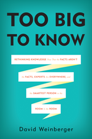
Too Big to Know
Too Big to Know
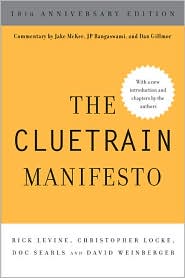
Cluetrain 10th Anniversary edition
Cluetrain 10th Anniversary
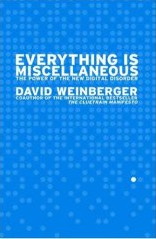
Everything Is Miscellaneous
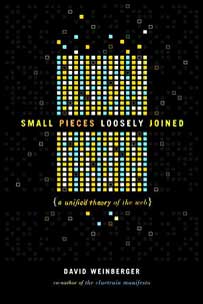
Small Pieces cover
Small Pieces Loosely Joined
Cluetrain cover
Cluetrain Manifesto
My face
Speaker info
Who am I? (Blog Disclosure Form) Copy this link as RSS address Atom Feed

August 8, 2005

Worst (major) director in history

Thinking that we could laugh our way through the bad parts and enjoy the sweeping battle scenes, we rented Alexander last night. Omigod. We had to watch the second half of the third Lord of the Rings afterwards just to get the bad bad movie out of our brains.

Try comparing the two elephant battles. Peter Jackson’s LOTR‘s battle with the oliphaunts is a masterpiece of story-telling. Alexander‘s is barely coherent, making it far better than the first battle scene in Alexander which we spent asking “Are those the good guys?” and “Wait, weren’t they just coming from the left?” even after the strategy had been ploddingly explained in the previous scene.

Or compare any of Alexander’s “stirring” speeches to his men with the words Aragorn says before the gates of Mordor open. Or compare the “touching” scene between Alexander and his near-death friend and the truly touching, human scene between Sam and the near-death Frodo before entering the volcano. Sam and Frodo’s relationship is far more real and they’re freaking, hairy-footed hobbits.

At least Alexander exposes Oliver Stone for what he is: A wildly incompetent director whose subject matter has led us to excuse his embarrassingly bad productions. Find a movie of his — I’ve seen most, but not all, of them — that doesn’t have a cliche-filled script, black-and-white characters, camera-work that needlessly calls attention to itself, actors pushed into career-damaging performances, and self-righteous, unsympathetic, simple-minded political stances. (“U Turn” is the one movie of his I’ve seen that’s exempt from most of these criticisms.)

On the other hand, the popcorn generally was good.

Note: For heaven’s sake, do not rent Alexander thinking that there must be some redeeming qualities. There aren’t. Half the movie is spent in exposition, including letters read on screen, lectures in caves, a framing narrator, generals talking while pushing models around on maps, and actual maps with animated arrows on them. Ten minutes are spent in battle scenes that make no sense, and not in a “fog of war” way. The rest of it is a lot of wailing and longing looks without a single true human emotion ever expressed. Have I mentioned that it’s a bad bad movie? [Tag: OliverStone]


James Wolcott responded to the above. He doesn’t allow comments, so I’m responding here. (He also doesn’t actually link to me, only to Jeff Jarvis‘ link to me, which strikes me as odd.)

First, he calls my comments about Oliver Stone’s 9/11 movie “jejune.” I am certainly jejune, but I didn’t make a single comment about the 9/11 movie. Fwiw, I have absolutely no problem with Stone making another awful movie about any topic he wants. It’s a free country.

James says the first commenter at Jeff’s site “handily disposes” of my “contention that Stone’s movies are always melodramatically ‘black and white.'” The commenter is a Vietnam vet and thinks Platoon is the best depiction he’s seen of the war. Yes, Platoon was a relief after Green Berets. But, the commenter says: “In Platoon and Salvador there are no black and white main characters.” Salvador I remember liking ok, but it was a long time ago and after Alexander I’m afraid to see it again. But no black and white characters in Platoon?? It had a good and a bad officer that might as well have had “Good” and “Bad” tatooed on their foreheads — except you didn’t need that because Stone flagged the good and the bad so obviously.

When Stone wants to give us a bad character, the bad character has all the subtlety of Gordon Gecko’s name. Is Gecko about anything except greed and moustache-twirling evilness? And how nuanced was that first great character that Stone penned, Scarface? Is there a major director — one with a sheen of respectability — who so consistently writes and directs such one-sided, cliched characters?

Wolcott writes: “Weinberger disqualifies himself from serious respect when he alludes to Stone’s ‘camera work that needlessly calls attention to itself’.” He then defends the use of innovative camera work. I refer back to the use of the adverb “needlessly” that would seem to indicate that I’m fine with some camera work that is noticeable. James then produces obvious and indisputable examples of excellence in camera work, but I actually don’t agree that they all call attention to themselves. The fact that the opening scene of The Player was done in one shot is impressive to people who care about such things (I do), but if you don’t, then it still serves its primary purpose, which is not to impress us with Altman’s skill but to set the stage by giving us a half dozen, very funny snapshots of Hollywood at its most jejune. (I’m just looking for a way to reclaim the word.) Likewise for the opening of The Stuntman: It was done in one high-risk continuous take, but it also serves the movie, not just the director’s ego. The fact that there are directors who use cameras well so well that we gasp doesn’t change the fact that Oliver Stone sucks.

Of course there’s nothing wrong with the techniques of art calling attention to themselves. One of the joys of art is in fact being aware that the impossible is happening. Some of ballet is thrilling simply for its athleticism, which is technique making itself conspicuous. Some of ballet is heart-stopping because you know the grace of the simple results from technique that is so hard. When I look at a great Monet my attention enters a weird vibratory state in which I’m awash in the scene depicted and aware of how unlike the scene is the technique by which the scene was created. Nevertheless, that doesn’t mean that every time you’re made aware of technique, you’re in the presence of art. Sometimes it’s because the technique is so bad (Oliver Stone) and sometimes it’s because it’s so pretentious (Oliver Stone).

(Then, of course, there’s Natural Born Killers. There the shopworn camera work pretends to be innovative because the theme is so trite, the plot is so ridiculous, and the directors has set the actors on Full Froth.)

Next James takes me to task for saying that Stone pushes his actors into “career-damaging performances,” and here James is absolutely right. I should have said that Stone pushes his actors into performances that should have ended their careers but instead leads them to Oscars. We need to compute a spittle-to-Oscars ratio to explain this. No, not every performance in every Stone movie is awful. Just more of them than we can count.

Finally, Wolcott acknowledges that he hasn’t seen Alexander. My post’s point was that you can’t see that movie without reevaluating Stone’s previous work. It was the movie he longed to make, he had a huge budget, he filled it with terrific actors, and he had creative control. Yet he came out with a piece that is incomprehensible visually, narratively and emotionally. When a great director like Scorcese makes an artistic dud, it’s The Gangs of New York which is — wait, let me get out my slide rule — still 184 times better than Alexander.

So, if Oliver Stone isn’t the worst major director around (where “major” includes being respected), then who is?

Tweet
Follow me

Categories: Uncategorized Tagged with: entertainment Date: August 8th, 2005 dw

12 Comments »

Order of Magnitude Quiz: Parking Meters

According to The Boston Globe, how many times a year does the average downtown Boston parking meter require repair? You win if you get within an order of magnitude of the answer.

The answer is in the first comment to this post. [Tag: OrderOfMagnitudeQuiz]

Tweet
Follow me

Categories: Uncategorized Tagged with: puzzles Date: August 8th, 2005 dw

6 Comments »

Ukulele blog and spam music

The uniquely talented Wikipedian, teacher, and singer-songer writer Oliver Brown has started a blog about ukuleles. The first thing I learned: I’ve been making the inverse of the “nucular” mistake, spelling “ukulele” as “ukelele.” (I wish more of Oliver’s music were available for download. You have to hear more than a couple to appreciate his whimsical seriousness.)

[Tags: OliverBrown ukulele]


Canadian superstar BradSucks has put together a CD called Outside the Inbox:

Outside the Inbox is a compilation of songs inspired by and titled after the subject lines of mass-email (spam). I asked artists to choose a spam subject line and then write a song with the same title.

It’s just US$5 for the CD, and that includes shipping. Or, you can download the whole thing for free, of course. But, jeez, if you like BradSucks’ music and you’re not willing to support a guy who lets you listen, rip, mix, and sing along for free, then what hope is there for honest musicians like him? [Tag: bradsucks]

Tweet
Follow me

Categories: Uncategorized Tagged with: entertainment Date: August 8th, 2005 dw

3 Comments »

Me on marketing and PR at the FastCompany blog

I’m the subject (object?) of a 3-question interview over at the FastCompany blog. And here’s a lagniappe: Brian actually uses the word “lagniappe”! [Tags: marketing FastCompany pr cluetrain]

Tweet
Follow me

Categories: Uncategorized Tagged with: business Date: August 8th, 2005 dw

1 Comment »

August 7, 2005

FCC’s Net Neutrality principles

After ruling that the cable companies don’t have to let competitors use their lines — thus killing the competitive market for wire-based broadband — the FCC issued a four-part statement about “Net Neutrality”:

1. Consumers are entitled to access the lawful Internet content of their choice;

2. Consumers are entitled to run applications and services of their choice, subject to the needs of law enforcement;

3. Consumers are entitled to connect their choice of legal devices that do not harm the network;

4. Consumers are entitled to competition among network providers, application and service providers, and content providers.

Michael Maranda at the Digital Divide Network likes the way they sound. But he’s only cautiously optimistic, as the phrase goes. Susan Crawford is less so, in part because she read Footnote One that says our open access to content is “Subject, of course, to the … quality of service terms” of the providers. Also, she points out that these four statements are not rules and are not enforceable. “More faith-based policymaking,” she concludes. “We’ll need more than principles for the open internet to survive.” [Tags: fcc SusanCrawford MichaelMaranda]


David Isenberg weighs in, contrasting the current and former FCC chiefs’ idea of our Net rights. Bottom line: “I’m scared.” Ulp.

Tweet
Follow me

Categories: Uncategorized Tagged with: digital rights Date: August 7th, 2005 dw

6 Comments »

BlogHer discussion guidelines and speaker types

Ashley Richards has posted the excellent speaker guidelines she wrote up for the BlogHer conference (pdf format).

The characterization of types of speakers who go bad is spot on:

Mockers

Interrupters

Know-It-Alls

Attackers

I think it’s a list worth extending. I’d add:

Droners

Shills

Smartest-Guy-in-the-Room

That last one may seem to be the same as the Know-It-All, but in my experience Know-It-Alls demonstrate their superiority by the quantity of their knowledge (and thus often become Droners) while Smartest-Guys-in-the-Room are happy to interject a single comment on every topic in order to show that they’ve thought more deeply than anyone else. (And, yes, I use the word “Guy” on purpose seems this seems to be a gender-based disorder.) [Tags: BlogHer AshleyRichards]


Staci Kramer at OJR has posted her excellent recap of the conference, and blogs about the conference and recapping it.

Tweet
Follow me

Categories: Uncategorized Tagged with: conference coverage Date: August 7th, 2005 dw

4 Comments »

The responsibility of op-eds

Boston Globe ombudsperson Richard Chacón, in a column today (gone tomorrow), responds to complaints that some op-eds have gotten facts wrong. He concludes:

Recent revelations of poor sourcing in news stories have brought tighter standards into many newsrooms. The influential people who help us shape our opinions should adopt the same rules.

IMO, that idea doesn’t stand up to much scrutiny. What does he mean by “rules”? Standards for truth? Standards for how truth is to be ascertained? Editorial processes? Besides, op-eds aren’t reportage. For one thing, I think we want to leave room for an op-ed writer to say, “It seems pretty likely that…” and “We may never know, but my guess is…” Op-eds can use metadata to condition assertions in ways that reporters can’t or at least don’t. I wish Chacón had been more specific in his response.

Chacón also lets pass without comment the statement by Marjorie Pritchard, the Globe’s op-ed editor, that there is “a trust that the writer wouldn’t want to undercut a piece by making errors.” [That’s Chacón’s paraphrase.] If that’s how newsrooms operated, there’d be no need for fact-checking. So, Richard, should op-eds follow newsroom rules or not?

He also writes:

In practice, attributing every piece of information might be tough to do in a typical 750-word op-ed column, but here’s a good suggestion from [columnist Robert] Kuttner: Make op-ed writers include their source information in brackets when submitting a column. That way, the editor knows where the material comes from and can decide whether to include that information in the final product.

Gosh, if only there were a medium that had no space constraints and that had a convenient, unobtrusive mechanism for connecting — “linking,” one might say — statements to sources. (Hint: Richard, publish the op-eds online with links to sources. And put in comment boards so we can supplement and dispute the author’s info.) [Tags: BostonGlobe media journalism]

Tweet
Follow me

Categories: Uncategorized Tagged with: media Date: August 7th, 2005 dw

1 Comment »

August 6, 2005

Grim animation

I found this visual display of quantified lives affecting. Personally, I don’t think any conclusion follows from it: If you support the war, it’s a record of sacrifice; if you don’t, it’s an accounting of futility. But either way it’s a reminder.

Before you complain that it doesn’t show Iraqi deaths, read the “About” pages. (Thanks to Salon for the link.) [Tag: iraq]


Another reminder: What would an animated map of Hiroshima look like 60 years ago?

Tweet
Follow me

Categories: Uncategorized Tagged with: politics Date: August 6th, 2005 dw

1 Comment »

August 5, 2005

Ethan in Jordan and Terrorism explained in Unix

Ethan blogs about his trip to Jordan. Quite fascinating, including Ahmad Humeid’s tantalizing idea that Jordan could be a bridgeblog country. A snippet from Ethan’s post:

…I was busily looking for Jordanian geeks, and ignored the small group that was beginning to form, as they were clearly “the cool kids”, laughing, chain smoking and snapping digital photos. Turns out the geeks are the cool kids in Amman, a city is starting to take technology very seriously.

Ethan also points to Jad Madi’s The War against Terrorism for Geeks. The parts I understood — I speak first-year Unix with a Lisp — were funny. [Note: Ethan corrects me in the comments. Jad didn’t write the post; he pointed to it. Sun Ray wrote it. Then Sun Ray wrote an exegesis (thanks, Tim). Sorry for the sloppy attribution!] [Tags: bridgeblog EthanZuckerman jordan]

Tweet
Follow me

Categories: Uncategorized Tagged with: bridgeblog Date: August 5th, 2005 dw

3 Comments »

Do not click

DontClick.It is an experiment in clickless navigation.

I can’t tell if my irritation with it is due to the unfamiliarity of clickless navigation and/or if their UI is irritating. E.g., I found it harder to pick from the middle of a list because mousing over an entry selects it. But if its point is that clicking is a part of the rhetoric of our neurology, it’s a point well made. (From UI Hall of Fame, via Lockergnome.) [Tag: ui]

Tweet
Follow me

Categories: Uncategorized Tagged with: uncat Date: August 5th, 2005 dw

3 Comments »

« Previous Page | Next Page »


Creative Commons License
This work is licensed under a Creative Commons Attribution-NonCommercial-ShareAlike 3.0 Unported License.
TL;DR: Share this post freely, but attribute it to me (name (David Weinberger) and link to it), and don't use it commercially without my permission.

Joho the Blog uses WordPress blogging software.
Thank you, WordPress!