


logo
EverydayChaos
Everyday Chaos
Too Big to Know
Too Big to Know
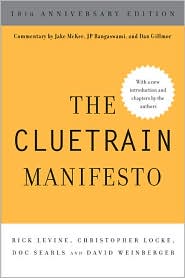
Cluetrain 10th Anniversary edition
Cluetrain 10th Anniversary
Everything Is Miscellaneous
Small Pieces cover
Small Pieces Loosely Joined
Cluetrain cover
Cluetrain Manifesto
My face
Speaker info
Who am I? (Blog Disclosure Form) Copy this link as RSS address Atom Feed

April 10, 2005

Greatest game in history – Now with a sandbox!

Garry.tv has a Half Life 2 mod that lets you use the game’s astounding physics engine and its existing objects to build Rube Goldberg-like machines, pose rag dolls, etc. I haven’t tried it yet, but it looks amazing. [Technorati tags: halflife2 mods]

Tweet
Follow me

Categories: Uncategorized Tagged with: entertainment Date: April 10th, 2005 dw

2 Comments »

Bittorrent marketplace

Prodigem, a legal torrent site, has announced a marketplace that will let you upload a file and sell bittorrent access to it. So, if you had, say, a video of your band performing its hit “Download Me, Baby, and Then Why Doncha Set Me Free?” that you wanted to sell, you’d upload it to Prodigem Marketplace and slap a price on it. Prodigem takes 10% plus the PayPal fee and passes the rest on to you.

It’s DRM-free once you’ve downloaded it: It’s just a file that you can redistribute as you see fit. And they’re contemplating an interesting licensing scheme:

To accomodate this new method of transfer, we have added a Copyright Plus Prodigem license to the available licensing options. This simple license allows you to retain copyright over your work while making a specific grant of rights to Prodigem and its users. In effect you are saying that it is fine to share your work so long as it’s only through the torrent you created, and since access to the torrent is only granted when payment is received, you get exactly what you are looking for.

You are also free to instead license your work under the Creative Commons. Though with a CC license you are technically granting everyone redistribution rights regardless of venue. This is fine by us if it’s okay with you, but does mean that people are free to share without payment. Realizing this conundrum, we are busy mulling over something akin to a “Delayed” Creative Commons license, where Prodigem users will be able to stipulate their work as covered under Copyright Plus Prodigem license, and then on some fixed date of their choosing (eg. 1 year, 5 years) it automatically switches over to a CC license of their choosing. It’s like peanut butter and chocolate.

I hope the marketplace takes off. But I’m worried about the “small monthly fee” Prodigem will require of users once it’s out of beta. It may keep the chicken from ever getting out of the egg. But I assume they’ve thought this through better than I have.

Here’s the site’s blog. [Technorati tags: bittorrent drm CreativeCommons]

Tweet
Follow me

Categories: Uncategorized Tagged with: digital rights Date: April 10th, 2005 dw

3 Comments »

April 9, 2005

Damn you, Monty Hall!

My son and I spent a little time this afternoon on the Monty Hall paradox, a topic we’d discussed a couple of years ago. Unfortunately, it takes me 20 minutes to understand the explanation, and I only understand it for 4 continuous seconds.

Here’s the situation. You are asked to pick one of three doors. Donkeys are behind two of them, and a new car is behind another. After you choose your door, but before it’s revealed to you, Monty Hall (the emcee) opens one of the doors you didn’t choose and reveals a donkey. He then asks if you’d like to switch from your initial choice to the remaining door. It turns out that if you agree to switch, you double (?) your chance of winning.

It just doesn’t seem possible. Here’s how one site, that has a simulator on it, explains it:

The easiest way to explain this to students is as follows. The probability of picking the wrong door in the initial stage of the game is 2/3. If the contestant picks the wrong door initially, the host must reveal the remaining empty door in the second stage of the game. Thus, if the contestant switches after picking the wrong door initially, the contestant will win the prize. The probability of winning by switching then reduces to the probability of picking the wrong door in the initial stage which is clearly 2/3.

Despite a very clear explanation of this paradox, most students have a difficulty understanding the problem…

Yeah, that was real clear. Oh yeah.

The only explanation that’s ever worked for me is the 1,000 door variation, which you can find here. And here’s the front page NY Times story about it.

Now please don’t bring this up for another two years. It’s given me a headache. [Technorati tags: paradox puzzle]

Tweet
Follow me

Categories: Uncategorized Tagged with: entertainment Date: April 9th, 2005 dw

21 Comments »

April 8, 2005

[s2n] Machinima

Paul Marino has been doing machinima for six years. Machinima are animated films created using the tools video game companies make available to build levels to add on to their games. It started with Quake in 1996. He shows some terrific samples

He says his group is working with game developers to allow for derivative works and to explore various licensing models, ultimately making machinima commercially viable. He says that machinima’s future is the democratization of animated storytelling.

[I have to leave the conference now. Damn.] [Technorati tags: s2n machinima]

Tweet
Follow me

Categories: Uncategorized Tagged with: conference coverage Date: April 8th, 2005 dw

Be the first to comment »

[s2f] New opportunities

David Dixon tells how in 2001 he publicized an MP3 that performed a Beatles track in the style of Metallica. He did it without permission of the band that did it. Sony sent him a cease and desist letter. Lars of Metallica is actually on the right side in ths case, trying to get Sony to drop its stupid, bullying lawsuit. Sony is not pursuing the suit, although they also haven’t dropped it.

Wendy Seltzer of the EFF says that this is a good example of chillling effects. The new means of distribution bring small-town bands under the gaze of big corporate property holders.

Naomi Novik is a fanfiction writer. She says she hasn’t received any cease and desist orders. She talks about “fan vids”: Clips from favorite shown over music tracks. “We’re flying under the radar,” she says. “The better the work is, the more likely it is to be hidden and hard to found” because “the people who write the better things are more aware” of the risks. The better writers, she says, post a few things publicly to draw people in, but keep the best hidden. She’s trying to create a modified Creative Commons license that let people read a work and use it in fan fiction, while protecting the author from later getting sued by a fan who claims the author stole the idea from her.

Wendy: “I’m really distrubed to hear that we have fewer rights when we’re dealing with richer media than when dealing with text.”

Should the owner be allowed to control who gets to use or remix? Naomi says if you let someone, you have to let anyone. Walter McDonough of the Future of Music says that if an objectionable group were to do that to music made by one of his clients, he’d go ballistic.

[They’ve delayed lunch by an hour, to 2 o’clock, and I’m losing focus. Sorry.] [Technorati tag: s2n]

Tweet
Follow me

Categories: Uncategorized Tagged with: conference coverage Date: April 8th, 2005 dw

4 Comments »

[s2n] Yochai Benkler

Yochai Benkler of Yale (and, Charlie Nesson says lightly in his introduction, he hopes someday maybe of Harvard) begins with a video of DangerMouse’s Gray Album, which mixed the Beatles’ White album and Jay-Z’s Black album.

Then he shows something “not so complimentary”: “The Mashin’ of the Christ.” It mashes clips from Jesus flicks on top of a “Christianity is stupid. Communism is good” soundtrack.

He gives an example of using these techniques to critique the media representation of news from CapedMaskedAndArmed.

He shows a couple of others, but I didn’t get enough info to be able to link to them. Anyway, they were impressive examples…

[Technorati tag: s2n]

Tweet
Follow me

Categories: Uncategorized Tagged with: conference coverage Date: April 8th, 2005 dw

3 Comments »

Cultural assumptions of photo editing software

Koranteng Ofosu-Amaah has a fascinating post about how photo upload sites and image editing packages look to someone whose skin is dark and who is shooting in very bright sunlight. This is just an example of a broader theme in the post: “The Subtle Business of Software Localization,” as Ethan puts it. Snippets:

The first thing I very quickly noticed: somehow all the photos that I uploaded to Yahoo Photos turned out darker than on Flickr (the services both resize uploaded photos). The photo-resizing algorithm used by Yahoo Photos was giving worse results. This was noticeable to me because a large number of photos featured darker-skinned people such as myself. The originals were fine and where there were lighter skin tones everything looked good, but with darker skintones, the resized photos were not so good.

…Thirdly, when retouching photos, the Quick Fix or Auto Correct options in Photoshop seemed tailored for lighter skintones so I was constantly having to do manual tweaking of my photos. Now this is not a big deal for a few photos and indeed it’s fun to fiddle with photos but after a couple of hundred images, it gets tiresome. I found mysef longing for “smarter” recognition by the software or for at least, a nice ‘dark skin’ option that I could set in a preferences dialog.

[Technorati tags: koranteng localization flickr Global Voices]

Tweet
Follow me

Categories: Uncategorized Tagged with: bridgeblog Date: April 8th, 2005 dw

3 Comments »

[s2n] Wayne Marshall

Wayne Marshall traces the movement of one particular musical idea, the “mad mad” of Reggae, used in Alton Ellis’ Mad, Mad, Mad in 1967. [Technorati tag: s2n] [Technorati tags: s2n reggae]

Tweet
Follow me

Categories: Uncategorized Tagged with: conference coverage Date: April 8th, 2005 dw

2 Comments »

Thomas Jefferson on blogging

Dan Bricklin points to Chris Daly’s Are Bloggers Journalists? Let’s Ask Thomas Jeffeson. Here’s a snippet that Dan pulls out of the article:

Common Sense and other pamphlets like it were precisely the kind of political journalism that Jefferson had in mind when he insisted on a constitutional amendment in 1790 to protect press freedom — anonymous, highly opinionated writing from diverse, independent sources. In historical terms, today’s bloggers are much closer in spirit to the Revolutionary-era pamphleteers than today’s giant, conglomerate mainstream media.

Both Chris’ piece and Dan’s discussion of it are well worth reading… [Technorati tags: blogs bricklin ChrisDaly journalism]

Tweet
Follow me

Categories: blogs Tagged with: blogs Date: April 8th, 2005 dw

4 Comments »

[s2n] Borrowing or stealing panel

Terry Fisher runs a panel.

Bill Alford wrote a book about the Chinese views of “intellectual property,” called To Steal a Book Is an Elegant Offense. He says that the Chinese have a sense of the past as a living, shared context. One makes one’s mark not by breaking from the past (as our Romantic geniuses do) but by making it one’s own. “Copying doesn’t carry the same dark implications as in the West.”

Unfortunately, I missed most of what Matthew Pearl, author of The Dante Club, had to say. When I came in, he was speaking charmingly about noticing that his book had been slapped with a “all similarities to people living or dead is purely coincidental.” In his book, the similarities aren’t coincidental at all. His publisher allowed him to re-write it since he’s a grad of Harvard Law.

Lawrence Ferrara is chairman of the dept. of music and performing arts at NYU, as well as a pianist. He explains the law around basing one musical work on another. [There is no chance I would represent his views accurately, so I’m not going to try.] He thinks that even tiny samples should be paid for, although he says he’d like to see some “common sense” applied so that “minimal” samples don’t have to be paid for; but he thinks that a three note arpeggio, even if digitally transformed, isn’t minimal enough [I think]. It can be hard to determine that something is a sample in the final recording but, he says, when you get the ProTool file, you can tell precisely. [Remixers take heed.]

Q: Is there any point at which a sample is so altered that it no longer is the same sample?

Lawrence: It probably wouldn’t be picked up. But if it were, the record companies would want it to be licensed.

[Lawrence’s disquisition is learned and subtle. But is the world better if his regime continues to win?]

[Technorati tag: s2n]

Tweet
Follow me

Categories: Uncategorized Tagged with: conference coverage Date: April 8th, 2005 dw

5 Comments »

« Previous Page | Next Page »


Creative Commons License
This work is licensed under a Creative Commons Attribution-NonCommercial-ShareAlike 3.0 Unported License.
TL;DR: Share this post freely, but attribute it to me (name (David Weinberger) and link to it), and don't use it commercially without my permission.

Joho the Blog uses WordPress blogging software.
Thank you, WordPress!