


logo
EverydayChaos
Everyday Chaos
Too Big to Know
Too Big to Know
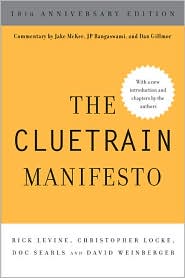
Cluetrain 10th Anniversary edition
Cluetrain 10th Anniversary
Everything Is Miscellaneous
Small Pieces cover
Small Pieces Loosely Joined
Cluetrain cover
Cluetrain Manifesto
My face
Speaker info
Who am I? (Blog Disclosure Form) Copy this link as RSS address Atom Feed

March 16, 2005

[etech] Microsoft Tesla

Last night I got a demo of a Microsoft lab project that will be available this summer. Tesla is a layer on top of XP that provides an alternative way of structuring and accessing the files on your desktop. You can sort your files by a whole bunch of the usual file attributes (date, size, etc.) but also by tags. Tags replace folders. (It’s a faceted classification system.)

Tesla virtualizes the file system to the point that it doesn’t care which actual machine a file lives on. So, if you have home and office computers, it syncs them up automatically. From your point of view, you’re working on a file without worrying about where the bits actually are stored.

It’ll ship first as a lab experiment. Definitely cool and possibly useful. Cairo lives!

[Technorati tags: etech tesla microsoft]

Tweet
Follow me

Categories: Uncategorized Tagged with: conference coverage Date: March 16th, 2005 dw

1 Comment »

[etech] Day 2 – Folksonomies panel

Clay Shirky moderates a panel on folksonomies. Participants: Jimbo Wales (wikipedia), Joshua Schachter (del.icio.us) and Stewart Butterfield (flickr).

Clay: Why did you decide to let users in to categorization?

Jimbo: We launched our categorization system last June. For the first few weeks, it was a complete madhouse in the English wikipedia. In the German one, they held off for a couple of weeks. It took a little while for things to be rationalized. We decided to let the masses categorize it because that’s just the Wiki way.

Stewart: We added it because Joshua told us to. I don’t think of it as categorization primarily. Tags are to help users. They aren’t a replacement of categorization.

Joshua: I’d been collected links in a text file. I started adding a hash mark and then some text so I could grep them out. Then he decided to make it massively multiplayer. Tags were originally for people to categorize their own bookmarks, but it’s gone social and used for purposes other than categorization.

Clay: When tensions arise between the individual and the group, and how is that resolved?

Jimbo: The tension is really more between the individual and the quality of the encyclopedia. We don’t allow people to categorize things in individual ways because they’re categorizing the encyclopedia itself.

Joshua: Maybe there’s a need for some mechanism for consensus because tag sets overlap…At Wikipedia, people fight over the same space whereas at delicious, everyone has his own page. The top tags for Wikipedia are free and reference, which are not words that appear on Wikipedia’s home page, so people are thinking about you differently than you are.

Jimbo: Very interesting.

Clay: There’s a large collection of “circle in square” photos on Flickr. That’s a place where some sort of social group. At delicious, people use the comments field to have a conversation, with the link serving as an anchor.

Joshua: Why do you have a distinction between groups and tags, Stewart?

Marc Cantor: Can we connect tags between systems

Jimbo: I talked with Technorati. We should all get together and share database dumps of tags just to see what people are doing in different systems. E.g., photos in flickr might be useful for the encyclopedia.

Stewart: Technorati is already doing that. We have 200,000 distinct tags and 12M total tags.

Joshua: We have different axes of why you’re tagging, what you’re tagging, and how it happens. E.g., at Flickr you’re mostly tagging your own stuff for your purposes, at delicious it’s mostly other people’s stuff mostly for your own purposes, technorati you’re tagging your stuff for others. Calling them all “tags” over-simplifies. We need better understanding before we start plugging things in.

Q: How are you giving users feedback to get their tagging better?

Jimbo: It’s a tight knit community of 600-1000 people who do the vast majority of the work.

Stewart: There are no bad tags, at least within the context of Flickr. The point isn’t for you to find all and only the photos of elephants. It’s to give them tools for organizing their own stuff. The rest is a happy accident. And when you have millions of photos, you don’t have to find all of them.

Joshua: I’ve tried to close the loop. With the experimental bookmarklet you can see all of your tags, the top tags for the thing you’re bookmarking, and the intersection of your tags with everyone’s. I don’t want people to be dominated by groupthink. Your instinct is the most reliable and reproducible — it’s the way you’ll remember.

Clay: Traditionally, we don’t allow users and time because we want timeless categories.

Q: The semantic web community is creating taxonomies in particular areas. But there are problems scaling it. What about a folksonomic approach to creating large scale taxonomies.

Stewart: I think the wikipedia model works.

Jimbo: To create a large scale category system, a small group of experts can’t even begin to compete with a large, open group of people.

Stewart: The idea that there is a proper way to cleave nature at the joints is difficult.

Joshua: Dividing the world into a complex, fine-grained tree doesn’t pay attention to what people are trying to do. They’re trying to find things. There’s a natural sort of scale. You tend not to tag too high (“computers”) and not to tag too finely. There’s a natural middle ground. [Cf. Eleanor Rosch: Why do we sit in a chair instead of in furniture? It turns out to do with the bodily nature of epistemology. But what about on the bodiless web?]

Q: What happens when we have thousands of services tagging? How do we bring all that knowledge together?

Joshua: First we have to know what we’re doing. People use tags for different purposes.

Q: What about using RDF to manage this infrastructure?

Joshua: I emit RDF because it’s convenient. They can work together.

Me: How much metadata about tags will we have to capture? E.g., it might be useful to know the author of a tag, whether it’s a place or a topic, when it was created, which app created it, etc.

Joshua: that would make tags too complex.

Stewart: You have to do it after the fact. You can’t make people express it explicitly.

Jimbo: If we saw two tags for Ohio, “Ohio” and “OH,” someone would catch it and fix it. And since our categories are hierarchical, we don’t have to disambiguate “cardinal” as a bird or a baseball team.

Joshua: I’m now letting users create “bundles,” i.e., second level tags. BTW, hierarchies sort nicely alphabetically. (E.g., computers.languages.perl sorts next to computers.languages.python.)

[Technorati tags: etech taxonomy folksonomy tags]

Tweet
Follow me

Categories: Uncategorized Tagged with: conference coverage Date: March 16th, 2005 dw

6 Comments »

[etech] Day 2 – Jimbo Wales, Wikipedia

Jimbo [I find it hard to call him that] gives an update on Wikipedia. The English version will pass 500,000 articles today. 350,000 hierarchical categories. The site has passd USAToday.com and the NYT.com. It’s so popular, he says, because it addresses the original deam of the Internet: People sharing information freely.

WikiCities.com is Jimbo’s new for-profit company, expanding the Wikipedia’s social model, “the social computing successor of free home pages.” 170 communities have formed in 3 months. (Communities are built around topics, it seems.)

He views Wikipedia as a social innovation that will spread to other areas besides encyclopedias. “Social collaboration is the future of the Net.” [Technorati tags: etech wikipedia]

Tweet
Follow me

Categories: Uncategorized Tagged with: conference coverage Date: March 16th, 2005 dw

Be the first to comment »

[etech] Day 2 – Justin Chapweske

Justin, of Onion Networks, talks about “the swarming Web.”

Standard http, he says, doesn’t work well for transferring large files: You have a 64% chance of failure if you transfer a gigabyte. (Here’s his “large file hall of shame“.)

“Swarming” is like RAID for Web content. Even as bandwidth increases, we need more reliable servers. And better make ’em fault tolerant. And he doesn’t like setting up mirrors because it’s a bad experience for users. Instead Onion Networks uses swarming — the technique BitTorrent uses — as a native Web format. “It’s ad hoc, Self-provisioning, it scales on demand.” It adds a few simple elements to http headers.

There’s a free public version… [Technorati tag: etech]

Tweet
Follow me

Categories: Uncategorized Tagged with: conference coverage Date: March 16th, 2005 dw

Be the first to comment »

[etech] Day 2 – Cory Doctorow – All Complex Ecosystems Have Parasites

[Cory’s talk will be posted on his site.]

You could stop spam by simplifying email, he says. You could charge a penny or two for sending emails. You could put in place strong ID. You could solve spam…by breaking email.

Complex ecosystems are influenced, not controlled.

Global efforts are underway to require anyone who makes a device that touches video first to get permission. You already need permission from a controlling body if you want to create a DVD player. That’s why there’s no innovation there.

He argues against “trusted computing,” the attempt to simplify the ecosystem to protect it from “parasites.”

Razing the ecosystem has a cost, he says. Anti-spam limitations hasn’t stopped spam. The limitations imposed by DRM haven’t stopped infringement. “These are 100% failure systems.” “And not a penny more put into artist’s pockets.” [Technorati tags: etech CoryDoctorow]

Tweet
Follow me

Categories: Uncategorized Tagged with: conference coverage Date: March 16th, 2005 dw

1 Comment »

[etech] Day 2 Morning – Neil Gershenfeld

Neil heads MIT’s Center for Bits and Atoms. He teaches a course called “How to make (almost) anything.”

As an example, he shows Kelly Dobson’s class project, a scream body. You scream into it in public spaces. It muffles the scream entirely, and then you can release it at a more appropriate space. Very funny. Another made an alarm clock you have to wrestle with to prove that you are awake. He says the liberal arts originally were about learning to control the means of expression; the Trivium consisted of grammar, rhetoric and logic. The “illiberal” arts had to do with making things. Now his students are hijacking the tools of making for personal expression.

They’re putting into the field experimental fab studios, all around the world. For about $20K, you get a fab that can make (almost) anything. This helps to get over the “fab divide.” He shows a video of street kids in Ghana who woulodn’t leave their local fab lab. In rural norway they’re making mesh networks for monitoring animals… [Technorati tag: etech]

Tweet
Follow me

Categories: Uncategorized Tagged with: conference coverage Date: March 16th, 2005 dw

1 Comment »

Meta-tags, or, the Dublin Meta Core

As we sort through tags, it’d often be useful to know who created a particular tag. And when. And in which application. And probably other stuff also. While some apps remember who created which tag (e.g., Flickr), as we begin to aggregate tags, we could use a standard way to express this tagging metadata…a Dublin Core not for objects but for tags attached to objects.

If this were to happen, it’s very likely to come from the apps that benefit from having standardized tag metadata. The most obvious suspects are the search engines. (Hmm. I may be re-having Mary Hodder‘s idea.) [Technorati tags: tags taxonomy]

Tweet
Follow me

Categories: Uncategorized Tagged with: taxonomy Date: March 16th, 2005 dw

6 Comments »

March 15, 2005

[etech] Reinventing radio

Four guys from the BBC are talking about radio.

They say it’s a popular medium. It’s growing. In fact, in terms of the hours per week people spend listening to it, radio is at an all time high. It is, they say, a re-emerging tech.

The BBC Radio Player lets you listen to any radio program over the past week. They’re broadcasting 4M hours of radio over the Net every week and 6M of on-demand music [or possibly vice versa].

So, they ask, how can we make radio more social and interactive? Last April they tried an on-air experiment to see if they could combine aggregation and lottery. It was called the 10 hour takeover: Listeners could text in their requests. They posted the text messages live on the BBC web site, lightly edited for profanity.

Now they want to go further. They want the individual to get value from their contribution, the contributions should provide value to others, and so should the BBC. The BBC should, they say, be more like a participant than “an overarching Sauron’s eye.” They talk about a demo that allows you to use your phone to bookmark songs that you like. “We’re not immune to fashion” so they let users tag the songs. Then they get a folksonomy going. And you should be able to do “group listening”: See what your friends are listening to, listen along with them, interact in ways that support the shared experience, and schedule future interactions.

They end by asking what the social implications of networked TiVo would be.

(The BBC guys are: Matt Biddulph, Tom Coates, Paul Hammond and Matt Webb.)

[Technorati tags: etech oreilly bbc]

Tweet
Follow me

Categories: Uncategorized Tagged with: conference coverage Date: March 15th, 2005 dw

1 Comment »

[etech] Wendey Seltzer: Endangered gizmos

Wendy of the EFF talks about technology threatened by copyright-protection laws. (Here’s the list.)

MythTV is open source TiVo. The HD cards sold after the Broadcast Flag law goes into effect will only output low res images, so build your mythTV’s now. (Wendy is one of the lawyers contesting the Broadcast Flag. Go Wendy!) [I’ve been trying to build a mythTV for months now. Hint: Be sure to get exactly the specified parts.]

Her unintroduced co-presenter talks about the game City of Heroes. Marvel Comics is suing because some users make characters who look like Marvel’s copyrighted heroes. Marvel wants the game destroyed.

The RIAA is trying to ban our ability to save digital radio broadcasts.

Kaleidescape makes a video jukebox. They got sued by a music studio organization because the library-ing of DVDs was outside the scope of the CSS decryption license.

This is a conflict that has existed for a long time, the presenters say, including with sheet music providers fighting player piano rolls. But we’ve always made way for the new technologies. Now, they say, we are killing the technology. “Entire avenues of innovation will be cut off.”

Some technologies already extinct:

DVD-X
Replay TV 4000
Streambox VCR
Adobe Advanced Ebook Reader
Napster 1.0

Endangered:

Morpheus (MGM vs. Grokster)
pcHDTV HD 3000
iPOD (via the Induce Act)
City of Heroes
Total Recorder – Record anything your cable can play
Analog-Digital converters – Would only play watermarked content, thus shutting the “analog hole”

Some of the technologies that survived:

VCRs
Skylink garage door remotes
Refurbished Lexmark toner cartridges

Q: If you’re a content creator, should you forego ITunes because it uses DRM?

A: People should have the choice to use DRM, but the devices shouldn’t be locked down to support one particular option.

Q: You defend these by looking for substantial non-infringing uses. How about asking the law makers to justify their regulations on Constitutional grounds?

A: Technologists have been under-represented in the legislative debates. So, we try to tell Congress that it affects them as well.

Q: Why doesn’t the consumer electronic industry oppose this?

A: The industry is schizophrenic. They need content to sell their devices, but they need consumers to buy them. They are open to being convinced.

Q: If you’re successful, people won’t make enough money.

A: In the history of copyright, it’s always gone the other way.

Q: Relative urgency of Induce vs. Watermark mandates?

A: Induce is the most immediate threat. The Watermark mandates are currently in discussion in trade associations.

[Technorati tags: etech oreilly eff]

Tweet
Follow me

Categories: Uncategorized Tagged with: conference coverage Date: March 15th, 2005 dw

4 Comments »

[etech] George Dyson on von Neumann

George Dyson talks about “Von Neumann’s Universe.”

Von Neumann came from Hungary and was appointed to Princeton during the Depression. In the office above him was Kurt Goedel who was stuck in a Catch 22 trying to emigrate. The Germans finally allowed Goedel to leave Austria once they realized he wasn’t a Jew, but he got classified as an enemy alien by the US because Germany had conquered Austria. In 1943 he finally got his US citizenship and was immediately drafted. Goedel was, however, paranoid. He would only eat food off his sister’s plate because he was worried about being poisoned. He was influential on von Neumann who came back from Los Alamos thinking that computing was going to be more important than bombs. Immediately after the war, von Neumann joined IBM where he designed the architecture of computers…building on Goedel’s idea that you could take logical processes, encode them in numbers, and get results.

He describes the culture in the group von Neumann built at Princeton, reminiscent of geek culture, right down to a memo complaining that they’re using too much sugar in their tea. They built a compuer with 3,400 tubes, more powerful than the Eniac that had many times that number. No proprietary rights were kept.

Dyson says von Neumann’s problem is how you build a reliable computer out of sloppy parts — tubes are not digital — which is the same problem this audience has building something reliable out of the Internet. Dyson was given permission by Princeton to open up seven boxes of archived material and has fantastic scans of logs and letters.

Von Neumann, a biologist, also saw that the digital world could give rise to digital evolution. Dyson shows printouts of generations of transforms that look like the cellular automata that Wolfram is doing. In fact, von Neumann was working on a book on creating self-reproducing automata.

He died of bone cancer at 54, probably from inhaling radioactive material at Los Alamos.

[Fantastic talk.]

[Technorati tags: oreilly etech]

Tweet
Follow me

Categories: Uncategorized Tagged with: conference coverage Date: March 15th, 2005 dw

3 Comments »

« Previous Page | Next Page »


Creative Commons License
This work is licensed under a Creative Commons Attribution-NonCommercial-ShareAlike 3.0 Unported License.
TL;DR: Share this post freely, but attribute it to me (name (David Weinberger) and link to it), and don't use it commercially without my permission.

Joho the Blog uses WordPress blogging software.
Thank you, WordPress!