

logo
EverydayChaos
Everyday Chaos
Too Big to Know
Too Big to Know
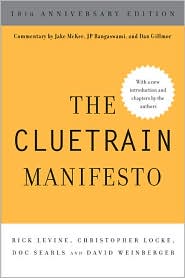
Cluetrain 10th Anniversary edition
Cluetrain 10th Anniversary
Everything Is Miscellaneous
Small Pieces cover
Small Pieces Loosely Joined
Cluetrain cover
Cluetrain Manifesto
My face
Speaker info
Who am I? (Blog Disclosure Form) Copy this link as RSS address Atom Feed

February 2, 2003

Joe Mahoney, feeling “black-minded” about winter, blogs this Wallace Stevens poem:

The Snow Man

One must have a mind of winter
To regard the frost and the boughs
Of the pine-trees crusted with snow;

And have been cold a long time
To behold the junipers shagged with ice,
The spruces rough in the distant glitter

Of the January sun; and not to think
Of any misery in the sound of the wind,
In the sound of a few leaves,

Which is the sound of the land
Full of the same wind
That is blowing in the same bare place

For the listener, who listens in the snow,
And, nothing himself, beholds
Nothing that is not there and the nothing that is.

Austere advice for poets of war and anti-war.

Tweet
Follow me

Categories: Uncategorized Tagged with: uncat Date: February 2nd, 2003 dw

Be the first to comment »

SourceID

Eric has been working hard on SourceID, “an open source community focused on digital identity infrastructure.” Open Source digID has to be better than the alternatives, and now there’s The Place to Go for all your Open Source Digital Identity Needs.

Tweet
Follow me

Categories: Uncategorized Tagged with: tech Date: February 2nd, 2003 dw

Be the first to comment »

Crud Factor Update

My CF has dropped to 4. This means I am upright, slept through the night, and tomorrow expect to be able to face a cup of morning coffee. Woohoo!

Tweet
Follow me

Categories: misc Tagged with: misc Date: February 2nd, 2003 dw

Be the first to comment »

Anti-War Poems

Val Stevenson and Todd Swift have put together a book of peace poems, with contributions by “over 100 of the world’s leading, mid-career and emerging poets who work in the English language.” It’s available here as a PDF file that can be printed and folded into a chapbook.

The poems are, of course, pointed. The question for me is: Do I learn from them? Do they open my eyes, either intellectually or emotionally? And do they escape the pitfall of anti-war poetry of over-simplifying in unhelpful ways? For example, “Are there children” by Robert Priest begins:

are there children somewhere
waiting for wounds
eager for the hiss of napalm
in their flesh —

It ends:

does each man in his own way
plot a pogrom for the species
or are we all, always misled
to war

This appeal to the broadest impulses (“species,” “all,” “always”) leaves out the third possibility: Sometimes wars are justified for particular reasons. And since the difficulty of war is always (talk about generalizations!) the disparity between its high aims and the “hiss of napalm” in the flesh of this one child, concluding by escaping into the general is exactly the sort of evasive maneuver the first part of the poem would have us avoid. Or, as Sampurna Chattarjli writes in “Easy”

The death-dealers deserved to die, you say.
Death is easy to pronounce.
It’s the smell of burning children that’s hard.

But is this just sentimentalism? After all, the inevitable death of children is part of a war that is being fought to prevent much larger evils. Still, the particularities cannot be forgotten, and poetry is one good way to remember them.

Many of the poems dispute the justification of this war, of course. For example, in “Regime change begins at home,” Sue Littleton writes about shooting fish in a barrel, except the fish are all stacked up, helpless. The zinger is in the last verse:

The barrel holds no water…
but somewhere in its depths
there is the dark, iridescent sheen
of oil.

Aolfe Mannix allows himself ambiguity in “Taking Sides,” which begins:

There will be another war,
many people will be killed,
and I will be expected to have an opinion.
But what can you say about a man
who’d rather let thousands of children die
than give them access to medical vaccines…

and ends:

Talk about a rock and a hard place.
The fundamental difference is questionable.
Neither Jesus nor Mohammed
would have allowed themselves
to be pushed into this kind of choice.

Sounds right. But why would Jesus and Mohammed escape the choice? Because they’d see immediately who to side with? Or because they would have seen the futility of sides? But, the first part of the poem tells us that sides aren’t futile, for Saddam is an evil-doer. What is it that Jesus and Mohammed would have done that we have failed to do? I want one more line…or maybe one more poem. Or maybe this is where I’m supposed to do some thinking. (The irony to me is that both Christianity and Islam believe their religions are universal whereas the unmentioned Abraham founded a religion based on a tribal revelation.)

Here is J.R. Carpenter’s “A verse to war” in its entirety, a reflection presumably on being asked to contribute an anti-war poem to a chapbook:

I am afraid
(of what will happen
of the rhetoric
of the silence
of not knowing).
I am afraid I don’t know what to contribute.

I am afraid
(of destruction
of waiting
of doing nothing
of adding fuel to the flames).
I am afraid I don’t have any answers.

I am afraid
(of trivializing
or propagandizing
of margins
of error).
I am afraid it is but a meager thing to add
a verse adverse to war.

I began by asking if these poems opened my eyes. That’s what I’m looking for. But anti-war poems can serve another purpose. They can encourage, impassion, give us courage in our opposition. After all, “Blowing in the Wind,” the most important anti-war poem of my generation, didn’t really teach us anything. But it did let us feel the wind against our back and gave us heart as we sang along. And these poems overall did make me feel encouraged. There are many strong voices making themselves heard.

Now, 100 poems are too many to read, so I admit that I skimmed. But I found only a handful of poems that are the sort of over-written, self-consciously poetic stuff that I personally dislike…the ones that talk about a “sea-cooled face” or stuff that’s “taut against the air.” Overall, these poems are entertaining and at times moving and thought-provoking. And funny. Hell, it’s worth browsing through the anthology just for some of the titles: “Terror on Warism” (Ian Ayres), “Mickey Mouse came, Mickey Mouse saw, Mickey Mouse conquered” (Vincent Tinguely), “God decides to press the mute button on his remote control” (David Siller) and “Talking with the cat about world domination the day George W Bush almost choked on a pretzel” (Kevin Higgins).

Will these poems stop the war? No, but then nothing will.

Tweet
Follow me

Categories: Uncategorized Tagged with: politics Date: February 2nd, 2003 dw

55 Comments »

February 1, 2003

I’m in Love with a Record Executive

In Salon, John Snyder, president of Artist House Records, says it all and gets it right. The title pretty well sums it up:

Embrace file-sharing, or die

This is the dream presentation you’ve always wanted the recording industry to put under its pillow and play to itself over and over as it sleeps.

Tweet
Follow me

Categories: Uncategorized Tagged with: web Date: February 1st, 2003 dw

1 Comment »

Museum of Compilers

Borland offers its antique compilers and development environments — Turbo Pascal and Turbo C in particular — for free at their museum site. I was one of the first customers for Turbo Pascal when it was a $29.00 wonder and hadn’t yet been acquired by Borland, so I’m looking forward to the musty rush of nostalgia.

Tweet
Follow me

Categories: Uncategorized Tagged with: tech Date: February 1st, 2003 dw

4 Comments »

Fragile Military Spectrum

So, the tech industry and the US military have come to a compromise that opens up more spectrum for wireless communications while preserving the slice the military uses for some of its delicate radar. Here’s what I don’t understand: If the military equipment is so sensitive to “interference” that it requires no other device broadcast at that frequency, why isn’t it incredibly vulnerable? Isn’t this really a strong argument for moving to an Open Spectrum policy?


Over at GreaterDemocracy.org, Jock Gill blogs on why inteference is a dangerously misleading metaphor.

Tweet
Follow me

Categories: Uncategorized Tagged with: tech Date: February 1st, 2003 dw

2 Comments »

« Previous Page


Creative Commons License
This work is licensed under a Creative Commons Attribution-NonCommercial-ShareAlike 3.0 Unported License.
TL;DR: Share this post freely, but attribute it to me (name (David Weinberger) and link to it), and don't use it commercially without my permission.

Joho the Blog uses WordPress blogging software.
Thank you, WordPress!